REVIEW · VENICE
Morning Walking Tour of Venice with Gondola Ride
Book on Viator →Operated by Insidecom srl · Bookable on Viator
Venice is easier when you start with a plan. This morning tour strings together classic landmarks with backstreet wandering, then finishes with a gondola ride so you get a feel for the city from land and water. The best part is how a guide helps you connect what you see—canals, churches, squares—to what made Venice powerful.
I especially like the walk for getting your bearings in a city of confusing turns, and I like the gondola as a simple, low-effort payoff after a few hours of exploring. One thing to consider: the gondola ride is short (about 30 minutes) and it’s collective, so you may share space with other people and you won’t get commentary during the boat portion.
In This Review
- Key highlights worth your morning
- The 9:00 AM start: why this pacing works in Venice
- Walking the Canal Grande: the city’s main artery in plain view
- Piazza San Marco: a quick taste of Venice’s headline square
- Marco Polo and what he represents for Venice
- Santa Maria della Salute: the plague vow you’ll remember
- La Fenice and the opera house energy
- Saints John and Paul: Venice’s “pantheon” feeling
- Campo Santa Maria Formosa: where local life shows up
- The gondola ride: short, shared, and no on-board storytelling
- The guides: the difference between a script and a story
- Group size and pacing: what to do so you don’t feel rushed
- Value check: what $87.70 buys you (and what it doesn’t)
- Who this tour suits best
- Should you book this Venice morning walk and gondola combo?
- FAQ
- How long is the Morning Walking Tour of Venice with Gondola Ride?
- Where does the tour start, and when does it begin?
- What’s included in the price?
- Is there commentary during the gondola ride?
- What if the gondola can’t run due to weather?
- Can my group be split between gondolas?
- Is there an access fee for some day visitors?
Key highlights worth your morning
- Start at 9:00 AM for an easier time navigating crowds in narrow walkways
- Guided walking route that links Venice’s big-name sites to everyday canals and piazzas
- Grand Canal area stop to understand how the city is divided and connected
- Major church stops like Santa Maria della Salute that explain why people built there
- Shared gondola logistics (up to 5 per boat) can mean different gondolas for groups
- Weather-dependent gondola—you’ll need to check at the departure point if conditions are poor
The 9:00 AM start: why this pacing works in Venice
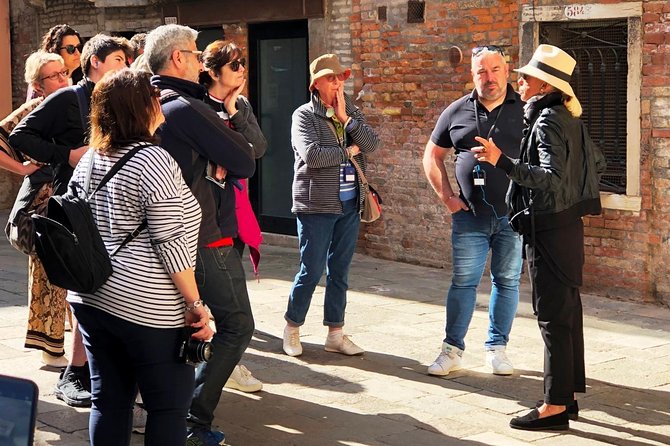
If you’ve ever tried to “wander” Venice without a plan, you know it can turn into a loop of bridges and dead ends. Starting at 9:00 AM helps you see more with less stress, especially during the busy parts of the day when the small streets get packed. You also get the walking portion done while your legs are still fresh.
This tour runs about 3 hours total and combines two parts: a roughly 1.5-hour guided walk plus a 30-minute gondola ride. That short gondola segment is the trade-off here—less time on the water, but a better chance you won’t feel like the boat eats your whole morning.
The tour uses mobile tickets, and at the meeting point on Calle larga de l’Ascension (30124 Venezia VE), a representative checks your voucher and sets expectations for the route. Bring comfortable shoes. Venice is famous for its charm and also famous for stone underfoot that can be slippery when wet.
You can also read our reviews of more walking tours in Venice
Walking the Canal Grande: the city’s main artery in plain view
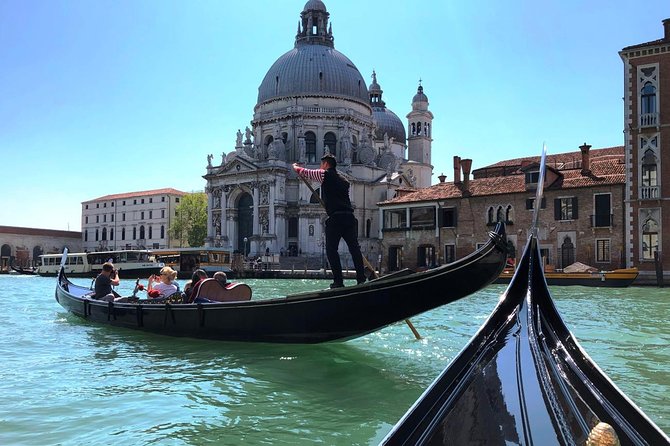
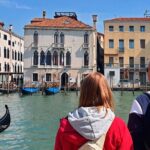
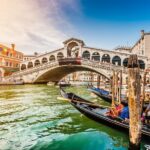
The first meaningful stop is at the Canal Grande, Venice’s central waterway. It’s about 3,800 meters long and forms an inverted S shape through the historic center, separating it into two sides. Seeing it early helps you understand the “map” of Venice before you start zig-zagging between streets and bridges.
On the walking route, you’ll get a solid look at why the Canal Grande matters: it’s the main corridor that made trade and movement possible. Even if you’ve seen photos, there’s a difference between a picture and standing nearby and realizing how the city is built to live with water, not around it.
Time-wise, you’re at this stop for around 20 minutes, so it’s long enough for views and basic orientation, not long enough to turn into a parking lot of tourists. If you’re the type who likes to take photos, I’d still focus on getting your bearings first—angles make more sense once you know where the landmarks sit.
Piazza San Marco: a quick taste of Venice’s headline square
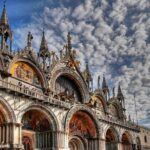
Next comes Piazza San Marco, often called the heart of Venice. You’ll spend around 5 minutes here, which is just enough time to feel the scale and see why people flock to it. It’s not a “linger and explore every detail” stop, but it’s a smart move for a tour that needs to cover multiple areas in a short window.
If Piazza San Marco is on your must-see list, this is a helpful sampler. And if it’s not, you’ll still learn why it became such a center for power and ceremony, which makes the rest of the city click.
Just know the square can be chaotic. Short time on-site is actually a plus—less time fighting crowds and more time learning how the rest of Venice connects back to this central stage.
Marco Polo and what he represents for Venice
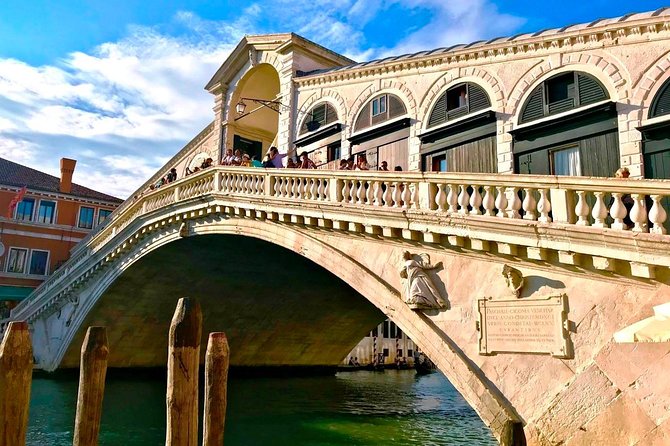
The tour also includes a stop tied to Marco Polo, the Italian traveler whose Far East accounts were collected in Il Milione. Even if you think you already know the basics, this kind of reference works well in Venice because the city’s identity is tangled with trade routes, merchant families, and storytelling.
What makes a stop like this useful is not a single “fact,” but the context it gives you. Venice didn’t just build buildings; it built a reputation. Polo’s legend is part of that reputation—one reason Venice keeps showing up in European imagination.
You don’t need to be a history buff to appreciate it. This is more of a “here’s why this matters” moment than a full lecture, which fits the pace of the rest of the morning.
Santa Maria della Salute: the plague vow you’ll remember
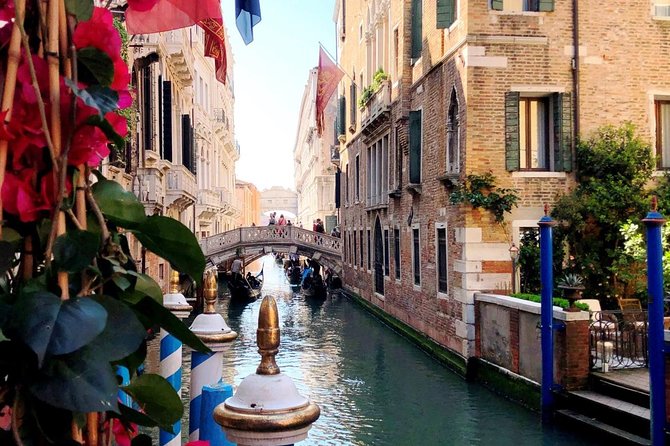
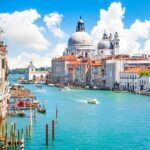
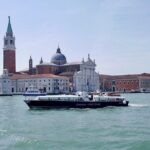
One of the most meaningful stops is Santa Maria della Salute, a basilica strongly tied to Venice’s Baroque style. The church sits near Punta della Dogana, and it’s known for how it frames views across St Mark’s Basin and the Grand Canal area.
Here’s what makes this stop stand out (in a practical way): it’s not only about architecture. The church was built as a votive offering to the Virgin Mary after the plague struck Venetians in 1630–1631. The tour also notes how the cult became so rooted in Venice that Mary joined the city’s list of patron saints.
The design is credited to Baldassare Longhena, with attention to ideas connected to Palladio. You’ll also hear that in December 1921, Pope Benedict XV elevated it to the rank of minor basilica. That’s the kind of detail that turns a photo-op into something you can explain to friends on the way home.
You can also read our reviews of more tours and experiences in Venice
La Fenice and the opera house energy
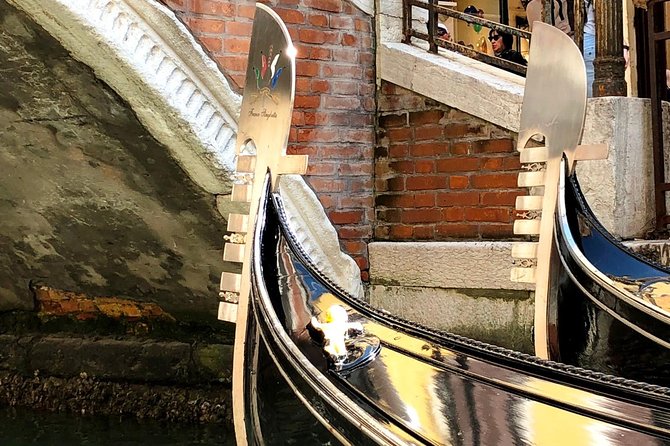
You’ll also pass Gran Teatro La Fenice, Venice’s major opera house in the San Marco area near Campo San Fantin. The tour points out its reputation as one of the world’s key opera stages, plus the fact that it was destroyed and rebuilt—so the building has history you can feel even if you aren’t attending a performance.
La Fenice has also hosted major opera and symphonic seasons and the International Festival of Contemporary Music, and the tour mentions its role in the traditional New Year’s Concert. Even if opera isn’t your thing, this stop helps you see how Venice treated culture as serious business, not just decoration.
As a quick pacing note: this is a “see it and learn the headline” stop. If you want a deeper dive, you can always plan an opera night later. For this tour, the goal is connection and context.
Saints John and Paul: Venice’s “pantheon” feeling
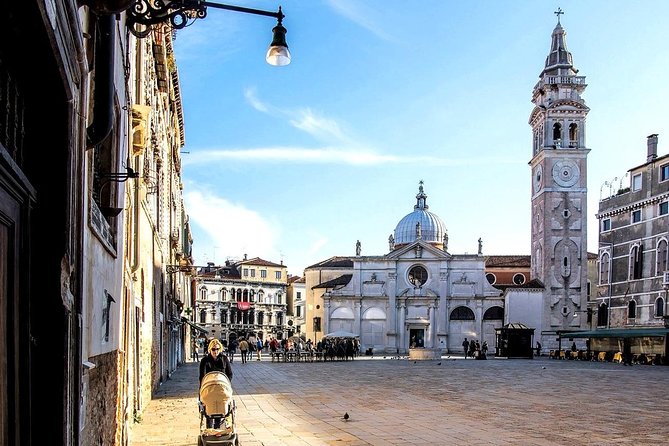
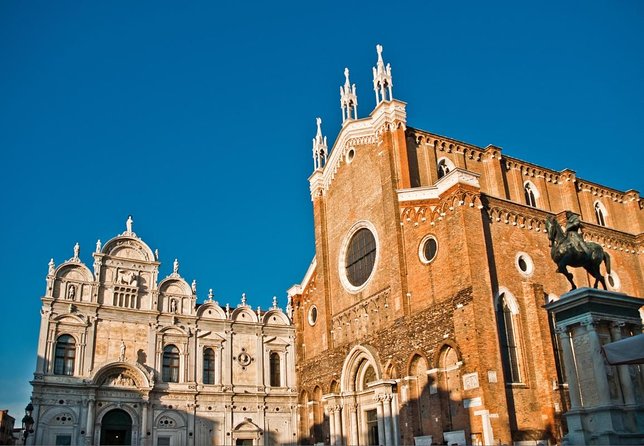
Another standout religious stop is the Basilica of Saints John and Paul. The tour describes it as one of Venice’s most impressive medieval religious buildings, often compared with Santa Maria Gloriosa dei Frari. It’s called a kind of pantheon because so many doges and important figures have been buried there since the 13th century.
Why you’ll care: burial sites in Venice aren’t just about graves. They’re about identity and power. When you understand that, you start noticing how the city honors its leaders through architecture and ritual.
This stop also has a specific milestone: in September 1922, Pope Pius XI elevated it to the rank of minor basilica. That’s another example of the tour connecting what you see now with what people decided mattered centuries ago.
Campo Santa Maria Formosa: where local life shows up
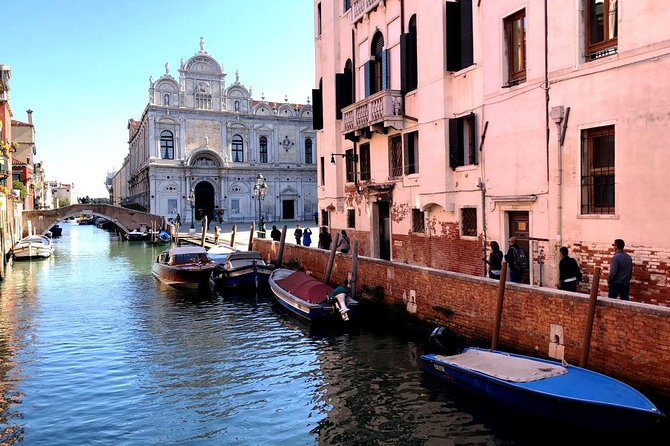
The walk finishes with a look at Campo Santa Maria Formosa, in the Castello district. The tour calls it one of the larger squares in Venice, and you’ll learn a useful detail: multiple calli and bridges radiate out from the area, with some bridges simply connecting palace entrances.
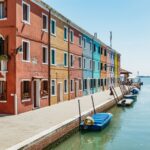
This is a good “Venice reality check” stop. Venice isn’t just canals and major monuments. It’s also the way people move day to day—through squares like this, crossing small bridges, and slipping into side streets.
Spending time here also helps the tour feel less like a checklist. You get a sense of place, not just landmarks.
The gondola ride: short, shared, and no on-board storytelling
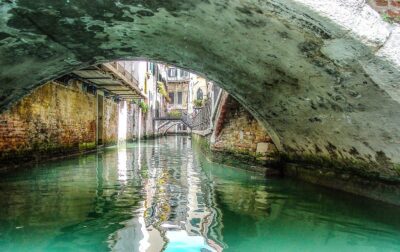
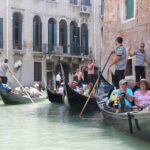
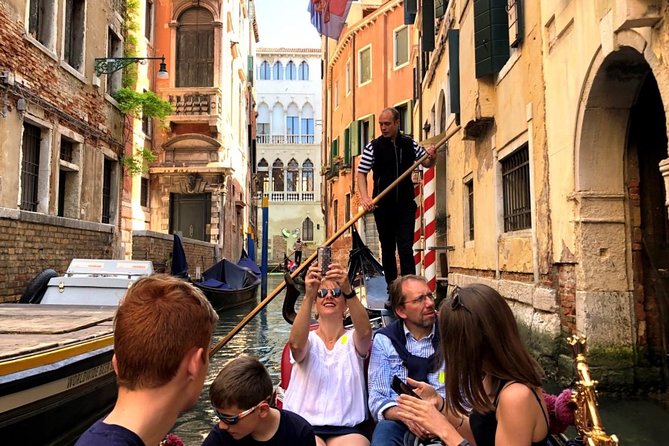
After the walk, you go into the gondola portion for about 30 minutes. Importantly, the ride includes no commentary during the trip itself. That means the value of the gondola is visual—views of canals, bridges, and the way water traffic threads through the city.
Your boat can host up to 5 people. If your reservation is bigger than that, the group gets divided and you might end up on different gondolas. In a collective tour, you could also share your gondola with other tour guests.
Some riders love this setup because it keeps the experience simple and quick. Others find it less special if you wanted a private feel or a more customized ride. Either way, the gondola is still one of the most iconic Venice experiences, and even a shorter ride gives you that “water-level Venice” perspective you can’t get on foot.
Weather matters too. The gondola might be suspended in bad weather. If that happens, you’re expected to return to the departure point to check whether the tour runs and what alternatives are offered.
The guides: the difference between a script and a story
This kind of tour lives or dies by the guide. In the best cases, you get someone who makes the city feel like a living place rather than a worksheet. I’ve seen firsthand that guides like Christine and Monica can turn facts into clear picture-making moments, with pacing that helps you keep up even when the route winds through crowded areas.
There are also guides who go more “script-style,” and that can make the walk feel a bit like fast playback instead of a guided conversation. Group size can affect this too. When the group is larger, it can stretch out across bridges and alleys, making it harder to stay connected with the guide.
Tip: if you get audio help (like headsets), use it fully. If you don’t, move closer at the crossings. Venice guides can’t control the city’s foot traffic, but your position can make the difference between missing lines and understanding them.
Group size and pacing: what to do so you don’t feel rushed
This is a collective tour, so you’re not the only reservation in the group. That can mean a larger crowd and more time waiting at certain points. The route includes bridges and narrow walkways, and a guide may move briskly to keep everyone on schedule.
Here’s how you can make it feel easier:
- Stay close to the front half of the group at crossings and tight turns.
- Keep an eye on the guide’s body language. If they speed up, speed up too.
- Wear shoes you can walk in comfortably on uneven stone.
Also, this tour starts at 9:00 AM, and timing matters. If you show up late, it’s not the kind of experience with a friendly “we’ll wait for you” safety net. Build in a buffer from your transit stop.
Value check: what $87.70 buys you (and what it doesn’t)
At about $87.70 per person, this isn’t the cheapest way to do Venice, but it’s priced like a shortcut. You’re paying for three things:
1) a guided introduction that helps you interpret what you’re seeing,
2) a gondola you don’t have to plan or reserve separately,
3) a morning schedule that compresses a lot into about 3 hours.
What you should not expect at this price is a long gondola experience, on-board narration, or a private boat. The gondola ride is short and shared, and there’s no commentary while you’re on it.
Still, for first-timers, this combo can be a smart move because it knocks out two big items in one go: walking orientation plus iconic water time. If the rest of your trip is packed with museums or day trips, shaving planning time matters.
One pricing detail: if you’re visiting Venice from outside the city for the day, you may face a €5 access fee on certain dates. That fee isn’t part of the tour cost here, so check the official guidance before you go.
Who this tour suits best
This is a strong fit if you want:
- an easy morning plan with guided context,
- a gondola that doesn’t hijack your entire day,
- enough landmark coverage to feel oriented for the rest of your Venice wandering.
It’s also friendly for families, since the gondola portion isn’t long and kids can still enjoy the ride without sitting for hours. On the other hand, if you want a deep architectural tour or a private gondola with custom storytelling, you’ll likely feel that the experience is too short and too shared.
Should you book this Venice morning walk and gondola combo?
I’d book it if it matches your goal: get your bearings fast and add a gondola payoff without overplanning. The walking portion gives you enough structure to understand where the city’s major spaces sit, and the gondola gives you that signature canal perspective.
I’d skip or look for a different option if you’re picky about gondola time, expect on-board narration, or hate the idea of sharing your boat. And if you’re sensitive to pace, go in knowing it’s a collective format with some crowd pressure.
If you want a simple, well-timed “first steps in Venice,” this combo is a practical choice—especially if you start at 9:00 and treat the walk like the map, not the goal.
FAQ
How long is the Morning Walking Tour of Venice with Gondola Ride?
It runs about 3 hours. It’s described as a combo of a 1.5-hour walking tour and a 30-minute gondola ride.
Where does the tour start, and when does it begin?
The tour starts at Calle larga de l’Ascension, 30124 Venezia VE, Italy. The start time is 9:00 am.
What’s included in the price?
The guided walking tour and the gondola ride are included.
Is there commentary during the gondola ride?
No. The gondola ride does not include commentary.
What if the gondola can’t run due to weather?
The gondola might be suspended in bad weather. You’re required to go to the tour departure point to check whether the tour takes place and what alternative service may be offered.
Can my group be split between gondolas?
Yes. A gondola can host up to 5 people, so larger reservations may be divided into smaller groups across different gondolas.
Is there an access fee for some day visitors?
On certain dates, visitors staying outside of Venice who are visiting for the day may be required to pay a €5 access fee. You can check details and exemptions at https://cda.ve.it