REVIEW · VENICE
Venice Sightseeing Small Group Walking Tour with a Local Guide
Book on Viator →Operated by Raphael Tours & Events · Bookable on Viator
Two hours, and Venice starts making sense. This small-group walking tour trades big-bus chaos for smart pacing and local storytelling, focusing on the city’s maritime past and the neighborhoods that shaped its wealth.
I like two things most: first, the guide-led route through Rialto, San Marco, and Cannaregio, with lots of bridges and little side streets that help you get your bearings fast. Second, you end at St. Mark’s Square, so you finish with an easy place to plan your next move.
One thing to consider: it is still a walking tour in Venice, so expect stairs and a steady pace. If you want frequent stops for coffee, or you need lots of photo breaks, you may feel a bit squeezed.
In This Review
- Key highlights you should know before you go
- A Small-Group Walking Tour That Helps You Get Oriented Fast
- Meeting Point, Route Length, and the Two-Hour Pace
- Campo San Pantalon: Where You Start Learning the City’s Logic
- Scuola Grande di San Rocco: A Stop That Explains Venetian Power
- Ponte di Rialto: The Bridge Stop That Anchors the Whole Story
- Casa di Marco Polo: Connecting Venice to Exploration
- Basilica dei Santi Giovanni e Paolo (San Zanipolo): Doges, Tombs, and Big Faith
- Piazza San Marco Finish: How to Use the Rest of Your Day
- Price and Value: Is $48.37 a Fair Deal?
- The Stairs, Shade, and Photo Reality Check
- Guides, Group Energy, and What to Expect From the Human Side
- Who Should Book This Tour, and Who Might Skip It
- Should You Book This Venice Walking Tour?
- FAQ
- How long is the Venice sightseeing walking tour?
- Is the tour a small group?
- What language is the tour in?
- Where does the tour start and end?
- Does it include admission tickets?
- Do I need to pay an access fee to visit Venice?
- What should I wear?
Key highlights you should know before you go
- Max 15 people (or private) keeps the experience human-sized and easier to ask questions.
- Rialto Bridge and St. Mark’s Square anchor the walk with Venice’s two most recognizable landmarks.
- Marco Polo stops connect you to Venice’s trade-and-exploration story, not just postcard views.
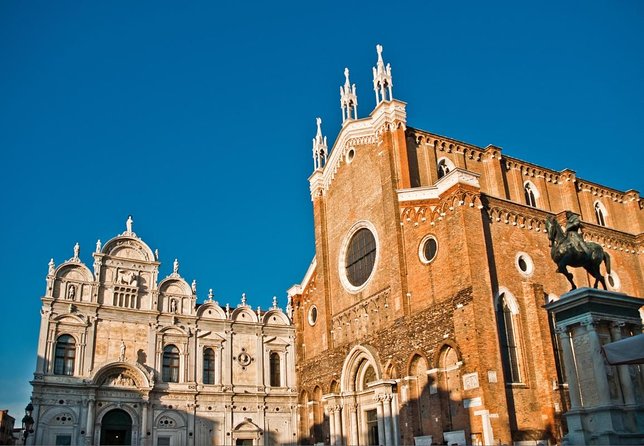
- Doge tomb church stop (San Zanipolo) gives you a strong reason to care about these big Venetian churches.
- Local food and free-time tips come with the tour, so you leave with a plan, not just a map.
A Small-Group Walking Tour That Helps You Get Oriented Fast
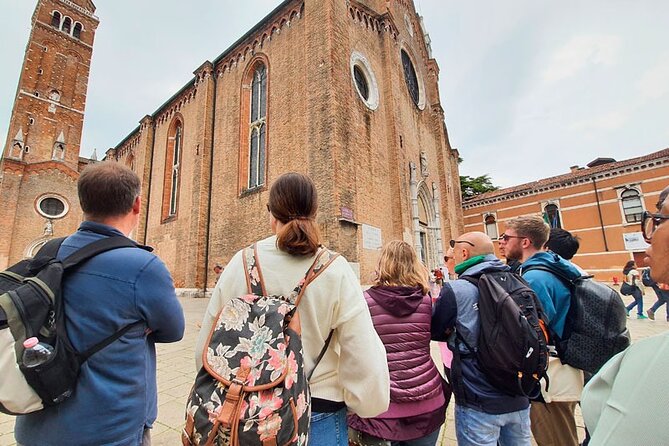
Venice can overwhelm you in minutes. Not because it is hard to look at, but because there are too many directions, too many canals, and too many buildings that all look important. This tour helps by giving you a tight route and a local guide who explains what you are actually seeing.
You walk through pedestrian-friendly streets and across footbridges, with the route built around Venice’s island-and-bridge reality. You also get placed into the bigger story of the city as a former maritime republic—how trade, ships, and power shaped where people built, worshiped, and lived.
If you end up with a guide like Gianmarco or Valentina, you likely get the kind of orientation that makes the rest of your trip click. Many guides in this program are the patient type: they answer questions, keep the flow moving, and tailor explanations to mixed groups.
You can also read our reviews of more walking tours in Venice

Meeting Point, Route Length, and the Two-Hour Pace
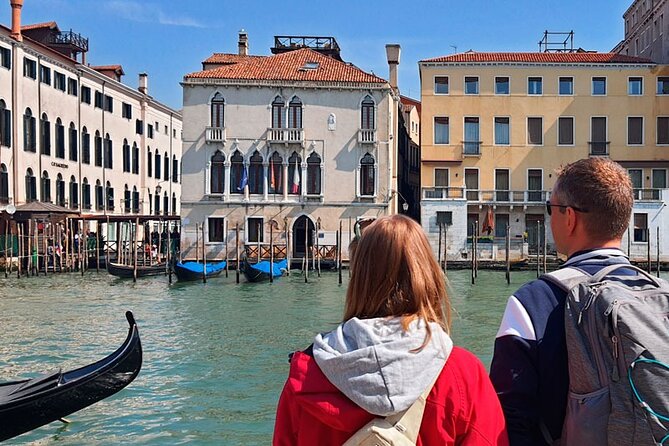
The tour starts at Campiello dei Squelini in Dorsoduro and finishes at St. Mark’s Square (Piazza San Marco). Duration is listed at about 2 hours, though in real life it can run a bit long depending on pace, questions, and how the group moves.
You also get a choice of morning or afternoon departure. For me, that matters because Venice light changes fast. A morning tour can feel calmer around the major sights, while an afternoon tour can work better if you want to sleep in and still do a key orientation walk on arrival.
Important practical note: this is not a sit-and-watch tour. It is a steady walking loop with multiple stops. Reviews mention plenty of stairs, and even if the walking sounds straightforward, Venice steps are still Venice steps.
Campo San Pantalon: Where You Start Learning the City’s Logic
Your first stop is Campo San Pantalon. Starting in a square like this is smart. Squares in Venice act like little hubs: people orient around them, routes bend from them, and the surrounding streets often reveal the logic of each neighborhood.
From here, your guide sets the tone—how to read streets, where sightlines lead, and how Venice’s geography funnels people toward key crossing points. You are not just collecting names. You are learning why this city is laid out the way it is.
A good guide will also help you understand that Venice is not one single place. It is a patchwork of sestieri and districts that connect through canals, bridges, and pedestrian routes. That framing pays off later when you reach Rialto and St. Mark’s.
Scuola Grande di San Rocco: A Stop That Explains Venetian Power
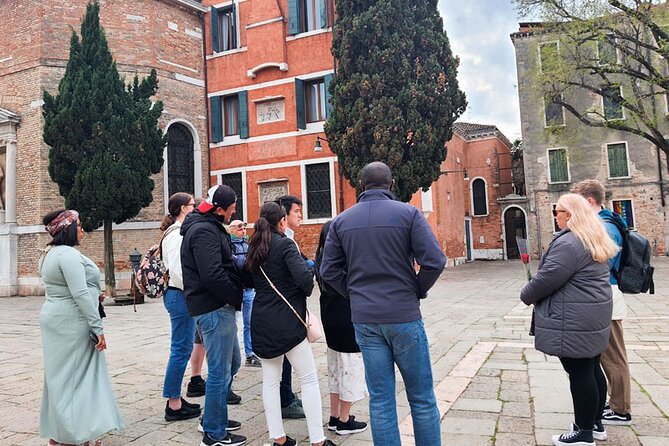
Next up is Scuola Grande di San Rocco. This is the kind of place that can look impressive from the outside, but feel flat if you do not understand what it represented in Venetian life.
This stop is built for context. Your guide ties the building to Venice’s social structure and history, including the way powerful groups lived, helped, and competed. You should expect a mix of facts and story, not a lecture dump of dates.
One caution: this tour is about seeing and learning from the street-level experience. Even if you are drawn to architecture, do not assume you will be going inside stops. If you want interiors, plan to return on your own time.
Ponte di Rialto: The Bridge Stop That Anchors the Whole Story
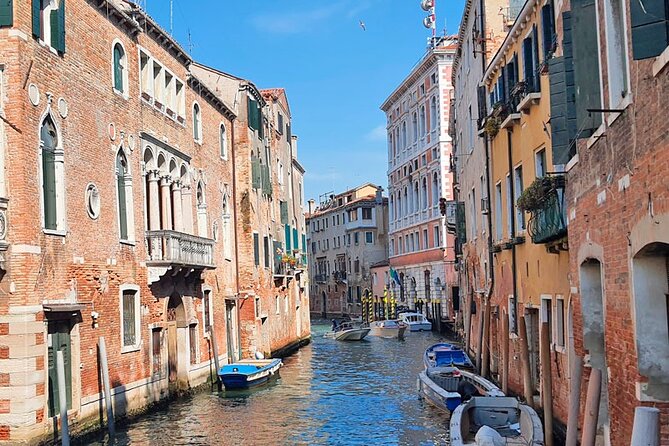
Then you reach Ponte di Rialto, one of those Venice sights that you recognize before you even stand near it. What makes this stop work on a walking tour is the explanation. Rialto is not only a photo spot. It is tied to the city’s former role as a financial and trade center.
As you move around the area, the guide can point out how trade shaped the neighborhood and why the city’s most important economic activity clustered here. You also get a sense of how people flowed through the city—crossing at key bridges, meeting in public spaces, and navigating by landmarks.
If you like learning by contrast—seeing a busy bridge and then understanding why it mattered—you will get a lot out of this section.
You can also read our reviews of more guided tours in Venice


Casa di Marco Polo: Connecting Venice to Exploration
You stop at the Casa di Marco Polo, tied to the story that Marco Polo was born in Venice. This is a strong narrative pivot in the tour. After walking through market-and-power Venice near Rialto, the Marco Polo stop shifts the theme toward exploration, travel, and the city’s outward gaze.
What you should aim for here is not just the name. Think about how Venice’s maritime identity powered the imagination of travelers and merchants. The guide’s job is to connect those dots as you walk—why a place like this matters inside a city that built its reputation on ships and routes.
If you are the kind of traveler who likes links between people and place, this stop can be a highlight. In the same spirit, some guides are also very good at answering questions on how Venice functioned as an information hub, long before the internet existed.
Basilica dei Santi Giovanni e Paolo (San Zanipolo): Doges, Tombs, and Big Faith
The tour then heads to Basilica dei Santi Giovanni e Paolo, also known as San Zanipolo. This is one of the most meaningful stops because it is directly tied to Venice’s leaders. The church is described as the resting place of many Venice doges, meaning it is not just a pretty building—it is political memory made stone.
Why this matters for you: doges are not just names in a textbook. When you see their connection to a physical place, you start to understand how Venice acted like a city-state with its own identity and power structure.
Also, this is the stop where a good guide can help you see scale. Churches like this were built to communicate status. So even if you do not go inside, the stop makes more sense once your guide gives you the framework.
If you have mobility limits, this is one of the sections to approach carefully. Even when the tour does not feel overly strenuous, stairs can pop up around major landmarks.
Piazza San Marco Finish: How to Use the Rest of Your Day
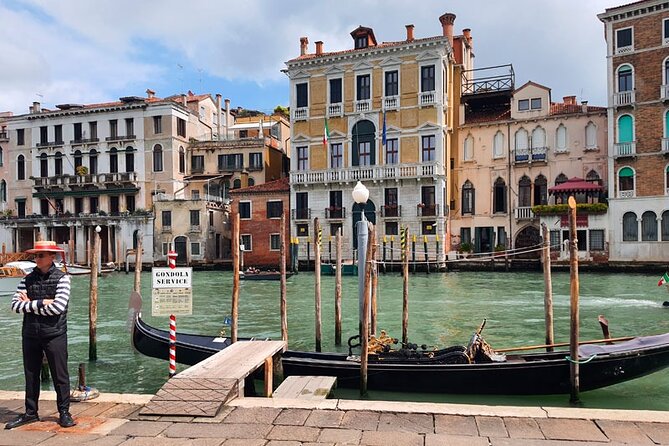
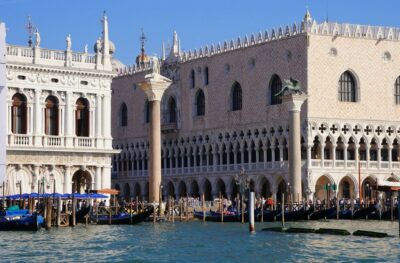
The walk ends at St. Mark’s Square (Piazza San Marco). Ending here is practical. St. Mark’s is the city’s gravity well. Once you reach it, you are in the middle of major routes for museums, viewpoints, and wandering loops.
Your guide can also help with what to do next, including where to eat and how to spend your free time. That advice is often better than generic lists because it usually comes from local patterns: when to go, where to stand, and which areas are calmer at certain hours.
I especially like tours that finish with a destination that is easy to navigate. Even if you feel slightly tired after two hours, you are not left in the middle of nowhere. You are placed at a hub.
Price and Value: Is $48.37 a Fair Deal?
At $48.37 per person for about 2 hours, the value depends on what you want from the money.
Here is why the price can feel fair:
- You get a local guide in English who explains the city’s maritime-republic angle, not just the surface landmarks.
- The tour size cap of 15 people is a real benefit. Fewer people means more room for questions and less “herding.”
- You cover a tight set of high-impact stops—Rialto Bridge, Marco Polo’s area, San Zanipolo, and St. Mark’s Square—so you do not waste your first day trying to connect dots.
Where it might feel less worth it:
- It is a walking-and-seeing tour, not a museum pass. If you came hoping for interiors, you may want to add separate entries later.
- If the headset fails or the group pace is rushed, the experience can feel more like a walk than a tour. One note from real-world experiences: sometimes audio issues make it hard to hear, which can reduce how much you catch.
For most first-timers, the price works best as a way to save time. You pay to get your mental map in place, then you spend your remaining hours exploring on your own with more confidence.
The Stairs, Shade, and Photo Reality Check
A walking tour in Venice always comes with friction points, and this one has a few worth naming.
Expect stairs. Even a “doable pace” can still include bridge crossings and changes in level. If stairs are a problem for you, plan ahead and be ready to slow down when needed.
Expect limited break moments. You should not count on regular chances to grab a coffee or sit for long stretches. Some people also report fewer opportunities to take photos, and that is usually because the group moves steadily and you do not want to fall behind.
The good side: Venice is hot in summer, and some guides are very good about keeping the group in shade and timing the walk to avoid the worst sun when possible. If you are visiting in peak heat, that makes a real difference in how enjoyable the tour feels.
Guides, Group Energy, and What to Expect From the Human Side
One of the best parts of this kind of tour is the person holding the map in their head.
You might get Valentina—friendly, funny, and patient with questions, taking time to get to know the group before walking. You might get Julia—a native Venetian who shares straight facts and history with a less “performer” style. Or you might meet Flavia, who keeps things smooth while highlighting Venice’s highlights and lesser-known stretches.
A theme that shows up often: guides can be great at pacing and explaining, but sometimes groups run into the limits of a small-group format. That includes audio issues and situations where one person does not hear as well. If you are the type who needs clear audio to follow along, stand close to the guide when possible.
For families: this tour seems best for adults and older kids who enjoy history and factual connections. If you want high-energy entertainment and constant engagement, it may feel more like a focused walk with information than a kid-style tour.
Who Should Book This Tour, and Who Might Skip It
This is a strong choice if:
- You are doing Venice for the first time and want a quick orientation loop.
- You like history tied to real places, including the doge legacy and the Marco Polo connection.
- You want an easy plan for where to go next, with food and free-time tips.
I would think twice if:
- You need frequent stops for breaks or coffee.
- You struggle with stairs or have mobility concerns.
- You want to go inside major sights during the tour. This walk is designed for street-level seeing and interpretation, and you can lose value if your main goal is interiors.
If you prefer quieter walking routes, this tour often works well because small groups can avoid some of the most chaotic flows. Also, you can sometimes get a less crowded path depending on the day and guide style.
Should You Book This Venice Walking Tour?
I think you should book it if you want your first Venice day to feel organized instead of random. For the money, you are buying two big wins: a local guide’s context and a route that takes you from Dorsoduro-area starting point to the center of St. Mark’s Square.
Book this tour soon after you arrive, so the explanations help you understand what you see for the rest of your trip. Then you can return on your own to any place that sparks extra interest—especially if you are the type who wants to see interiors.
If you are short on time, this is a practical way to cover major highlights without getting lost. Just lace up comfortable shoes, expect stairs, and plan to use the end point as your launchpad for the rest of the day.
FAQ
How long is the Venice sightseeing walking tour?
It runs for about 2 hours.
Is the tour a small group?
Yes. The group is limited to a maximum of 15 travelers, and there is also a private option.
What language is the tour in?
The standard tour is offered in English. The private option can be done in English, Spanish, and German.
Where does the tour start and end?
It starts at Campiello dei Squelini in Dorsoduro and ends at St. Mark’s Square (Piazza San Marco).
Does it include admission tickets?
The tour information lists admission tickets for stops as free, so you are not expected to pay entry fees as part of the tour stops.
Do I need to pay an access fee to visit Venice?
On certain dates, day-trippers staying outside Venice may need to pay a €5 access fee. You should check the official Venice access fee details before you go.
What should I wear?
Wear comfortable shoes, because this is a walking route with stairs. The tour also requires good weather.