REVIEW · VENICE
Venice: After-Hours St. Mark’s & Doge’s Palace VIP Tour
Book on GetYourGuide →Operated by Walks of Italy · Bookable on GetYourGuide
Gold mosaics, no crowds, and real power. This after-hours VIP walk gets you into St Mark’s Basilica after closing and into Doge’s Palace when the day-trippers are gone. I love the story-led pace and the chance to see the Pala d’Oro and Bridge of Sighs without constant elbowing. One thing to consider: this tour is not suitable for wheelchairs or guests with mobility impairments.
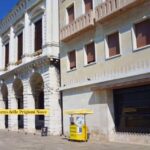
You start in Piazza San Marco at the Museo Correr, meeting your guide under the portico outside the entrance. Look for the green Walks sign and plan to arrive 15 minutes early so you don’t feel rushed before the first big room.
This is one of those Venice nights that makes the city feel oddly calm. Guides like Roberta and Nico B (plus many others) bring the Venetian Republic to life with history that’s told like a good story, not a lecture.
In This Review
- Key things to know before you go
- Why this after-hours St Mark’s + Doge’s combo works
- Getting started at Museo Correr: quick, clear, low-stress
- Doge’s Palace: apartments, councils, armory, and the prisons
- The Bridge of Sighs from inside: less romantic, more real
- St Mark’s Basilica after closing: lights, mosaics, and quiet awe
- Pala d’Oro and the crypt: what to look for
- Pace, timing, and the built-in break between sites
- Price and value: is $157.47 worth it?
- What to wear and bring (so you don’t get stopped)
- Who should book this VIP after-hours tour
- Should you book this tour or skip it?
- FAQ
- Where do I meet the guide?
- What’s included in the price?
- How long is the tour?
- Is the tour in English?
- Do I need to follow a dress code for St Mark’s Basilica?
- Is this tour suitable for wheelchair users?
Key things to know before you go
- After-hours access at St Mark’s means soft evening light and far fewer people inside the mosaics
- Doge’s Palace on a power-tour route: Great Council Hall, armory, and the prisons
- Bridge of Sighs from the inside gives you the truth behind the romance (and it’s a bit darker)
- The Pala d’Oro altarpiece without the crowd crush—you can actually look instead of queue
- Small-group feel keeps the tour intimate enough to hear your guide and take photos comfortably
Why this after-hours St Mark’s + Doge’s combo works
Venice is famous for being pretty. But at night, it’s also strangely functional. The best part of this tour format is that it treats two major icons like living places with real purpose—then shows them to you when the city is less loud.
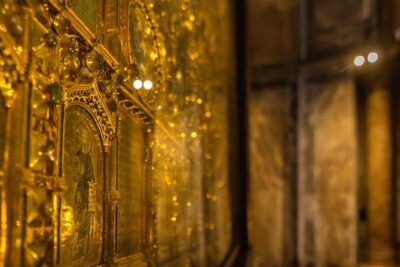
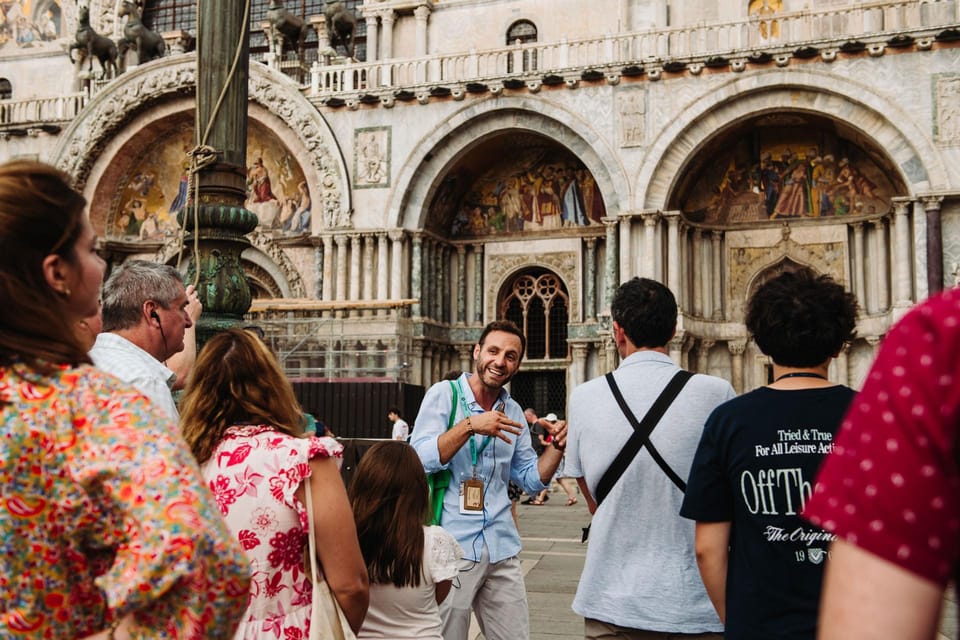
At St Mark’s Basilica, you’re not just seeing gold. You’re seeing how the gold changes when the daylight fades. Your guide points out details in the mosaics and the Pala d’Oro (that glittering altarpiece of gemstones) when the basilica feels hushed instead of packed. In the Doge’s Palace, you’re not just touring rooms. You’re walking through the machinery of power—meeting halls, apartments, armory spaces, and prisons that make the Republic feel human and even a little tense.
The timing matters. Daytime visits can feel like a fast-moving line with a side of architecture. This tour aims for the opposite: time to look, time to listen, and enough quiet to actually notice what makes Venice Venice.
You can also read our reviews of more tours and experiences in Venice

Getting started at Museo Correr: quick, clear, low-stress
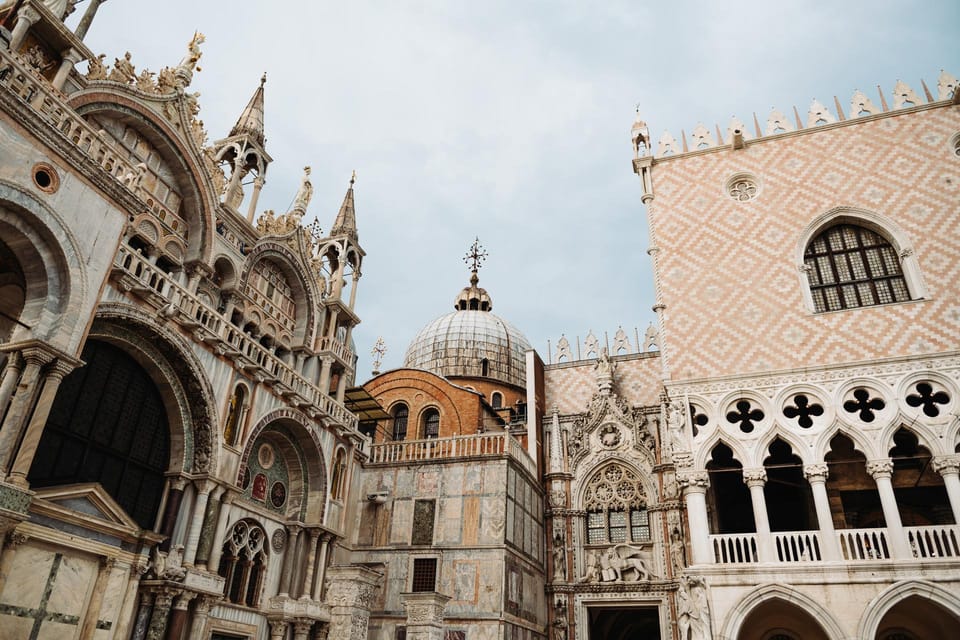
Your meeting point is in St Mark’s Square at the Museo Correr. You’ll meet under the portico just outside the entrance, and your guide holds a green Walks sign. The instructions are simple: arrive 15 minutes early, and you’ll be with the group before you hit the first interior.
Practical note: St Mark’s Square can be a maze, especially late. If you’re coming from a hotel outside the center, I’d give yourself extra time to get there. You’ll be walking later, so arriving calm helps you enjoy the first room rather than clock-watch.
Also, this tour has no hotel pickup. That’s normal for Venice, but it means you control your start time and route—use that to your advantage. If you can, go earlier to do a quick look at the square in daylight, then return at evening with fresh energy.
Doge’s Palace: apartments, councils, armory, and the prisons
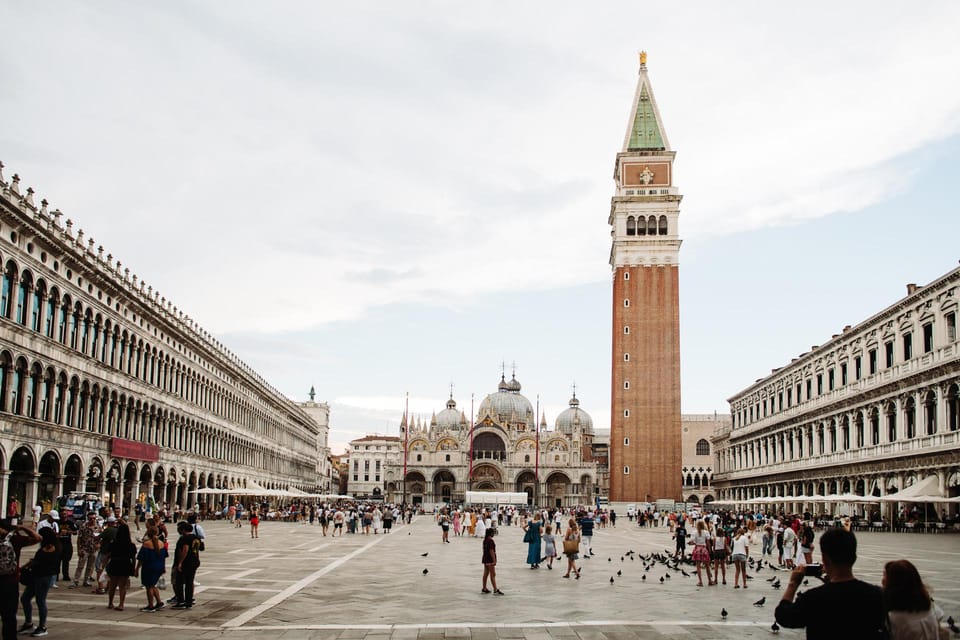
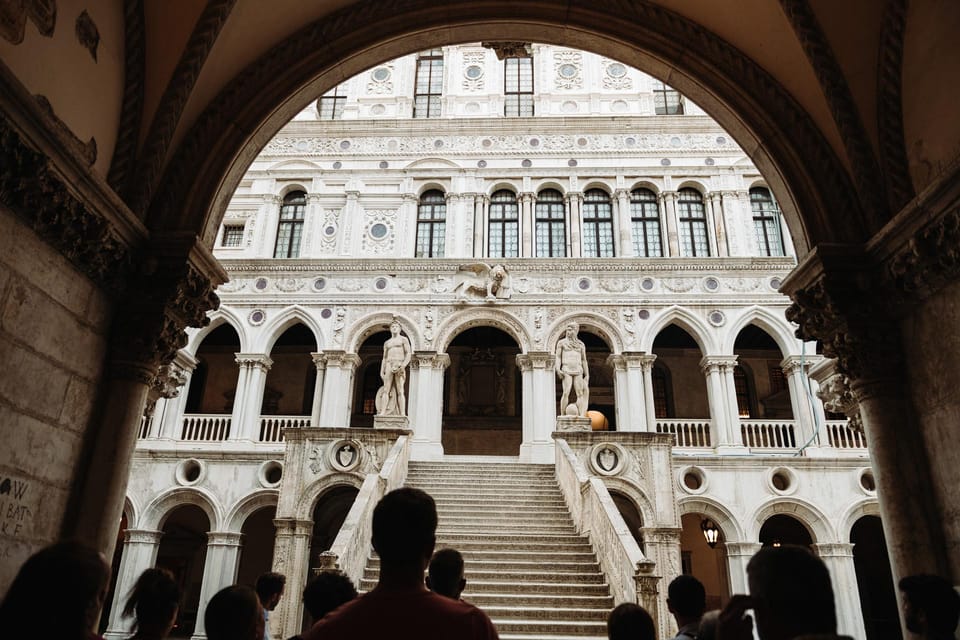
The Doge’s Palace is one of the few places in Venice where power is built into the walls. On this tour, you see it in a smart order that helps the story click.
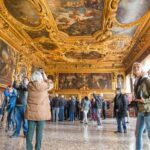
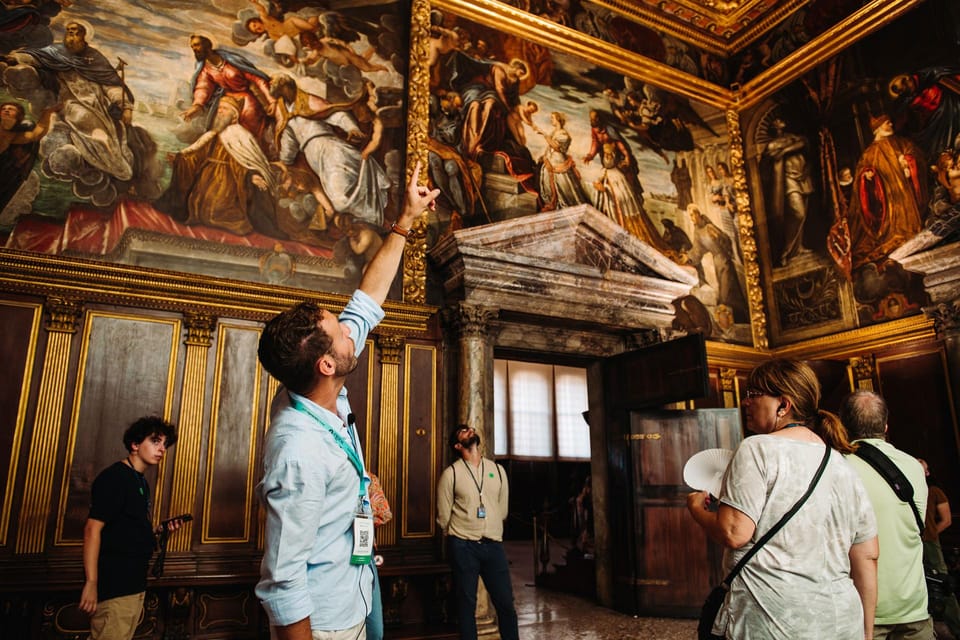
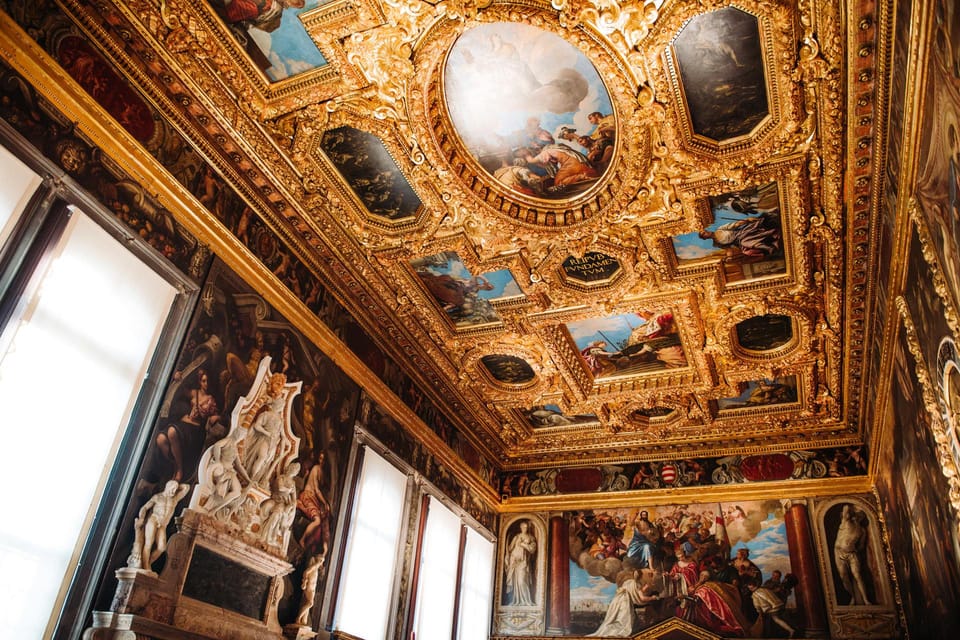
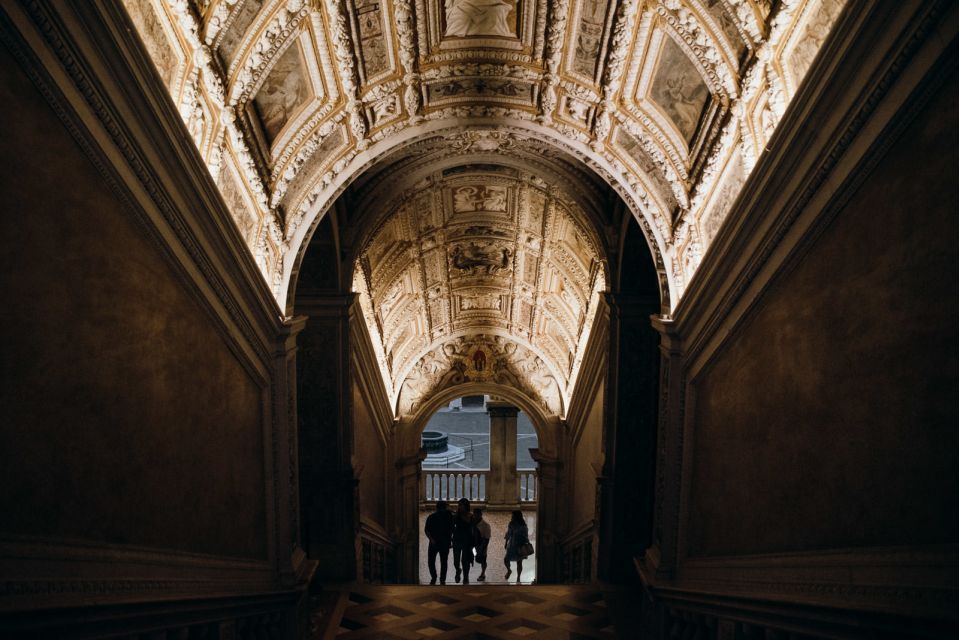
You begin with the parts that explain how rule worked: the sumptuous apartments and meeting halls of the Venetian rulers, plus the Hall of the Great Council. This is where the Republic flexes its artistic muscles. You get to see frescoes by Veronese and Tintoretto, and your guide ties those images to the dukes and their political world.
One of the most memorable kinds of details your guide is likely to share is how art functioned as messaging. For example, you’ll hear why one doge in the painted series is marked with a black veil—the kind of clue that’s easy to miss when you’re staring at the ceiling instead of the story behind it.
Then the mood shifts. After the grand spaces, you move into the darker side of state control: the massive armory and the new prisons. This is where the palace stops feeling like a museum and starts feeling like a system. Even if you’re not a “prison person,” these rooms help you understand why the Bridge of Sighs exists at all.
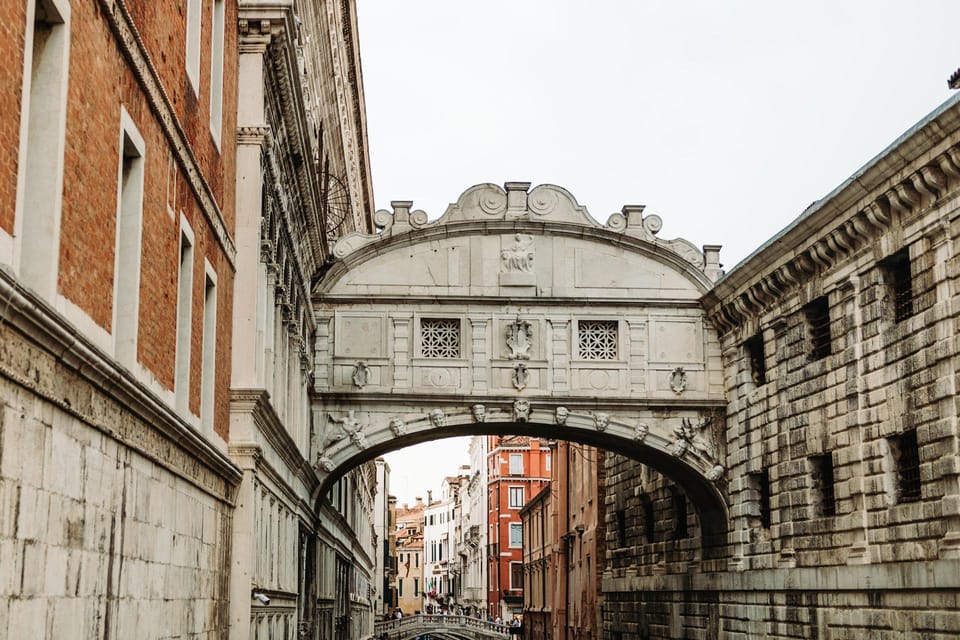
The Bridge of Sighs from inside: less romantic, more real
The Bridge of Sighs is famous for a reason. But it’s also famous for the wrong reasons—because many people expect a postcard moment.
On this tour, you cross it from the inside. That matters. You’re not looking at it from one angle and guessing at meaning. You’re inside the route, hearing why it’s not quite as romantic as the name suggests. Your guide connects it to the flow of prisoners through the palace complex, which puts the bridge in context: less love poem, more history lesson written in stone.
If you’ve only seen the bridge from street level, this angle can feel like seeing a painting in a frame instead of through glass. You understand where the route starts, where it goes, and why it’s built the way it is.
St Mark’s Basilica after closing: lights, mosaics, and quiet awe
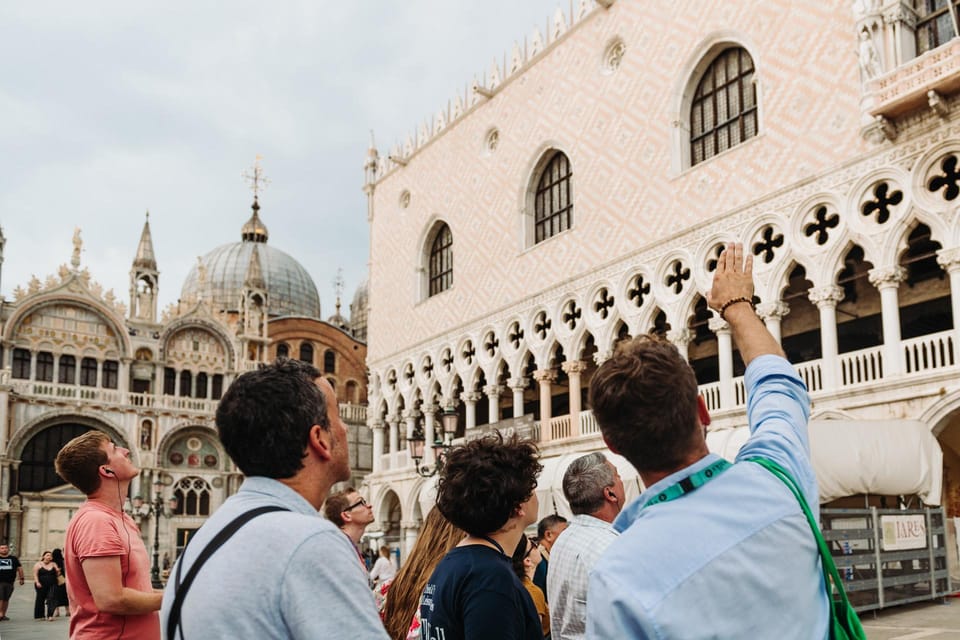
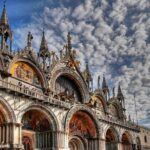
Then comes the payoff: St Mark’s Basilica after closing. This is the section of the tour where the whole city’s energy changes. The basilica becomes a different kind of venue—one where you’re not fighting your way to the front of the line.
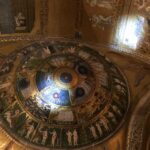
A custodian will open the doors so you can experience the basilica like a VIP would—calm, focused, and without the usual crush. Expect soft glimmer rather than harsh daytime lighting. Your guide helps you look up and see what matters: the mosaics, the gold details, and the way the space feels when fewer people are breathing the same air.
A particularly magical moment you might encounter: the basilica can feel nearly dark at first, with lighting gradually brought up so the gold mosaics “arrive” in stages. That slow reveal changes how you experience the ceilings. Instead of scanning quickly, you start noticing smaller details because you aren’t being pushed along.
And yes, it’s emotional. The basilica is dramatic at any hour, but at night it feels less like sightseeing and more like witnessing.



Pala d’Oro and the crypt: what to look for
Two parts of St Mark’s are worth planning for: the Pala d’Oro and the crypt.
The tour includes time to look at the Pala d’Oro altarpiece without the crowds. That’s a big deal. During the day, the altarpiece can turn into a stop where you see a blur and move on. Here, you can actually study the gemstones and how the goldwork carries the light. If you love details, you’ll be in your happy place.
Then there’s the crypt, where the bones of St Mark are said to be kept. Even if you don’t go in with deep religious background, the crypt is still one of the most meaningful places in the basilica complex. It anchors the art and architecture to a story older than the city’s tourist habit.
Your guide also connects Venetian art and history to what you’re seeing. That’s useful because St Mark’s can otherwise feel like a glorious jumble of styles. With the right explanations, the basilica feels more like a statement—about identity, power, and belief—than a random collection of beauty.
Pace, timing, and the built-in break between sites
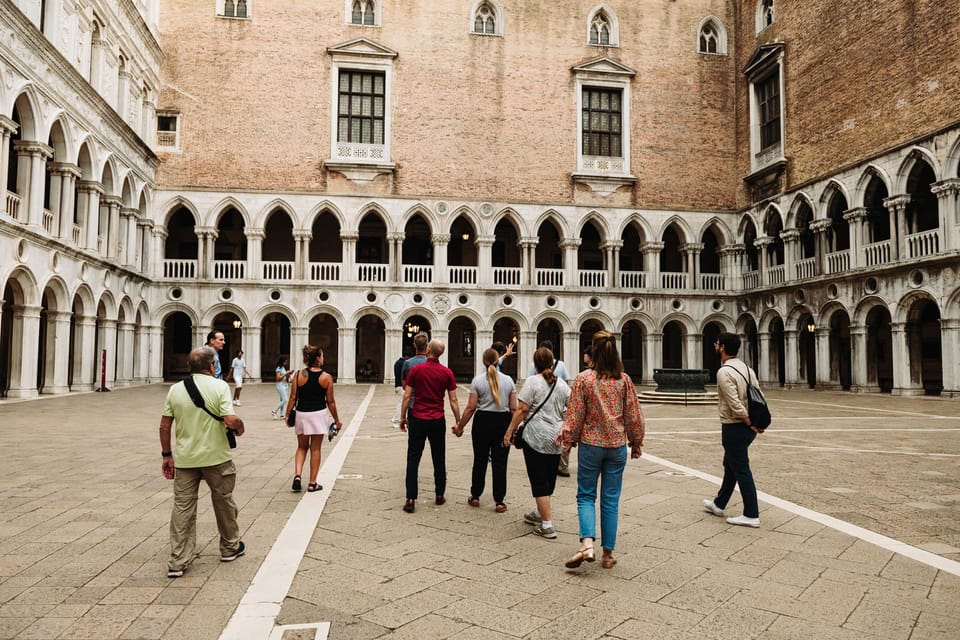
The tour lasts about 3.5 hours, but the biggest timing factor is what happens between the palace and the basilica. There can be a break of up to 1.5 hours between stops, so don’t schedule something tight right after you finish the palace portion.
I recommend planning one of two ways:
- If you’re hungry, eat before you go into the palace, then use the break to grab a simple dinner nearby.
- If you’re not hungry, use the time to rest your feet and walk off the first big chunk of St Mark’s Square.
This structure helps you avoid a common Venice problem: moving at full speed from one major site to the next until your eyes glaze over. It also makes the after-hours portion feel earned.
Price and value: is $157.47 worth it?
At about $157.47 per person, this is not a cheap Venice “add-on.” But it’s also not just paying for a ticket. You’re paying for three things that are hard to buy any other way in St Mark’s orbit:
1) After-hours access to St Mark’s Basilica
That’s the biggest cost driver. The basilica is the kind of place where crowds shape the entire experience. When you remove that pressure, the architecture actually gets to speak.
2) A guided story route through the Doge’s Palace
Doge’s Palace is packed with rooms that look impressive but can be confusing if you’re reading nothing and hearing nothing. A skilled guide turns names, artworks, and political rituals into a narrative you can remember.
3) Less time wasted standing
You’re skipping the ticket line and moving with a group that’s meant to be more efficient. In a city where your day can be eaten by lines, that matters.
If you’re the type of visitor who likes photos but also likes context—this price tends to feel fair. If you only want a quick overview and you’d rather roam solo with a standard ticket, you can spend less. But if you want Venice’s two most iconic spaces at a calm hour, this format is one of the best value moves you can make.
What to wear and bring (so you don’t get stopped)
Venice does have rules, and St Mark’s has religious dress requirements. Keep it simple and you’ll be fine.
Bring:
- Comfortable shoes
- Long pants
- A long-sleeved shirt
- A scarf or shawl helps cover shoulders and knees
Not allowed:
- Luggage or large bags
- Shorts
- Sleeveless shirts
Also, this is a walking tour with a moderate pace. If you’re okay with walking for a few hours, you’re the target audience. If you’re dealing with mobility limits, you’ll likely need a different option.
One more reality check: sites can sometimes be affected by holy observances and high tides or flooding. Adjustments can happen for safety, and access can sometimes be restricted by private events. It’s rare, but Venice isn’t predictable like a theme park. I’d go in with flexibility.
Who should book this VIP after-hours tour
This tour fits best if you check a few boxes:
- You want St Mark’s Basilica with real breathing room, not a squeeze-and-go crowd sprint.
- You care about why the Doge’s Palace looks the way it does, and what its spaces were used for.
- You like guides who tell the story with humor and context. In recent groups, guides such as Roberta, Elena, Giulia, Pamela, Nico B, Susan, Laura, Mosè, and Ione have been praised for making history easy to follow and fun to listen to.
- You’re traveling in a small-group comfort zone. Reviews point to groups that can be around a couple dozen, which is exactly the size where you can hear the guide and still look at the art.
If you’re traveling with limited time and you’re only doing one major guided experience, this is a strong candidate.
Should you book this tour or skip it?
Book it if you want Venice in its best light: inside St Mark’s when the crowds are gone and inside the Doge’s Palace with stories that make the politics make sense. The after-hours access is the big reason to choose this over a daytime ticket.
Consider skipping if you’re on a tight budget and you don’t care much about guided context. Also skip if you can’t meet the dress expectations or walking pace.
My practical verdict: if you can afford it and you’re willing to dress appropriately, this is one of the easiest ways to turn two “must-see” icons into a genuinely memorable evening.
FAQ
Where do I meet the guide?
You meet at the Museo Correr in Piazza San Marco. The guide stands under the portico just outside the museum entrance, holding a green Walks sign. Arrive about 15 minutes early.
What’s included in the price?
The tour includes entry to St Mark’s Basilica after closing, entry to the Doge’s Palace, and a live English guide.
How long is the tour?
The duration is listed as about 3.5 hours. Starting times vary, so check availability for the exact slot.
Is the tour in English?
Yes, the tour is in English.
Do I need to follow a dress code for St Mark’s Basilica?
Yes. You must cover your shoulders and knees. A scarf or shawl is acceptable. Shorts and sleeveless shirts are not allowed.
Is this tour suitable for wheelchair users?
No. It is not suitable for wheelchairs or for guests with mobility impairments (and it’s also not suitable for strollers).