REVIEW · VENICE
Verona City Sightseeing Walking Tour of Must-See Sites with Local Guide
Book on Viator →Operated by Private Tours of Venice · Bookable on Viator
Verona’s top sights in a calm, guided loop. This 2-hour walking tour lines up the city’s big landmarks in a practical route, with an English-speaking local guide who adds human details and neighborhood atmosphere. I especially like the low-stress format—you’re not wrestling with maps while you try to enjoy Verona.
I also enjoy how the tour doesn’t just stop at monuments. You get the feel of historic squares like Piazza delle Erbe, plus the Romeo-and-Juliet connection with a visit to the balcony that inspired the story. The one thing to consider: some people found the commentary hard to hear or wanted more nonstop detail, so if you’re the type who loves lots of explanations, aim to stay close to your guide.
In This Review
- Key things you’ll notice on this Verona walk
- Verona in Two Hours: why this pacing feels right
- Where the route starts: Piazza Bra and the Arena atmosphere
- Piazza Bra to Piazza delle Erbe: from big monument to human-scale square
- Dante’s Square (Piazza dei Signori): the mood shifts—and so does the story
- Romeo and Juliet balcony: the legend with a real-city setting
- The guide makes (or breaks) the experience
- Value check: is $43.54 a good deal for Verona?
- Who should book this tour (and who might pass)
- Practical tips before you leave Piazza Bra
- Should you book this Verona walking tour?
- FAQ
- How long is the Verona city sightseeing walking tour?
- What language is the tour offered in?
- Where does the tour start?
- Is food included in the tour price?
- Does the tour include a local guide?
- Are the main stops free to visit?
- How big is the group?
- What if the weather is bad?
- Can I get a refund if I cancel?
Key things you’ll notice on this Verona walk
- Small group (max 10) keeps it easier to follow and ask questions
- English local guide adds context beyond what you see on the street
- Piazza Bra first gives you a strong starting point in the city center
- Piazza delle Erbe (30 minutes) focuses time on one of Verona’s most distinctive squares
- Dante’s Square plus nearby sights adds variety without long detours
- Romeo-and-Juliet balcony stop brings the myth back to the real city
Verona in Two Hours: why this pacing feels right
A good first outing in Verona should do two jobs: help you get oriented fast, and give you enough story to make later wandering more rewarding. This tour is built for that. You’re walking an intentional route, hitting major squares and key landmarks without turning the day into a logistics project.
The duration (about 2 hours) matters because Verona is compact, but easy to overdo if you plan too much. With a guide setting the rhythm, you can spend your energy on the architecture, the street life, and the little “wait—what is that?” moments.
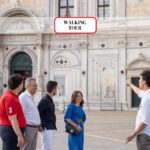
Because it’s designed as an outdoor walking tour with a small maximum group size, it’s also usually easier to keep track of where you should be and who you should be listening to. That becomes important in historic centers, where streets get narrow and signage can be surprisingly subtle.
You can also read our reviews of more walking tours in Venice
Where the route starts: Piazza Bra and the Arena atmosphere
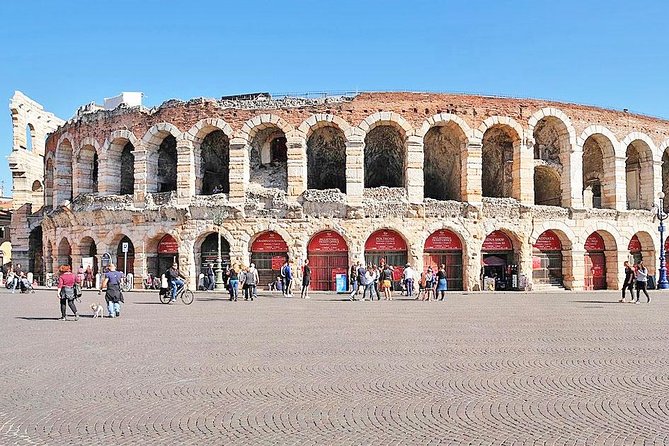
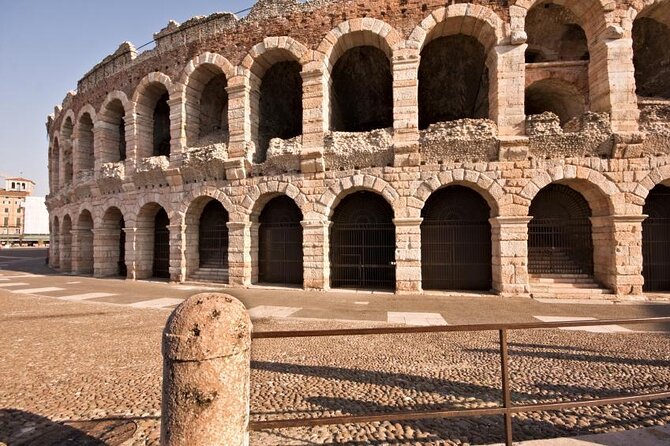
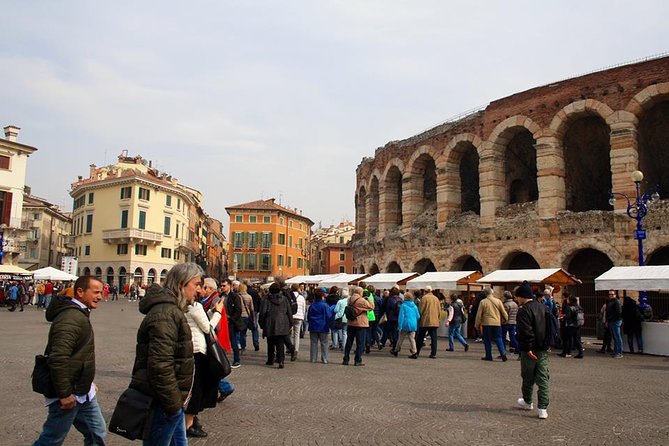
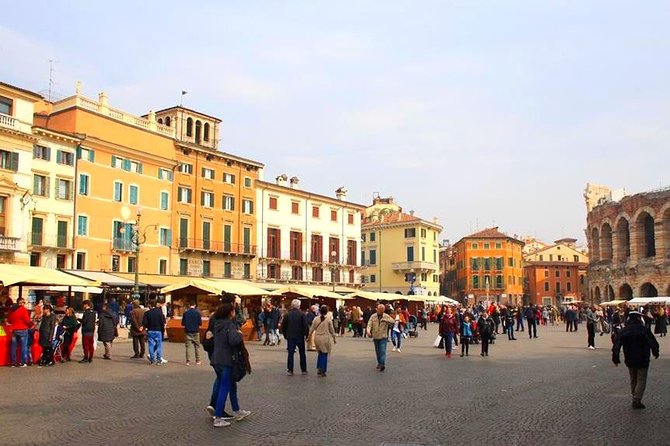
You begin at Farmacia Internazionale on Piazza Bra (Piazza Bra 28, 37121 Verona). Piazza Bra is the city’s central pulse point—wide-open compared with many of the side streets you’ll see later. Starting here makes sense: you anchor yourself in the big visual landmarks first, then you can enjoy the smaller squares as transitions rather than surprises.
From there, the walking route focuses on the area around the famous and largest amphitheatre of Italy. You’ll also pass the ancient palace that serves today as the headquarters of the Austrian Civic Guard and the Town Hall. Even if you don’t know the names ahead of time, seeing these kinds of buildings close up helps you understand how Verona has shifted roles over centuries—public space, government space, and cultural space all layered into one city center.
One practical note: one guide is described as being hard to spot unless you know exactly what you’re looking for. If you’re meeting at Piazza Bra, give yourself a minute to scan the group and the guide’s identifying sign so you don’t waste time circling.
Piazza Bra to Piazza delle Erbe: from big monument to human-scale square
After the opening square, you move to Piazza delle Erbe, one of the most distinctive meeting points in Italy. This stop is longer—about 30 minutes—because the place rewards slow looking.
Here’s what makes it special: the square feels like a visual collage where statues, palaces, and architectural pieces from different eras stack on top of each other. That’s exactly the kind of “on the spot” experience that’s hard to recreate on your own, because you’d need either serious reading time or lots of chances to accidentally stumble across the right viewpoints.
In a guided setting, you get a framework for what you’re seeing. The guide can point out relationships between the buildings and how the square works as a public stage. That’s also why this stop helps later. Once you understand what Piazza delle Erbe is doing visually, you’ll start noticing similar patterns across the rest of the city.
A quick realism check: this part of the walk can be busy. The advantage of having a guide is that you spend less time figuring out where to stand and more time actually taking it in.
Dante’s Square (Piazza dei Signori): the mood shifts—and so does the story
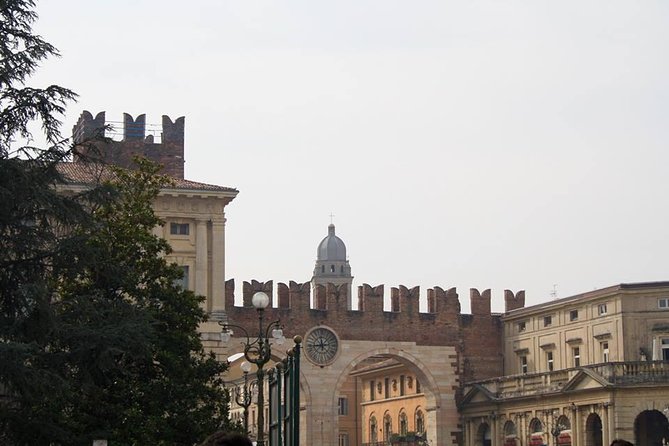
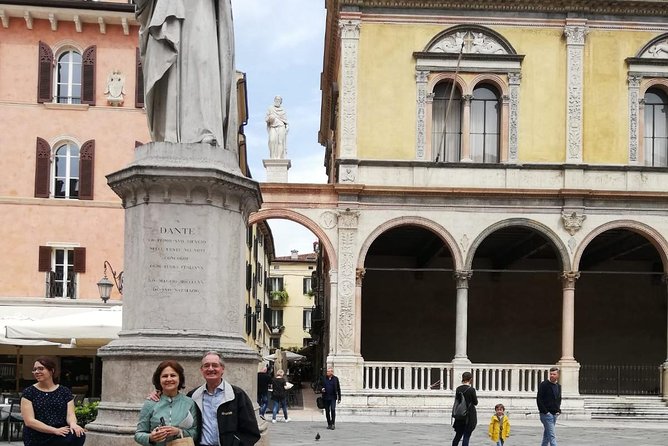
Next comes Piazza dei Signori, also known as Dante’s Square. This is a shorter stop at about 15 minutes, which is about right. It’s one of those places where you don’t need a long lecture to appreciate the atmosphere.
What anchors the stop is the mix of landmark meaning and physical details. You’ll see the graves of the Lords of Verona, which gives the square a more solemn tone than a typical shopping or sightseeing plaza. In practice, it’s a helpful pacing change after the more energetic feel of the earlier stops.
For me, this is the part of the tour where the guide’s style matters most. If your guide is chatty, you’ll hear the “why” behind the space. If your guide is more reserved, you still get enough time to look, notice, and connect the dots without feeling rushed.
Romeo and Juliet balcony: the legend with a real-city setting
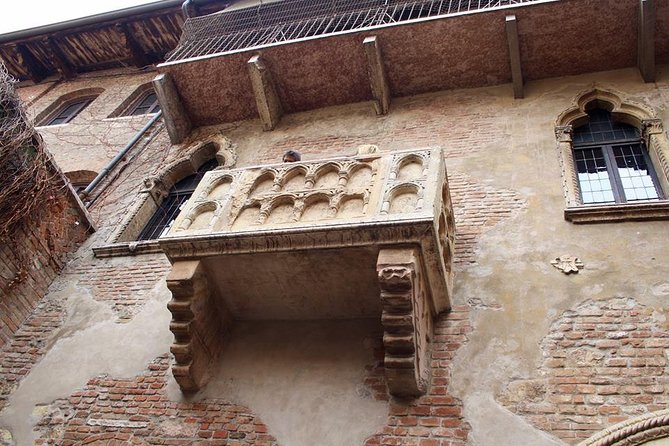
One of the highlights is the chance to visit the balcony inspired by Romeo and Juliet. This is the part that will pull you in even if you’re not a Shakespeare superfan.
What I like about including it on a walking loop is that it avoids turning the experience into a single-photo stop. Instead, it’s placed inside a broader city tour, so the balcony feels less like a theme-park moment and more like a symbol Verona uses to market—and remember—its own stories.
A practical consideration: the tour data doesn’t spell out whether every single component is admission-free beyond the clearly marked free stops. So if you’re the kind of traveler who expects full access to ticketed sites as part of the package, check details before you go. The outdoor square stops are listed as admission ticket free for the main plazas, but the balcony experience may vary depending on how the tour is set up.
You can also read our reviews of more guided tours in Venice

The guide makes (or breaks) the experience
This tour stands or falls with your guide’s delivery. That’s not a complaint—it’s just truth with walking tours. When the guide is strong, the walk turns into a story you can picture, not a list of sights you forget 20 minutes later.
I’m glad the format supports that. You’re not stuck on one bus stop or one museum label. You have continuous chances for context: why a square matters, what kind of building you’re looking at, and how Verona became the Verona you see today. In particular, multiple guide names come up in customer feedback—Laura and Luisa—and they’re praised for keeping the tour engaging and easy to follow.
Still, keep expectations realistic. Some people felt there were gaps of silence while walking or that the guide didn’t answer questions about bars or extra recommendations. Others said the guide was friendly and stayed on track, even if the tone wasn’t the most high-energy.
If you want to maximize your odds of getting a great run:
- Stay fairly close to the guide for clear listening
- Ask a question early (something simple like what to focus on in your own free time)
- If you prefer extra commentary, communicate that by asking for more detail rather than just waiting
Value check: is $43.54 a good deal for Verona?
At $43.54 per person, you’re paying for three things: a local guide, a structured route through central Verona, and time saved compared with DIY planning. In a city like this—where squares are close but not always obvious—the guide time is often the biggest value driver.
Here’s how I look at the price:
- You get guided context for multiple key points in about two hours, which is the sweet spot for orientation
- You don’t have to decide what to skip, because the route is pre-selected
- You get help with meeting up and keeping the group moving
One possible downside to consider: if you were hoping for lots of ticketed interior access, the tour’s clearly listed free stops suggest that the main value is in outdoor sights plus narration. In other words, it’s a sightseeing walk with guide storytelling—not a package of paid entrances to major attractions.
A good strategy: if your “must-do” list includes specific ticketed attractions, plan those separately and treat this tour as your planning advantage and orientation tool.
Who should book this tour (and who might pass)
This is a great match if:
- You’re visiting Verona for the first time and want the essentials in one go
- You like hearing stories about how a city developed, not just what the buildings are called
- You prefer a small group over a big crowd march
- You want a route that helps you later explore on your own
It may be less ideal if:
- You need nonstop, loud narration at every step
- You want guaranteed answers to practical “where should we eat or drink?” questions (the tour data doesn’t promise restaurant planning)
- You’re expecting ticketed admissions beyond the free-listed plaza stops
One more fit detail: the tour is set as most travelers can participate, with children needing an adult. Service animals are allowed, and the meeting spot is near public transport, which helps if you’re coordinating with other parts of your day.
Practical tips before you leave Piazza Bra
A few small things make a big difference on a walking tour in Verona:
First, wear walking shoes. Even though the stops are close, you’re outdoors and moving steadily for about two hours.
Second, focus on where you’re standing. If the guide’s voice is softer in certain moments (and this came up for some visitors), being close helps a lot. If you’re hard to hear, you can miss the best stories.
Third, be ready to spot your guide at the start point. One comment mentioned difficulty finding the guide unless you look for a tall pole with VIATOR written on it. That’s not something to rely on blindly, but it’s a helpful reminder: arrive a few minutes early and don’t be shy about checking with the meeting point staff if the group looks unclear.
Should you book this Verona walking tour?
Yes, if you want an efficient introduction to central Verona with a guide who can turn squares into context. The route through Piazza Bra, Piazza delle Erbe, and Piazza dei Signori, plus the Romeo-and-Juliet balcony connection, is a smart mix of major sights and atmosphere, and the small group size makes the experience feel manageable.
I’d think twice if your dream tour is all about nonstop talking or lots of ticketed entries. This is strongest when you show up willing to walk, look, and listen—and when you treat it as your “set the stage” outing before you explore on your own.
If you’re flexible and you care about getting oriented fast, this is a solid use of your time in Verona.
FAQ
How long is the Verona city sightseeing walking tour?
It runs for about 2 hours.
What language is the tour offered in?
The tour is offered in English.
Where does the tour start?
The tour starts at Farmacia Internazionale, Piazza Bra 28, 37121 Verona VR, Italy.
Is food included in the tour price?
No. Food and drinks and lunch are not included.
Does the tour include a local guide?
Yes. The tour includes a local guide and a professional guide.
Are the main stops free to visit?
The listed plaza stops (Piazza Bra, Piazza delle Erbe, and Piazza dei Signori) are marked as admission ticket free.
How big is the group?
There is a maximum of 10 travelers.
What if the weather is bad?
The tour requires good weather. If it’s canceled due to poor weather, you’ll be offered a different date or a full refund.
Can I get a refund if I cancel?
Free cancellation is available. You can cancel up to 24 hours in advance for a full refund.