REVIEW · VENICE
Venice Walking Tour with Audioguide on Your Smartphone
Book on Viator →Operated by TouringBee · Bookable on Viator
Venice can feel like controlled chaos, but this tour helps you slow it down. You lead yourself with a smartphone audio guide that’s built for wandering, and you can pause and restart as many times as you want. I like that it gives you history and legends while you’re walking, not after you’ve tired out your feet.
The main consideration: you’ll rely on your phone for navigation. Bring headphones and expect a bit of trial-and-error if you’re off by a turn, since some people report the geolocation can lag and the route markers can be easy to miss.
This is also a smart value play at $8.42 per person for about 2 hours of narration (plus a year of access). For Venice, that’s the difference between hitting just the biggest postcard stops and actually learning what you’re looking at along the way.
In This Review
- Key points before you start
- How the smartphone audio guide actually works in Venice
- Starting point and navigation: from Calle Seconda de la Fava to the first landmark
- Piazza San Marco: Doge’s Palace, Campanile, and St. Mark’s Basilica
- Stop 1: Ponte dei Sospiri (Bridge of Sighs)
- Doge’s Palace (Palazzo Ducale)
- Campanile di San Marco (bell tower)
- Basilica di San Marco (St. Mark’s Basilica)
- Piazzas with coffee history: Caffè Florian and Procuratie
- Caffè Florian
- Procuratie Vecchie (and the surrounding ensemble)
- Torre dell’Orologio and a surprising detour: casino and then Rialto
- Torre dell’Orologio
- Casino di Venezia
- Ponte di Rialto
- Canal Grande, Rialto markets, and local life stops
- Canal Grande
- Campo San Giacomo di Rialto
- Il Gobbo di Rialto
- Mercato di Rialto
- Ca’ d’Oro and San Cassiano: art and architecture at a calmer pace
- Ca’ d’Oro (Golden House)
- Chiesa di San Cassiano
- Ponte delle Tette and Basilica dei Frari: a more intriguing ending
- Ponte delle Tette
- Basilica dei Frari
- Price and value: what $8.42 buys you (and what it doesn’t)
- What I’d do to make the route feel smooth
- Should you book this self-guided Venice walking tour?
- FAQ
- How long is the Venice Walking Tour with Audioguide?
- What’s the price per person?
- Is the tour self-guided or do I meet a human guide?
- What language is the audio guide available in?
- Do I need to bring headphones?
- Can I pause the tour and continue later?
- Do I need an internet connection?
- Are entrance tickets included for the sights?
- Where does the tour start and end?
- Does the tour include audio recordings for multiple landmarks?
Key points before you start
- Offline map + route guidance: you follow a planned path inside the app instead of trying to decode Venice streets from memory
- 25 audio recordings: short segments tied to specific landmarks so you’re not stuck listening to long chapters
- Illustrations to recognize places: helpful in Venice, where a building can look the same until you get closer
- Designed for breaks: the tour is easy to spread over several days, not just one sprint
- Smartphone-only setup: no human guide, so you control timing, pace, and how long you linger
- Max 20 travelers (self-guided): small group pressure is removed, but this does signal the tour isn’t meant to be a huge mob moment
How the smartphone audio guide actually works in Venice
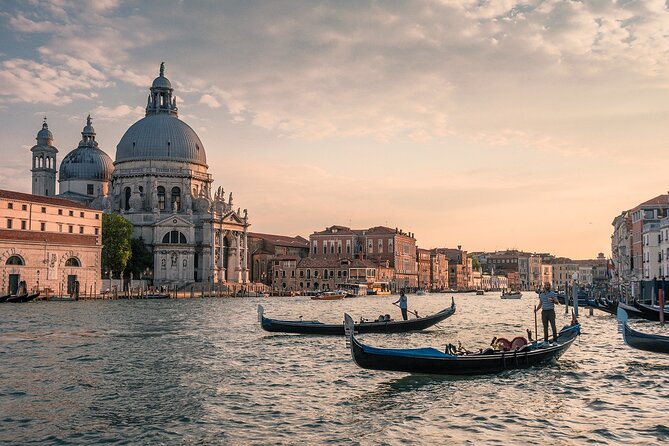
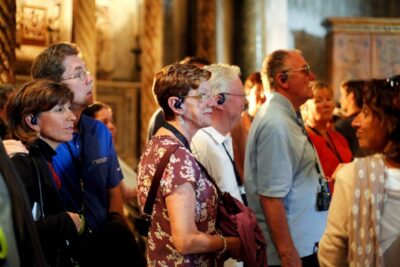
This is a self-guided walking tour using an iPhone or Android app. You download the audio guide, activate your purchase, and then follow the route on the app map. There’s no human guide waiting for you, which is why you’ll want to start with a charged phone and working headphones.
The guide includes an offline map with the route, which is a big deal in Venice where cell service can be spotty. It also includes illustrations meant to help you visually confirm you’re standing at the right landmark before you press play. You get 25 audio recordings covering sights, history, and traditions, and you keep 1 year of access in your language choice (English is offered here).
You can stop, restart, and continue later. That matters because Venice rewards slow choices—long photo stops, coffee breaks in piazzas, and detours when you spot a church doorway worth a peek.
You can also read our reviews of more walking tours in Venice


Starting point and navigation: from Calle Seconda de la Fava to the first landmark
The meeting point is Calle Seconda de la Fava, 4196, 30122 Venezia VE. The tour ends back at the meeting point, but you’ll effectively be “on your own route” the entire time, listening and walking between stops.
One practical thing to note: the meeting address doesn’t always feel like it matches where the first listening moment lands. In other words, you may have a short walk to your first official stop area around central sights near Piazza San Marco. That’s normal for Venice tours, but it’s worth planning for if you’re trying to minimize walking before you even start listening.
Tip for smooth navigation: use your app map early, then once you’re at a landmark, match it to the illustration in the guide. If you skip a stop in the middle of the route, it can feel annoying trying to catch up. My advice is simple—when you’re unsure, pause and check the map rather than guessing. Venice streets will happily trick you into thinking you’re still on the right side of the canal.
Also, bring your own headphones. They’re not included, and you’ll be hard-pressed to hear audio clearly in outdoor noise.
Piazza San Marco: Doge’s Palace, Campanile, and St. Mark’s Basilica
This tour’s spine runs through the St. Mark’s area first, where Venice stops looking like a city and starts looking like a stage set.
Stop 1: Ponte dei Sospiri (Bridge of Sighs)
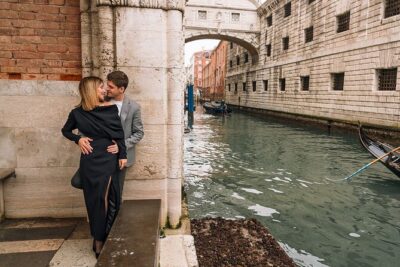
You start at Ponte dei Sospiri, the Bridge of Sighs connecting the Doge’s Palace to the New Prison. It’s famous for its stone detail, and the audio adds the legend angle—sighs allegedly heard from prisoners heading toward their fate. If you’re going for atmosphere, this is a great opener. It’s also an easy spot for quick photos because the bridge frames well against the surrounding canal view.
Doge’s Palace (Palazzo Ducale)
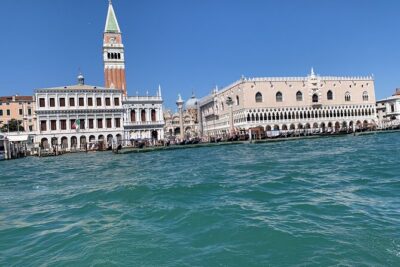
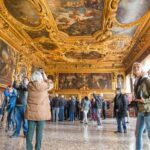
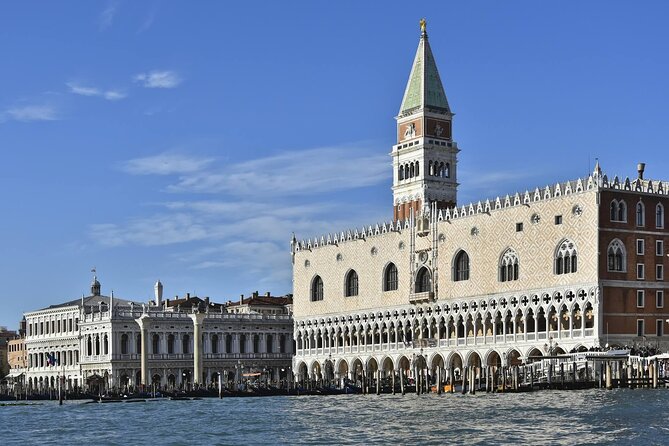
Next is Palazzo Ducale, the Doge’s Palace, with its Gothic architecture and an emphasis on power and art. The guide points you to its opulent interiors (including works attributed to artists like Tintoretto and Veronese) and the famous Bridge of Sighs crossing from the palace side.
Here’s the practical side: entrance fees aren’t included. So you can enjoy the palace area and exterior views with the audio, but if you want the full interior experience, you’ll need separate tickets. If you do plan to enter, do it with your eyes open: this tour gives context, but it doesn’t replace buying admissions.
You can also read our reviews of more tours and experiences in Venice




Campanile di San Marco (bell tower)
From there, you reach the Campanile di San Marco in Piazza San Marco. The audio focuses on the tower’s identity and the view payoff—climb if you want city and lagoon panoramas. It also calls out the bronze Moors striking the hours, which is one of those Venice details you’d otherwise miss even while standing in the square.
Again: tickets for climbs aren’t included, so treat this as a listening-and-looking stop unless you’ve planned for tower access.
Basilica di San Marco (St. Mark’s Basilica)
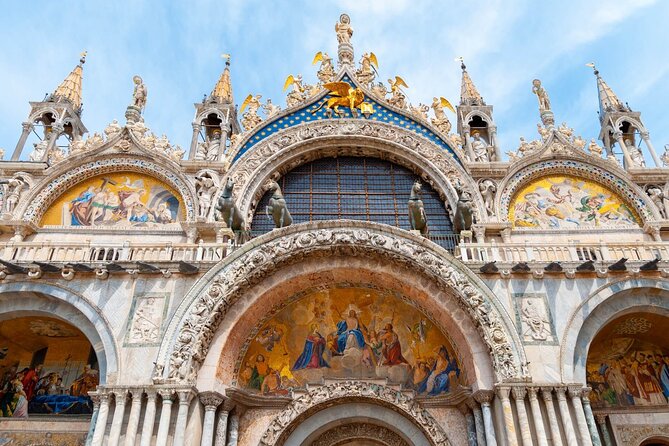
Then comes the big one: Basilica di San Marco. The guide frames it as a Byzantine-style masterpiece with golden mosaics, marble façade details, and the iconic horses of St. Mark’s. You’re also guided toward how this church represents Venice’s wealth and influence—religion and politics braided together.
This is a place you’ll want time for. Even if you only do the portion you can access without a separate plan, the audio makes the interior feel less random. You’ll know what you’re looking at: not just glitter, but symbolism.
Piazzas with coffee history: Caffè Florian and Procuratie
After the cathedral-and-palace intensity, the route shifts to lighter Venice energy—still grand, but more social.
Caffè Florian
At Caffè Florian in Piazza San Marco, the audio gives you the backstory: it’s been around since 1720 and has drawn famous names over the centuries. You can step inside for a coffee, pastries, or a slow sit in the opera-lobby style that Venice does so well. This is also a useful reset point if the mornings start too fast for your feet.
Procuratie Vecchie (and the surrounding ensemble)
Then you’re at Procuratie Vecchie and the broader Piazza San Marco arcades. The guide explains their history as government-linked spaces and the way the area now functions with cafes and shops. It’s a great section for “look at the buildings while you walk” sightseeing, with less pressure to rush into entrances.
If you’re trying to avoid crowds, this is also where you can choose your rhythm. Stand, listen, then move on when you feel the square getting too busy for your personal comfort.
Torre dell’Orologio and a surprising detour: casino and then Rialto
This tour keeps bouncing between major icons and Venice’s less-obvious landmarks, which is exactly what makes it more fun than a basic checklist.
Torre dell’Orologio
At the Torre dell’Orologio (Clock Tower), you’re shown Renaissance elegance and the detail of the bronze Moors striking the hours. The big value here is the in-between time: you’re not just walking through a famous square—you’re stopping at a landmark that teaches you how Venice measured time and spectacle.
Casino di Venezia
Then the route heads to Casino di Venezia in the Palazzo Vendramin-Calergi. The guide frames it as the world’s oldest casino and points you toward the Baroque opulence. Even if you don’t gamble, it’s an interesting “Venice has multiple faces” stop, especially because it sits right on the Grand Canal view axis.
One reality check: if you’re hoping for inside access, remember admissions aren’t included. Still, the exterior setting and the historical angle give you something to actually notice.
Ponte di Rialto
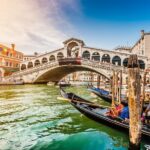
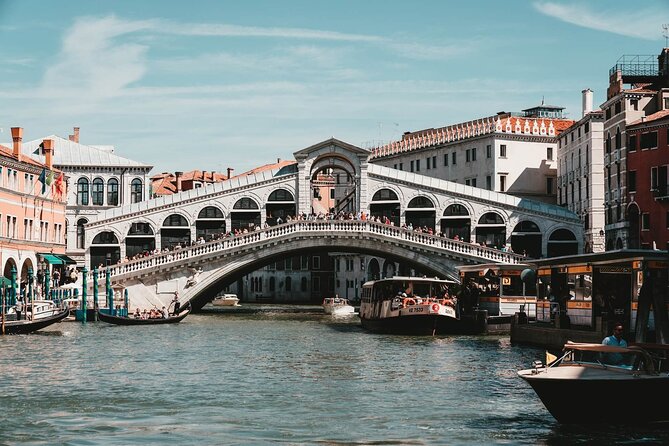
Next up is Ponte di Rialto, Venice’s signature bridge spanning the Grand Canal. The audio focuses on the views and the market atmosphere under and around it. This is one of those stops where you’ll want to pause for photos, then keep moving so the crowd energy doesn’t swallow your time.
A practical trick here: take one wide shot from the bridge, then switch to a tighter canal detail shot from the side walkways. The audio helps you connect what you see to Venice’s commerce story.
Canal Grande, Rialto markets, and local life stops
After Rialto, you get a more everyday Venice feel—water, noise, produce, and the feeling that the city is still doing the job it’s always done.
Canal Grande
At Canal Grande, the guide nudges you toward a vaporetto-style experience: use the waterway perspective to see palace rows and the Grand Canal at a grander scale. Even if you don’t do a full ride, the audio makes a static view feel like it has motion.
For timing: sunset can be stunning, but the guide doesn’t force that schedule on you. Plan around your stamina and crowds.
Campo San Giacomo di Rialto
Then you’re at Campo San Giacomo di Rialto, a lively square near the Rialto area. The audio highlights the market atmosphere, plus a nearby historic church and clock tower. This stop feels more local and less museum-like, which is a nice balance after St. Mark’s.
Il Gobbo di Rialto
The route includes Il Gobbo di Rialto, the hunchback sculpture. Here the guide plays with legend and folklore—good luck stories and theories about an old moneylender. It’s a quick stop, but it adds personality to the route, like a wink in the middle of all the marble.
Mercato di Rialto
Finally in this cluster you reach Mercato di Rialto, where fresh produce and seafood stalls make Venice sensory. The audio ties it to how the market sits with Rialto’s backdrop, so it’s not just walking past the idea of a market—it’s listening to why it matters.
This is also a smart place to slow down and actually look at what people are buying. It turns the trip from landmark hunting into city living.
Ca’ d’Oro and San Cassiano: art and architecture at a calmer pace
The tour doesn’t stay only in the loudest tourist lanes. It pushes you toward Venice’s art-and-architecture rhythm where the buildings start speaking in details.
Ca’ d’Oro (Golden House)
At Ca’ d’Oro, the guide calls out Venetian Gothic architecture and the “Golden House” facade facing the Grand Canal. It also points toward the art collection inside, which is great context if you plan to enter.
Even if you only appreciate the exterior, the audio helps you notice why this building mattered—Venice loved display, and it loved doing it with style.
Chiesa di San Cassiano
Then you get Chiesa di San Cassiano, presented as a quieter, less crowded Baroque stop. The audio emphasizes art and the calm of the interior experience, including notable altarpieces. This is the kind of church stop that makes the tour feel more complete, because it gives you a break from the biggest names without leaving you bored.
Again, entrance access can vary by day and time, and tickets aren’t included. But even knowing what to look for makes the visit more rewarding.
Ponte delle Tette and Basilica dei Frari: a more intriguing ending
The final stretch leans into Venice’s layered stories, including its not-so-clean past and its serious sacred art.
Ponte delle Tette
At Ponte delle Tette (Bridge of Breasts), the audio covers the bridge’s historic use as a boundary associated with courtesans. Today, the name and the story add intrigue to the canal setting. It’s short and memorable, and it keeps the tour from becoming only “pretty and polished.”
Basilica dei Frari
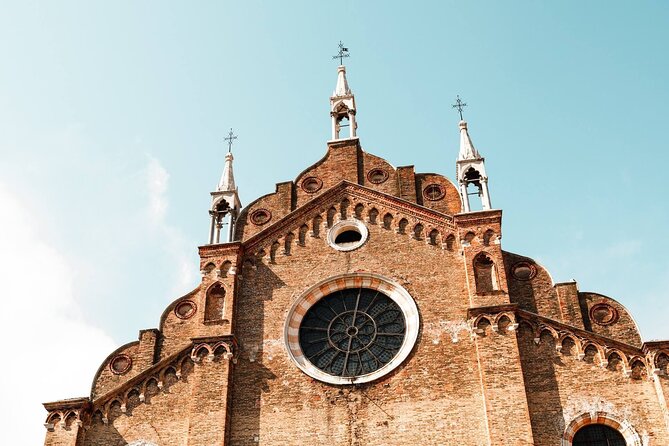
To finish, you reach Basilica dei Frari, a Gothic church with major art works highlighted by the guide—including Titian’s Assumption and Bellini’s Madonna. It also notes the vast interior and the cloisters as a quiet pause from the streets.
If you’re trying to end the route with something weighty instead of another viewpoint, this is a strong choice. It gives you a sense of Venice that isn’t just postcard geometry.
Price and value: what $8.42 buys you (and what it doesn’t)
At $8.42 per person for about 2 hours, this tour earns its value by being flexible. You’re paying for story + navigation support, not for a guide’s time and not for museum tickets.
That’s why it works especially well if:
- you like wandering without a group clock
- you want context while you walk
- you’re traveling solo or with a small group and you don’t want to stay together at someone else’s pace
- you want to spread sightseeing over multiple days using the app pause/restart idea and your year of access
What it doesn’t include: transportation, a human guide, your phone or headphones, food and drinks, and entrance fees/tickets. So if you’re planning to enter many interiors (Doge’s Palace, basilica, tower, and so on), budget separately.
What I’d do to make the route feel smooth
A few practical moves can turn this from “fine” into genuinely enjoyable.
1) Start with the app open and phone brightness up.
2) Use the illustrations to confirm landmarks before you trust the audio timing.
3) If GPS seems off, take a short moment to re-check where you are on the map. Some users report geolocation lag and an angled map view that can hide which side of a building you should be on.
4) Bring your own headphones. Outdoor listening is not a “tiny speaker” situation.
5) If you’re off-route, don’t panic-walk. Reorient using the offline map and then continue from the next reachable stop.
For the crowd-heavy areas near Rialto and Piazza San Marco, pacing matters. You’ll get more out of the audio when you can actually look at what you’re being told about.
Should you book this self-guided Venice walking tour?
If you want Venice in your own rhythm, this is an easy yes. The combination of smartphone audio, offline map routing, and 25 short landmark recordings makes it a strong value for the price, especially if you like mixing major icons with less-expected stops like Il Gobbo di Rialto, Ponte delle Tette, and the Frari finish.
I’d pass or at least go in with caution if you hate relying on your phone for navigation, or if you’re the type who gets frustrated when you miss a pinpointed stop. The route is doable, but it isn’t guided by a person who can fix mistakes on the spot.
FAQ
How long is the Venice Walking Tour with Audioguide?
It’s listed at about 2 hours.
What’s the price per person?
The price is $8.42 per person.
Is the tour self-guided or do I meet a human guide?
It’s self-guided. You’ll use a mobile app with no human guide.
What language is the audio guide available in?
The tour is offered in English.
Do I need to bring headphones?
Yes. Headphones are not included, so you’ll need to bring your own.
Can I pause the tour and continue later?
Yes. The tour is designed so you can stop and restart using the app, and you also get 1 year of access in your language.
Do I need an internet connection?
You’ll have an offline map with the route, but the guide is accessed through the smartphone app.
Are entrance tickets included for the sights?
No. Entrance fees and tickets are not included.
Where does the tour start and end?
It starts at Calle Seconda de la Fava, 4196, 30122 Venezia VE, Italy, and it ends back at the meeting point.
Does the tour include audio recordings for multiple landmarks?
Yes. The app includes 25 audio recordings covering sights, history, and traditions of Venice.