REVIEW · VENICE
Giudecca Island Discovery Tour
Book on Viator →Operated by deTourist Venice Valerio Coppo · Bookable on Viator
Venice, minus the postcard crowds. A Giudecca Island Discovery Tour lets you slow down in the Venetian Lagoon and learn why this island matters, from 9th-century exile to today’s art-and-maker spaces. I especially like the small-group format (max 10) and the way the guide weaves place names, buildings, and human stories into a walk that actually feels like you understand what you’re seeing.
One possible drawback: Giudecca can feel cool and windy, especially in shade and near the water, so you’ll want a light layer even when Venice feels warm.
If you like Venice history, but not the usual St. Mark’s rush, this tour is a smart fit. You’ll get a clear sense of how Giudecca changed over time—aristocratic exile first, then industry, and now an artist-friendly rhythm that most first-time visitors miss.
In This Review
- Key things that make this Giudecca tour worth it
- Price and what $163.64 buys you
- Meeting at Zattere: the real meaning of Giudecca
- Fondamenta Sant’Eufemia: a Veneto-Byzantine church with a lion-martyr
- Hilton Molino Stucky: from flour and pasta to a luxury hotel
- Fondamenta de le Convertite: punishment, markets, and the island’s hidden corners
- Artisti Artigiani del Chiostro (Ex Convento Santissimi Cosma e Damiano)
- Teatro Junghans: when a glass factory became housing and theatre
- Chiesa del Santissimo Redentore: Palladio’s plague vow and the pontoon bridge ritual
- Villa Heriot and the endgame views: lagoon light all the way to Casa dei Tre Oci
- Who this tour suits best
- Should you book the Giudecca Island Discovery Tour?
- FAQ
- How long is the Giudecca Island Discovery Tour?
- What does the $163.64 price include, and what’s not included?
- How big is the group?
- Where does the tour start and end?
- Is there an extra Venice access fee for day visitors?
- What is the cancellation policy?
Key things that make this Giudecca tour worth it
- Max 10 people means you can ask questions and actually hear the answers.
- Valerio Coppo leads the experience, and the tour style is story-driven, with humor and lots of backstory.
- Stop-by-stop design keeps you moving without feeling rushed, with about 15 minutes at each highlight.
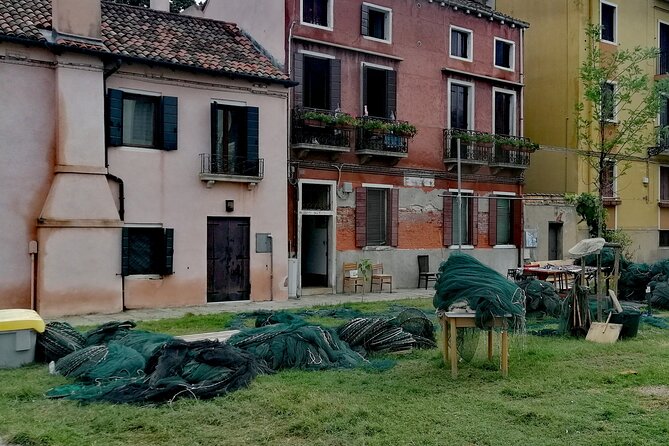
- Industry-to-art transformations show up repeatedly, from mills and factories to studios and workshops.
- Palladio’s Redentore church is a standout moment tied to the Black Death and a July pilgrimage ritual.
- Big lagoon views at the end give you the payoff: San Marco and Punta della Salute from Casa dei Tre Oci.
Price and what $163.64 buys you
At $163.64 per person for a tour that runs about 2 hours, the best way to think about value is this: you’re paying for a guide who can connect buildings, streets, and local traditions into one coherent story.
You also get practical extras that matter in Venice:
- Group discounts may apply depending on how your booking fills.
- A mobile ticket helps reduce hassle.
- The tour includes the tour leader and interpretive/nature guide, so you’re not just hearing names—you’re getting meaning.
What’s not included is the water bus ticket to Giudecca. The tour notes that tickets are purchased on board, so build in time and keep that in mind if you’re trying to run on a tight schedule.
If you’re a day visitor staying outside Venice, note the possibility of a €5 access fee on certain dates. It’s linked to Venice’s rules (with exemptions), so it’s worth checking before your tour day.
You can also read our reviews of more tours and experiences in Venice.

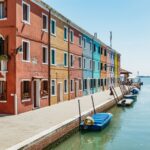
Meeting at Zattere: the real meaning of Giudecca
You start on the Venice side at Zattere (30133), which is a good choice because it puts you in the mood for lagoon time right away.
Stop 1 is more than a warm-up. The guide tackles a common misunderstanding: Giudecca’s name is often connected to a Jewish reference people expect to hear—but the tour explains it differently. You’ll learn that the name traces to a Venetian word, zudega, meaning the judged. The story goes back to the 9th century, when rebel aristocratic families were sent here.
That one lesson changes how you see the island’s later buildings. You start looking for the logic of exile, separation, work, and reinvention instead of treating Giudecca like an optional side trip.
Practical tip: since this is a lagoon crossing and a walking route, wear shoes that handle uneven surfaces. Giudecca is far more about walking comfort than museum comfort.
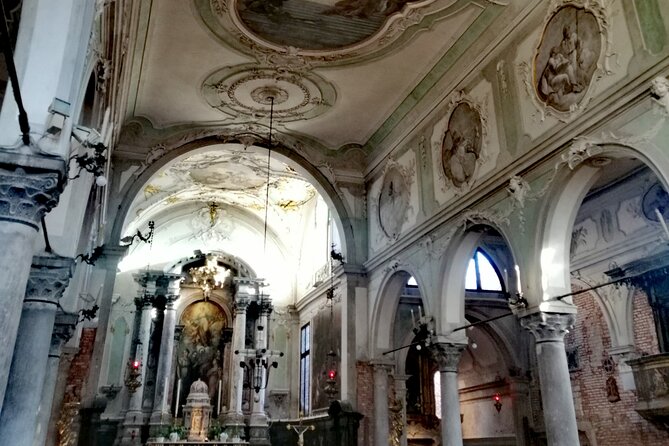
Fondamenta Sant’Eufemia: a Veneto-Byzantine church with a lion-martyr
Next you move to Fondamenta Sant’Eufemia for Stop 2: an AD 890 church structure with a simple Veneto-Byzantine layout, dated in its current form to the 14th century.
The key detail here is the dedication. The church is named after a Byzantine Christian martyr whose story includes being thrown to hungry lions. In the account you’ll hear, the martyr is described in terms of refusing to lose her holy virgin flesh—even when the lions bite off her hand.
This is the kind of stop that doesn’t feel like random trivia when your guide connects it to local identity. You see how faith stories shaped the names you hear along the water.
Why it’s valuable: churches in Venice can look similar at a glance. Here, the guide gives you a reason to notice specific structure and naming details instead of just admiring the facade.
Hilton Molino Stucky: from flour and pasta to a luxury hotel
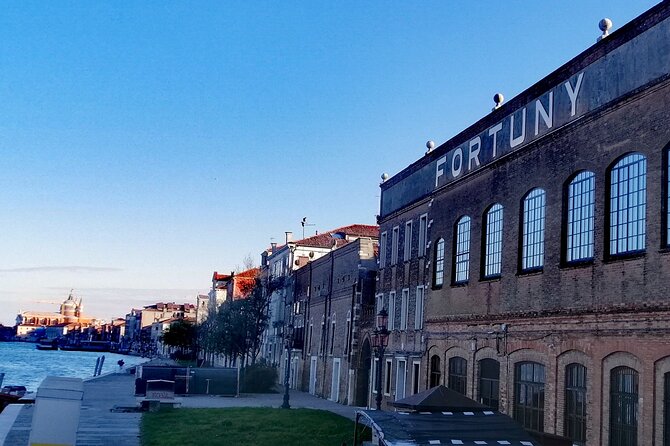
Stop 3 brings you to Hilton Molino Stucky Venice. The building is a big Neo-Gothic presence, and it’s easy to miss how much industrial history it once carried—unless you’re told.
You’ll learn that this complex served as:
- a flour mill,
- supplied across the lagoon by boats,
- and it also operated as a pasta factory.
Today, it’s known as a luxury 5-star hotel, but the tour frames it as a transformation story: water-based work became building-based preservation, and the industrial architecture remained.
What to watch for: look at the scale. This is not a “small island landmark.” This was a working node for the lagoon economy, which helps you understand why Giudecca could shift from exile island to industrial zone and still keep its distinctive character.
Fondamenta de le Convertite: punishment, markets, and the island’s hidden corners
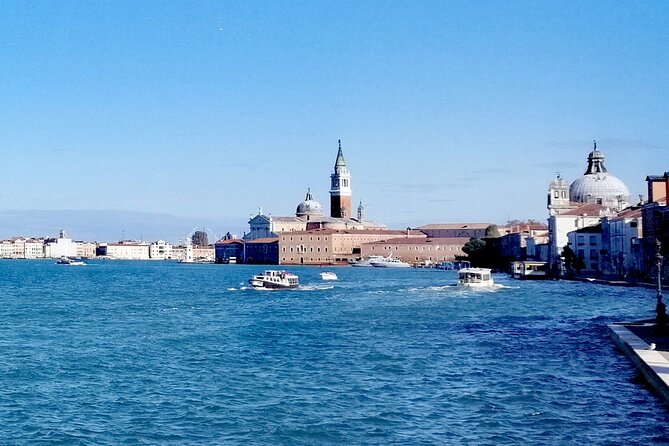
Stop 4 is Fondamenta de le Convertite, where the tour intentionally heads into a less obvious part of the island.
Here, you’ll pass an organic prison market, adjacent to a women’s correction facility.
Even if you don’t want heavy themes on vacation, this stop matters because it adds honesty. Giudecca wasn’t only romantic canals and artist lofts. It also handled the practical, difficult side of life in a city-state system.
A consideration: this stop can feel more serious than the others. If you prefer a lighter tone, know that the route includes places tied to correction and institutional history.



Artisti Artigiani del Chiostro (Ex Convento Santissimi Cosma e Damiano)
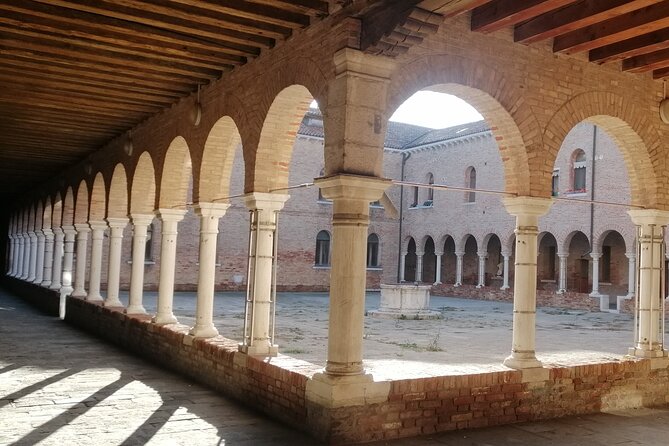
Stop 5 is where Giudecca starts to feel like a working creative place instead of a museum.
You’ll enter a former monastery, now a center for promotion of local artists and artisans of all kind: Artisti Artigiani del Chiostro – Ex Convento Santissimi Cosma e Damiano.
This is one of the reasons people love the tour. It shows the island’s current “engine.” Instead of only discussing what used to be here, the guide points out what’s still happening—craft, production, and community spaces.
What you can do with this on your own trip: after the tour, you’ll likely find it easier to understand why artists were drawn here. When rents in central Venice got out of reach, Giudecca offered something different: space and the chance to work closer to the island’s rhythms.
Teatro Junghans: when a glass factory became housing and theatre
Stop 6 is Teatro Junghans.
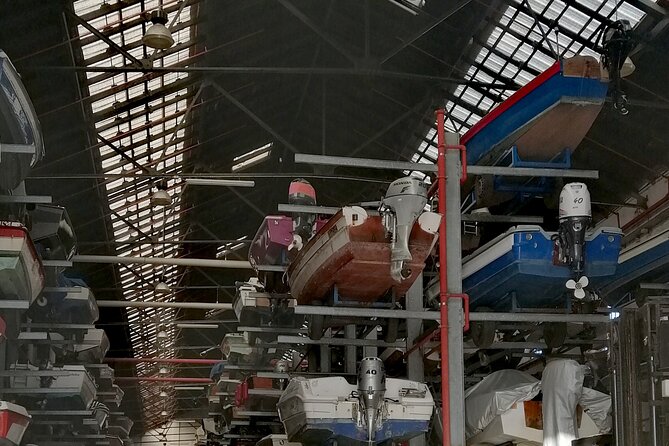
The tour explains that this site was once a glass factory and then underwent a major change:
- the factory buildings became a modern residential neighbourhood,
- and a contemporary theatre facing the southern lagoon took its place in the island’s cultural map.
This is a strong example of what makes Giudecca worth your time. You’re not just looking at old stone. You’re watching a place reinvent itself while keeping its industrial identity readable.
Practical tip: near-the-water buildings can change sound and temperature. If you’re the type who carries a scarf, you’ll be glad later.
Chiesa del Santissimo Redentore: Palladio’s plague vow and the pontoon bridge ritual
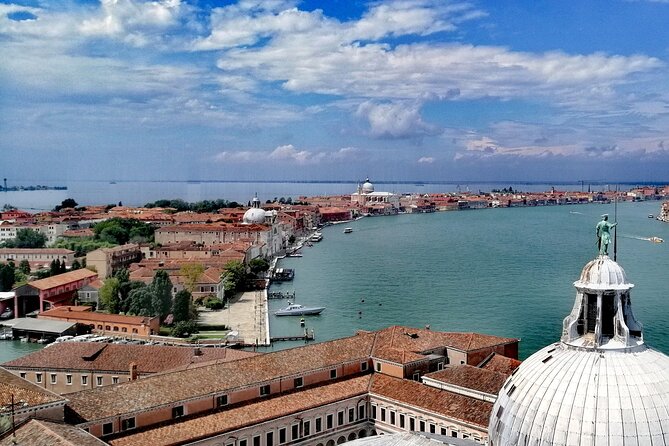
Stop 7 is the big spiritual and architectural highlight: Chiesa del Santissimo Redentore, designed by Palladio.
The tour’s framing is direct. This church was built to celebrate Venice’s deliverance from the Black Death. That matters because the story gives the building a purpose beyond aesthetics: it’s not only art on stone, it’s a civic promise made in fear—and kept through tradition.
Then comes the ritual detail. Every July, Venetians make a pilgrimage to the church across a shaky pontoon bridge from the Zattere, a tradition traced to 1578.
This stop is a “pause and look” moment. Even if you’ve seen famous Venetian churches before, this one gains weight when you understand the annual behavior it created.
If you’re visiting in summer and timing lines up: you might notice the route energy in the city. Ask your guide about what changes around the pilgrimage period.
Villa Heriot and the endgame views: lagoon light all the way to Casa dei Tre Oci
Stop 8 is Villa Heriot, an Art Nouveau villa a bit off the beaten path. The value here is twofold:
1) you get a change in architectural style from Palladio-era grandeur and factory-era structure,
2) you get breath-taking views over the southern lagoon.
Stop 9 is Casa dei Tre Oci, and this is where the tour earns its ending.
You’ll finish with scenic views that frame San Marco and Punta della Salute. Along the way you pass a palace with a distinctive neo-gothic brick facade and three peculiar arched windows.
After that, the tour ends at Le Zitelle (Fondamenta Zitelle, 33), near the Zitelle water bus stop.
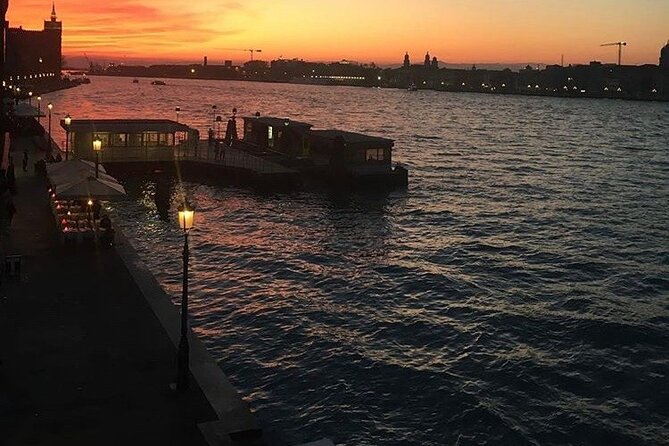
That ending matters because it gives you context for the whole day. You start to see Giudecca not as a detour, but as a vantage point—an island that helps you understand Venice’s relationship with its lagoon.
One extra note from people who’ve done the walk: Giudecca is sometimes called the isola delle foche, the island of seals. The tour data doesn’t guarantee seal sightings, but it’s a fun reason to keep an eye on the water during your lagoon-facing moments.
Who this tour suits best
This Giudecca Island Discovery Tour is especially good if you:
- have been to Venice before but haven’t explored Giudecca,
- want a guided story that explains how an island changes over centuries,
- like mixing major landmarks with lesser-seen corners,
- and appreciate small groups where questions are welcome.
It can work well for families too, as long as everyone is comfortable with a couple of hours of walking and listening. The guides (including Valerio and others on the team) are described as friendly and attentive, and that helps keep kids engaged rather than bored.
Should you book the Giudecca Island Discovery Tour?
I’d book it if your goal is a Venice you don’t get by accident. Giudecca is visible from the mainland and from passing vaporetto rides, but it’s not automatically understandable. This tour gives you a clear explanation for why the island’s buildings look the way they do—exile, industry, craft spaces, and the annual Redentore tradition tied to the Black Death.
I’d think twice only if:
- you’re very sensitive to wind and chilly shade (bring layers),
- or you want purely “pretty photo” stops with no institutional or heavier historical moments (one section touches correction and a prison-related market).
If you want your time in Venice to feel smarter, not busier, this is one of the best ways to spend a focused morning or afternoon on the lagoon.
FAQ
How long is the Giudecca Island Discovery Tour?
The tour runs for about 2 hours.
What does the $163.64 price include, and what’s not included?
The price includes the tour leader and nature/interpretive guide. The water bus ticket to Giudecca is not included, and it will be purchased on board.
How big is the group?
The tour has a maximum of 10 travelers, which helps keep it intimate.
Where does the tour start and end?
It starts at Zattere (30133 Venice) and ends at Le Zitelle (Fondamenta Zitelle, 33, 30133 Venezia VE), near the Zitelle water bus stop.
Is there an extra Venice access fee for day visitors?
On certain dates, day visitors who are staying outside Venice may need to pay a €5 access fee. Exemptions may apply, so check the Venice official guidance linked in the tour info.
What is the cancellation policy?
Free cancellation is available up to 24 hours in advance for a full refund.