REVIEW · VENICE
Ellegi Murano Glass: The Art of Tradition
Book on GetYourGuide →Operated by Ellegi Murano Glass Srl · Bookable on GetYourGuide
Watching hot glass happen is oddly addictive. This small family-run Murano glass factory gives you a front-row seat to real-time furnace work and two glass-shaping techniques explained by a live guide. I like how it’s straightforward and fun for different ages, but the short window means you may not see every detail every time, especially if the room is busy.
I also love the location. You can walk over from the main boat stop area near Faro, and it’s close to the Glass Museum and the Basilica of Santa Maria e San Donato, so it fits cleanly into a Murano day. One possible drawback to consider: if you’re counting on a specific language, confirm the session language when you book, because hearing can vary in a working workshop.
In This Review
- Key things to know before you go
- Murano glass at Ellegi: what the experience really feels like
- Getting there on Murano without stress
- What you actually see: furnace, blowing, and molding
- How the short guided tour fits your day
- The showroom and shop: turning watching into buying
- Price and value: $5 for real craft time
- Language and sound: plan for a working workshop
- Who should book Ellegi Murano Glass?
- Should you book Ellegi Murano Glass?
- FAQ
- How long is the Ellegi Murano Glass factory visit?
- What does the tour include?
- How much does it cost?
- Where do I meet for the tour?
- What languages are available for the live guide?
- Is Ellegi Murano Glass wheelchair accessible?
- Are kids free?
- Are pets allowed?
- What’s the cancellation policy and can I pay later?
Key things to know before you go
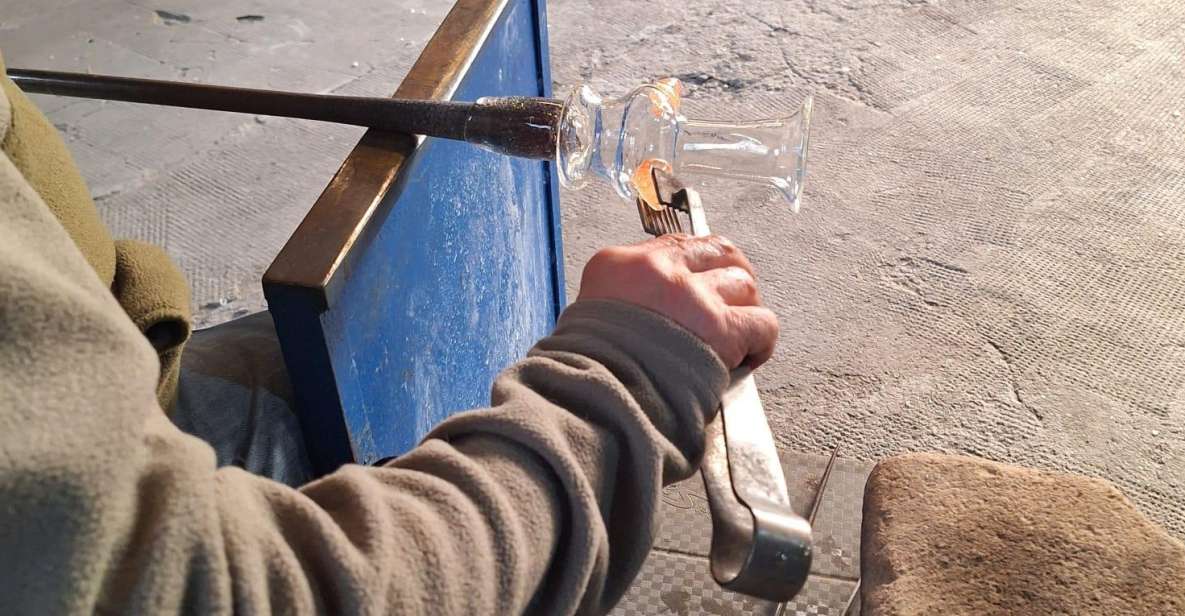
- Furnace-to-finished-piece demo: You’ll watch glass heated and shaped while it’s still hot, not just explained from afar.
- Two techniques shown: You should see both hot blown and molded glass processes, explained step-by-step.
- Easy Murano logistics: It’s a few steps from the main boat stop area, with no big architectural barriers.
- Shop is in the same area: After the demonstration, you can browse the showroom and buy handmade pieces.
- Good value for the time: At about $5 for a short, live technique demo, it’s one of the most practical add-ons on Murano.
- Family-friendly, even with pets: Kids under 15 are free, and pets are welcomed (handy if your crew runs on fur).
Murano glass at Ellegi: what the experience really feels like
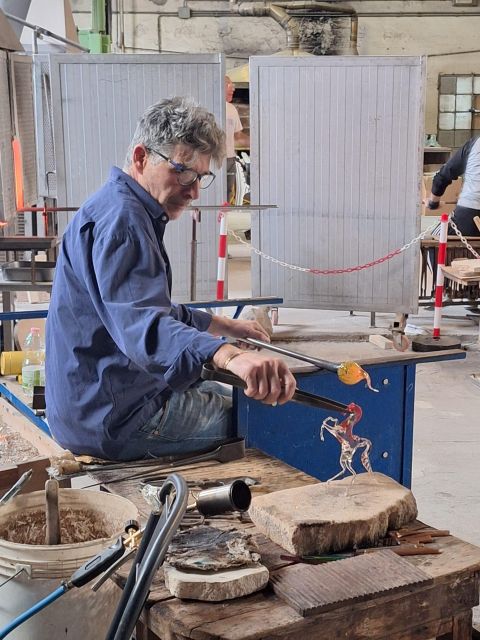
Ellegi Murano Glass is the kind of place you go to for the craft, not for a long lecture. The whole visit is centered on demonstrations: the glass comes from high-temperature heat and gets shaped in front of you, then the guide explains what you’re seeing in plain terms. The atmosphere is classic Murano workshop—working, focused, and slightly chaotic in the good way.
What makes it interesting is that you’re not just looking at glass. You’re watching the process that creates it: heat, shaping, and the quick decisions artisans have to make before the material cools. That matters because Murano glass is all about timing and control. Even a small change in temperature or handling can change the look.
The visit is designed to be short—around 15 minutes, and the experience is described as lasting about 20 minutes—so it’s doable even if your Murano schedule is packed. You’re not trapped for an hour in a slow-moving demo line. You’re in and out, and you can keep exploring the island right afterward.
You can also read our reviews of more tours and experiences in Venice.



Getting there on Murano without stress
This is one of those rare workshop stops that doesn’t punish you for having a real sightseeing plan.
Ellegi Murano Glass is just a few steps from the main boat stop area at Faro. That means you don’t need a complicated plan or a separate transfer. You can hop off the vaporetto, walk straight over, and still hit major sites nearby such as the Glass Museum and the Basilica of Santa Maria e San Donato.
If you’re using a private taxi, the company also has its own private boat pier. That’s useful if you’re traveling with older relatives, have limited walking stamina, or simply want to reduce friction between stops.
Also, access is smooth. You won’t run into big architectural barriers. The meeting point is in the factory’s internal courtyard, and above the entrance there’s a sign with the factory name. That courtyard setup is helpful because it gives you an obvious place to regroup before the demo begins.
What you actually see: furnace, blowing, and molding
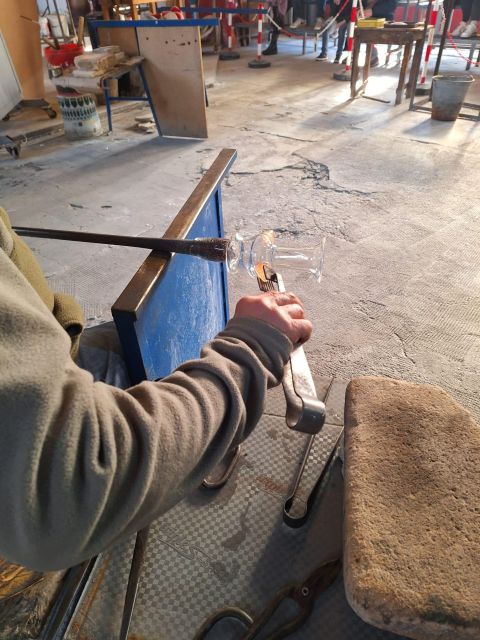
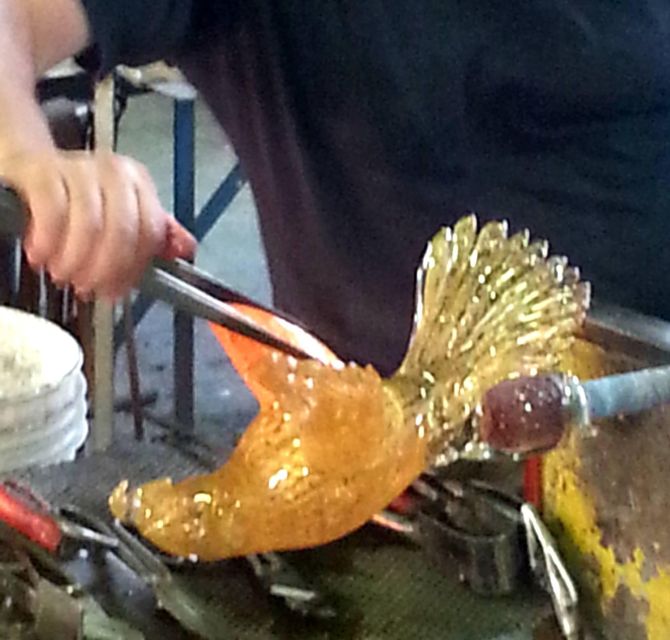
The heart of the visit is the glass processing demonstration. This isn’t a “glass is pretty, isn’t it nice” session. It’s about technique.
You should expect to see the glass extracted from high temperatures and shaped while you watch with wide-eyed amazement. You’ll likely notice two distinct approaches:
- Hot blown glass: This is about forming the glass using breath and tools as the material is still workable. You can usually tell the difference because the glass keeps its round, stretched character while it’s shaped.
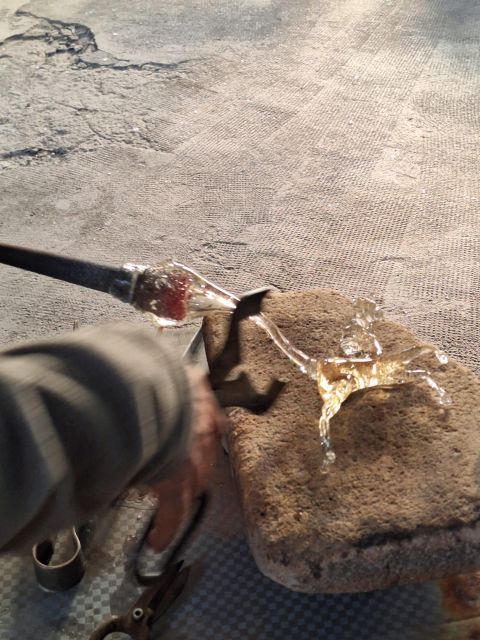
- Molded glass: This is shaping using a mold, where the artisan drives the form by working the heated glass into a predefined shape.
A live speaker explains each technique in the language required for your tour (Italian, English, Spanish, or French). The goal isn’t just to show the steps—it’s to explain why those steps matter. You’ll leave with a better sense of how Murano glass becomes objects, not just decorative patterns.
And yes, you’ll see the furnace. That’s important. Seeing the scale and heat level in real life makes the craft feel less like a myth and more like a real, skill-heavy process.
How the short guided tour fits your day
Your time on the island matters. With Ellegi, you don’t have to rearrange your whole Murano itinerary around one activity.
Because the guided tour is short (about 15 minutes, sometimes described as up to around 20), it’s a smart stop when you’re already near the main sights. A typical flow that works well:
1) Step off at the Faro area
2) Walk to Ellegi for the demo
3) Continue to nearby attractions while your schedule still has slack
This is also a good “recharge stop” if your Murano day is moving fast. Watching a demonstration gives your brain a switch in pace—less wandering, more watching and learning.
One practical consideration: short tours mean you’re unlikely to see every possible item or every stage of every craft step. The emphasis is on key techniques and the main showpieces the studio is creating. If you’re the type who wants slow, deep explanations on one single object, you might want to pair this with more time in the area’s museums or with extra browsing in the showroom afterward.
The showroom and shop: turning watching into buying
Right after the demonstration, you’re taken to the showroom area. This is where the experience becomes tangible.
The factory’s own shop sells handmade products created by skilled craftsmen, so you can connect what you saw at the furnace to what’s on display. If you’re shopping for a gift, this is one of the simplest places to do it because the pieces are directly tied to the production tradition you just watched.
Even if you don’t buy anything, the showroom is worth a look. It helps you understand scale, finish quality, and how the final piece looks compared to the early working stages.
This is also where you can check what types of items are currently being made or shown, which matters because glass styles can shift depending on what the artisans are working on at the moment.





Price and value: $5 for real craft time
At about $5 per person, Ellegi is priced like a quick, high-value add-on rather than a big-ticket attraction. The value comes from a few things you don’t always get in lower-cost activities:
- You watch real processing rather than only viewing finished items.
- You get live explanation in multiple languages.
- The location makes it easy to fit without paying for extra transport or restructuring your plan.
Of course, it’s not a long workshop class. You’re not learning to make glass yourself here. But for most people, the goal is to see how it’s done and to understand the technique with minimal fuss. For that, the price feels fair.
If you’re traveling with kids, value gets even better because children up to 15 years old are free. That can make Murano glass watching dramatically easier on your overall budget.
Language and sound: plan for a working workshop
Ellegi offers live guided tours in Italian, English, Spanish, and French, which is great on paper. In practice, a glass workshop is still a working environment—so sound can be uneven, and the group can be lively.
My advice is simple: if hearing details matters to you, choose a session time that matches your language needs and arrive a bit early so you’re not stuck at the back. Also, don’t assume every element will be equally audible. You’ll still catch the process visually, but fine details may be harder if the group is packed.
There’s another thing to keep in mind: in any small working shop, the pace can vary. Sometimes artisans and staff have to handle other responsibilities while the demo is running. That doesn’t ruin the craft experience, but it can affect how uninterrupted the commentary feels.
Who should book Ellegi Murano Glass?
Ellegi is a strong match if you want:
- a short, low-commitment Murano activity
- to see hot glass shaping without a full-day workshop
- a family-friendly experience with free admission for kids under 15
- an accessible stop that’s easy to reach from the main boat area
It’s also a smart choice if you plan to browse the Glass Museum and want something that shifts from “objects on display” to “objects in production.”
If you’re very sensitive to noise or need ultra-detailed instruction for one specific technique, you might want to treat this as a taste of the craft rather than a complete educational course. The time is short by design.
Should you book Ellegi Murano Glass?
Yes, I think you should book it if you’re doing Murano and you care about how things are made. For the low price, you’re getting furnace time, real technique, and a showroom stop—plus it’s easy to slot in near Faro and major sights.
My only “hold up” is practical: if you’re picky about language and hearing every word, confirm your session details when you book and arrive early. Also, keep expectations aligned with a short demo format. You’ll likely see the key processes, but you may not see the whole “studio day” of glassmaking.
If you want a quick, authentic Murano craft moment that doesn’t eat your afternoon, Ellegi is one of the more sensible ways to spend $5 on the island.
FAQ
How long is the Ellegi Murano Glass factory visit?
The guided experience is listed at about 15 minutes, and the demonstration is described as lasting around 20 minutes.
What does the tour include?
You get a glass processing demonstration and a visit to the showroom.
How much does it cost?
The price is listed as $5 per person.
Where do I meet for the tour?
Meet in the internal courtyard of the Ellegi Murano Glass factory. There’s a sign above the entrance with the factory name.
What languages are available for the live guide?
The live tour guide offers Italian, English, Spanish, and French.
Is Ellegi Murano Glass wheelchair accessible?
Yes, it’s wheelchair accessible, and access is described as smooth with no architectural barriers.
Are kids free?
Yes. Kids until 15 years old are free.
Are pets allowed?
Yes, pets are welcomed.
What’s the cancellation policy and can I pay later?
Free cancellation is available up to 24 hours in advance for a full refund. You can also reserve now and pay later.