Murano glass meets Venice at water level. This small-group outing pairs a semi-private lagoon cruise with a real glassblowing demonstration on the islands, so you get the story plus the sights without spending your whole day in logistics.
What I like most is how the tour keeps things human-sized—max 10 travelers—and that you’re not just stuck on a crowded vaporetto. I’ve also seen guides like Sabrina and Claudia bring the Murano tradition to life with clear, practical context and a lively pace that makes the time feel well spent.
One consideration: the live glass demo can be short (often minutes, not a long production). On a few dates, the working setup can also vary, so the experience may feel more like a guided visit plus sales browsing than a full workshop.
In This Review
- Key Things to Know Before You Go
- Why This Tour Works When Venice Is Overcrowded
- The Water Taxi Ride: Views, Comfort, and Timing
- Murano Furnace Stop: What You’ll See and How to Set Expectations
- Free Time on Murano: Shopping Without Losing Your Mind
- Burano Time: The Lace Island Side Quest (That Often Steals the Show)
- The Guide and Group Size: How You’ll Feel During the Walk
- Panoramic Venice Views: Why the Stops Feel Better Than the Sum
- Price and Value: What $41 Buys You (and What It Doesn’t)
- Weather Reality: Rain Usually Isn’t the Problem
- Who Should Book This Tour (and Who Might Skip It)
- Should You Book? My Decision Shortcut
- FAQ
- How long is the Murano glassblowing tour?
- What does the tour cost?
- Is food included?
- Is hotel pickup included?
- What language is the tour offered in?
- How large is the group?
- Do I need to arrive early at the meeting point?
- Will the tour run if it rains?
- Where is the tour meeting point?
Key Things to Know Before You Go
- Semi-private water taxi keeps the lagoon cruise calmer than mass lines
- Max 10 travelers means you’ll actually hear instructions and move as a unit
- Murano furnace visit includes admission and a live glassblowing demonstration
- Free time on Murano and Burano gives you room to explore at your own pace
- English-guided experience with support from an official tour leader on the route
- You can buy on-site glass if you want a real Murano souvenir
Why This Tour Works When Venice Is Overcrowded
Venice is easy to get wrong when you’re short on time. You can wander for hours and still end up feeling like you paid for lines and stop-start navigation.
This tour fixes that with two smart moves: it takes you by water taxi (not another packed ride), and it schedules a proper stop on the glass island instead of just passing it. The result is a focused outing that still leaves you time to look around—without trying to do everything.
The tone is also a good match for first-timers. You get an official tour leader onboard for basic orientation, then you’re guided through Murano so you know what you’re seeing while you’re seeing it.
You can also read our reviews of more walking tours in Venice



The Water Taxi Ride: Views, Comfort, and Timing
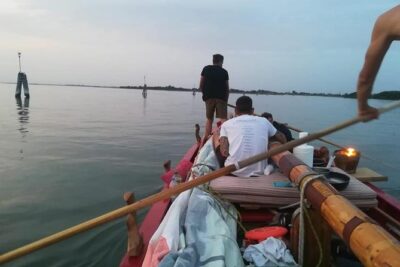
The best part of Venice from the start is always the water. You cruise through the Venetian Lagoon on a covered boat, which helps when the wind kicks up or if the weather is a little messy.
This matters because lagoon weather changes fast. One day it’s bright; the next, it’s choppy and cold on the deck. Since boats are completely covered, you can stay comfortable and still enjoy the scenery.
In rain, the tour typically operates, and in exceptionally bad weather it may be postponed or switched. My advice: bring a light layer even in warm months, and keep your day flexible. If it’s windy, you’ll feel it more on the water than you will on land.
Murano Furnace Stop: What You’ll See and How to Set Expectations
Murano is where Venice’s glass reputation becomes real. Here you visit a furnace area where you can see glass products being made, and you also get admission included for the visit tied to the demonstration.
The big expectation-setting point is the duration. The glassblowing demo is often only around 5 to 10 minutes. That doesn’t mean it’s useless—it can still be fascinating—but it means you should treat it like a live preview, not a full-length artisan masterclass.
During the furnace visit, you’re not just watching. You also have time to move through what’s on view, and you’ll likely see glass displays and objects linked to the demonstration. The tour structure makes it easy to go from explanation to seeing the proof of craft.
If you’re someone who wants to linger and watch every step repeatedly, you may want extra independent time on Murano after the tour ends. The tour itself is designed to move.
Free Time on Murano: Shopping Without Losing Your Mind
Murano glass comes with a shopping reality. There’s a reason the islands have showrooms and galleries nearby—the craft is valuable, and the sales presence is part of the ecosystem.
I like that you have the option to buy directly on-site if you want. I don’t like the pressure feeling some people get when they expect a more purely educational demo. You can usually handle this by going in with a plan:
- Decide your budget before you arrive.
- Pick one or two item types you actually want (ornaments, small figurines, functional pieces).
- Look first, ask questions second, and don’t feel rushed.
One practical tip from the vibe of the island: the longer you’re in shops, the more your eyes adjust. Early on, it’s easy to think everything is overpriced. Later, you start noticing the differences between styles and workmanship.
If the demonstration feels brief, don’t write off the stop. Use your extra time to watch the displays and read the explanations. That’s where the meaning of what you saw starts to click.
Burano Time: The Lace Island Side Quest (That Often Steals the Show)
Many departures include time on Burano, the neighboring island famous for colorful buildings and lace traditions. Even if Murano is your main goal, Burano can be the island you remember most—because it feels like a place, not a themed showroom.
You’ll have room to walk around and explore. And if you’re lucky with timing, you may also catch a small shop-side demonstration related to local crafts. The point is you get to switch gears from glass to the island’s softer, more everyday rhythm.
One specific sweet detail worth noting: people often look for Esse cookies—small, iconic treats shaped like the letter S. If your guide mentions them, take it seriously; it’s the kind of snack that turns a walk into a little mission.
Burano also rewards slow wandering. Balconies and street views are colorful, and even when it’s crowded, the layout makes it feel more navigable than the busy parts of central Venice.
You can also read our reviews of more tours and experiences in Venice





The Guide and Group Size: How You’ll Feel During the Walk
This tour keeps the group small—up to 10 travelers—and that changes the whole experience. You’re more likely to stay together, get answers, and not feel like your guide is talking at a wall.
On the islands, you’ll hear an official tour leader style of guidance. In past departures, guides such as Sabrina and Claudia have been praised for being clear, friendly, and good at bringing the story alive without turning it into a lecture.
One caveat: on windy or loud days, it can be harder to catch spoken commentary. If you’re given audio gear, test it quickly and adjust it so it’s actually comfortable. If you’re not near the speaker, you’ll miss more than you think—so position yourself in the front half of the group when the guide is talking.
Panoramic Venice Views: Why the Stops Feel Better Than the Sum
A half-day outing can feel either packed or pointless. Here, it works because the scenery adds value between the “main events.”
The lagoon ride gives you that sense of Venice as an island city, not just a set of streets you walk. On a covered boat, you still get the views, just with less discomfort.
Then the islands do their part. Murano gives you craft and craft-related browsing. Burano gives you color, walking, and small local food moments. Together, it becomes a balanced route: one stop explains how Venice became famous for art glass; the other shows how life looks on the islands today.
Price and Value: What $41 Buys You (and What It Doesn’t)
At $41.13 per person, this tour is priced in the “you pay for convenience” category—but it’s not random convenience.
You’re buying:
- A semi-private water taxi to and from the islands
- A guided experience on-site
- Admission included tied to the Murano furnace stop
- A live glassblowing demonstration
What you’re not buying:
- Food and drinks
- Hotel pickup
- Long, hands-on workshop time
For me, the math works if you want transportation handled and you care about seeing the furnace stop with guidance. If you’re the type who enjoys self-guided museum hopping with lots of free time, you might also compare against doing it on your own with public boats and paying admission separately.
Also note a real-life detail: Venice can charge a €5 access fee on certain dates for day visitors staying outside the city (check the official city details for which days and exemptions). That can affect your true total cost.
Weather Reality: Rain Usually Isn’t the Problem
This tour runs in rain more often than you’d expect. The boats are covered, and the schedule is designed to keep the plan moving even when the sky doesn’t cooperate.
But there’s a line. If weather is exceptionally bad, the tour may not take place and you’ll be offered a different date or a refund. In practice, this means you’ll want a backup plan in your Venice schedule—especially if your trip is tight.
My practical advice: pack for damp conditions (a light waterproof layer helps), and don’t schedule anything critical right after your return time. With water rides, small delays can happen.
Who Should Book This Tour (and Who Might Skip It)
Book this if you want:
- A short, structured Murano stop with a live demo
- A small-group experience that avoids some crowds
- The chance to pair Murano with Burano time
- Guidance that helps you understand what you’re seeing while you’re there
Consider another option if you want:
- A long masterclass with extensive hands-on time
- A purely educational demo with minimal sales atmosphere
- Total certainty that the exact furnace setup and working master will match your expectations on every date
If you’re very price-sensitive, it’s also worth keeping in mind that Murano glass pricing can vary wildly. You don’t need to buy, but you should be ready for a shopping-heavy environment.
Should You Book? My Decision Shortcut
I’d book this if your goal is simple: get to Murano efficiently, see the glassmaking in person, and still have time to enjoy island life. The value lands best when you treat it like a guided taste of Murano craft plus genuine island wandering on Burano.
I’d hesitate if you’re expecting a long, slow demonstration or a workshop-level experience. The furnace moment is real, but it’s usually brief, so your enjoyment will depend on whether you like art-glass context and browsing as part of the package.
If you’re okay with that—and you want a calmer way to do the islands—this is a solid pick for a half-day Venice escape.
FAQ
How long is the Murano glassblowing tour?
It’s listed at about 3 hours (approx.).
What does the tour cost?
The price is $41.13 per person.
Is food included?
No. Food and drinks are not included.
Is hotel pickup included?
No. Hotel pickup is not included.
What language is the tour offered in?
The tour is offered in English.
How large is the group?
The tour has a maximum of 10 travelers.
Do I need to arrive early at the meeting point?
Yes. You must be at the meeting point 10 minutes before departure time and show your voucher to the representative for ticket verification.
Will the tour run if it rains?
In case of rain, the tour typically operates (boats are covered). In exceptionally bad weather it may be canceled and you’ll be offered a different date or a full refund.
Where is the tour meeting point?
It starts at Venice Tours, Calle de le Rasse, 4536, 30122 Venezia VE, Italy and ends back at the same meeting point.