REVIEW · VENICE
Carnival & Casanova Secrets, Theatrical Walking Show
Book on Viator →Operated by CITY TOURS CO. LTD · Bookable on Viator
Venice at night gets a story engine. This Carnival-era walking show uses a costumed host and real performance beats to turn sidestreets into scenes from old Venice. You’ll move through lanes and alleyways with a guide-actor from the Pantakin Company, using the myth and everyday details of the Serenissima Republic to keep the walk moving.
What I like most is the focus on history you can feel in your feet: the show starts with the Codega, a servant with a lantern who led nobles through dark streets. I also love that it steers you away from the crowded center, so you see Venice as a lived-in maze instead of a postcard loop. A possible drawback: you’re walking on uneven cobblestones, and the show can be postponed if there’s exceptional high tide or bad weather.
In This Review
- Key highlights and what they mean
- What This Theatrical Walking Show Does Better Than a Typical Tour
- Price and Time: The Sweet Spot for a First Night in Venice
- Starting Point at Calle Larga de l’Ascension: Where the Show Begins
- Stop One: The Codega Lantern and Venice After Dark
- Stop Two and Three: Becoming Part of the Mise-en-Scène
- Stop Four: Casanova Secrets, Devil’s Bridge, Ghost Stories, and More
- Why the Route Leads to the Best Kind of Venice Memories
- Weather, Changes, and How to Stay Flexible
- Who This Works Best For (And Who Might Skip)
- Should You Book Carnival & Casanova Secrets?
- FAQ
- How long is the Carnival & Casanova Secrets theatrical walking show?
- Where does the tour start in Venice?
- Is hotel pickup included?
- What language is the show offered in?
- How many people are in a group?
- What’s included in the ticket price?
- What happens if there’s exceptional high tide or bad weather?
- Are service animals allowed?
Key highlights and what they mean
- The Codega lantern concept: a 15th-century entry into Venice, guided by night, servants, and stories
- Pantakin actors run the show: monologues become mini-scenes as you pass through real locations
- You’ll hear the city’s odd legends: Casanova, Levantines, ghosts, and more city-lore than most tours cover
- Off-center routes: unusual places that are different from the busiest tourist streets
- Small group size (max 15): easier pacing for kids and adults, and more interaction with the actor
What This Theatrical Walking Show Does Better Than a Typical Tour

This isn’t a “stand still and listen” walking tour. It’s built like a traveling theater show, timed to Venice’s natural drama: narrow lanes, sudden views down a canal corridor, and the feeling that you’re always one turn away from something unexpected.
The big value is how the show turns background into action. You don’t just learn that Venice was powerful, or that famous figures moved through its orbit. You’re guided through small moments—anecdotes, character sketches, and theatrical monologues—that make the city’s past feel closer than a museum label. For me, that’s the difference between knowing Venice and getting your bearings fast.
I also appreciate that the format works for different energy levels. Older kids usually do well with the role-playing and character reveals. Adults tend to enjoy the mix of famous names (hello, Casanova) and stranger stories that make Venice feel human instead of grand.
You can also read our reviews of more walking tours in Venice
Price and Time: The Sweet Spot for a First Night in Venice
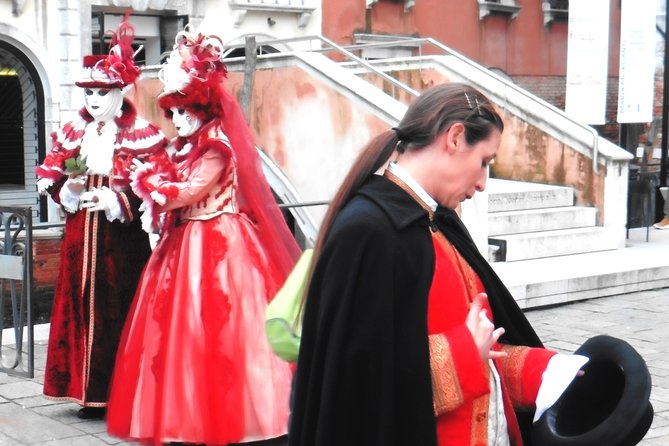
At about $37.55 per person and roughly 1 hour 15 minutes, this is a practical commitment—short enough to fit your first evening, long enough to matter. If you’re in Venice for a few days, you want at least one activity that helps you start moving through the city with context. This kind of story-led route can make the rest of your sightseeing feel easier.
The price also makes sense when you factor in what you’re buying: a walking experience with a professional actor guide (Pantakin Company) and an itinerary flyer. You’re not just paying for narration. You’re paying for a scripted performance that uses Venice itself as the stage.
One scheduling note that’s worth planning around: the average booking happens around 24 days in advance. If you’re traveling during Carnival, don’t wait until the last minute. Small group size can mean fewer seats when popular evenings sell out.
Starting Point at Calle Larga de l’Ascension: Where the Show Begins
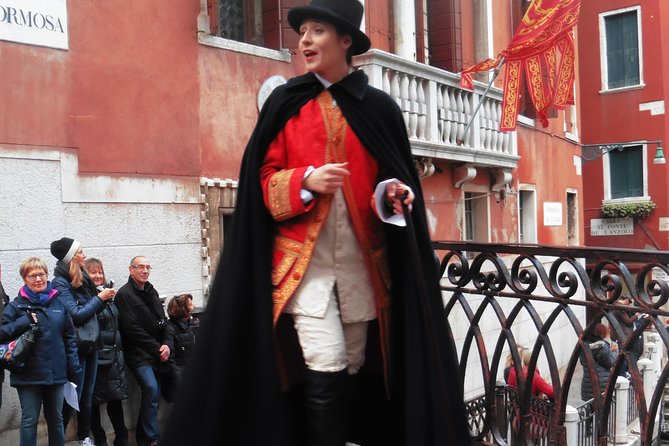
You’ll meet at the gondola ride area at Calle larga de l’Ascension, 1257, 30124 Venezia VE, Italy. The meeting point matters more than you might think, because this tour is about moving through side streets rather than marching in a straight line from landmark to landmark.
Expect the walking pace to feel like a guided theater walk: you’ll stop often enough to catch a scene, then move quickly enough that the story keeps flowing. And since the tour ends back at the meeting point, it’s easy to treat this as your “anchor activity” in the early part of the day or your first evening.
Language is English, with the possibility of bilingual delivery depending on the run. The actor-led format is usually easy to follow even when you don’t catch every detail—what matters most is the character beats and the way the actor steers the group.
Stop One: The Codega Lantern and Venice After Dark
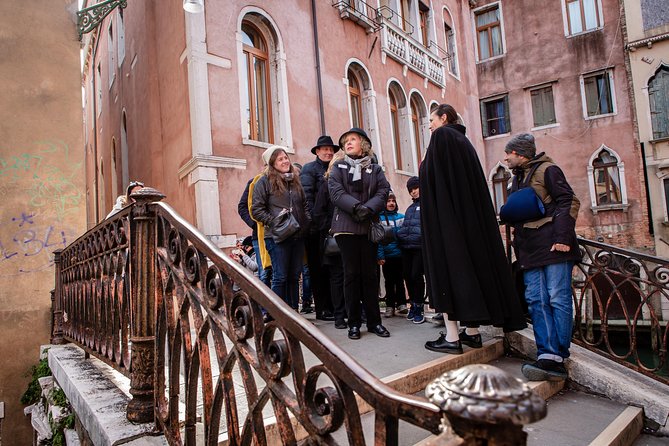
The first stop sets the tone with a 15th-century idea: nobles and wealthy Venetians were preceded by a servant called Codega, carrying a lantern to help light the path through the darkness. That concept is clever because it instantly gives Venice a mood—night, safety, class, and performance all mixed together.
When you hear this story, you start looking at the city differently. You’re not just noticing architecture; you’re thinking about why people moved the way they did, what hazards existed in dark streets, and how social rituals shaped everyday behavior. The lantern detail also makes the tour feel theatrical from the start, even before you reach any famous square.
A practical takeaway: if you’re planning your photo stops, know that the best views might come as sudden glimpses while you’re walking. Stay alert, but don’t get so fixated on photos that you miss the actor’s setup.
Stop Two and Three: Becoming Part of the Mise-en-Scène
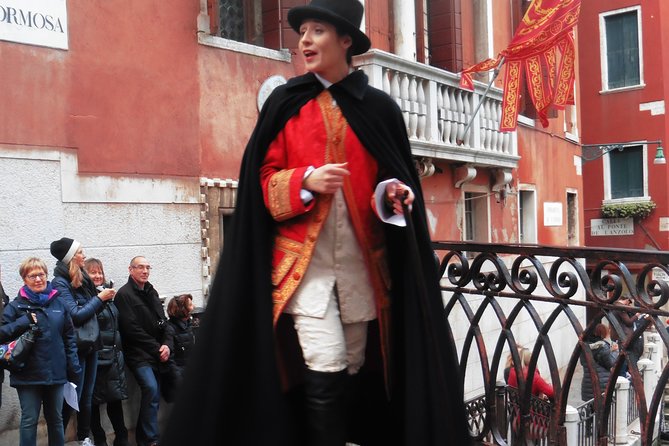
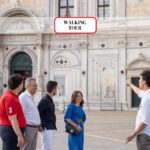
As the show progresses, you’ll get the “moving scene” feeling. The route becomes a moving mise-en-scène, with the actor guide leading you into the heart of life in the Serenissima Republic.
At these stages, the experience shifts from storytelling into participation. The show is designed so you’re not only listening—you’re placed as a main character in a living theatre moment. That’s the part most families and groups end up remembering, because it creates a shared laugh and a shared focus.
If you’re lucky with your guide run, you might meet an actor like Francesca—praised for making stories come to life—or Tullia, noted for roles that involve and entertain. You won’t control who you get, but you can control your attitude: lean into the actor’s cues. When you follow along, you’ll feel less like a spectator and more like you’re inside Venice’s folklore.
Possible consideration: because the format uses performance beats and side streets, the experience may feel less suited to anyone who wants a quiet, purely informational lecture. If you like history with energy, you’ll be happy here.
You can also read our reviews of more tours and experiences in Venice





Stop Four: Casanova Secrets, Devil’s Bridge, Ghost Stories, and More
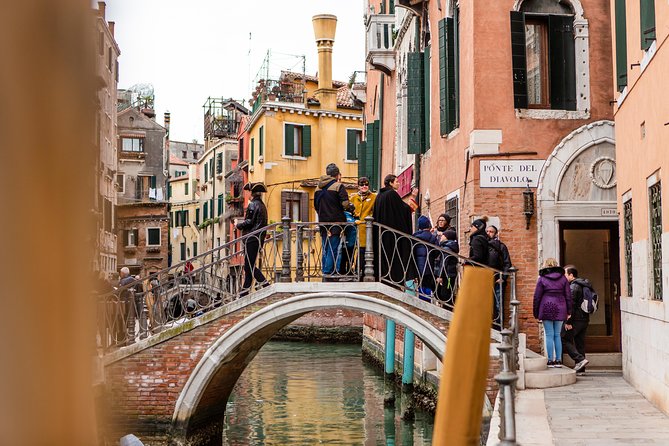
This is where the show’s title starts making sense. You’ll get a parade of Venice oddities and famous names woven into one walking narrative. The focus is on secrets—some romantic, some religious, some strange enough to sound like local bedtime stories.
Here are the themes you’ll hear about in this final stretch:
- Casanova and the Levantine
- A gondolier who became a priest
- An elephant that found shelter in a church
- Why an angel was put as a guardian of a palace
- Why a bridge between two convents is called the Devil’s Bridge
- The secret language of fans
- Legends of ghosts still said to live in Venice
Even if you already know a bit about Casanova, this stop gives you variety. The inclusion of things like the fan language or the gondolier-priest switch adds texture. Venice had layers: cultural exchange, religious institutions, and social codes that weren’t always obvious to outsiders.
The ghost stories also help you understand the city’s rhythm. Venice has always been a place of legends because it’s physically complex and historically stacked. Walking through that maze with a theatrical guide turns uncertainty into entertainment instead of confusion.
Why the Route Leads to the Best Kind of Venice Memories
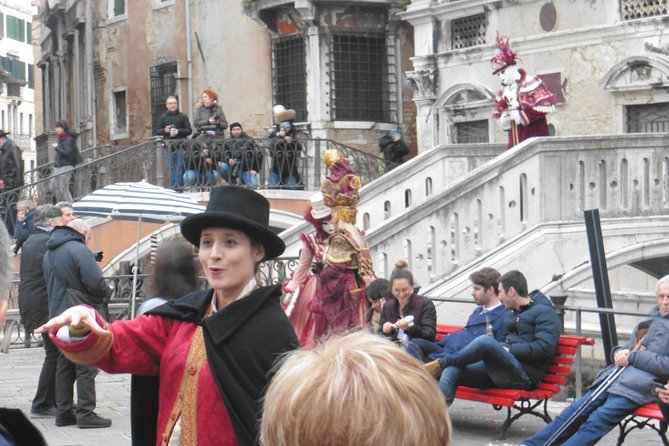
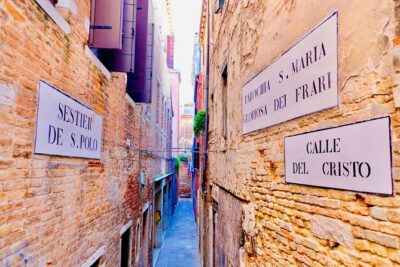
Off-center routes aren’t just a “less crowded” perk. They change what you learn and how you remember it. When you walk past places that aren’t constantly photographed, you pick up details you would otherwise miss: smaller courtyards, quieter canal edges, side entrances, and architecture that looks ordinary until a story makes it meaningful.
This show is intentionally built for that. Through the Codega stories, you’re escorted to unusual and secret places that differ from the crowded center. That means you’ll likely finish feeling like you’ve mapped part of Venice in your head. And because you return to the start point, your evening plans don’t get tangled up in logistics.
One more thing I value: the show is capped at 15 travelers. That keeps the group manageable for tight streets and for getting the actor’s attention when a moment asks for participation.
Weather, Changes, and How to Stay Flexible
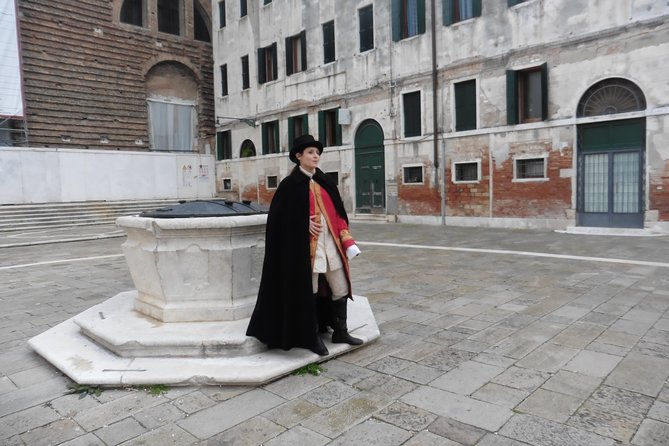
Venice weather can be dramatic. This experience doesn’t operate in case of exceptional high tide or bad weather, and in those cases it can be postponed later. Also, if particular events happen, the itinerary could change.
That’s not a dealbreaker, but it’s a reminder to keep your first evening flexible. If your schedule is locked down, plan a couple of backup options near your hotel. For many people, this tour is chosen specifically because it helps set the tone for the trip—so being adaptable keeps it fun instead of stressful.
Who This Works Best For (And Who Might Skip)
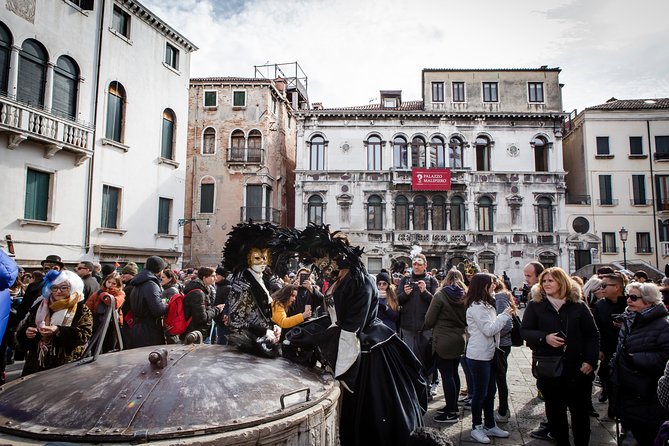
This show is a strong fit if you:
- want a first evening activity that makes Venice easier to navigate
- like story-driven tours more than lecture-style facts
- travel with older kids who enjoy character and a bit of theater
- prefer small groups and a route that goes beyond the busiest blocks
It may be less ideal if you:
- need a fully quiet experience with no participation or performance moments
- dislike walking on uneven cobblestones
- want a purely museum-style timeline with no theatrics
Overall, the format is built for real enjoyment: moving through the city while the story leads the pace.
Should You Book Carnival & Casanova Secrets?
If you’re the type of traveler who wants Venice to feel personal—not just seen—I’d book it. The show’s combination of Codega lantern framing, Pantakin actor energy, and a final stop packed with Casanova-era and ghost-lore secrets gives you more variety than a standard walking tour.
It’s also a solid value for the time: $37.55 for about 1 hour 15 minutes with a professional actor and a guided route that helps you remember where you’ve been. Add the small group size and you get a better chance of feeling included rather than herded.
Quick nudge before you go: set expectations for a moving theatrical walk, wear comfortable shoes, and keep your evening flexible for possible postponements in exceptional conditions.
FAQ
How long is the Carnival & Casanova Secrets theatrical walking show?
It runs for about 1 hour 15 minutes.
Where does the tour start in Venice?
The meeting point is at the gondola ride, Calle larga de l’Ascension, 1257, 30124 Venezia VE, Italy.
Is hotel pickup included?
No. Hotel pickup is not included.
What language is the show offered in?
The tour is offered in English, and it could be bilingual.
How many people are in a group?
This activity has a maximum of 15 travelers.
What’s included in the ticket price?
Included are the walking tour with a professional actor of the Pantakin Company from Venice and an itinerary flyer.
What happens if there’s exceptional high tide or bad weather?
If there’s exceptional high tide or bad weather, the tour does not operate and it can be postponed later.
Are service animals allowed?
Yes. Service animals are allowed.