REVIEW · VENICE
Venice: Legends, Anecdotes and Ghost Stories Walking Tour
Book on GetYourGuide →Operated by Avventure Bellissime · Bookable on GetYourGuide
Venice at night has a different pulse. This Venice Legends, Anecdotes and Ghost Stories walking tour threads together canal-side spots and backstreet secrets with six ghost tales, including the gruesome name of Biasio. I like how the route uses real landmarks you’ll remember, from the Bovolo staircase to the quiet campi, while keeping the mood on the spooky side without turning it into a theme park.
Two things I particularly like are the small group size and the way the guide makes the stories feel tied to the city itself. In the reviews, guides such as Ana, Christine, and Annamaria are called out for strong English, timing, and story energy. One consideration: it’s a lot of walking on historic lanes, so it’s not a great fit if you have mobility issues or back problems.
In This Review
- Key highlights that make this tour worth your time
- A 90-minute Venice ghost walk with a small-group feel
- Where the tour starts at night: Campo San Bartolomeo
- Riva del Carbon and palazzi stops: the mood starts early
- Campo San Beneto and Palazzo Fortuny: beauty with a sharper edge
- Scala Contarini del Bovolo: the staircase story you’ll remember
- Corte Sant’Andrea and quiet campi: where Venice feels like itself
- Secret passage talk and flooded-cell stories
- Rio Terà dei Assassini and Calle energy: walking with a plot
- “Mind your step” moments: cemeteries under the streets
- Ending near Rialto and Casino Venier dei Nobili
- The stories: six ghost tales plus Venetian legends
- What you should wear and who this tour fits
- Price and value: is $41 a fair deal for a Venice ghost tour?
- Should you book this Venice Legends and Ghost Stories walking tour?
- FAQ
- FAQ
- How long is the Venice Legends, Anecdotes and Ghost Stories walking tour?
- What is the price per person?
- Where does the tour meet?
- Where does the tour finish?
- How many people are in the group?
- What language is the guide?
- Is the tour suitable for wheelchair users?
- Does the tour run in high water or bad weather?
- What should I wear or bring?
- Are food and drinks included?
Key highlights that make this tour worth your time
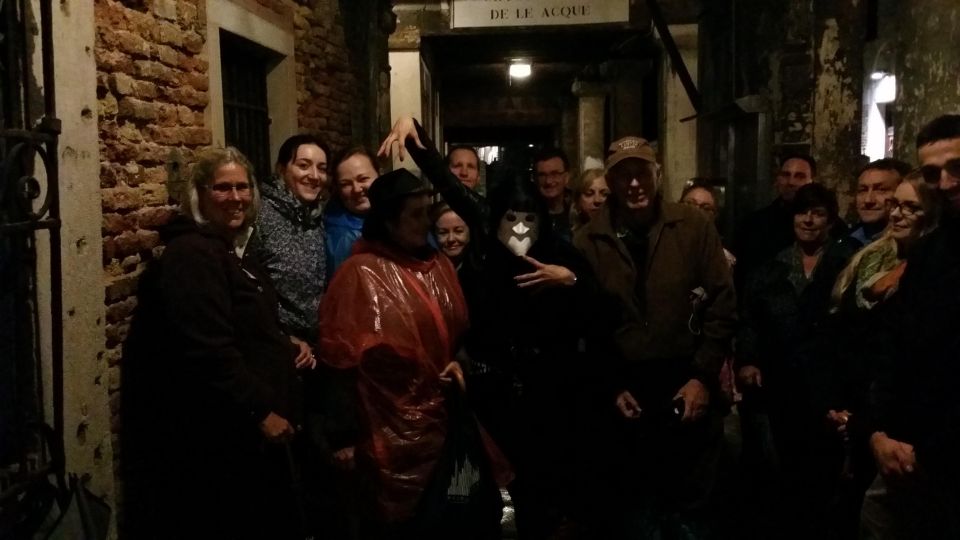
- Small group feel with max 20 people or fewer, so you can actually hear the stories
- Six ghost stories plus Venice legends and anecdotes, including Biasio the butcher
- Bovolo staircase focus on Scala Contarini del Bovolo and why it was built the way it was
- Backstreet Venice route through dim alleys, courtyards, and quiet campi (piazzas)
- Architecture with plotlines: palazzi stops connect to the darker side of Venetian life
- Rialto-area ending near the bridge, handy for continuing your night on your own
A 90-minute Venice ghost walk with a small-group feel
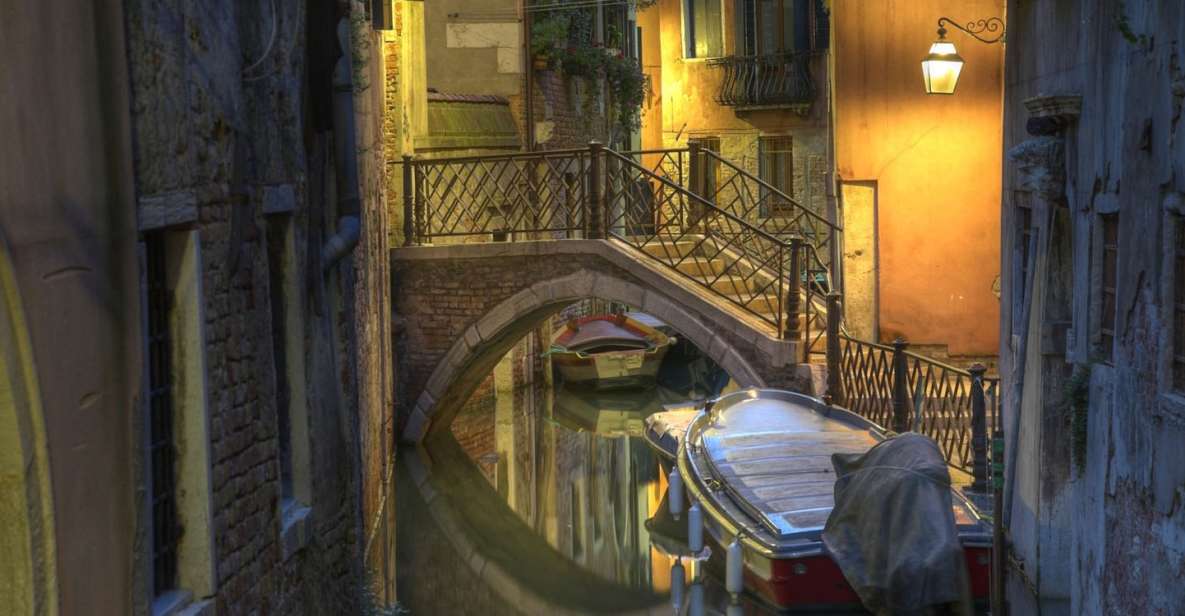
This is a 1.5-hour Venice ghost walking tour priced at $41 per person, which is a solid value for an organized evening experience. You’re not paying for transport or a fancy meal. You’re paying for a live English-speaking guide, a tight route, and storytelling time in places you’d likely skip if you were just wandering.
The small-group limit (max 20) matters in Venice. Tight lanes can get loud fast, and ghost stories work best when you can hear every detail. I also like that it runs in all weather conditions; Venice rain and high water can be real, so it’s helpful when the plan expects the city to do what it does.
If you’re after the “most famous Venice sights” version of the trip, this isn’t that. If you want Venice with dim corners, eerie history, and a guide who knows how to pace a story, it’s a good match.
You can also read our reviews of more walking tours in Venice



Where the tour starts at night: Campo San Bartolomeo
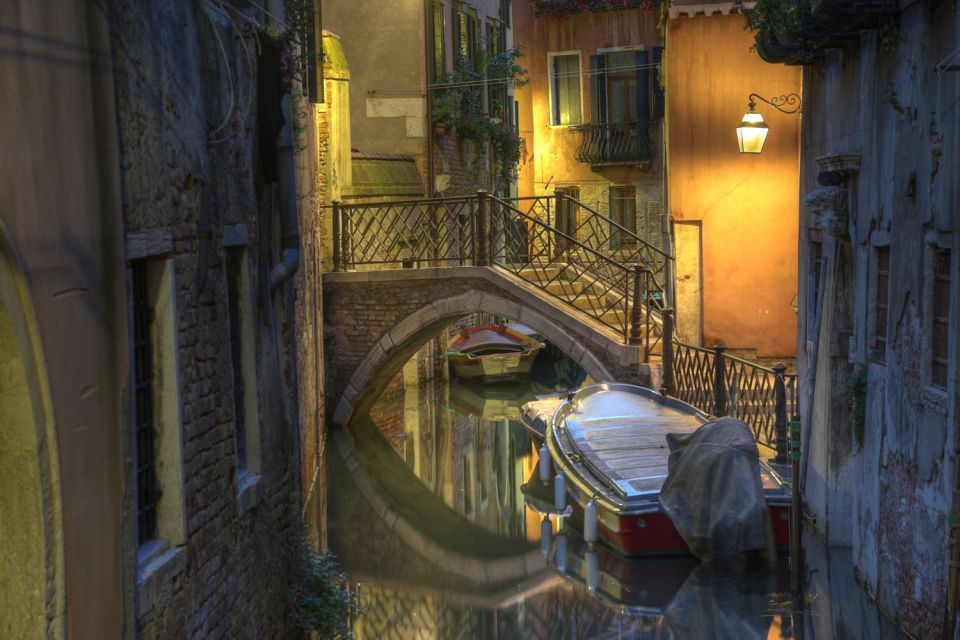
The meeting point is Campo San Bartolomeo (the tour is also listed as Campo S. Bortolomio), near the statue in the middle of the square. The guide holds a sign with the tour name written on it.
This sounds easy, but Venice squares get busy. One practical tip: arrive a few minutes early and scan for the sign. In a crowd, a small sign on a stick can be hard to spot, so give yourself time to find the right group before you lose the start of the first story beat.
From there, the tour heads toward the canal-side mood that sets up the night’s theme.
Riva del Carbon and palazzi stops: the mood starts early
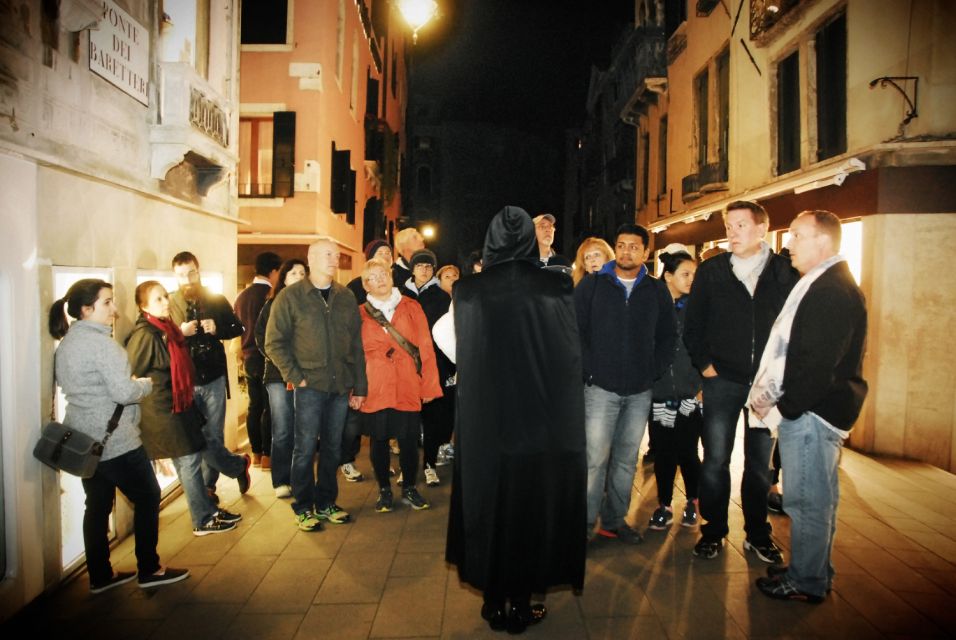
One of the first named stops is Riva del Carbon, a canal-side stretch where the guide gives context before the route gets more labyrinth-like. Then you pass by or visit Palazzo Cavalli and Palazzo Fortuny along the way.
Here’s what makes these early stops work for you: they’re not just scenic breaks. The tour uses architecture and location to explain how Venice functioned in the past—who had access to what, why certain passages mattered, and how daily life could turn dark.
A lot of Venice walking tours rush you through the first ten minutes. This one tends to set the tone right away, so by the time you’re in quieter backstreets, you’re already in the right headspace.
Campo San Beneto and Palazzo Fortuny: beauty with a sharper edge
The itinerary includes Campo San Beneto and time around Palazzo Fortuny. This area is a good reminder that Venice is dramatic in daylight, and even more layered after dark.
Practically, this stop is valuable because it’s a “breather” inside the story. You’re still moving, still hearing tales, but you’re not constantly fighting for footing in the tightest lanes. It also gives you a chance to look at the surroundings more closely—facades, courtyards, and the way the city holds itself together in small spaces.
If you love details, you’ll likely enjoy how the guide ties what you see to what you hear, rather than treating the ghost theme as separate from the buildings.
Scala Contarini del Bovolo: the staircase story you’ll remember
One of the biggest “wait, that’s so Venice” moments is the Scala Contarini del Bovolo—the famous spiral staircase connected to Palazzo Contarini del Bovolo. The tour specifically calls out the logic behind it: it was built for a wealthy Venetian, at a time when some travel around the city involved horses.
That detail does more than sound cool. It helps you understand how private spaces worked in Venice. You’re not just looking at a pretty staircase—you’re hearing why someone would build something this elaborate, and how status and access could shape daily routines.
You also get panoramic views while ascending, which is a nice “spotlight moment” in a tour otherwise focused on dim alleys and hidden passages.





Corte Sant’Andrea and quiet campi: where Venice feels like itself
The tour includes time in areas described as narrow passageways, sleepy canals, and campi (piazzas), including Corte Sant’Andrea. These are the kinds of places where Venice doesn’t feel like a postcard. It feels like a neighborhood.
This part of the experience helps you get your bearings. You learn which turns lead to calmer, less obvious streets. And you understand why Venice is hard to navigate on your own at night: it isn’t just dark. It’s maze-like.
If you enjoy “small city texture,” this section is a highlight. If you’re expecting big open views every few minutes, Venice’s backstreets will feel a little slower. The payoff is that you’re seeing Venice the way it actually functions between the major landmarks.
Secret passage talk and flooded-cell stories
A standout theme in the route is the idea of hidden access—including a secret passageway mentioned as one of the few remaining ones in the city. The tour description notes that access can depend on water levels.
Even if you don’t get the exact passage moment, the concept is worth it. Venice wasn’t only built for beauty; it was built for control—who could move privately, who could avoid attention, and how the city’s waterways could change everything.
The tour also mentions stories like rat-infested prison cells that flooded during high tide. That’s the kind of detail that makes Venice feel more real and less romanticized. It’s also why the ghost theme works here: it’s rooted in practical Venice problems—water, crowds, old systems, and the thin line between power and punishment.
Rio Terà dei Assassini and Calle energy: walking with a plot
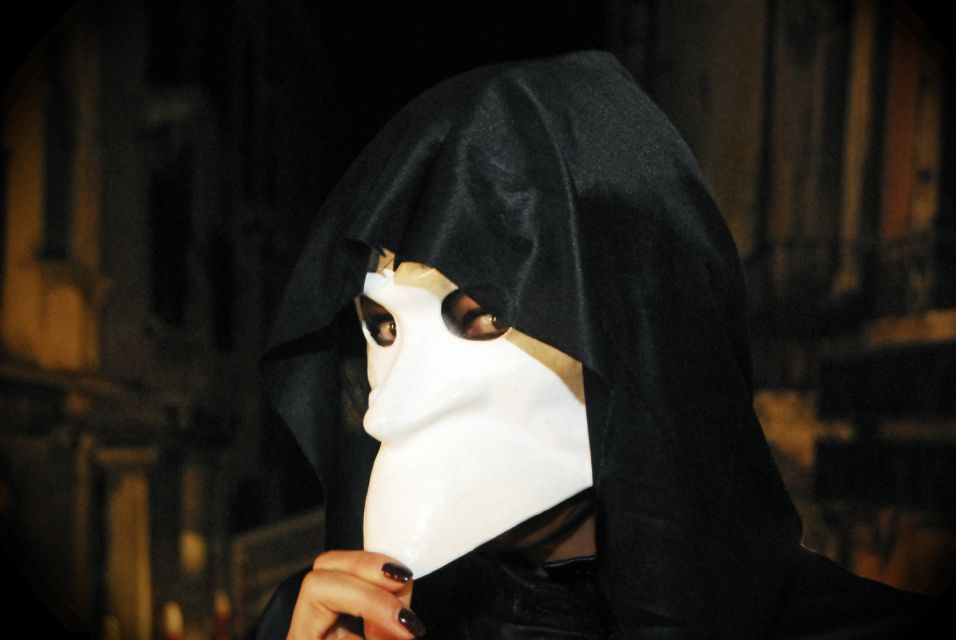
You’ll hear stories connected to Rio Terà dei Assassini and the Calle dei Assassini. The names alone give you a hint that this tour is leaning into darker material, and the guide uses those locations to connect narrative to place.
What I like about this kind of routing is that it changes how you walk. Instead of treating streets as background, you’re moving like you’re following clues. That’s especially useful in Venice, where streets can look similar and you can easily lose the thread of where you are.
If you’re the type who likes history with a story shape—motive, consequence, and setting—this section is where the tour clicks.
“Mind your step” moments: cemeteries under the streets
The tour explicitly notes crossing several ancient cemeteries hidden beneath the streets and campi of modern-day Venice. That’s a serious detail, even in a walking tour format.
Why it matters: Venice’s beauty can make you forget how layered it is. When you’re standing where people are buried, and you hear that the city built over that reality, the tone shifts. It’s not scary for spectacle. It’s unsettling in a grounded way.
This is also why comfortable shoes matter so much here. You’re moving through historic areas, sometimes with uneven surfaces and lots of attention needed for footing while the guide talks. The tour isn’t trying to make you rush. It’s asking you to slow your pace just enough to stay steady.
Ending near Rialto and Casino Venier dei Nobili
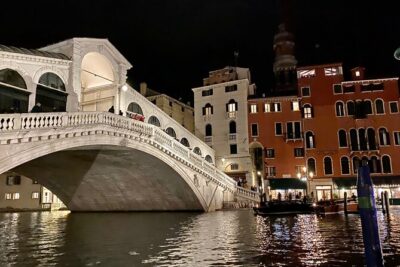
The tour ends close to the Rialto Bridge, and the finishing point listed is 4931 S. Marco, Venezia, VE 30124. The route also mentions the Casino Venier dei Nobili as part of the closing atmosphere.
Ending near Rialto is practical. It drops you back into a major area where it’s easier to find your next move—dinner, a vaporetto route, or a calmer night walk with less aim.
Also, finishing near such a well-known landmark gives you a sense of progress. The backstreets were winding and sometimes tight, but you can feel the route “connect” as you return toward the hub of Venice.
The stories: six ghost tales plus Venetian legends
The tour’s promise is bold but straightforward: during the 90-minute walk you’ll hear six ghost stories, along with legends and anecdotes about Venice and Venetians. The theme includes examples like Biasio, described as the child-killing butcher of Venice.
A key part of the value is balance. The best-rated experiences in the set of guides described in the reviews lean on sharp pacing and a sense of humor while still giving you historical context. In other words, you’re not just hearing spooky sound effects. You’re hearing why these stories exist and how they became part of Venice’s nighttime identity.
Guide names that show up in the strongest reviews include Ana, Christine, Annamaria, and Christina—often praised for engaging storytelling and strong English. If you love guided narrative, this matters. A ghost tour depends on delivery as much as the setting.
What you should wear and who this tour fits
This tour involves a lot of walking and is in a historical area that is not fully accessible for wheelchair users or people with walking disabilities. It also lists that it’s not suitable for wheelchair users and not suitable for visually impaired people, and it flags people with back problems.
So here’s the practical advice:
- Wear comfortable shoes with good grip.
- Plan for uneven old surfaces and tight lanes.
- If you have mobility or stability concerns, don’t treat this as a “gentle stroll.”
On the other hand, if you can walk comfortably for 90 minutes in Venice, you’ll likely find this a fun way to see parts of the city that don’t dominate daytime tour routes. It also helps first-timers build a mental map of where the quiet streets are.
Price and value: is $41 a fair deal for a Venice ghost tour?
At $41 for 1.5 hours, you’re paying for a guide, a small group cap, and access to a route built around specific locations. There’s no included food, and there’s no hotel pickup. That keeps the cost down.
Is it worth it? For many people, yes—especially if you’re in Venice for a short time and want an organized plan that takes you to the Rialto-area finish, the Bovolo staircase, and a chain of lesser-known lanes and campi. You can wander those areas on your own, sure, but you’d miss the connections: why the staircase was built, what the secret passage story means, and which locations tie to the legends.
Also, the max-20 size is real value. A ghost tour with 50 people turns into a chatter contest. Here, the format is set up to keep the storytelling coherent.
Should you book this Venice Legends and Ghost Stories walking tour?
Book it if you want:
- A night-time Venice experience focused on stories, not just sights
- Stops tied to recognizable landmarks like the Bovolo staircase and ending near Rialto
- A small-group format with English storytelling
Skip it if:
- You need wheelchair access or have significant mobility limitations
- You have back problems and can’t comfortably handle extended walking on old surfaces
- You dislike “dark history” themes, even when delivered as legends and anecdotes
FAQ
FAQ
How long is the Venice Legends, Anecdotes and Ghost Stories walking tour?
The tour lasts 1.5 hours.
What is the price per person?
The price is $41 per person.
Where does the tour meet?
It departs from Campo San Bartolomeo near the statue in the middle of the square, and the guide holds a sign with the tour name.
Where does the tour finish?
The tour ends close to the Rialto Bridge, with the listed finish point at 4931 S. Marco, Venezia, VE 30124.
How many people are in the group?
The tour is a small group with a maximum of 20 participants or fewer per guide.
What language is the guide?
The tour is guided in English.
Is the tour suitable for wheelchair users?
It is not fully accessible for wheelchair users or people with walking disabilities. The information also says it is not suitable for wheelchair users. You can contact the provider directly to ask about alternative routes.
Does the tour run in high water or bad weather?
It operates in all weather conditions. During high water, the tour will still take place, but the route may need partial adaptation to weather conditions.
What should I wear or bring?
Bring comfortable shoes, since the tour involves a lot of walking. Dress appropriately for the weather.
Are food and drinks included?
No. Food and drinks are not included unless specified.