REVIEW · VENICE
Secret Venice, an unusual walk – Private Walking Tour
Book on Viator →Bookable on Viator
Venice can feel like a puzzle box. This tour makes it solvable, with art in the right churches and stories you do not hear on the usual route. It’s short, lively, and aimed at helping you connect the dots fast.
What I like most is the way the guide uses Venetian churches as a living classroom. You’ll see works tied to Titian and Tintoretto in the exact places they were made for, and you’ll hear the why behind the look—not just a quick name drop. I also love the pace and the format: the group is kept small (capped at eight), so questions don’t get pushed aside.
A possible drawback: it’s a 2-hour walk, so you get orientation and highlights, not a slow, linger-in-every-corner day. Also, it depends on good weather, so if the day is rainy you may need to adjust plans.
In This Review
- Key Highlights Worth Showing Up For
- What Makes This Secret Venice Walk Different
- Price and Value at $453 Per Group
- Meeting Point at Campo San Giacomo di Rialto and the 11:00 Start
- Chiesa di San Giacomo di Rialto: 1600 Years in One Small Church
- Mercati di Rialto: Merchants, Power, and What You Should Watch For
- Rio Terà de le Carampane: The Old Red-Light District Explained
- Campo San Polo Wells and Altana Views
- Campo San Toma Carnival, Masks, and Why People Covered Up
- Basilica di Santa Maria Gloriosa dei Frari: Titian in the Right Place
- Scuola Grande di San Rocco: Tintoretto at Its Painted Home
- How Federico and Francisco Keep the Walk Fun and Clear
- A Practical Plan for the Rest of Your Day
- Should You Book This Secret Venice Walk?
Key Highlights Worth Showing Up For
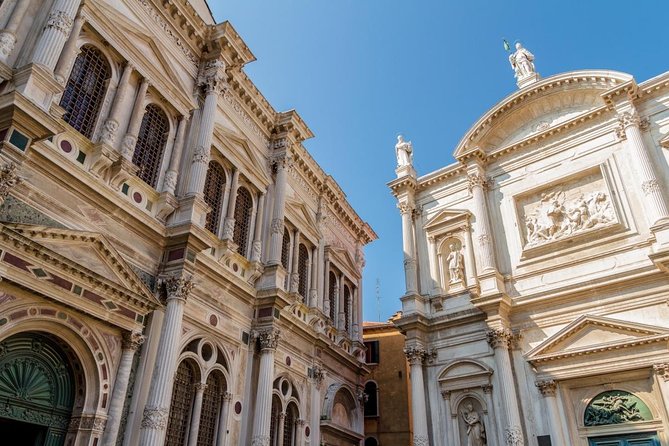
- Titian and Tintoretto in context, seen where the art was originally made for
- Small headcount (capped at eight) so you can actually ask questions
- Stories about Carnival and why masks mattered to Venetian life
- A guided look at the old red light district at Rio Terà de le Carampane
- Practical Venice tech talk: wells and altana explained through real spots
- English-guided, with a private group feel and time for recommendations
What Makes This Secret Venice Walk Different
This is not the type of Venice walk that just ticks off big monuments. It’s built around a tight set of places that explain how Venice worked—art, commerce, daily life, and the city’s weirder corners—without dragging on for hours.
The tour leans hard into a simple idea: when you’re standing in the right location, the story makes more sense. You’ll connect the dots between churches and the art commissioned for them, and you’ll hear why Venice’s physical layout shaped daily habits. It’s a fun mix of serious art and street-level curiosity.
And yes, there’s humor. Guides like Federico and Francisco have a knack for making the information land without turning the walk into a lecture hall. You’ll feel like you’re walking with a smart friend who knows the city’s backstory and how to point you toward what to see next.
You can also read our reviews of more walking tours in Venice

Price and Value at $453 Per Group
At $453.01 per group (up to 15 on the booking), this is not a “cheap and cheerful” walking tour. But it can be strong value if you compare what you’re buying: a private, English-speaking guide for about 2 hours, with a small capped group size designed for Q&A.
Here’s when the price starts to make sense:
- You’re a family or small group who wants one guide rather than splitting up.
- You care about art in the right places, not just quick exterior stops.
- You’d like the guide to help you plan what comes next with real, local suggestions.
One more value point: the listed stops include free admission for the sites on the route. That matters in Venice, where costs can add up if you’re stacking museums and paid attractions.
If you’re traveling solo and just want a general overview, you might decide the cost is too high. If you want context—and you’ll use it—this one can feel like money well spent.
Meeting Point at Campo San Giacomo di Rialto and the 11:00 Start
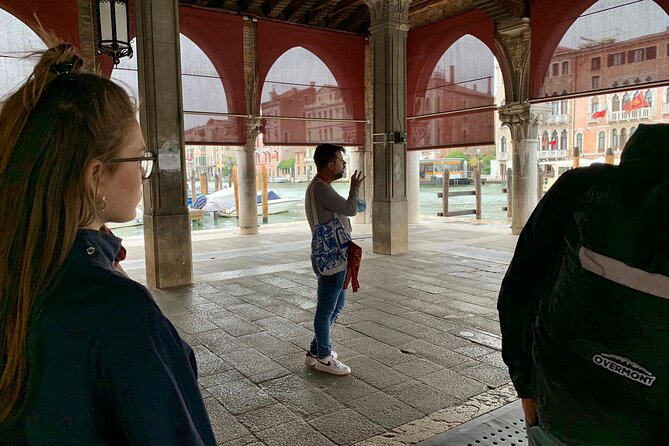
You meet at Campo San Giacomo di Rialto (Campo S. Giacomo di Rialto, 30125 Venezia VE) at 11:00 am. The end point is Campo San Rocco, and the meeting spot direction says you’ll be in front of the Scuola Grande di San Rocco.
You’ll use a mobile ticket, and confirmation comes within 48 hours (as long as space is available). It’s also listed as near public transportation, which helps in a city where “just walking everywhere” can turn into a workout fast.
One note to plan around: you might need to pay a €5 access fee on some day visits if you’re staying outside Venice. The rules depend on the date, and you can check the current schedule on the official page provided (cda.ve.it). I’d treat that as a quick pre-check so you don’t get surprised later.
Finally, there’s a weather dependency. The experience requires good weather, and if it’s canceled for poor conditions, you’re offered a different date or a full refund.
Chiesa di San Giacomo di Rialto: 1600 Years in One Small Church
The tour starts at Chiesa di San Giacomo di Rialto, and the guide uses it as a launchpad for Venice’s early story—right where it was originally funded. The time here is short (about 15 minutes), but the goal is not depth for depth’s sake. It’s to help you understand why Venice grew the way it did and why faith and funding were tied together.
I like using the first stop like this because it gives you mental bearings. Once you know what the place is telling you, the rest of the walk feels less like random wandering and more like a connected map.
If you dislike standing for quick explanations, this might feel fast. But the tradeoff is the tour keeps moving, and you’ll get multiple perspectives in a short window.
Mercati di Rialto: Merchants, Power, and What You Should Watch For
Next up is the Mercati di Rialto, where the guide explains what the market is for and how Venetian merchants operated. You get another brief window (about 15 minutes), so expect a guided orientation: who bought what, how the market functioned, and why Rialto mattered beyond shopping.
This stop works well if you like practical context. Venice is full of beautiful architecture, but it’s also a city of trade—and the market explains why the city had both money and taste.
The possible downside is timing and movement. Markets can be busy, and because the walk stays tight, you won’t have a long, slow browse. You go to learn, not to shop your way through.
You can also read our reviews of more private tours in Venice



Rio Terà de le Carampane: The Old Red-Light District Explained
At Rio Terà de le Carampane, the guide turns to stories and curiosities about the former red light district. This is one of the stops where the tour feels most “Venice”: the city’s roles shifted over time, and the canal geography helped define what happened where.
You’ll get about 15 minutes here, which is perfect for setting the scene without getting lost in side tangents. I appreciate the balance. You’re not being asked to sensationalize anything. Instead, you’re learning how Venice’s neighborhoods and waterways shaped human behavior and governance.
If you’re sensitive to adult-themed history, you’ll want to know this stop includes it. Still, the focus is historical explanation, not graphic detail.
Campo San Polo Wells and Altana Views
Now you shift into Venice’s practical “how did they live here?” zone at Campo San Polo. The guide explains wells and the altana, using the surroundings to make the concepts stick.
Why does this matter? Because Venice’s physical reality is unusual. It’s built on water, and that changes everything from daily routines to engineering choices. When you hear why Venice has so few wells, you stop seeing it as a quirky footnote and start seeing it as a logical outcome.
You also get a sense of how people used elevation and rooftops. Altana is one of those Venetian ideas that sounds mysterious until you understand what people did with it. This stop helps you spot those elements in your future wandering.
A small consideration: because the walk keeps a quick rhythm, you’ll get the idea in a guided burst. If you want to spend extra time later, keep an eye on where the altana-related viewpoints are when you’re standing there.
Campo San Toma Carnival, Masks, and Why People Covered Up
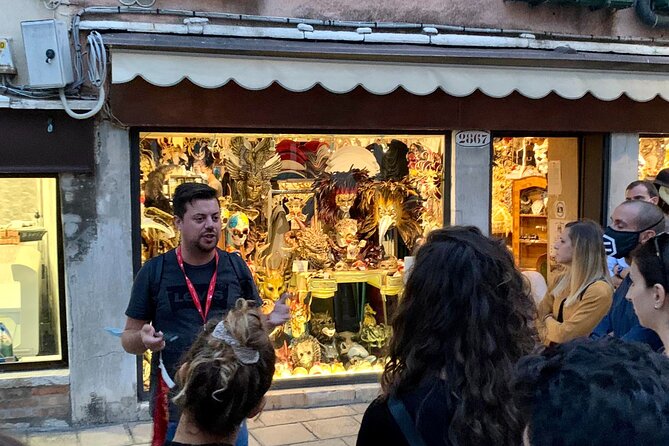
At Campo San Toma, you’ll hear about Carnival and the importance of masks. This is where Venice’s theatrical side becomes more than just a costume party. The guide connects masks to how Venetians performed identity, changed social roles, and leaned into spectacle.
The time allocation is brief (about 15 minutes), but the story gives you a framework you can reuse when you see Carnival imagery around the city. You’ll understand why masks were more than decoration.
One review note that I think is worth your attention: the experience can include mask-making detail as part of the Carnival discussion. If that’s something you care about, this tour is more aligned with that interest than a standard walk that only mentions Carnival in passing.
Possible drawback: if you’re expecting lots of time to look at Carnival venues or events, you’ll likely feel it’s too short. The strength here is meaning, not extended sightseeing.
Basilica di Santa Maria Gloriosa dei Frari: Titian in the Right Place
The route then reaches Basilica di Santa Maria Gloriosa dei Frari, one of the key churches in Venice. You’ll spend around 15 minutes there, with the guide focused on what makes this place important and how it connects to Titian.
This is the power move of the tour: you’re not just seeing a grand church. You’re seeing art in the environment it was designed for. That changes how you read a painting or an altarpiece. Even a short time inside can shift your understanding from decoration to purpose.
What to watch for during your visit: let the guide point out the art relationships, not just the architecture. The tour’s whole theme is that Venice is best understood when you stand where the story happened.
The main drawback is simple: inside time is limited. If you want to linger for longer contemplation, you’ll probably want to come back later on your own.
Scuola Grande di San Rocco: Tintoretto at Its Painted Home
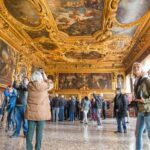
The walk finishes at Campo San Rocco, in front of the Scuola Grande di San Rocco, with the tour stopping inside the building for about 15 minutes. This is where you get a close connection to Tintoretto, tied to why the works were made for this setting.
This kind of place is perfect for a small-group guide. The guide can point you to what to notice, and because the group stays small, you’ll have space for questions. In particular, the guides Federico and Francisco are praised for making it easy to hear and for keeping the walk organized without shutting down curiosity.
This stop is also a nice emotional finish. You start with Venice’s early funding story, you move through markets and darker legends, you talk practical city design, and then you end with one of the city’s best-known art experiences. The balance keeps the walk from feeling repetitive.
How Federico and Francisco Keep the Walk Fun and Clear
A big reason this tour lands so well is the way the guide manages the group. It’s capped at eight, which means you don’t spend your time playing audio roulette. You can ask questions and actually get an answer that fits what you’re looking at.
Federico is singled out for great knowledge and for making the experience feel memorable for families, including when the group is split between adults and younger people. Francisco is praised for being both friendly and sharply focused, and for presenting the material clearly without turning the experience into a rushed checklist.
If you’re the kind of person who hates vague tours, you’ll probably like the structure here. You get a sequence of places, a reason for each one, and a guide who uses humor to keep it light while still staying accurate.
A Practical Plan for the Rest of Your Day
Because the tour ends near Scuola Grande di San Rocco, you’re well placed for more exploration in that area without committing to a long tram or waterbus hop immediately afterward. If you’re curious, ask your guide for restaurant ideas and a next neighborhood to wander through. One of the best parts of hiring a guide is using that brain while it’s still attached to a human.
Also, since each stop is around 15 minutes, wear comfortable shoes. Venice walking gets you even if the tour itself isn’t long.
And if you’re combining this with museums later, you’ll get a head start on how to interpret what you see. The tour helps you understand why certain artworks belong where they do, which makes later visits more satisfying.
Should You Book This Secret Venice Walk?
Yes, if you want a small-group private Venice experience that focuses on art where it belongs and on stories that explain the city’s logic. It’s especially worth it if your group includes people who want more than a photo parade—people who like connections, context, and questions.
Think twice if you’re traveling solo on a tight budget or if you prefer slow, unstructured wandering. This is a focused 2-hour format. You’ll come away with clarity, not exhaustion—but you may still want a separate day to linger.
Bottom line: if you value Titian and Tintoretto in context, plus Carnival and the city’s odd past, this is one of the more coherent ways to start Venice off on the right foot.