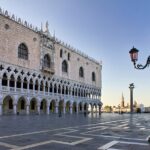
REVIEW · VENICE
Immersive Beauty: A Tailored Private Tour of the Doge’s Palace
Book on Viator →Operated by deTourist Venice Valerio Coppo · Bookable on Viator
Crammed tours turn this palace into homework. With fast-track entry and a licensed guide meeting at Caffè Florian, you move in quickly and get the kind of pacing that lets details land. You also get help with skip-the-line tickets and a route that aims past the usual “seen-it-all” checklist.
I really like the way the tour is personalized. In particular, guide Valerio Coppo (deTourist Venice Valerio Coppo) has a knack for matching the story to what you care about, and the room-by-room explanations connect art, power, and everyday politics without turning it into a lecture. The second thing I love: you don’t just get big highlights, you work through the palace’s main decision-making spaces, plus the justice and prison areas.
One possible consideration: entrance tickets to the Doge’s Palace aren’t included in the price. Skip-the-line help is part of the service, but you’ll still need to budget for the palace admission when you book your tickets.
In This Review
- Key points worth planning for
- Why this private Doge’s Palace tour feels different
- Piazza San Marco: your orientation point before the palace
- Scala dei Giganti: the staircase that announces power
- The Loggia view: art, arches, and the city below
- Scala d’Oro: opulence with a political job
- Atrio Quadrato: the square atrium where daily life echoed
- Sala delle Quattro Porte: politics told through room design
- Anticollegio and Collegio: culture, power, and decision rooms
- Senato and Council of Ten: how a republic tried to stay in control
- Sala della Bussola: anonymous accusations and justice mechanics
- Armeria: Venice’s military reality behind the elegance
- Sala della Quarantia Civil Vecchia: justice in a formal setting
- Sala del Guariento: more art, more context
- Sala del Maggior Consiglio and Sala dello Scrutinio: voting and civic theatre
- Quadreria: the Picture Gallery as an emotional reset
- Ponte dei Sospiri: the famous crossing with real context
- Prigioni Nuove: the New Prisons and the darker side of justice
- Who should book this Doge’s Palace private tour
- Final verdict: book it or not?
- FAQ
- How long is the Doge’s Palace private tour?
- Is the tour private or shared?
- What language is the tour offered in?
- Where do we meet and where does the tour end?
- Are the Doge’s Palace entrance tickets included?
- Do we get skip-the-line or fast-track entry?
- Is there a mobile ticket?
- Can I get a full refund if I cancel?
Key points worth planning for
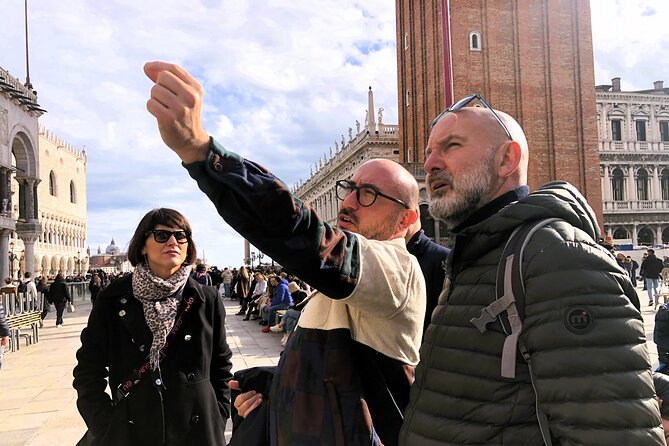
- Fast-track entry from Piazza San Marco so you start inside without the worst of the crowd shuffle
- A tailored route guided by your interests, not a rigid script
- Staircases and galleries with meaning, not just pretty stops (Scala dei Giganti, Scala d’Oro, Loggia)
- Power rooms and political systems, including the Council of Ten and the Great Council chamber
- Justice and espionage angle via the Compass Room (Sala della Bussola) and the prisons area
- Ends back where you meet, right at Caffè Florian for an easy finish
Why this private Doge’s Palace tour feels different
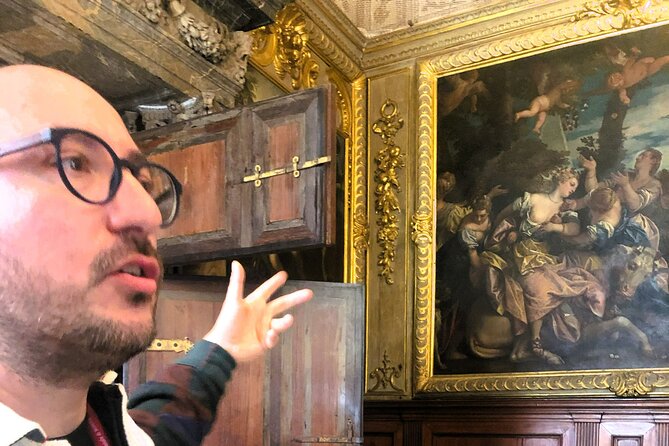
Venice has a talent for turning history into a big blur. The Doge’s Palace is the perfect example. From the outside it looks like a single landmark; inside, it’s a whole machine for governing the Republic—plus an art gallery and a symbol of authority.
This private tour is built to keep you from getting lost in the scale. You’re not stuck waiting while other groups funnel in. You start at Piazza San Marco, then go inside with fast-track entry. From there, the guide helps you read what you’re seeing: the staircases, the chambers, the paintings, the legal and political spaces, and the famous route that connects the palace to captivity.
Price-wise, at $185.43 per person for about two hours, it’s not a budget “add-on.” But it’s also not just paying for someone to point at walls. The value is in time saved, translation of symbolism into clear context, and a route that’s meant to hit more than just the headline rooms. Also, since entrance tickets aren’t included, your final “all-in” cost depends on the palace admission you purchase.
You can also read our reviews of more private tours in Venice

Piazza San Marco: your orientation point before the palace
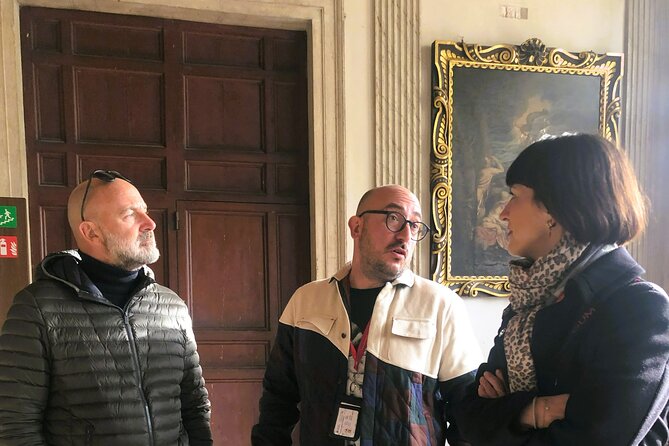
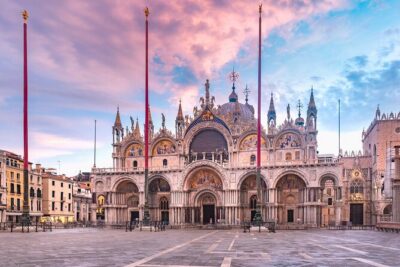
You begin at Caffè Florian, Piazza San Marco 57. It’s a smart start because St. Mark’s Square is the public face of Venetian power. The guide sets the scene with the square’s development and what events have unfolded there over centuries.
What I like about this first step is that it gives you a frame for the palace. The Doge’s Palace wasn’t meant to feel hidden. It was tied to public life—courts, ceremonies, diplomacy, and announcements—so starting in the square helps you understand why the palace is so theatrical.
If you’re the type who hates wandering and then realizing you’ve missed context, this is your cure. You get a short briefing, then you move inside while the palace is still “fresh” in your mind.
Scala dei Giganti: the staircase that announces power
Next comes the internal courtyard and the Scala dei Giganti. Even if you’ve seen photos, this staircase has a weight to it when you stand at the start. The reason it matters: the sculptures and symbols aren’t decoration. They’re a statement about authority, designed to be read in a public-facing political space.
This stop works as a “setup” moment. You start noticing how much Venetian rule relied on visible messaging. Your guide connects the imagery to the idea of power that was meant to look permanent—even when politics wasn’t.
The Loggia view: art, arches, and the city below
From there you hit the Loggia—an open gallery with arches that gives you views of St. Mark’s Basilica and the square. This is where the palace shifts from strict interior space to a balcony over Venice’s most important stage.
Expect the guide to use the view as a teaching tool: the palace doesn’t sit apart from the city. It’s part of it. You’re reminded that government was performed in spaces meant for watching, not hiding.
Practical note: since the Loggia is a gallery with outside-facing sightlines, light changes quickly. If you like photos, you’ll want to follow your guide’s timing so you don’t spend your whole tour squinting.
Scala d’Oro: opulence with a political job
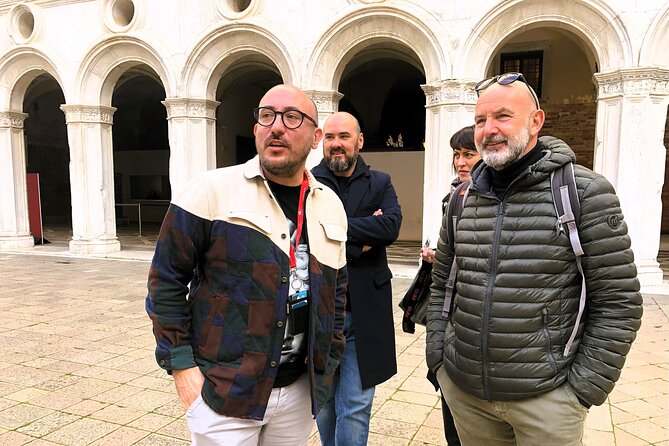
Then comes the Scala d’Oro, or Golden Staircase. This is the “wow” moment, but it’s not only about gold and drama. The guide explains how its artistic and historical elements reflect the wealth and prestige of the Doge.
If you’re used to palace tours that treat staircases like decoration, this one helps you see it differently: the stairway is part of how authority traveled. It’s a route for people with status, and it’s staged to impress.


Atrio Quadrato: the square atrium where daily life echoed
The Square Atrium (Atrio Quadrato) is a quieter stop, but it helps you understand how the palace operated. This space isn’t just a pretty geometry lesson. It has a functional purpose in the rhythm of the Doge’s Palace.
This is one of those rooms where pacing matters. If you rush it, you miss the point. The guide’s narration turns it into a model for how movement and activity worked inside a government building that was also a theatrical set.
Sala delle Quattro Porte: politics told through room design
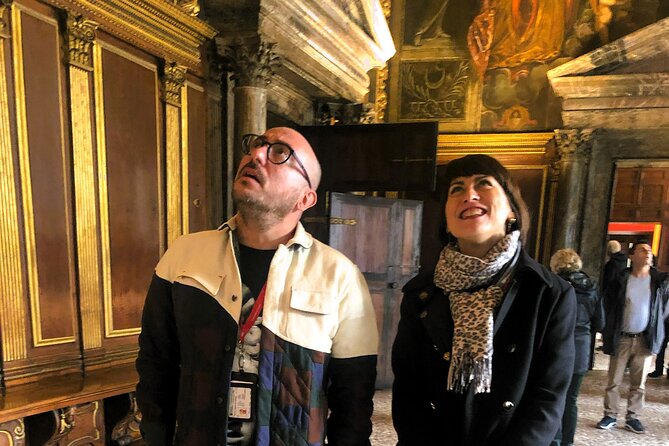
Next is the Sala delle Quattro Porte. The name alone makes you pay attention. The guide connects it to the room’s place in political life, plus the artwork and fine details that shape how the space communicates status and decision-making.
This is where the tour becomes more than “look and listen.” You start thinking about how architecture can shape behavior: who meets where, how messages travel, and how a republic builds legitimacy in stone and paint.
Anticollegio and Collegio: culture, power, and decision rooms
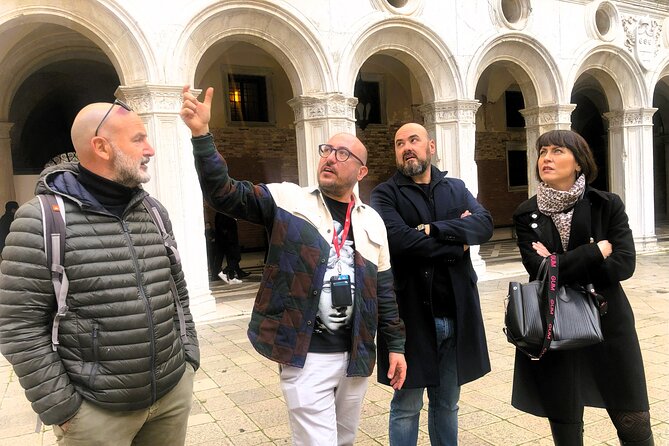
You then move into the Sala dell’Anticollegio, followed by the Sala del Collegio.
In the antechamber, you’re surrounded by masterpieces credited to famous Venetian artists such as Tintoretto and Veronese. The guide uses these works to explain the Republic’s cultural power: politics wasn’t only laws and votes, it was also prestige through art.
Then you step into the Council Chamber (Sala del Collegio), described as the heart of political decision-making. This part of the tour leans into drama. Your guide unpacks the political narrative that took shape in these rooms and explains why it mattered for Venice’s direction.
Senato and Council of Ten: how a republic tried to stay in control
After the council chamber, you visit the Senate (Senato). The guide explains how senators convened to discuss matters of state, and how that structure worked in the Venetian Republic.
Then you go to the Chamber of the Council of Ten (Consiglio dei Dieci). This is where the story gets darker and more suspicious-by-design. The Council of Ten is tied to maintaining stability and order, and the guide connects the room to that mission.
I like these stops because they answer a key question most visitors don’t ask soon enough: who had power, who checked it, and how the Republic tried to protect itself from threats, internal or external.
Sala della Bussola: anonymous accusations and justice mechanics
One of the most memorable stops is the Compass Room (Sala della Bussola). This chamber is tied to justice and espionage. It’s named after a small window where anonymous accusations were submitted.
Here the guide explains the system behind secret denunciations—how citizens could report suspicious activities without attaching their names—and how that fed into the Republic’s control mechanisms. It’s not comfortable justice, but it’s fascinating because it shows how the state balanced order with fear.
If you care about governance as a social system, this is the room that turns the tour from art history into political sociology. You’ll likely remember details here longer than the staircase photos.
Armeria: Venice’s military reality behind the elegance
Next comes the Armoury (Armeria). A lot of visitors assume Venice’s story is only ships, beauty, and trade. The guide adds the other half by walking you through the military might of the Republic.
You’ll hear how battles, alliances, and the need for maritime defense shaped what the Republic invested in. It’s a useful correction. The palace may look like a museum, but it was built to represent a state with real pressure and real stakes.
Sala della Quarantia Civil Vecchia: justice in a formal setting
Then you visit the Chamber of Quarantia Civil Vecchia. This room is tied directly to the justice system. The guide focuses on how the legal framework worked and why justice was seen as part of maintaining order.
Even if you’re not a law person, the value here is understanding that Venice’s governance was designed to be credible and orderly, at least in how it was presented.
Sala del Guariento: more art, more context
After the legal and political rooms, you enter the Guariento’s Room (Sala del Guariento). The guide points out artwork that adds cultural depth to the tour and connects the Republic’s golden-age achievements to what you’re seeing.
This part matters because it prevents the tour from becoming too heavy. After councils and justice systems, the art brings you back to the Venetian skill for turning power into beauty.
Sala del Maggior Consiglio and Sala dello Scrutinio: voting and civic theatre
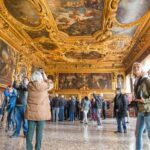
Then you reach the Chamber of the Great Council (Sala del Maggior Consiglio)—described as the largest chamber in the palace. The guide explains the grand assemblies and how democratic principles shaped political life in the Republic.
Next is the Sala dello Scrutinio, focused on elections, voting processes, and the mechanics of the Venetian electoral system. This is where the tour gets very practical in concept: how decisions were actually made, not just who had titles.
If you want a takeaway you can explain to friends, it’s this: Venice wasn’t ruled by one person only. It was governed through institutions and procedures—and the building reflects that.
Quadreria: the Picture Gallery as an emotional reset
You then visit the Quadreria (Picture Gallery). The guide uses it to tie together the cultural side: you’re seeing masterpieces and understanding how art reflected Venetian vibrancy and values.
This stop is a breather. After political chambers and justice spaces, the gallery lets you “feel” the Republic without the constant explanation of who voted for what.
Ponte dei Sospiri: the famous crossing with real context
You finish the interior storyline by crossing the Bridge of Sighs (Ponte dei Sospiri). The guide shares stories behind the bridge and what prisoners once faced when they crossed it.
The key is not the legend alone. The tour balances romance and historical reality, so you understand why the bridge became a symbol and how that symbol formed in the public imagination.
Expect time for photos, but keep an eye on your guide’s pace so you don’t fall behind. This is one of those “icon stops” where timing affects everything.
Prigioni Nuove: the New Prisons and the darker side of justice
Finally, you head to the Prigioni Nuove (New Prisons). This is the darker ending that matches the Compass Room’s justice story. You learn how the prison system worked, who was held there, and how judicial processes played out.
This ending changes how you interpret earlier rooms. Once you’ve seen where punishment led, the palace’s justice machinery feels less abstract.
Then the tour ends back at your starting point, Caffè Florian, which is convenient if you want lunch, a gelato break, or to continue your Venice walking route.
Who should book this Doge’s Palace private tour
This fits you best if:
- You want a private, tailored pace instead of a large-group rush
- You care about politics and governance, not just famous artworks
- You’d like a guide who can link architecture to meaning
- You prefer to get in quickly and avoid the worst crowd bottlenecks
It may not be ideal if you want a very casual “walk and glance” tour. This route is packed with major spaces and expects attention. If you’re the type who needs long pauses to stare, tell the guide early so the pacing can bend.
Final verdict: book it or not?
I’d book this tour if you’re planning to do only one high-ticket “must-see” inside Venice and you don’t want it to feel like a checklist. The combination of fast-track entry, a licensed guide, and a room-by-room storyline that connects the Republic’s art and politics makes the money feel earned.
Skip it if you’re traveling on a tight schedule and can only handle very light interpretation. Also, because entrance tickets aren’t included, double-check your total budget before you commit.
If you do book, show up at Caffè Florian ready to ask questions. The best moments come when you tell the guide what you care about—politics, art, justice, or the staircase drama—and then let the tour build around that.
FAQ
How long is the Doge’s Palace private tour?
It runs for about 2 hours.
Is the tour private or shared?
It’s a private tour/activity, so only your group participates.
What language is the tour offered in?
The tour is offered in English.
Where do we meet and where does the tour end?
You meet at Caffè Florian, Piazza San Marco 57, 30124 Venice, Italy, and it ends back at the same meeting point.
Are the Doge’s Palace entrance tickets included?
No. Entrance tickets to the Doge’s Palace are not included.
Do we get skip-the-line or fast-track entry?
Yes. The tour includes fast-track entry, and there’s assistance in purchasing skip-the-line tickets at the best possible rate.
Is there a mobile ticket?
Yes, a mobile ticket is part of the experience.
Can I get a full refund if I cancel?
Free cancellation is available up to 24 hours in advance for a full refund. If you cancel less than 24 hours before the start time, the amount paid is not refunded.