REVIEW · VENICE
Lido Bike Tour: With a Local on the Island of Cinema
Book on Viator →Operated by deTourist Venice Valerio Coppo · Bookable on Viator
Lido feels like Venice’s calm cousin. This Lido bike tour takes you across the island on two wheels with a guide who knows how to connect the dots between beaches, canals, and the movies.
I especially love two things: first, the way Valerio Coppo helps you get your bearings fast—you’re not just pedaling, you’re understanding what you’re passing. Second, you see Lido’s film-festival world and then escape the crowds, riding through calmer natural zones and along the shoreline.
One consideration: the route includes some rougher paths and sandy stretches, so if you’re on the sensitive side of balance or comfort, choosing a fat-bike-style tire can make a real difference.
In This Review
- Key highlights to look for
- Why Lido by bike beats another Venice walk
- Meeting at Santa Maria Elisabetta and choosing your bike
- From Lido di Venezia into a quieter Venice world
- Jewish cemetery stop: Cimitero Ebraico’s ancient tomb variety
- San Nicolo al Lido: the church tied to the sea’s marriage
- Faro di San Nicolò: pier views and Grand Hotel silhouettes
- Grand Hotel des Bains: when Thomas Mann and film came to Lido
- Palazzo del Cinema and the beach-adjacent film festival feeling
- Murazzi and the Adriatic breakwater ride
- Alberoni dunes: pine forest quiet and a near-empty beach
- Malamocco: a fisherman village with mini-Venice vibes
- Poveglia: quarantine and the island people talk about
- Lazzaretto Vecchio: the plague-era hospital and later military use
- San Lazzaro degli Armeni and Ausonia Hungaria: spiritual quiet and luxury tiles
- Practicalities, timing, and what the price really buys
- Should you book this Lido bike tour?
Key highlights to look for
- Valerio Coppo’s local pacing: he adjusts to your group and even suggests how much riding fits your comfort level
- Shortcut to Lido’s highlights: Jewish cemetery, a church tied to the sea, lighthouses, and grand old hotels
- Film-festival connections: views of festival landmarks and stories linked to Thomas Mann and Lido’s famous hotels
- Murazzi breakwater ride: an engineering spine that keeps the lagoon calmer
- Alberoni dunes and near-empty beach time: pine forest-to-sand scenery with birds and kites on windy days
- Lagoon-island contrasts: Poveglia’s quarantine past next to the quieter Armenian monastery island
Why Lido by bike beats another Venice walk
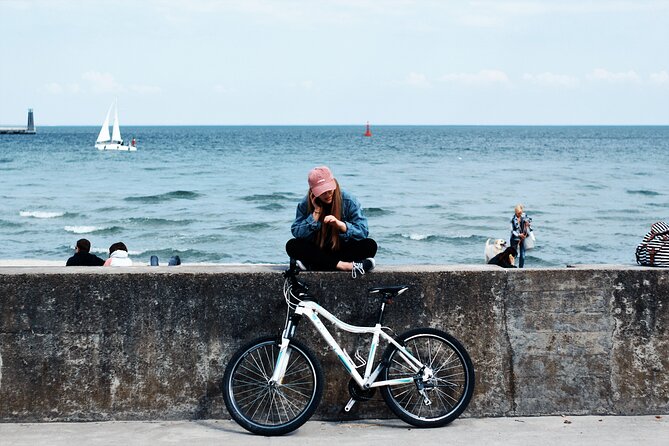
Venice is famous for standing still and staring up at brick and water. Lido is different. You move. That motion matters.
On Lido, a bike ride turns what can feel like a long, scenic detour into something you actually finish with energy. You get beaches, protected nature areas, and lagoon views—without the slow shuffle that crowds can bring on the mainland.
And then there’s the film-festival layer. This tour weaves Lido’s movie mythology into real places you can point at: hotels used as sets, festival venues, and the coastline that frames so many famous moments. It’s not museum mode. It’s sightseeing with context.
You can also read our reviews of more cycling tours in Venice


Meeting at Santa Maria Elisabetta and choosing your bike
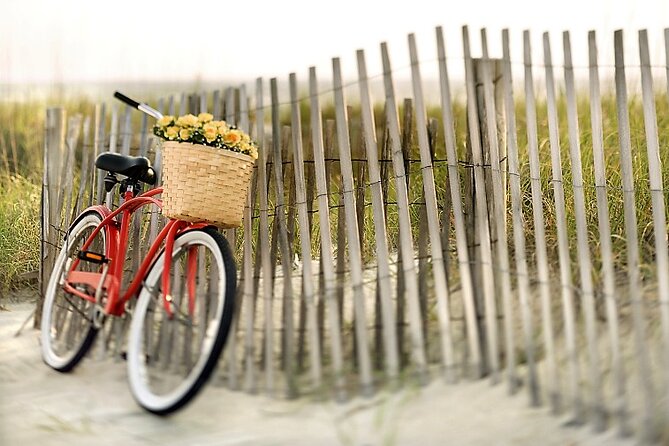
You’ll meet at Santa Maria Elisabetta on Lido (30126 Venice). It’s a straightforward meeting point near public transportation, and it’s easy to find if you’re arriving by water taxi.
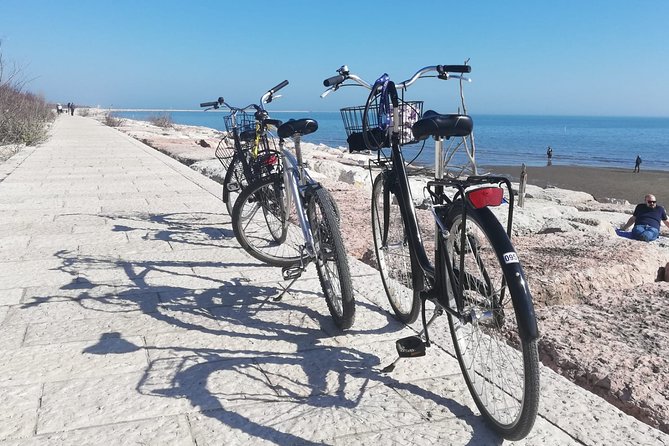
Once you get there, you’ll rent your bicycle for the tour start. The bike choices are part of the deal, and picking the right one can make or break the comfort level:
- city bike – 10 €
- tandem – 20 €
- e-bike – 20 €
- fat bike – 18 €
- e-fat bike – 30 €
If you’re trying to maximize comfort on mixed surfaces, I’d lean toward fat-bike tires. Some parts of the route can be rough, and there’s at least one sandy area where it’s smart to be ready to walk a short section rather than fight the terrain.
This tour is offered in English, and the group size is capped at 10 travelers, which is big enough to feel lively but small enough that the guide can keep an eye on everyone’s pace.
From Lido di Venezia into a quieter Venice world
After bike pickup, you ride out from Lido di Venezia and settle into the island’s rhythm. The first stretch helps you understand the “shape” of Lido: less maze than Venice proper, but still full of canals, cut-through footpaths, and sea-facing viewpoints.
This is one of the biggest values of doing Lido with a guide rather than on your own. You don’t just see points on a map—you learn how they relate: which spots connect to festival life, which connect to older Venice stories, and which are simply there because they’re good to be there.
Jewish cemetery stop: Cimitero Ebraico’s ancient tomb variety
One of the first stops is the Cimitero Ebraico. Today it’s quiet and garden-like, but it served as Venice’s main Jewish cemetery from 1386 until the 18th century.
The entrance matters, because from the gate you can see tombs with designs that shift across time and influence—from Venetian gothic to details that look distinctly Ottoman. It’s an unusually clear way to see how Venice absorbed and layered cultures.
This stop is brief (around 15 minutes), but it works. You get a focused moment to appreciate craftsmanship and historical layers without turning the ride into a museum marathon.
San Nicolo al Lido: the church tied to the sea’s marriage
Next you visit Chiesa di San Nicolo al Lido, the church where the traditional thanksgiving mass for Sposalizio del Mare (the Marriage of the Sea) is performed.
That may sound ceremonial—and it is—but it’s also practical to understand why it matters for Venice. The idea was symbolic: Venice’s maritime dominion. On Lido, it clicks because you’re constantly aware of water: lagoons, harbor mouths, coastlines.
It’s another 15-minute stop, and in a bike tour that’s exactly what you want: enough time for meaning, not enough time to steal your momentum.


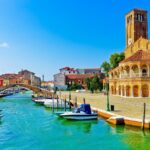
Faro di San Nicolò: pier views and Grand Hotel silhouettes
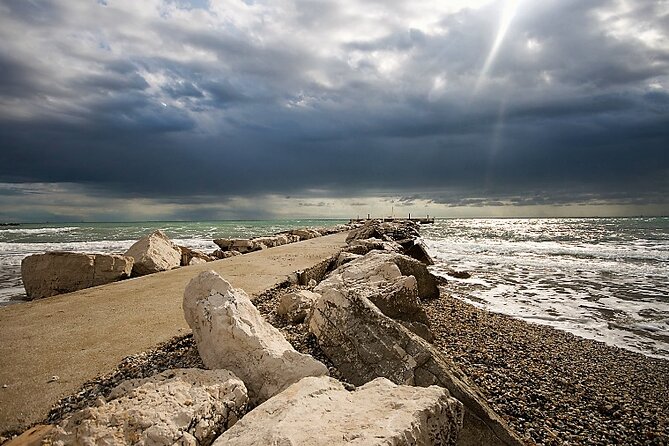
As you move toward Faro di San Nicolò, you’ll ride after biking in a protected natural zone. Then the route continues along an old pier between the sea and the harbor mouth until the lighthouse.
This is where the tour gets visually “cinematic” in a different way. You’re not watching movies—you’re seeing the coastline and recognizing silhouettes of famous buildings. In particular, you’ll get outlines related to the Grand Hotel des Bains and Hotel Excelsior.
If you like photography, this stop is worth the pause. Even if you don’t take pictures, the view gives you a mental map for the later hotel and film-festival stories.
Grand Hotel des Bains: when Thomas Mann and film came to Lido
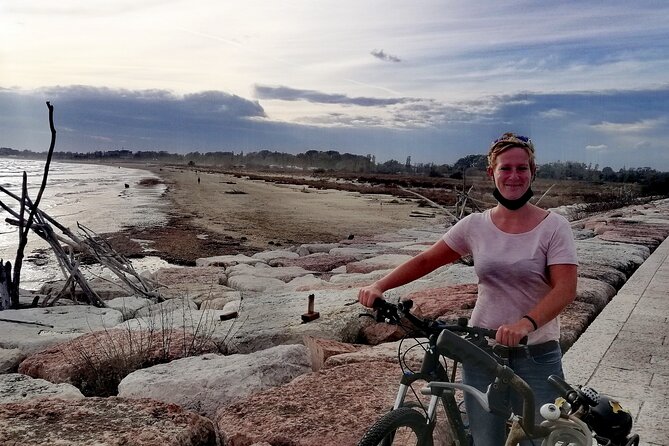
The Grand Hotel des Bains is a former luxury hotel built in 1900, and it’s remembered for two big cultural hooks.
First: Thomas Mann stayed here in 1911. Second: the hotel has been tied to filming—connected to movies like Death in Venice (1971) and The English Patient (1996).
What I like about this stop is that it doesn’t float as pure glamour. The guide ties the luxury-era presence to Lido’s real geography—why this island became a stage for wealthy visitors and later for screen stories.
It’s a short stop (about 15 minutes), but it lands. You walk away knowing this isn’t just an attractive facade. It’s a place that shaped attention.
Palazzo del Cinema and the beach-adjacent film festival feeling
At Ristorante Mostra Del Cinema, you connect to the world-famous Venice film festival tradition. The festival is held in late August or early September, with screenings at the historic Palazzo del Cinema.
This stop also carries a hotel connection: the still-running Hotel Excelsior (Art Nouveau, 1908) often hosts producers and actors during the festival.
Even if you’re not traveling during festival season, the value here is perspective. You get why people treat this stretch of Venice like a home base for international culture.
And then you shift back into movement—because the tour doesn’t stay stuck in film-world. It moves you back toward nature and the coast, which keeps the day from turning into one long “look at famous things” exercise.
Murazzi and the Adriatic breakwater ride
Then comes a classic Lido feature: the route along the Murazzi. This is a scenic stretch that follows the Adriatic sea and traces an 18th-century engineering work designed to protect the lagoon from high seas.
Why this matters for you as a rider: it’s one of those places where you can feel the coastline doing something functional. It’s not just scenery. It’s a working boundary.
This segment is about 15 minutes, but it changes the mood. You’re aware of wind and water, not just buildings and plaques.
Alberoni dunes: pine forest quiet and a near-empty beach
If you want the Lido that feels like it escaped the internet, head to L’Oasi delle Dune Alberoni. This includes the natural beach of Alberoni, where a maritime pine forest slopes down toward the island’s wilder beach.
The dunes themselves have an almost literary vibe; they’ve been associated with early inspiration from poets like Shelley and Byron. And in practice, the best part is what you likely came for in the first place: the beach can be close to deserted, with marine birds around and only a few kite surfers or windsurfers when conditions are windy.
This stop is about 15 minutes. You’ll want to use the pause well: take a breath, look at the dunes, and don’t rush the sand-to-pine feeling.
Malamocco: a fisherman village with mini-Venice vibes
From Alberoni, the tour steers toward Malamocco, a small fisherman village. Here you’ll ride through canals and calli (the Venice-style lanes), passing over Ponte di Borgo.
What I like about this part is the contrast. You go from wild dunes and sea air to a town that feels lived-in and local. It’s described as less overwhelming than bigger Venice areas, with a few churches and a Gothic palazzo—basically a smaller-scale Venice experience.
Again, expect a shorter stop (about 15 minutes). The goal isn’t to tour Malamocco like a standalone day trip. It’s to show you the island’s local texture without draining your legs.
Poveglia: quarantine and the island people talk about
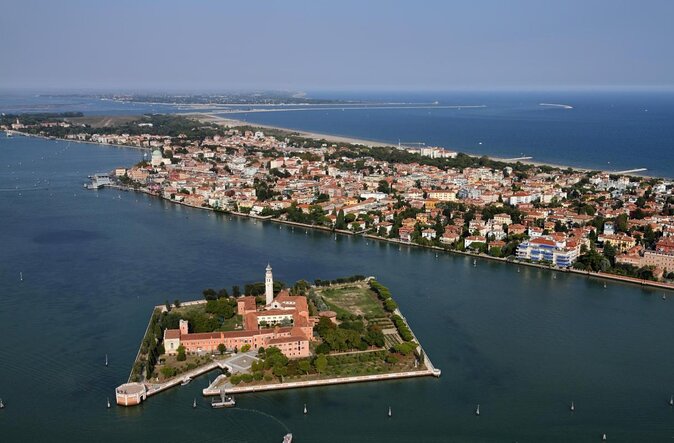
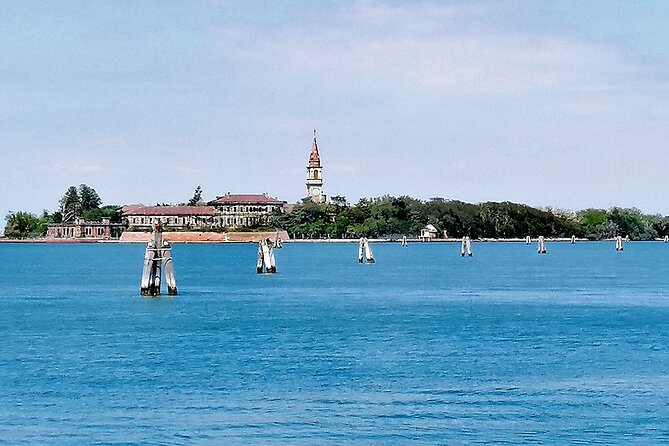
Now the tone shifts. You ride toward Poveglia, staying on the lagoon side of the island with views of Lazzaretto Vecchio.
The big historical note: from 1776, Poveglia was used as a quarantine station for plague and other diseases. Later, it became a mental hospital, closing in 1968. Because of that history, it’s frequently featured in paranormal-themed storytelling.
I think the value here is balance. Even if you’re not chasing scary legends, you’re seeing how Venice protected itself—by using islands as barriers when staying on the mainland wasn’t safe.
This is about 15 minutes, and the effect is strongest when you let the guide connect how isolation worked in the lagoon.
Lazzaretto Vecchio: the plague-era hospital and later military use
You continue to Lazzaretto Vecchio, which had an even earlier hospital role—cared for people during plague epidemics between roughly 1403 and 1630. It also functioned as a leprosarium, and later became a military post.
This stop works because you can compare it with what you just saw at Poveglia. The same lagoon geography that supports beauty also supported separation and survival.
It’s another 15-minute pause that feels heavy in the best way: not dramatic, just real.
San Lazzaro degli Armeni and Ausonia Hungaria: spiritual quiet and luxury tiles
On San Lazzaro degli Armeni, you’ll learn about the small island and its Armenian Catholic monastery tradition. The Mekhitarists congregation has been there since 1717.
You also get views of San Lazzaro degli Armeni island from the route area, which helps you understand how these islands sit apart inside the lagoon.
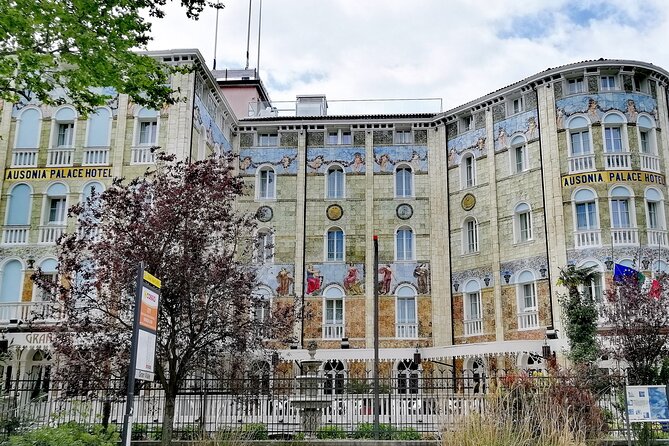
Then the tour returns to a different kind of cultural contrast at Grande Albergo Ausonia Hungaria (Hotel Ausonia & Hungaria, built 1913). This one is notable for its ceramic tiles on the main facade, recently renovated.
This pairing—monastery presence followed by decorated luxury facade—shows how the lagoon isn’t only about one story. It’s about different communities and different reasons people valued these islands.
Practicalities, timing, and what the price really buys
This experience runs about 4 hours 30 minutes and is priced at $203.50 per person. Bike rental is not included, but the organizer does handle the bike rental setup for you if needed.
Here’s how I’d think about value:
- You’re paying for a guide to connect places quickly. That matters on Lido because the best sites are spread out.
- You’re also paying for time efficiency. With a bike, you cover beaches, film connections, and lagoon islands within one afternoon.
- The small group size (max 10) helps the tour feel organized instead of rushed.
A few practical notes that matter on the day:
- The ride assumes moderate physical fitness. You don’t need to be a racer, but you do need to be comfortable pedaling for stretches.
- Choose your bike thoughtfully. If you’re worried about rough or sandy sections, the fat bike options make sense.
- The experience requires good weather, and since Lido is outside all day, rain can change your comfort fast.
- There’s a “tour with a local” vibe. In real life, that means the guide is attentive to pacing. In past rides, Valerio has been described as adjusting easily to the group and having humor that keeps the day light.
Also, there’s a small bonus beyond the official stops: the guide’s extra talk. One account described chatting with him afterward over a drink, picking up more island tips that didn’t feel like a lecture—more like hanging out with someone who actually cares about what you’re seeing.
Should you book this Lido bike tour?
Book it if you want an afternoon that’s more than postcard photos. This is a smart choice when you care about why Lido matters—Jewish cemetery layers, sea-related Venice rituals, and the film-festival footprint—while also getting time on actual beaches.
Skip it or adjust your expectations if you’re very sensitive to rough surfaces. The route can include uneven patches and at least one sandy stretch, so bring the right bike choice mindset, and be ready to walk a small section if needed.
If your Venice trip already includes crowded streets and museum lines, this is a refreshing counterbalance: Lido by bike feels like a different Venice—one with room to breathe, pedal, and notice details you’d miss on foot.