REVIEW · VENICE
Full Venice Walking Tour: Doge’s Palace and St. Mark’s
Book on GetYourGuide →Operated by Gray Line Venice - Park Viaggi · Bookable on GetYourGuide
Venice hits faster when you walk with a guide. I love how this route balances the big icons with quieter calli and squares where locals actually hang out, and I also love the practical skip-the-line focus at Doge’s Palace and St. Mark’s Basilica. One caution: even with skip-the-line entry, you should still expect security checks when you get close to the buildings.
You’ll start in Piazza San Marco and move in an organized loop around the city’s political, religious, and everyday life—without wasting time getting lost. If you’re lucky enough to have a guide like Cynthia (who’s known for mixing history with practical walking tips), the explanations can make the whole day feel easy and clear. If you get a guide who speaks softly or in a monotone way, the experience can feel less fun, so be ready to lean in and ask questions early.
In This Review
- Key highlights to look forward to
- Starting in Piazza San Marco: your fastest Venice orientation
- How Venice works on the outside: Clock Tower and Procuratie context
- Campo Santa Maria Formosa to SS. Giovanni e Paolo: Venice’s big civic church moment
- The Scuola Grande di San Marco: the charity school that shaped explorers
- Teatro Malibran and Le Mercerie: shopping street history, not just storefronts
- Calli and social squares: where Venice still feels lived-in
- Doge’s Palace: art and power in the same breath
- St. Mark’s Basilica: Byzantine monument, Saint Mark, and mosaics that stop you
- The Treasury and the Pala d’Oro: the gem-heavy finale
- Price and logistics: is $142.74 worth it for 4 to 4.5 hours?
- What to bring (and what to avoid) so you don’t lose time inside
- Who this tour fits best
- Should you book this Venice tour?
- FAQ
- How long is the Full Venice Walking Tour?
- Where does the tour start?
- What is included in the ticket and tour price?
- Does it include St. Mark’s Basilica skip-the-line access?
- What should I wear to enter St. Mark’s Basilica?
- Are bags or luggage allowed?
- What languages are the guides available in?
- Is the tour wheelchair accessible?
- Can I cancel for a full refund?
Key highlights to look forward to
- Piazza San Marco orientation that makes the rest of Venice easier to read on foot
- Skip-the-line entry at Doge’s Palace and St. Mark’s Basilica, plus guided context as you go
- Street-level Venice on Le Mercerie and into side streets where everyday social life continues
- Civic landmarks like SS. Giovanni e Paolo and the Scuola Grande di San Marco
- St. Mark’s Basilica treasures including the Byzantine mosaics and the Pala d’Oro in the Treasury
- A 4 to 4.5 hour structure that fits a single, high-impact Venice morning or afternoon
Starting in Piazza San Marco: your fastest Venice orientation
Most Venice “walking tours” start with the view. This one starts with the meaning. You’ll meet on Piazza San Marco and begin with a guided explanation of what you’re seeing: the city’s power center, the way Venice organized itself, and why this square became the stage for politics and religion.
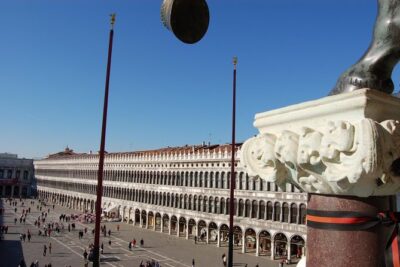
Even early in the tour, you’ll get an organized frame for the rest of the day. The guide points out the story behind the buildings and monuments around you, including the St. Mark’s Clock Tower and the Procuratie. You’ll often see these landmarks from outside, which is a smart move in Venice—clear sight lines, less time trapped in crowds, and enough context to appreciate what comes later.
The best part of starting here is that you immediately understand the grid of your own walking day. You’re not just passing sights; you’re building a mental map while you move.
You can also read our reviews of more walking tours in Venice

How Venice works on the outside: Clock Tower and Procuratie context
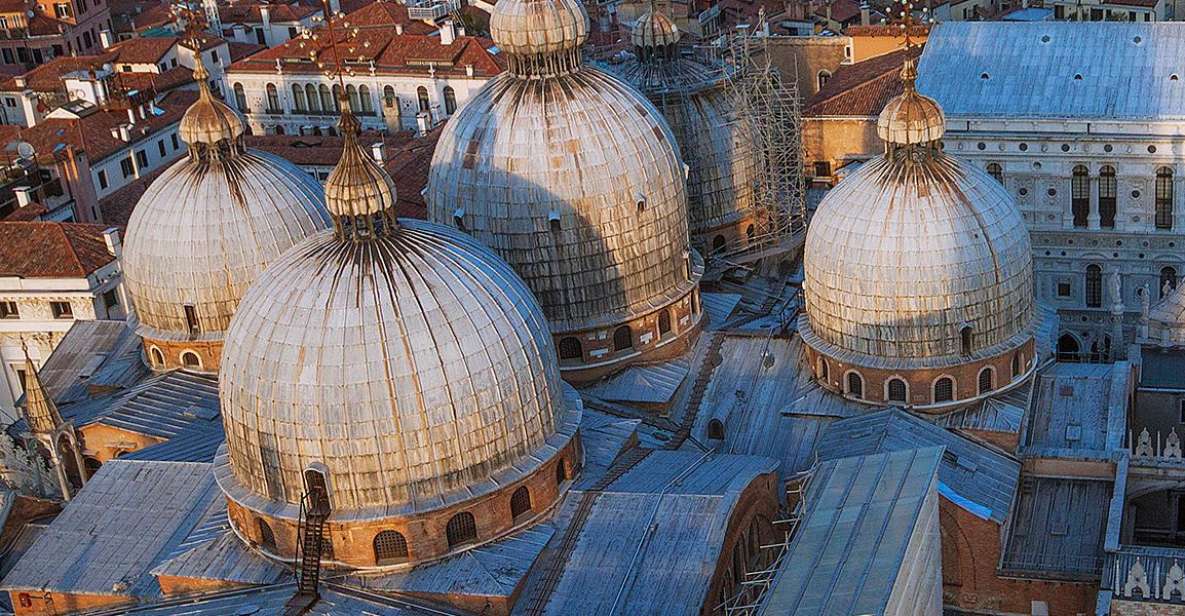
Venice can feel like one endless postcard until someone gives you a key. The early portion of this tour does that by focusing on what the city was trying to accomplish—control, trade, legitimacy, and unity—then linking those ideas to what you’re walking past.
You’ll learn the story of Venice and the Venetian Empire at key monuments around Piazza San Marco. That means you’re not waiting until Doge’s Palace to understand who had power. You get the background first, so when the tour later leads you into political rooms, it makes sense why the art and architecture are so intense.
This matters for you because it changes how you look. Instead of asking, What am I seeing? you start asking, Why did they build it this way? And in Venice, that question leads to better photos and better memories.
Campo Santa Maria Formosa to SS. Giovanni e Paolo: Venice’s big civic church moment
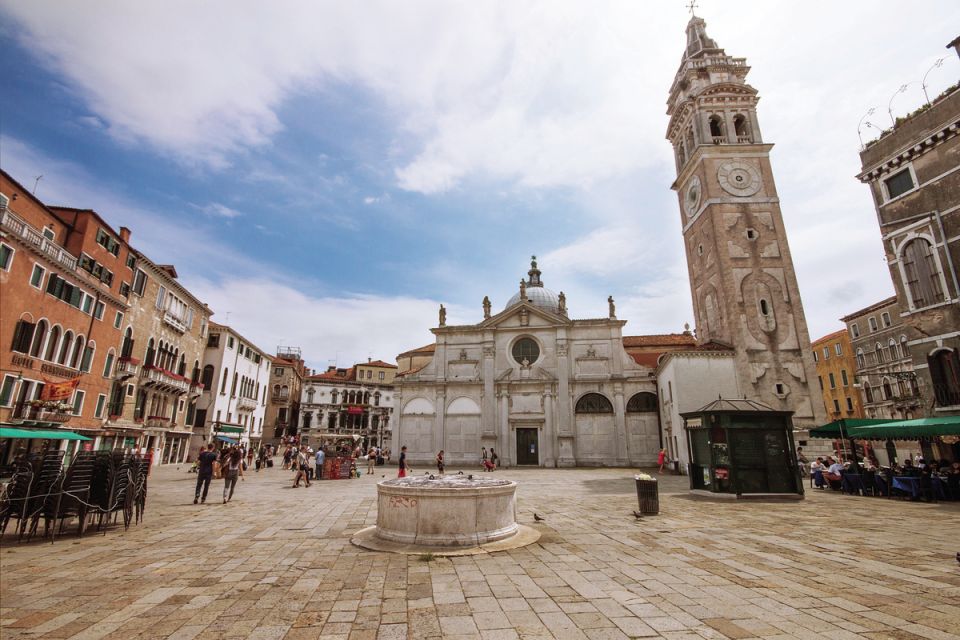
After Piazza San Marco, you’ll head toward Campo Santa Maria Formosa, where the tour spotlights SS. Giovanni e Paolo. This is one of those stops that works especially well for first-time visitors because it feels like Venice is switching gears—from political symbolism into public identity.
The church is known for its connection to major funerary art and for its famous “pantheon” idea—an important clue to how Venetian elites wanted to be remembered. Even if you don’t catch every detail on your first visit, your guide’s explanations help you notice what’s going on: how the city commemorated leaders, and how public places turned into statements of power and continuity.
Practical tip: wear comfortable shoes here. This stretch of Venice is not designed for quick walking. You want good traction for the uneven stone and a pace you can sustain without rushing.
The Scuola Grande di San Marco: the charity school that shaped explorers
Next comes one of the most interesting stops if you like Venice beyond the obvious. The tour visits the Scuola Grande di San Marco, also known as the Great School of Charity.
This isn’t charity in the modern, casual sense. It’s a window into how Venetian society was organized through brotherhoods and civic institutions. The tour also connects members with the world of exploration—known figures like the captains of fortune tied to some of the major Italian explorers of the 15th century. That link is a great reminder that Venice’s wealth didn’t stay locked in palaces. It supported voyages, reputations, and networks.
Why you’ll like this stop: it adds depth without requiring you to be an art historian. You’re learning how people structured community, influence, and ambition—through institutions that still leave a physical imprint on the city.
Teatro Malibran and Le Mercerie: shopping street history, not just storefronts
Back toward Piazza San Marco, the tour brings you past places like the Teatro Malibran, once described as the biggest, most beautiful, and richest theatre in the city. Whether you’re a theatre person or not, this is useful context because Venice treated performance as a public signal—status, taste, and civic pride.
Then comes Le Mercerie, the main shopping street, where you’ll see boutiques of top designers. Here’s the trick: you can treat this as a simple walk for shopping, or you can treat it as a clue. The tour helps you understand why this street mattered as the commercial heart of the city and what that says about how Venice generated and managed money.
If you like to browse, you’ll find this part enjoyable. If you don’t, it still works as a way to move through central Venice while learning what made the area important long before today’s brands.




Calli and social squares: where Venice still feels lived-in
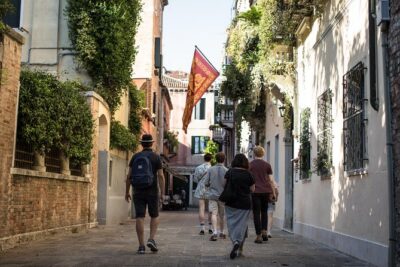
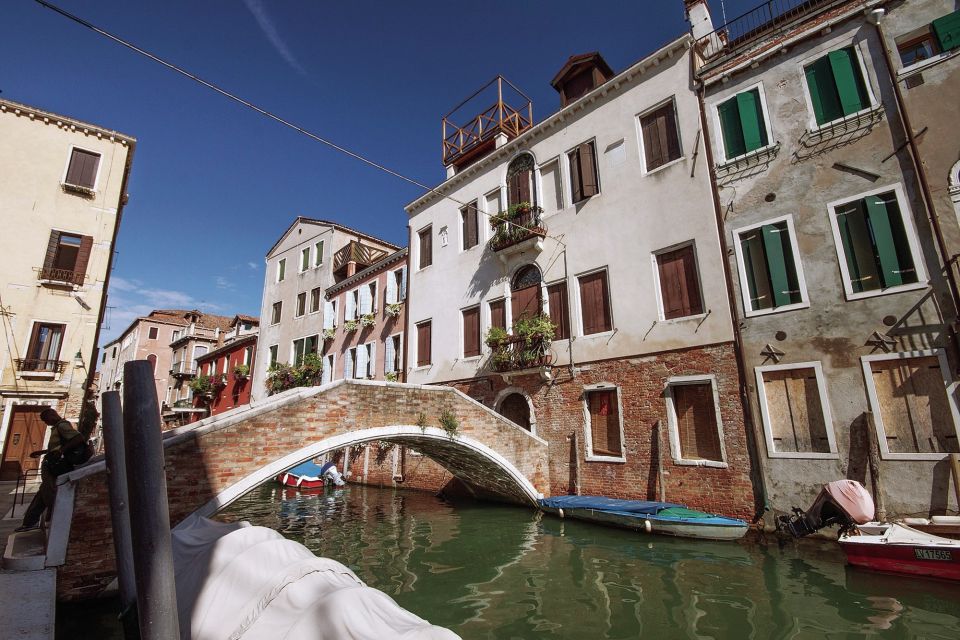
A major strength of this tour is that it doesn’t stay locked on monuments. You’ll be led through smaller alleys called calli, and toward picturesque squares where Venetians still gather to socialize.
This is the side of Venice that many “fast icon” tours miss. You get a chance to slow down, look around, and notice daily life—little conversations, the way people use the space, and how the city’s layout supports social routines even now.
One of the most helpful things your guide can do here is point out what to look for: the layout of a small square, the way streets open up, and which corners are worth standing in for a minute. Those small moments can end up being your best photos, because they’re real Venice, not just famous Venice.
Doge’s Palace: art and power in the same breath
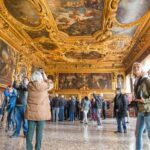
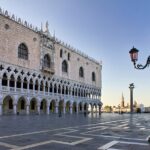
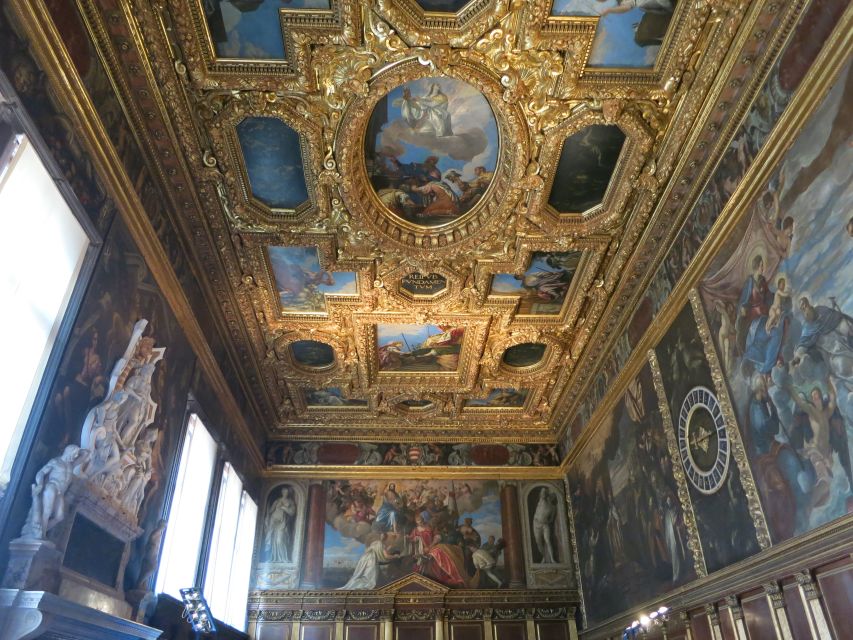
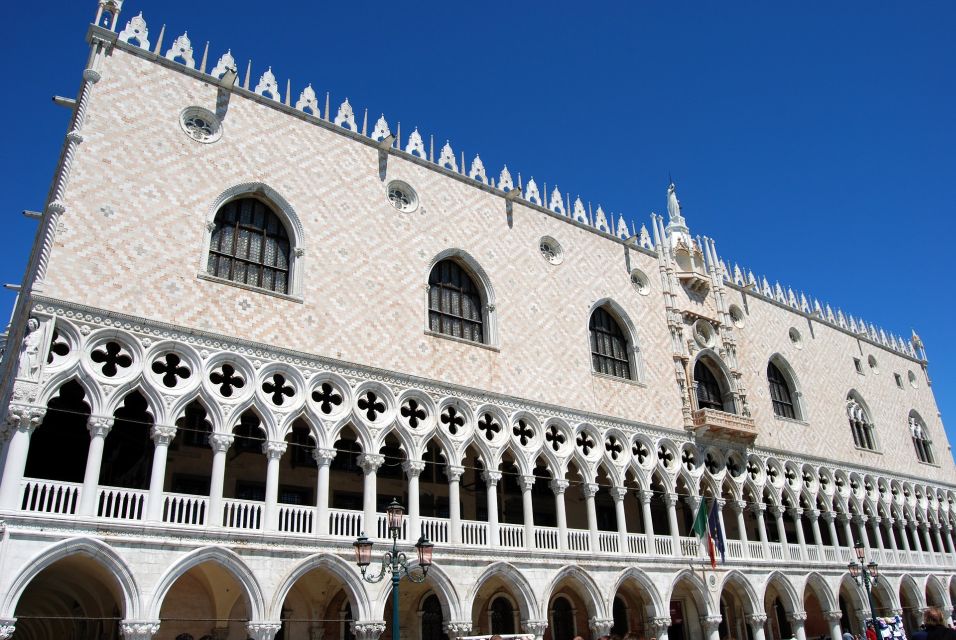
Then you get the centerpiece. The tour uses skip-the-line access to the Doge’s Palace, which is where Venice’s political identity becomes physical. This building is more than impressive—it’s a statement of how the city ran itself and how it displayed authority.
Before you enter, plan for security checks. Even when you have skip-the-line entry, you’ll still go through required screening near the entrances. That’s the main downside to this stop from a logistics perspective, but it’s also reality in a high-security, high-traffic place.
Inside, the tour focuses on the rooms and masterpieces you’ll see. You’ll learn that the Doge’s Palace served as the seat of Venetian political power for centuries, and the effect is immediate. The artwork isn’t decorative; it’s political language. It tells you who mattered and what values the city wanted projected.
Why the guide helps: without context, the palace can feel like “lots of rooms.” With context, each chamber starts to make sense as part of a system—law, governance, ceremony, and public display.
A note on group experience: if you end up with a guide who speaks softly or mumbles, this is the moment where you’ll wish you could hear every detail. The palace can overwhelm you visually; clear narration keeps you anchored.
St. Mark’s Basilica: Byzantine monument, Saint Mark, and mosaics that stop you
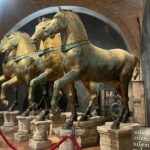
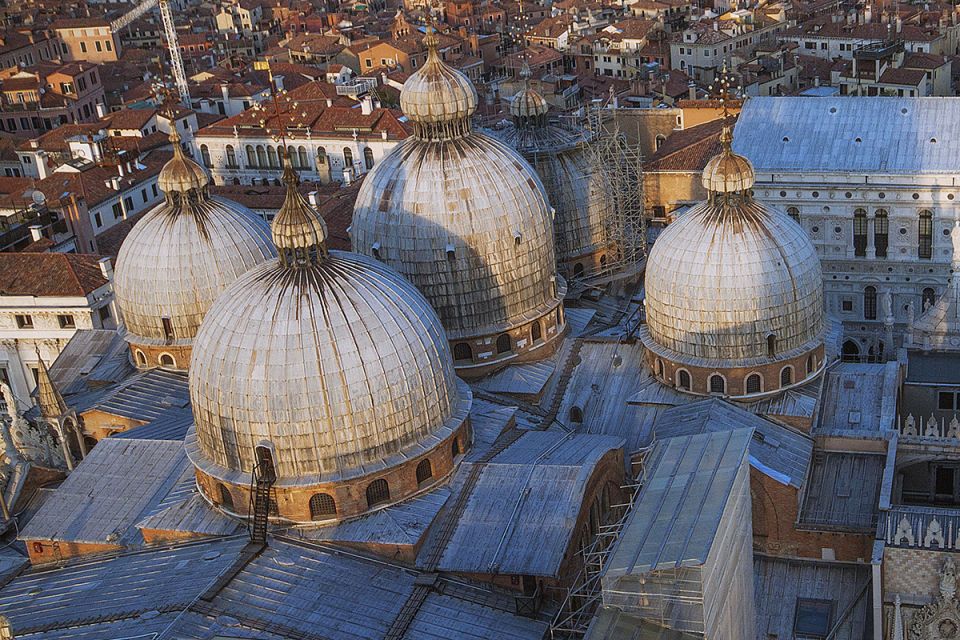
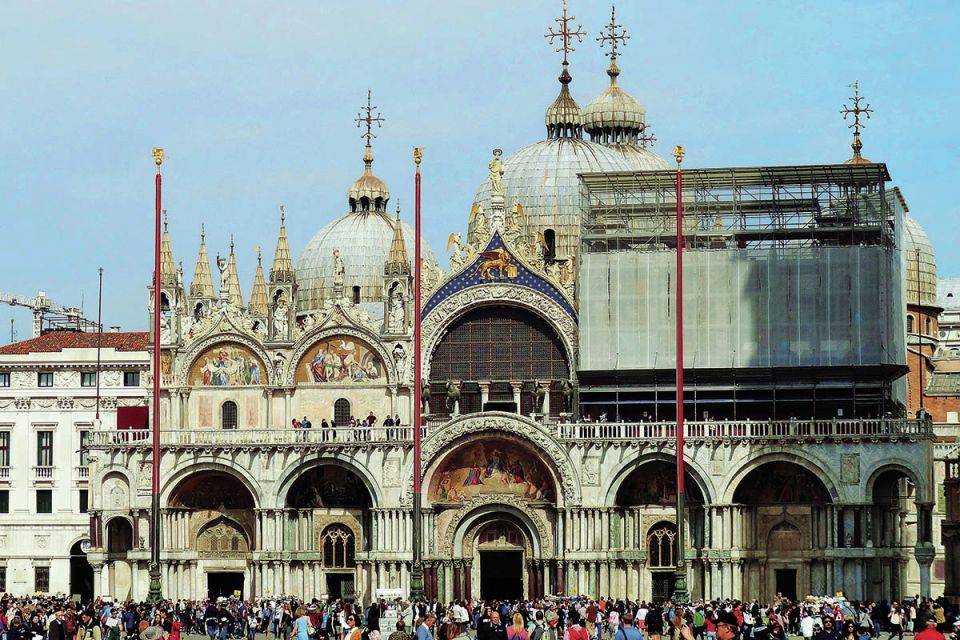
After Doge’s Palace, you’ll enter St. Mark’s Basilica. This is the kind of place where you don’t really need to hype it. The building does the talking fast. You’ll learn about Saint Mark and the story of how his ruins came to rest here, which gives weight to what would otherwise be just spectacle.
The tour highlights the Byzantine style and focuses on what people remember most: gold mosaics and marble inlays. You’ll spend time learning about the architectural masterpiece and its priceless treasures, and you’ll be guided through the logic of the imagery—how art becomes a religious and political message at the same time.
Dress matters here. You’ll want clothes that match basilica rules: no bare knees or shoulders. If you show up dressed for the heat without a plan, you risk being turned away or forced to improvise. Bring a light layer that you’re willing to use over your shoulders and legs.
Also, large bags aren’t allowed in St. Mark’s Basilica for security reasons. This is one of those points where preparation saves time and stress. Pack light.
The Treasury and the Pala d’Oro: the gem-heavy finale
Your St. Mark’s experience doesn’t end with what’s on the walls. The tour takes you to the Treasury, where you’ll see a splendid example of religious art and then marvel at the Pala d’Oro—the gem-encrusted centerpiece people come for.
Even if you’re not a collector type, this stop changes your perception of what “religious art” meant in Venice. It wasn’t only about worship; it was about wealth, identity, and the city’s ability to gather resources and craftsmanship.
Why this finale works: the rest of Venice’s icons can be overwhelming in a single day. But the Treasury gives a concentrated experience. You’re not walking room to room. You’re focusing on one stunning object and the stories behind it.
Price and logistics: is $142.74 worth it for 4 to 4.5 hours?
At $142.74 per person for about 4 to 4.5 hours, you’re paying for three things: timed entry, guidance, and included tickets for Doge’s Palace (with skip-the-line help at both Doge’s and St. Mark’s).
Here’s how I think about value for you:
- Time saved matters in Venice. Doge’s Palace and St. Mark’s Basilica are the kind of places where a delay can ruin your schedule. Skip-the-line access is usually worth it because it reduces the risk of losing momentum.
- You’re not just looking. You’re learning the story of Venice, the Venetian Empire, civic institutions like the Scuola Grande di San Marco, and then connecting it to what you see inside Doge’s Palace and St. Mark’s.
- You avoid the “ticket-buy chaos” on the day. That’s not glamorous, but it’s a real quality-of-life upgrade.
Potential downside is mostly human, not monetary. If your guide’s voice is hard to follow or the pacing feels slow, the art and monuments can start to blur together. On a tour this structured, you want a guide who keeps you oriented. If you’re sensitive to audio clarity, go in prepared to ask questions.
What to bring (and what to avoid) so you don’t lose time inside
Venice is fun until you hit a security line with the wrong bag. For this tour, bring:
- Passport or ID card
- Comfortable shoes
Leave behind:
- Luggage or large bags, especially because St. Mark’s has restrictions inside the basilica.
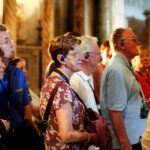
One small lesson I’d give you based on how tours like this run: if your tour uses a radio system, pay attention to how you carry it. If there’s a strap, use it. Carrying the device in your hand for long minutes can make your feet tired faster than you’d expect.
Who this tour fits best
This is a strong choice if you want a single morning or afternoon that hits both the political core and the religious treasure core of Venice. You’ll get exterior context first, then two of the biggest interiors, without wasting time wandering aimlessly.
You’ll also like it if you enjoy the city at street level. The route includes Le Mercerie, Teatro Malibran, and the quieter calli that show you how Venice functions beyond the camera-ready spots.
If you’re a wheelchair user, this specific tour is noted as not suitable. And if you hate walking in small crowded areas, Venice is still Venice here—tight lanes and busy entrances are part of the experience even with a well-run guide.
Should you book this Venice tour?
Book it if you want the best concentration of Venice icons in one guided loop: Doge’s Palace for political art, St. Mark’s Basilica for Byzantine mosaics, and a street-level path that helps you understand daily life around Piazza San Marco.
Skip it (or consider a different style) if you’re very sensitive to audio clarity and pacing. Some guides on this kind of tour can sound monotone or hard to hear, and once you’re inside the palace and basilica, you’ll miss the point if the narration isn’t coming through.
If you’re the type who likes to see Venice with a story attached—then this is a solid value. You’re paying for time saved, ticket access, and a guided thread that connects what you see to why it mattered.
FAQ
How long is the Full Venice Walking Tour?
The tour lasts about 4 to 4.5 hours.
Where does the tour start?
You meet on Piazza San Marco. The exact meeting point can vary depending on the option booked.
What is included in the ticket and tour price?
You get an entrance ticket to the Doge’s Palace, skip-the-line access to the Doge’s Palace and St. Mark’s Basilica, and a live guide.
Does it include St. Mark’s Basilica skip-the-line access?
Yes. Skip-the-line access is included for both the Doge’s Palace and St. Mark’s Basilica.
What should I wear to enter St. Mark’s Basilica?
You should wear appropriate clothes: no bare knees and no bare shoulders.
Are bags or luggage allowed?
Large bags and luggage are not permitted inside St. Mark’s Basilica for security reasons.
What languages are the guides available in?
The tour is offered with live guides in English and Spanish.
Is the tour wheelchair accessible?
No. It is not suitable for wheelchair users.
Can I cancel for a full refund?
Yes. You can cancel up to 24 hours in advance for a full refund.