REVIEW · VENICE
San Polo, Rialto & Frari: 2-Hour Private Walking Tour in Venice
Book on Viator →Operated by Venice Events srl · Bookable on Viator
Venice hits fast when you start with Rialto and San Polo. This private 2-hour walk is a smart way to see the parts of town many people skip after they tick off the big landmarks. You’ll get a guide who talks through the neighborhood’s mercantile past, including the trade in silk, spices, precious metals, and exotic woods.
What I liked most is how the tour keeps it personal. A private format helps you pause without getting shoved, and the guide’s narration gives meaning to what you’re seeing, not just a list of sights. One more win: you end at the Frari Basilica, where you can step inside and focus on Renaissance art by Titian and Bellini.
One drawback to plan for: this is tight timing. Church time is limited, and the Frari entrance is not included, so you’ll want to budget a little extra for entry if you plan to go inside.
Key highlights at a glance
- Private, 2-hour format that keeps the walk flexible and crowd-resistant
- A mercantile story trail tied to Rialto Bridge, the statue area, and the market
- San Polo walking streets and campos with living-neighborhood energy
- Frari Basilica visit focused on statuary and art by Titian and Bellini
- Optional hotel pickup if you’re staying in the Rialto area
In This Review
- Where the Walk Begins: Campo San Bortolomio to Rialto Bridge
- Ponte di Rialto, Il Gobbo di Rialto, and the Market Stops That Explain the Trade
- San Polo’s Back Streets: Where the Neighborhood Story Feels Real
- Frari Basilica: A Short Visit to Big Names in Renaissance Art
- Why This Private 2-Hour Tour Works Better Than Longer Sightseeing
- Price and Value: Is $322.58 per Person Worth It?
- Who Should Book This San Polo, Rialto & Frari Walk?
- Should You Book It?
- FAQ
- How long is the private walking tour?
- Where does the tour start?
- Where does the tour end?
- Is pickup available?
- Is this a private tour?
- What sights are included in the walk?
- Are church or museum entrance fees included?
- What languages are the guides available in?
- Do you get a ticket on your phone?
- Can I cancel and get a refund?
Where the Walk Begins: Campo San Bortolomio to Rialto Bridge
You start near Campo San Bortolomio, which is a great choice if you want to get out of the motion and into real Venice neighborhood life. The meeting point is also close to public transport, so it’s workable even if you’re juggling water buses, walking, and a tight schedule.
From there, the route moves you toward Rialto quickly—but not in a rushed, sprinting way. You’re not just walking past buildings. You’re getting the context that turns sights into stories. That matters in Venice, because many streets look similar until someone explains what each bend, canal edge, or campo once meant.
Also, you can usually choose a morning or afternoon slot. I’d pick based on your energy level: morning often feels fresher for a first pass through Venice, while afternoon can be easier if you’re coming from an earlier stop.
If you’re staying in the Rialto area, pickup is optional. That can shave stress off your arrival day, especially when you’re figuring out which bridges to use and how close your hotel is to where you actually want to be standing.
Ponte di Rialto, Il Gobbo di Rialto, and the Market Stops That Explain the Trade
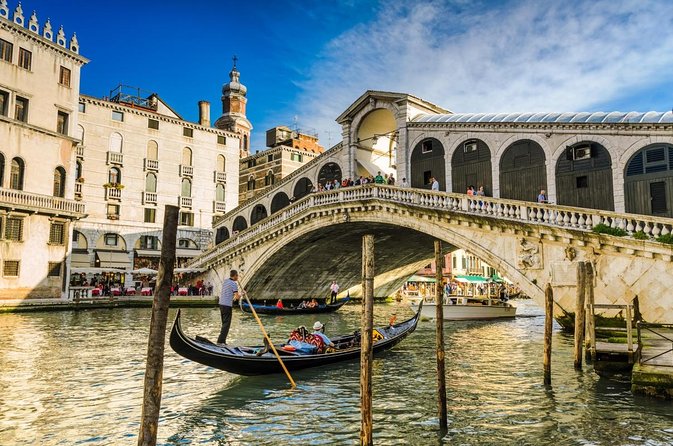
The first real anchor is Ponte di Rialto. Even if you’ve seen the bridge in photos, it feels different in person because it’s surrounded by constant foot traffic and old-world commerce energy. Here’s the trick: in a private tour, you’re more likely to get a sensible moment to look around, rather than being stuck in the thickest press of the crowd.
What makes this stop worth the time is what your guide connects to it. The bridge wasn’t just a scenic crossing; it’s part of how people moved goods and money. Your guide’s narration ties the area to brisk trade that included silk, spices, precious metals, and exotic woods. Suddenly the bridge feels like a piece of a larger machine, not just an Instagram destination.
Next comes Il Gobbo di Rialto, the statue of the Gobbo di San Giacomo. This is one of those Venice details that most people walk past without noticing, but it adds character to the walk. It also helps break up the flow between big landmark spaces and the smaller, more local corners you’ll cover soon after.
After that, you move to Mercati di Rialto, the famous Rialto market area. This is where you get a dose of Venice’s everyday trading spirit. The time is short, but it’s built to match the story: your guide links the market setting to the goods that made Venice powerful. The effect is practical. When you later see similar storefronts and trading history in other parts of town, you’ll already know what to look for and why it mattered.
If you’re the type who loves architecture and city layout, Rialto is also a great place for that. Bridges, narrow lanes, and market proximity all shape how people shop, talk, and move. You’ll leave this stretch with better city sense, not just better photos.
You can also read our reviews of more walking tours in Venice


San Polo’s Back Streets: Where the Neighborhood Story Feels Real
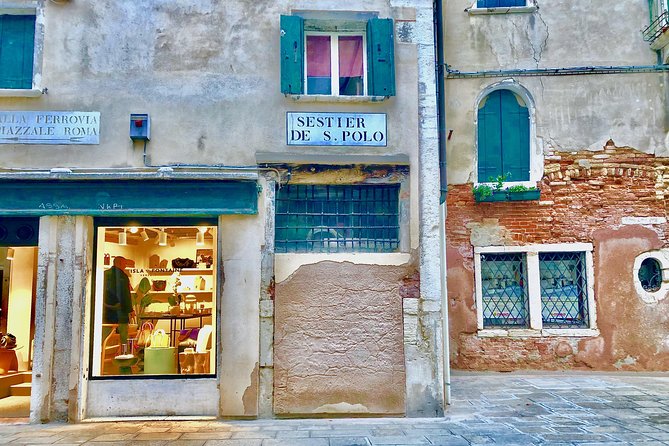
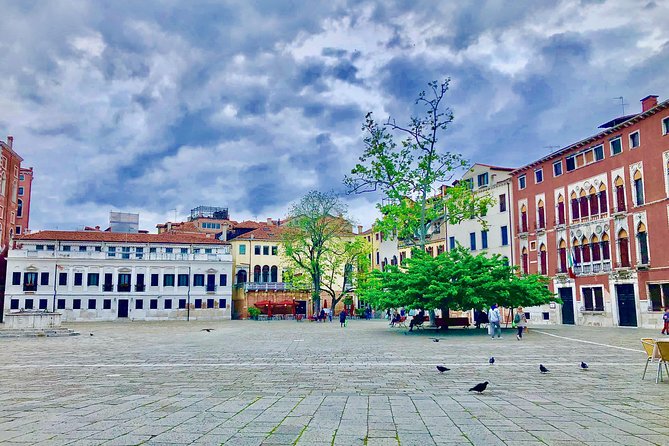
After Rialto, the walk shifts into San Polo, with time around Campo San Polo. This is where the tour does something many fast sightseeing plans don’t: it slows down enough to help you understand the neighborhood rather than just collecting stops.
San Polo is a working Venice vibe. You’re walking through areas with historic shops and living quarters, so it feels less like you’re touring a museum and more like you’re watching the city do what it does. Your guide’s narration keeps the thread going from trade to daily life, so you’re not just seeing pretty streets. You’re seeing how commerce and community overlap.
One of the most useful things about private guiding is that you can get a sharper response to your own interests. If you care about how markets shaped the city, your guide can lean into that. If you’re more into art and architecture, they can connect it back to the neighborhood spaces you’re walking through. A guide like Marco (named in one of the accounts I saw) was praised for keeping the stories clear and for adding extra sights when the group’s plans overlapped.
That flexibility is real value. If you’ve already done a broader Venice highlight tour on the same trip, you won’t feel locked into a script that repeats what you already saw. Your guide can help you choose the version of Venice you still want—more quiet lanes, more local feeling, or more art-forward stops.
Practical note: Venice walking means cobblestones and lots of turning. San Polo is a great zone to explore on foot, but wear comfortable shoes and expect a slow pace even when you feel like you could go faster.
Frari Basilica: A Short Visit to Big Names in Renaissance Art
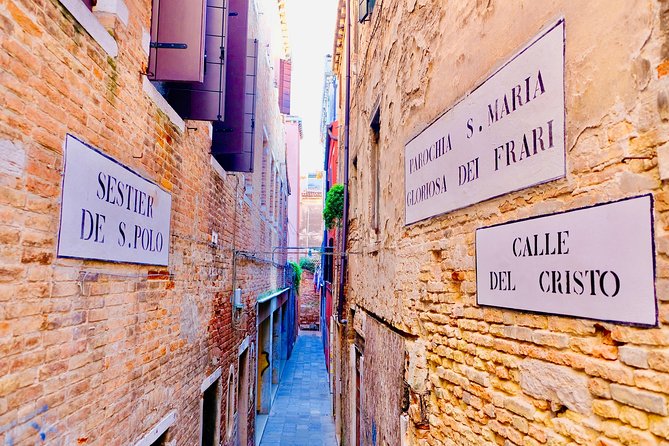
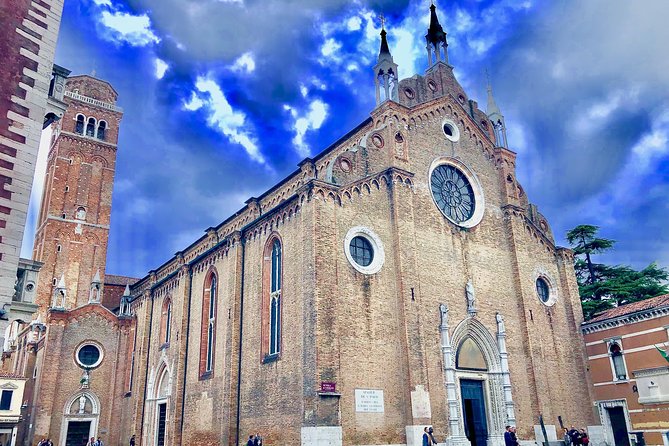
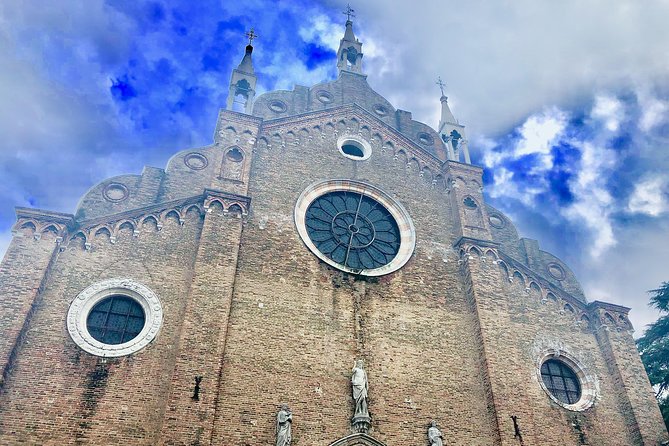
The final major stop is Basilica di Santa Maria Gloriosa dei Frari—often just called the Frari. This matters because it’s not a quick look at an exterior. You step inside to see statuary and important Renaissance art connected with Titian and Bellini.
The timing here is about 20 minutes. That can feel short if you love museums-style browsing, but it’s also smart. In 20 minutes, you can get your bearings and see the big-ticket art and religious sculpture points that your guide points out. If you want to linger later on your own, this stop still sets you up well. You know what you came for, and you can return with a clearer focus.
The Frari is also described as imposing in architecture. That’s one of those Venice churches where the scale hits you right away, and the interior details reward attention. Even if you only have a limited window, guided time helps you spot what matters without getting stuck in the overwhelm of a big space.
One consideration: entrance fees to churches are not included. Plan for that, so the visit doesn’t turn into a last-minute decision about whether you’re willing to pay to go inside.
Why This Private 2-Hour Tour Works Better Than Longer Sightseeing
A 2-hour walking tour is not a lot of time, but that can be the point. With Venice, too much time chasing too many landmarks turns into fatigue and shallow seeing. This one stays compact: Rialto bridge, the Gobbo statue, the market area, San Polo, and then the Frari.
Because it’s private, your guide can keep things moving at a pace that fits your group. That also means you can ask real questions mid-walk without feeling like you’re slowing down a big group. People tend to enjoy private guiding most when they engage—asking what a detail means, where a story connects, or what to notice for later.
There’s also a value angle here. At $322.58 per person, this isn’t a budget pick. It makes sense when you value time, comfort, and a focused route. If you’re traveling with a partner or a small group and you want a guided first day that helps you navigate the city afterward, the cost can feel easier to justify.
It’s also a great timing option. One of the accounts I reviewed described using it as an introduction to Venice just after arrival. That’s a strong use case because the tour builds mental maps fast: where Rialto sits in the larger neighborhood web, how San Polo feels, and what kind of art power the churches hold beyond the obvious tourist stops.
Price and Value: Is $322.58 per Person Worth It?
Let’s talk straight about money. $322.58 per person is a premium price for a short walk. You’re paying for three things you don’t get in standard group tours: privacy, a guiding voice that shapes what you notice, and a tight route that hits a coherent theme—Rialto commerce and San Polo neighborhood life, ending with a major church interior.
So when does it feel worth it?
- When you want a personal guide to explain what you’re seeing, not just stand around at stops.
- When you’d rather do fewer sights and understand them well.
- When you care about finishing with an art stop like the Frari that rewards inside time.
- When your schedule is tight and you want a structured plan for the first hours in Venice.
If you’re the type who enjoys wandering on your own with minimal structure, you might choose self-guided options instead. But if you want the city to make more sense quickly, the private format is the main reason this tour can be a smart spend.
You can also read our reviews of more private tours in Venice





Who Should Book This San Polo, Rialto & Frari Walk?
This tour is a good fit if you want Venice to feel lived-in, not staged. I’d especially recommend it if you like neighborhood atmospheres, markets, and city stories tied to how people once made and moved wealth.
You’ll likely enjoy it if:
- You’re visiting for the first time and want a quick orientation that isn’t cookie-cutter.
- You like art, and you want a guided route that ends with the Frari Basilica and big names like Titian and Bellini.
- You want fewer crowds and more personal pace.
- You’d benefit from optional pickup (if you’re staying in the Rialto area).
It’s also a strong choice if you want to layer it after another Venice tour. The private setup can help avoid repetition, and a flexible guide can add small extras if the day allows.
Should You Book It?
If you’re aiming for a first-day plan that mixes Rialto, San Polo, and a meaningful church visit, I think this tour is a solid buy. The route is short but purposeful, and the guide narration turns the area from postcard Venice into an understandable city.
Book it if you want a private guide to help you notice the right things fast—especially the mercantile storyline and the payoff of stepping into the Frari. Skip it only if you’re chasing a long list of stops, or if you’d rather spend your time wandering without a guiding voice.
FAQ
How long is the private walking tour?
The tour lasts about 2 hours.
Where does the tour start?
It starts at Campo San Bortolomio, Venice.
Where does the tour end?
It ends at Basilica S. Maria Gloriosa dei Frari, in San Polo.
Is pickup available?
Optional hotel pickup is offered if your hotel is in the Rialto area.
Is this a private tour?
Yes. Only your group participates.
What sights are included in the walk?
You’ll visit Ponte di Rialto, Il Gobbo di Rialto, Mercati di Rialto, San Polo (Campo San Polo), and the Frari Basilica.
Are church or museum entrance fees included?
Entrance fees to churches or museums are not included. The Frari Basilica entrance is listed as not included.
What languages are the guides available in?
The guide is available in English, French, German, Spanish, or Italian.
Do you get a ticket on your phone?
Yes, a mobile ticket is provided.
Can I cancel and get a refund?
Yes. Free cancellation is available up to 24 hours before the experience start time for a full refund.