REVIEW · VENICE
Venice Walking Tour and Gondola Ride
Book on Viator →Operated by ROMAETRAVEL · Bookable on Viator
Venice moves best with a plan. This Venice walking tour with gondola pairs St Mark’s area classics with story-led stops, so you don’t just look at buildings—you understand why they matter. I especially liked the way the guide turned corners and canals into people-and-power stories, with names like Julian and Elisabeth coming up in past groups for their energy and clear explanations.
I also like the mix: you get the obvious heavy hitters around Piazza San Marco, Rialto, and Doge’s Palace, plus less-expected streets that help Venice feel walkable instead of chaotic. There’s real value here if you want an intro that also gives you a route you can reuse later.
One caution: the pacing can feel fast, and the biggest risk is logistics. If you’re even a few minutes late to the Santa Lucia meeting spot, you can end up losing time on the gondola portion.
In This Review
- Key things to know before you go
- St Mark’s and the Grand Canal: where this tour starts to sing
- The Piazza San Marco loop: what you see and what you’ll skip
- Bridge of Sighs and Rialto: the photo stops with real context
- Doge’s Palace and La Fenice: big names, but know what costs extra
- The gondola ride: slow water, quick decisions
- How the 3 hours really feels on the ground
- Value check: what you’re paying for at $185.38
- Who this tour suits best (and who should think twice)
- A few practical tips that prevent stress
- Should you book this Venice walking tour and gondola?
- FAQ
- How long is the Venice walking tour and gondola ride?
- What’s included in the price?
- Are admission tickets for major sights included?
- Where does the tour start and end?
- Is food or drinks included?
- What’s the group size limit?
- Is there an access fee for some visitors?
Key things to know before you go
- Small-group feel: capped at up to 14 travelers, with some departures noted at up to 8
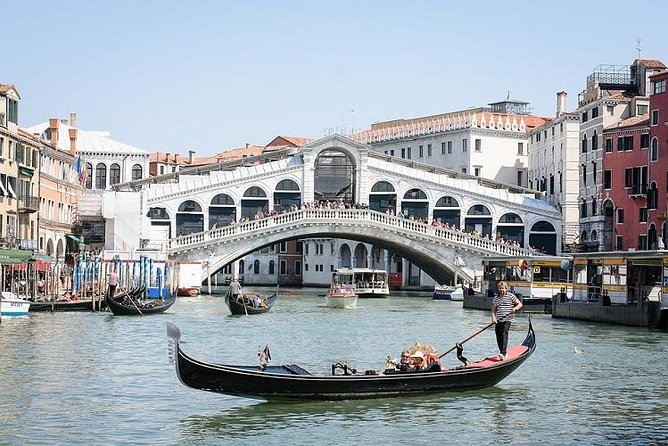
- Gondola ride included: you get the traditional gondola experience as part of the 3-hour plan
- Prime Venice targets: St Mark’s Square, Rialto Bridge, Bridge of Sighs, Doge’s Palace area
- Some major museum entries cost extra: Campanile/Basilica pieces, clock tower, Doge’s Palace, Teatro La Fenice are listed as not included
- Comfort matters: you’ll be on cobblestones, so comfortable shoes are a must
- Pace can be tight: a guide who keeps momentum can make it hard to stop for photos and listen at the same time
St Mark’s and the Grand Canal: where this tour starts to sing
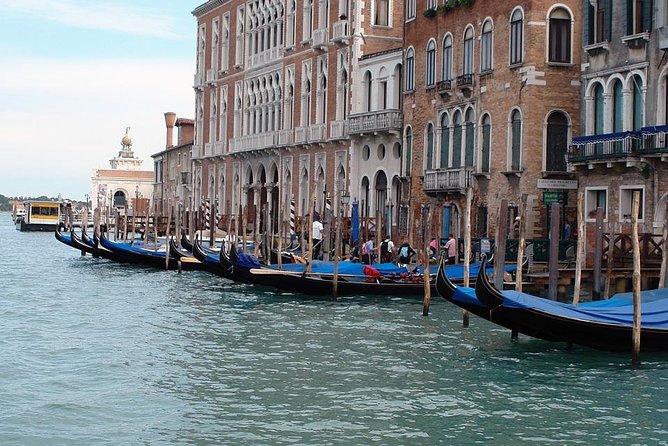
Most first-timers arrive in Venice thinking the city is all one postcard. This tour pushes back on that idea in a good way. You begin near the Canal Grande, the city’s main “street,” where the city’s layout makes more sense once you see the canal’s shape and scale.
The Grand Canal is 3.8 km long and widens from about 30 to 90 meters. It runs like a reverse S through the central districts, dividing Venice’s core into two halves. I like opening with this because it helps you later when you’re trying to figure out where you are relative to St Mark’s and Rialto.
Then you transition into Piazza San Marco, the political, religious, and social heart. The guide usually points out that everything else in Venice tends to be called campi, except the Piazzetta and Piazzale Roma. That little language detail makes the city feel more legible as you walk.
You can also read our reviews of more walking tours in Venice

The Piazza San Marco loop: what you see and what you’ll skip
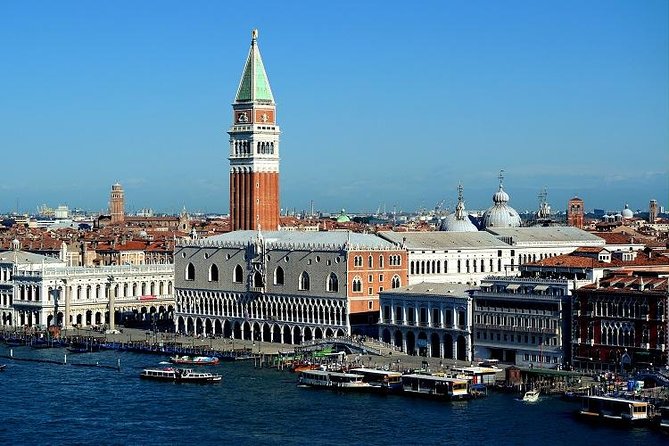
The core of the experience is anchored in the square and its immediate edges. You’ll spend time around the Basilica di San Marco area, the Campanile di San Marco, and nearby sights like the Clock Tower.
At Campanile di San Marco, the focus is the setting. The Basilica di San Marco sits in the square, with a structure dating to the latter part of the 11th century and a Gothic-leaning main façade look. The key practical point: the Campanile entry is not included, so if you plan to go inside, you’ll need to budget extra time and money outside the tour price.
Next you’ll reach Torre dell’Orologio (Clock Tower), an early Renaissance structure on the north side of the Piazza San Marco at the Merceria entrance. The clock-tower complex is paired with lower buildings on each side and adjoins the Procuratie Vecchie end. The tower is listed as not included for admission, so treat it as a great photo-stop and orientation point rather than a guaranteed interior visit.
This section works best if you can handle crowds. St Mark’s is busy, and the group can keep moving. One past guest experience complained about feeling rushed and not always hearing explanations clearly, so I’d plan to stay close to the guide and accept that this is a paced intro, not a slow wander.
Bridge of Sighs and Rialto: the photo stops with real context
A standout moment is Ponte dei Sospiri (Bridge of Sighs). It’s built from white Istrian stone (1602) and connects Palazzo Ducale to the Prigioni Nuove, the new Venetian prisons. The bridge is unusual because it’s fully covered, formed by two wall-separated corridors—so you’re seeing a connector that was literally designed to move captives without exposure.
That’s exactly why I like this stop on a guided tour. It turns the bridge from a classic picture into a story about justice, power, and secrecy in the old Republic.
Then you’ll move to Ponte di Rialto. Venice has roughly 354 bridges, but Rialto is one of the few that instantly defines the city for most people. It’s the oldest of the four bridges spanning the Grand Canal at this location and has been rebuilt multiple times—first with two old ships, then a wooden structure, and finally the version visible today from the 1591 reconstruction.
Spending time here is also smart because Rialto sits between the sestieri of San Marco and San Polo. Even if you don’t become a map wizard immediately, you start to feel how Venice “routes” people: bridges are the connectors, canals are the highways, and narrow streets are the shortcuts.
Doge’s Palace and La Fenice: big names, but know what costs extra
After Rialto, the tour lands you in the orbit of Doge’s Palace. This building is Venetian Gothic in style and served as the residence of the Doge, the head of the former Republic. It opened as a museum in 1923, and it’s run as one of the 11 museums managed by Fondazione Musei Civici di Venezia.
The practical catch: Doge’s Palace admission is not included. So you’ll likely get time in the immediate area or an orientation-style visit window rather than a full museum experience. If you know you want to go inside and plan to spend real time with art and archives, you should think of this tour as a primer—then you can come back on a separate day with tickets for your preferred pace.
You’ll also pass Teatro La Fenice, one of Italy’s most famous opera houses. In the 19th century, it was the stage for major operatic premieres, with works from the big bel canto names—Rossini, Bellini, Donizetti, and Verdi—showing up in its premiere history. Again, admission is not included, so treat it as a landmark stop unless you’re arranging tickets separately.
I like that this part doesn’t pretend you’ll see everything in one 3-hour sprint. It helps you prioritize which indoor experiences you want to pay for later.
The gondola ride: slow water, quick decisions
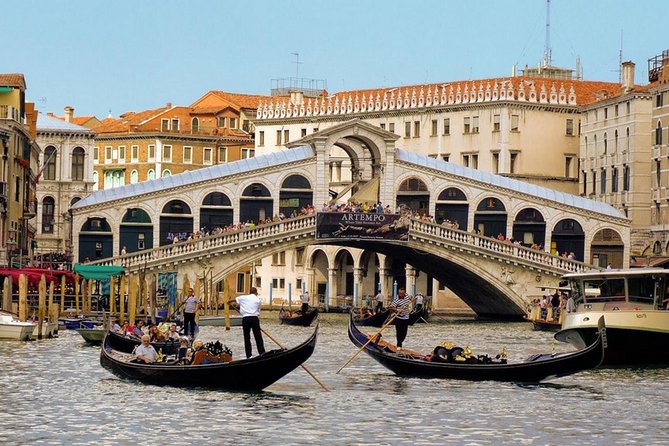
The tour ends with your traditional gondola ride, a signature Venetian ritual that the tour describes as tied to the city’s long gondola tradition. This is the emotional payoff for many first-timers: after the walking, your brain gets to decompress on still water.
A small heads-up from real-world experiences: don’t bet your evening on a specific style of gondola entertainment. One past group noted they did not get the singing gondolier version. That doesn’t mean the ride isn’t beautiful—it just means what you get can vary.
Also, timing matters. The walking pace and crowd levels in central Venice can make the gondola line-up feel tight. If your tour includes staff escorting you to the gondola location, pay attention at the moments just before departure and be ready to move when they say move.
The good news: guides like Julian were praised for making sure the group got to the gondola and then back together at the end. That kind of coordination is a big deal in Venice, where it’s easy to lose each other in the maze.




How the 3 hours really feels on the ground
The schedule lists a series of short stops across major sites, with durations like about 10 minutes for the Canal Grande orientation, then around 30 minutes at multiple square-and-bridge anchors, and shorter time at spots like the Clock Tower. On paper it’s structured. In reality, it’s a mix of walking, crowd navigation, and quick explanations.
So here’s the mental model: this is an intro tour built for first impressions and storytelling, not a museum substitute. You’ll walk enough to learn your bearings, but you won’t linger long enough to master every detail of Basilica rooms, palace galleries, or tower interiors.
If you love a fast rhythm—seeing a lot without planning too hard—this fits. If you hate rushing and want time to take your shoes off at every corner café, you may feel boxed in.
Value check: what you’re paying for at $185.38
At $185.38 per person for a roughly 3-hour experience, the cost isn’t just about walking. You’re paying for three things:
- a guide to interpret the sights (and keep you pointed in the right direction),
- the small-group format,
- and the included traditional gondola ride.
In Venice, gondola time and logistics can be pricey, so the included ride is a strong anchor for value. The price becomes more reasonable when you’re not also buying multiple entries on the spot—especially because several major admissions are listed as not included.
If you’re the kind of traveler who likes to save money by picking only one or two paid sights, this tour can work well as your orientation base. Then you choose what to add later when you’re less overwhelmed.
Who this tour suits best (and who should think twice)
This tour is a strong fit if you:
- are seeing Venice for the first time and want a logical route,
- want a guide to connect landmarks to stories,
- plan to come back for separate interior museum visits (Doge’s Palace, Campanile areas, and other ticketed stops).
It might not be your best match if you:
- hate moving quickly through crowds,
- need lots of bathroom breaks or long photo pauses,
- rely on a slow, unstructured walk to enjoy Venice.
The key is matching your pace tolerance to the tour style.
A few practical tips that prevent stress
- Wear comfortable shoes. Cobblestones add up fast.
- Arrive early at Venice Santa Lucia station. The meeting point is at Stazione di Venezia Santa Lucia, and the tour ends back there.
- If you’re a day-tripper staying outside the historic center, check the local €5 access fee guidance for certain dates using the official link listed for this tour.
- Bring something small to drink or a snack plan, since food and drinks aren’t included. This helps you stay focused instead of scanning menus mid-walk.
- Have patience for crowd noise around St Mark’s and Rialto. Even the best guide can’t control the city’s sound level.
Should you book this Venice walking tour and gondola?
I’d book it if you want a classic Venice “first day” that gets you to the right places fast: St Mark’s energy, Rialto landmarks, Bridge of Sighs drama, and then the gondola payoff. The strongest argument is the combo—walking plus a guided narrative plus a gondola ride—kept to a small-group size, and supported by guide feedback that names real people like Julian and Elisabeth.
I wouldn’t book it if your number one goal is slow strolling or deep museum time inside ticketed sites. This is built for orientation and stories, not for standing in line for hours inside every landmark you pass. If that’s your style, you’ll likely get more satisfaction with separate museum tickets and more self-guided time.
FAQ
How long is the Venice walking tour and gondola ride?
It’s listed at about 3 hours.
What’s included in the price?
The tour includes a guided walking tour, a traditional gondola ride, and a small group format.
Are admission tickets for major sights included?
No. Admission tickets are listed as not included for several stops such as Campanile di San Marco, Torre dell’Orologio, Doge’s Palace, and Teatro La Fenice. Other stops are listed with admission ticket free.
Where does the tour start and end?
It starts at Stazione di Venezia Santa Lucia and ends back at the same meeting point.
Is food or drinks included?
No. Food and drinks are not included.
What’s the group size limit?
The tour is described as small group limited to a maximum of 14 people, and it also notes a maximum of 8 travelers for the activity.
Is there an access fee for some visitors?
On certain dates, day visitors staying outside Venice may be required to pay a €5 access fee. The tour provides a link for details and exemptions.