REVIEW · VENICE
New – Maleficia: Inquisition, Torture and Witchcraft between the centuries
Book on Viator →Operated by CITY TOURS CO. LTD · Bookable on Viator
Venice keeps a dark paper trail. This Maleficia visit inside the Prisons’ Palace turns Venetian law into something you can actually see—documents, objects, and the machinery of fear that sat behind witchcraft accusations, all in about an hour.
I especially like the way the exhibition ties the story to real material: not just ideas, but what officials held in their hands and wrote on paper.
Two things I liked a lot: the experience runs as a small group (max 15), and the on-site guiding style can be genuinely engaging—sharp, clear, and focused on what the objects meant. One possible drawback is practical: the meeting spot can be confusing, and signage on the building may not instantly match what you expect, so arrive with your address saved and give yourself a few extra minutes.
In This Review
- Key highlights to notice before you go
- Maleficia in Venice’s Prisons’ Palace: what you’ll actually see
- The 1-hour museum tour: how the timing and group size help
- Circolo Artistico and the meeting point at Riva degli Schiavoni
- Documents and justice instruments: why the objects matter
- Inquisition-era Venice: the 15th–18th century context you get
- Torture tools and confessions: what to expect from the guided explanation
- Casanova, magic, and the way fame got dragged into the courts
- Tone check: how to handle the emotional weight of the subject
- Value for money: is $11.56 good use of your Venice time?
- Who should book Maleficia—and who might pass
- A quick plan to avoid common hiccups
- Should you book Maleficia: Inquisition, Torture and Witchcraft?
- FAQ
- How long is the Maleficia visit?
- Where does the tour start in Venice?
- What does the tour cost?
- Is this a mobile ticket or a paper ticket?
- How big is the group?
- What is the main theme of the exhibition?
- What centuries does the experience cover?
- Is it refundable if plans change?
- Is there an access fee on some dates?
- What safety or health measures are used?
Key highlights to notice before you go
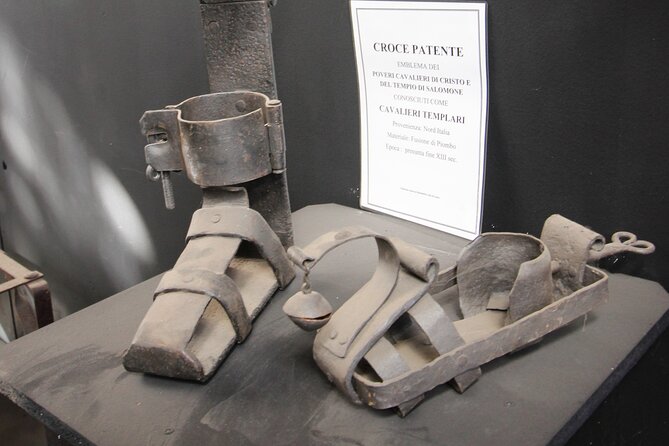
- Prisons’ Palace setting: you’re stepping into a real historic prison complex used between the 15th and 18th centuries.
- Original items plus reproductions: the exhibition uses documents and objects tied to the Holy Office and the justice system.
- A focused 1-hour format: short enough to fit your Venice day without feeling trapped.
- Small groups: the tour operates with small groups for a calmer museum experience.
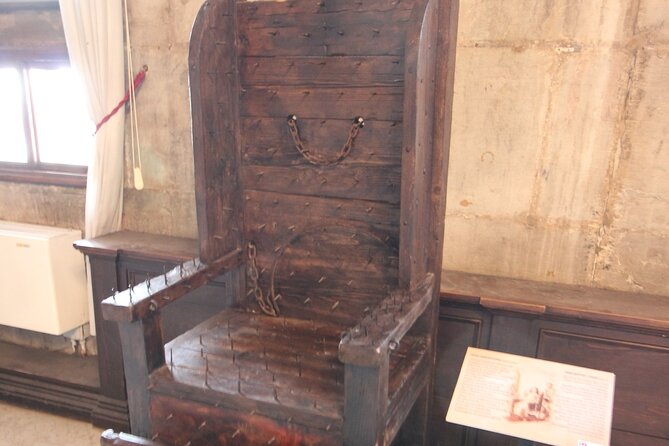
- Courts, confessions, and punishment: you’ll see tools used in the persecution of witchcraft and magical arts.
- Wayfinding watch-out: the meeting place is described clearly, but in practice it can be easy to miss if you arrive last-minute.
Maleficia in Venice’s Prisons’ Palace: what you’ll actually see
This exhibition is built around a simple but unsettling idea: the Inquisition and related tribunals didn’t only rely on accusations. They relied on evidence in the form of documents and objects, and on a justice system that turned interrogation into procedure.
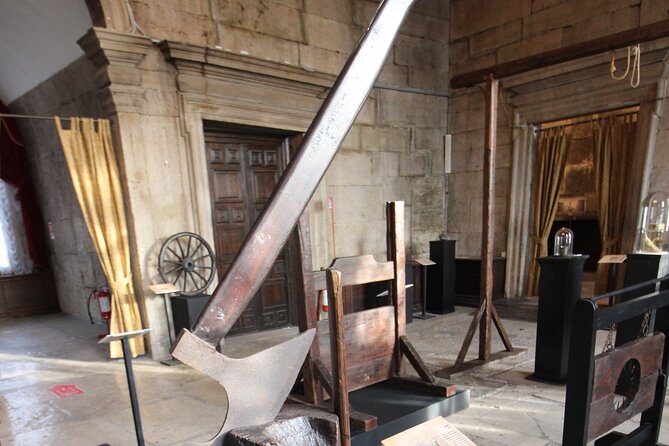
In the Prisons’ Palace, you move through rooms connected to how cases were handled when people were accused of evil spells, magical arts, and witchcraft. The display mixes suggestive testimonies, period documents, and judicial tools used to counter what authorities considered crimes. Even if you know the broad outline of the Inquisition, the physicality of the exhibit makes it harder to shrug off.
You also get a sense of how Venice—part legal powerhouse, part political state—managed religious and criminal authority in the same spaces. That’s why this doesn’t feel like a horror show. It feels like a historical system, presented in a museum setting where the goal is interpretation, not entertainment.
You can also read our reviews of more tours and experiences in Venice.


The 1-hour museum tour: how the timing and group size help
The experience is about 1 hour. That matters in Venice, where museums can sprawl and meeting schedules can shift. Here, the structure keeps the pace manageable. You’re not stuck wandering for hours hoping the story clicks.
The group limit is 15 people, and the small-group approach helps you follow the guide rather than just stand at the back. You can ask questions when the moment fits, and the guide can point out specific objects without losing everyone.
You’ll also have a mobile ticket, and you’ll be confirmed at booking time. That combination tends to reduce the typical last-minute stress of Venice logistics, as long as you have your phone ready and the ticket doesn’t get buried in your camera roll.
Circolo Artistico and the meeting point at Riva degli Schiavoni
The tour starts at Circolo Artistico – Palazzo Delle Prigioni, on Riva degli Schiavoni, 4209, 30122 Venezia VE. It ends back at the same point.
Here’s the practical thing to plan for: the building signage may not look like what you expect for this exact exhibit. Some visitors have reported that the signage around the area can indicate a different exhibit, and the operator wasn’t always obvious right away. So don’t show up at the last second.
My advice:
- Save the address on your map app before you leave the hotel.
- Bring up your booking info on your phone.
- If you don’t see a clear way to enter or meet, step inside or approach the front desk rather than circling outside.
If you take those steps, the rest of the experience usually goes smoothly—especially since the museum stop itself is relatively short.
Documents and justice instruments: why the objects matter
This is the heart of the experience. You’re shown ancient documents used by the Holy Office in the persecution of witchcraft, and you’re also shown justice instruments used to counter it.
What I like about this approach is that it reframes the subject from a vague legend into something bureaucratic. Witch trials didn’t float around as spooky folklore. They were processed as cases, recorded, argued, and punished through an official pipeline.
Even when the exhibit includes reproductions, the mix helps you understand what’s being reconstructed and why. It also helps you focus on how authority worked: papers for the record, objects for the enforcement. That’s the part that turns the subject from rumor into machinery.
You should also expect a somber tone. The materials relate to accusations that led to suffering and death. The point isn’t to shock you. It’s to make you reflect on what happens when fear becomes policy.
Inquisition-era Venice: the 15th–18th century context you get
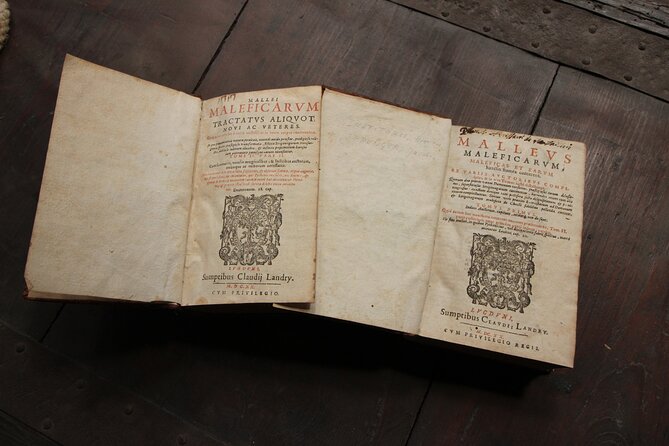
The exhibition is set in the 15th to 18th centuries in Venice’s Prisons’ Palace. That span is important because it covers long periods when legal systems, religious authority, and public order were tightly linked.
One practical benefit of this tour format is that it gives you a guided timeline without turning the hour into a lecture. You get a sense of the tribunal setting and the type of cases that were pursued. The display also moves you around the setting so the history feels less abstract.
If you like your history grounded in places, this helps. If you prefer pure academic detail, you might still leave with more questions than answers—but you’ll have a clearer picture of what the justice system looked like on the ground.





Torture tools and confessions: what to expect from the guided explanation
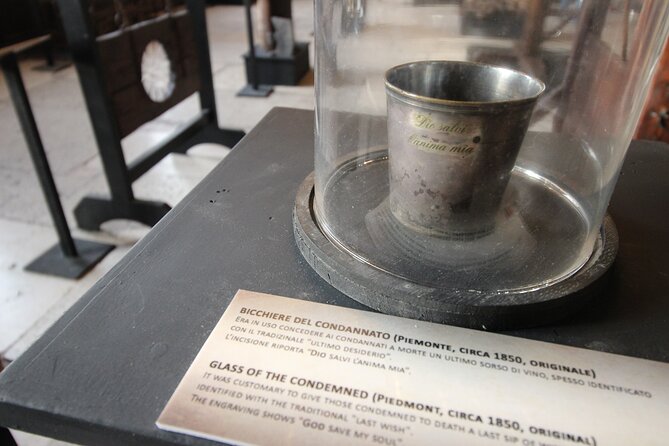
The exhibition touches directly on torture techniques used to obtain confessions and punish crime in the context of witchcraft accusations. That content is part of what draws people in, but it also sets expectations.
In other words: don’t treat this as light sightseeing. It’s historical material about how interrogation and punishment were carried out. You’ll likely see the tools and learn what they were used for, with the guide explaining the logic authorities used to justify the process.
One more practical note: the tour is short, so the explanation may be broad rather than exhaustive. You’ll get a guided introduction and a path through key areas. If you’re the kind of visitor who always wants the extra level of detail, you might be the person who wishes you had more time or another layer of interpretation.
Casanova, magic, and the way fame got dragged into the courts
The description includes a striking detail: Giacomo Casanova is referenced as being accused of dabbling in magic and the occult.
That kind of name shows you that witchcraft allegations weren’t only aimed at anonymous locals. In a climate of suspicion, accusations could attach to people with reputations, social ties, or behaviors that authorities framed as dangerous.
It’s also a useful reminder for you as a visitor: these tribunals didn’t operate on modern categories like entertainment vs. superstition. They operated on what officials believed threatened moral order and religious authority.
So yes, it adds drama—but it also makes the history feel closer to human behavior: how people get interpreted, misinterpreted, and punished.
Tone check: how to handle the emotional weight of the subject
This is one of those experiences where you need to match your expectations. The exhibition is meant to make you reflect on suffering of condemned people, including women accused of evil spells and magical arts.
If you’re sensitive to grim historical material, plan your visit with care. The tour is only about an hour, but the theme is heavy. I’d recommend bringing a calm mindset and not pairing it with other high-intensity stops right before or right after.
The good news: because it’s a museum visit rather than a staged performance, the experience is controlled. You’re moving at a guided pace through rooms built for exhibits, not watching scripted scenes.
Value for money: is $11.56 good use of your Venice time?
At $11.56 per person, this is priced like an efficient Venice museum stop, not like a high-end private experience. For that price, you get:
- an exhibition in a historic prison palace,
- a guided introduction (not just self-guided wandering),
- and a short duration that fits into a day.
If you’re in Venice for the long-haul museums—Doge’s Palace, churches, big art—this won’t replace those. But it does offer a different angle: law, persecution, and the built environment of justice.
Where it may not be the best value is if you’re looking for very deep, technical treatment of torture methods. The tour is brief, and the exhibit itself is presented as an introduction to key themes and objects. You may leave wanting more specifics if you’re a subject specialist.
Still, at this price point, it’s a reasonable way to see something distinct and Venetian-specific—especially if you like guided context.
Who should book Maleficia—and who might pass
This is a good fit if you:
- like guided history tied to a real location,
- want a short stop that doesn’t hijack your whole day,
- enjoy understanding how systems worked, not just what legends say.
It may not be the best fit if you:
- want a laid-back, upbeat museum vibe,
- get uncomfortable with depictions and explanations related to torture and punishment,
- hate any chance of meeting-point confusion and prefer very obvious, street-front tours.
Also, one review noted regret about not having an audio guide. If you’re the type who listens to layers of interpretation at your own pace, you might prefer an option that clearly includes audio—or plan to read the labels carefully while you’re there.
A quick plan to avoid common hiccups
Venice is full of small mysteries—especially when signage doesn’t match the exact exhibit you’re after. Here’s how I’d minimize friction:
- Use the exact address for Circolo Artistico – Palazzo Delle Prigioni and set your map pin before you go.
- Arrive a few minutes early. Don’t cut it fine.
- If you’re unsure, ask at the desk. The process is designed for visitors passing through the palace area.
- Wear shoes you can stand in. Even short museum visits involve a bit of walking between rooms.
Should you book Maleficia: Inquisition, Torture and Witchcraft?
If you want a short, guided look at how Venetian legal and religious authority intersected with accusations of witchcraft, I’d say book it. The setting in the Prisons’ Palace adds weight, and the guided explanation helps turn objects into meaning instead of just display cases.
I’d hesitate only if you strongly dislike grim historical topics or you’re worried about meeting-point clarity. If you show up early and have the address ready, that last issue becomes a minor headache instead of a dealbreaker.
Bottom line: for the price and time, it’s a serious, historically grounded stop that’s hard to replicate elsewhere in Venice.
FAQ
How long is the Maleficia visit?
The duration is listed as about 1 hour.
Where does the tour start in Venice?
It starts at Circolo Artistico – Palazzo Delle Prigioni, Riva degli Schiavoni, 4209, 30122 Venezia VE, Italy.
What does the tour cost?
The price is $11.56 per person.
Is this a mobile ticket or a paper ticket?
It includes a mobile ticket.
How big is the group?
The tour has a maximum of 15 travelers.
What is the main theme of the exhibition?
It focuses on the persecution of witchcraft and magical arts, using documents and justice instruments from the relevant Inquisition period.
What centuries does the experience cover?
The palace context is described as being between the 15th and 18th centuries.
Is it refundable if plans change?
Yes. It’s refundable until 24 hours before the visit. If you cancel within 24 hours of the start time, the amount paid is not refunded.
Is there an access fee on some dates?
On certain dates, visitors staying outside Venice for the day may need to pay a €5 access fee. You can check applicable days and exemptions at https://cda.ve.it
What safety or health measures are used?
The tour operates according to Covid-19 National directives, with frequently cleaned touchpoints and small groups to support a safe environment.