REVIEW · VENICE
Venice Guided Walking tour
Book on Viator →Operated by Venice Events srl · Bookable on Viator
Venice can feel like a puzzle at first. This guided walking tour helps you get your bearings fast by threading you through the big icons and then off toward calmer squares and canals. I especially liked how the story starts at St. Mark’s Square and then expands into everyday Venice, not just postcards.
Two things I really appreciated: the tour uses a personal audio system (so you can actually follow the guide without craning your neck), and the pace stays friendly—built for seeing details instead of sprinting. I also like that it’s capped at a small group size, which makes questions and stop-and-look moments easier.
The one drawback to consider is comfort. It’s a city-walk with bridges and narrow lanes, so comfortable shoes matter, and you’ll want to dress for weather since it runs in all conditions.
In This Review
- Key highlights that make this tour worth your time
- First steps in St. Mark’s Square: learning the symbols before you get lost
- Beyond the postcard lanes: Castello’s calli, campi, and Campo Santa Maria Formosa
- San Zanipolo: where power meets memorials
- Marco Polo’s area: merchants, trade, and everyday Venice connections
- Teatro Malibran: you see it from outside, but the story still lands
- Time and pace: what 2 hours feels like in real Venice
- Price check: is $38.13 good value for what you get?
- Weather and comfort: how to prepare so the walk stays fun
- Who should book this tour (and who might want a different option)?
- Should you book? My recommendation
- FAQ
- How long is the Venice Guided Walking tour?
- Where does the tour start?
- Where does the tour end?
- Is the tour in English?
- What’s included with the tour?
- Do I need a mobile ticket?
- Are there admissions included for the stops?
- Is food or drink included?
- Does it run in bad weather?
- Is there any extra fee to visit Venice on certain dates?
Key highlights that make this tour worth your time
- St. Mark’s Square orientation with architectural landmarks explained in plain language
- Castello shortcuts to calmer Venice, including Campo Santa Maria Formosa
- San Zanipolo (Basilica dei Santi Giovanni e Paolo) and the Doges’ connections
- Marco Polo’s former residence area, tied to Venetian merchant life
- Teatro Malibran viewed from outside, so you still cover ground efficiently
- Headset audio keeps you close to the commentary even when crowds surge
First steps in St. Mark’s Square: learning the symbols before you get lost
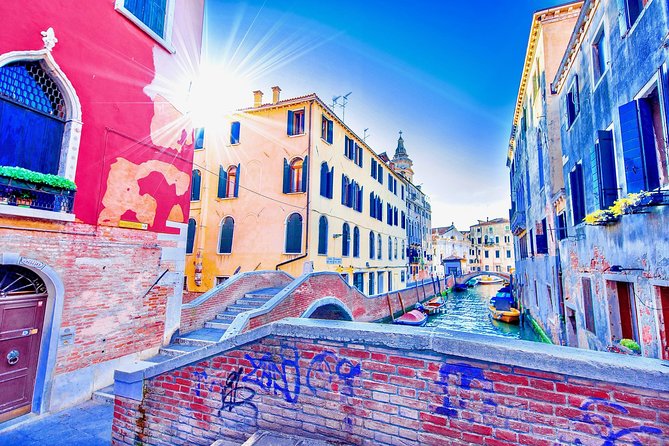
Your walking day begins at the TU.RI.VE. Meeting Point on Calle larga de l’Ascension, then you’re brought into the rhythm of Venice right away. Expect a short kick-off before you move into St. Mark’s Square, where the guide frames what you’re seeing and why it matters. This matters because Venice looks dramatic from every angle, but without context it’s easy to miss what you’re actually looking at.
At the start, you’ll get a focused introduction to St. Mark’s Square itself and the nearby architectural stars: St. Mark’s Basilica, the Doge’s Palace, and the Renaissance clock tower. You’re not just told facts. You’re guided through how these buildings connect to the Republic of Venice—power, wealth, and the symbols Venetians used to project authority.
Practical note: St. Mark’s can feel like a pressure-cooker. This tour helps you manage that. You start in the place everyone wants to be, then you’re guided away from the most crowded flows toward pockets that feel more like Venice lives there day to day.
You can also read our reviews of more walking tours in Venice


Beyond the postcard lanes: Castello’s calli, campi, and Campo Santa Maria Formosa
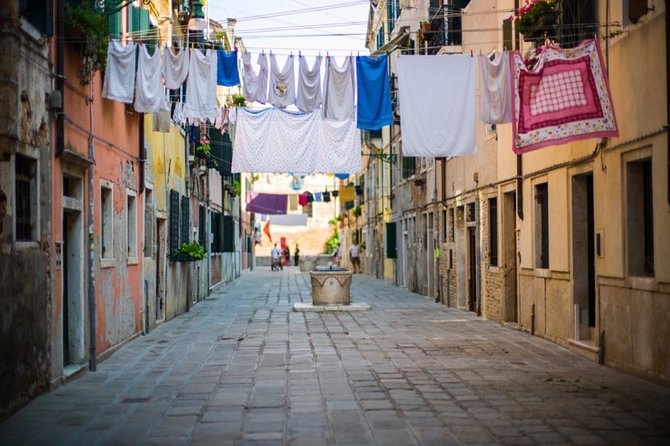
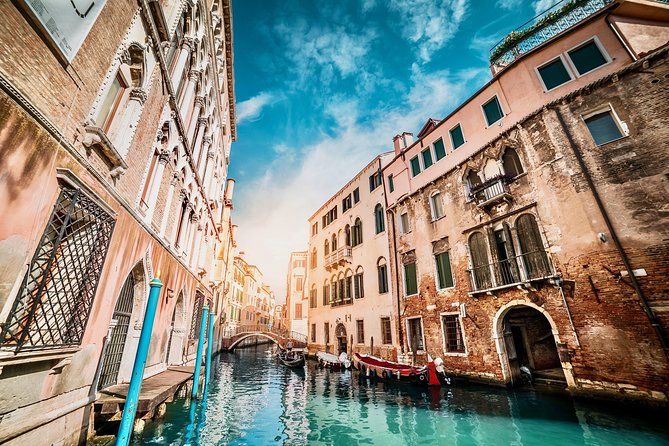
After the main square, you shift into the Castello area, where the city starts to feel more like a neighborhood than a theme park. The guide steers you through the labyrinth of narrow alleys called calli, over bridges, and past open squares known as campi. If you’ve ever watched Venice maps and thought: how is anything navigable?—this is the kind of walking that teaches your brain the geometry.
One of the most satisfying stops is Campo Santa Maria Formosa. It’s one of the larger squares in Venice, and the guide brings your attention to the church there, named after the visitation of the Holy Virgin. Standing in a square like this is different from seeing it in a photo. The space, the edges, and how people move across it all add up to a better feel for Venetian street life.
What I like about this section is that it slows you down at the right moments. Instead of only chasing famous monuments, you also learn how Venetians use public spaces—where gatherings happen, how squares function as breathing spaces between lanes, and why the city doesn’t feel random once you understand the layout.
A possible consideration: you’ll be walking on uneven surfaces. Venice ground is a mix of stone and age. Move carefully, especially after rain or when it’s slick.
San Zanipolo: where power meets memorials
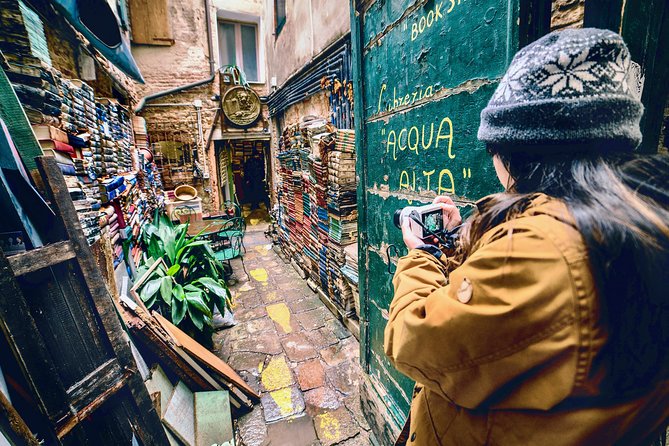
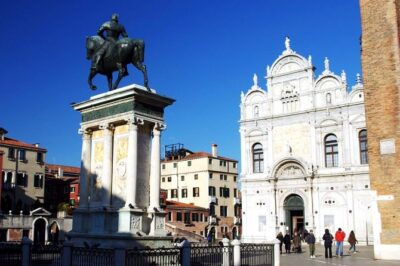
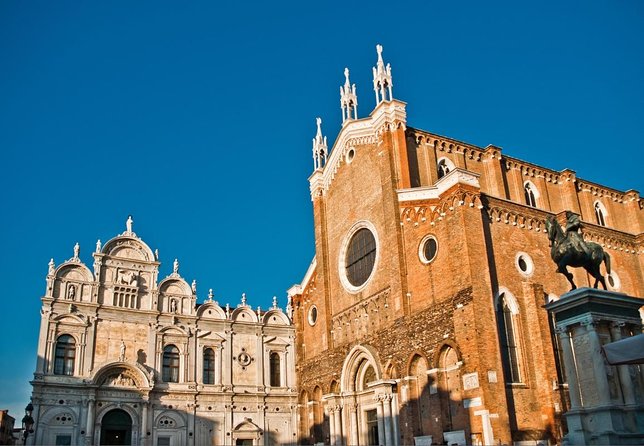
Next up is Basilica dei Santi Giovanni e Paolo, also known as San Zanipolo. This stop is short but meaningful, because it connects Venice’s political identity to physical places of remembrance. The basilica is known as the resting place of several Doges, so the guide’s storytelling turns the architecture into a kind of public memory.
You’ll also see mention of the equestrian monument of Bartolomeo Colleoni, an Italian mercenary captain. That detail helps balance the typical Venice narrative. Yes, Venice is about art and ceremony—but it also ran on strategy, force, and the people who managed both.
Even with only a brief stop, this is a strong point in the tour because it changes your perspective. You move from squares and civic geometry to the idea that Venice’s rulers are still present in the city’s stonework and monuments.
If you’re the type who likes to connect the dots between politics and culture, you’ll enjoy this section. If you mainly want visual highlights and minimal talking, plan to keep your attention on the guide’s key points so the time feels “earned,” not just spent.
Marco Polo’s area: merchants, trade, and everyday Venice connections
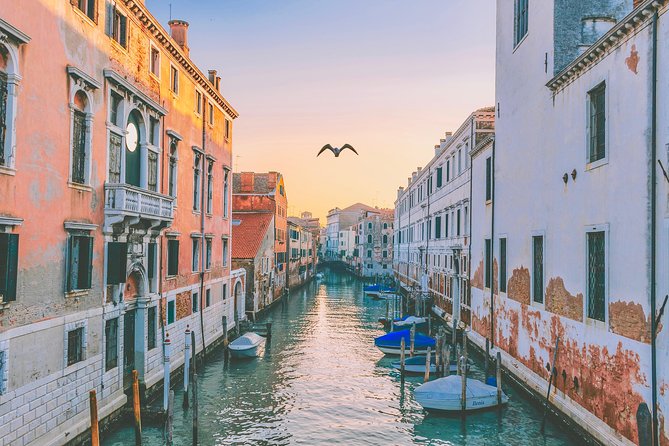
The tour then points you toward Casa di Marco Polo, the former residence area associated with Marco Polo, located in Corte Seconda del Milion. This is another stop that’s more about context than about “waiting in line.” The guide’s angle ties Marco Polo back to Venetian merchant life—how the Republic traded, how wealth traveled, and why Venice built its identity around commercial reach.
This portion works well for two kinds of travelers. If you love the Marco Polo story, you get a clear link between legend and place. If you’re more interested in how cities grow, you learn that Venice’s global connections weren’t abstract—they were rooted in real neighborhoods and real trading networks.
One consideration: this is a walking tour, so you’ll get the stop time needed to understand what you’re looking at, but not long enough for a deep study session. If you want extended museum-style time, you’ll likely still want separate visits after this tour.
Teatro Malibran: you see it from outside, but the story still lands
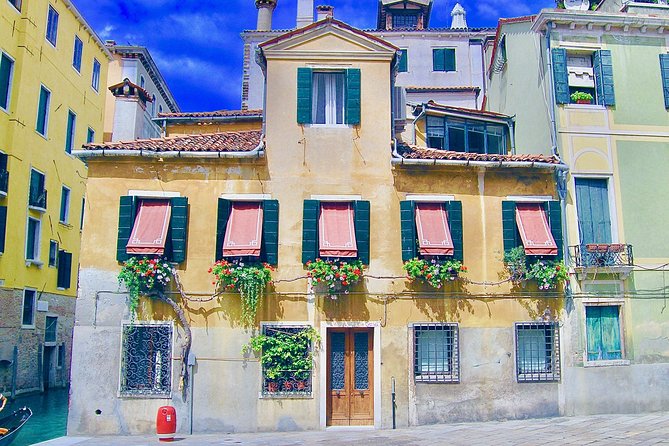
The tour includes the Teatro Malibran, with an important detail: you see it from the outside only. That might sound limiting, but it fits the tour’s purpose. You keep moving through the city while still covering a piece of Venice’s performing arts world.
Here’s the kind of production-history detail the guide brings: the theatre was built in a very fast timeline at the end of 1677, and later renovations shaped the version you’d recognize today (including one in 1919). This helps you appreciate the building not just as a pretty façade, but as part of Venice’s cycle of reinvention.
If you’ve been wondering why Venice has so many layers—different centuries all stacked at once—this stop is a good reminder. Even cultural institutions change, and they change fast when money and civic will align.
You can also read our reviews of more guided tours in Venice




Time and pace: what 2 hours feels like in real Venice
The tour runs about 2 hours total, and you’ll return to the St. Mark’s Square area at the end. Along the way, you’ll spend time at multiple landmarks and squares, with shorter moments at each stop so the tour doesn’t bog down.
The pacing is one of the stronger practical points. You’re not overwhelmed with endless museum-wait energy, and you’re not stuck in a single spot for long stretches either. The guide uses the headset system effectively, and that’s a big deal in Venice where street noise and crowd movement can otherwise make commentary hard to catch.
Group size also affects quality. With a maximum of 20 travelers, the tour tends to feel organized rather than chaotic. You’ll still encounter crowds near the famous sights, but the small-group structure helps you get guidance on where to stand and when to move.
Price check: is $38.13 good value for what you get?

At $38.13 per person, this tour is positioned as a value-friendly introduction. You’re paying for a professional guide plus an audio system, and you’re getting a route that mixes top landmarks with quieter areas. In Venice, that combination can save you time because you’re not spending your first day guessing what’s worth your attention.
What you should think about when judging value:
- You get context at St. Mark’s, not just photos.
- You get off-the-main-flow streets in Castello, so you see more than the obvious circuit.
- You don’t waste energy trying to interpret complicated canal-lane layout without guidance.
- The tour is short enough to fit into a tight schedule, but structured enough that it doesn’t feel random.
What isn’t included is also clear: food and drinks are not part of it, and there’s no hotel pickup. If you need a full day of guided wandering with breaks for meals, plan that separately. But for an efficient, story-driven orientation walk, this is easy to justify.
Weather and comfort: how to prepare so the walk stays fun
The tour operates in all weather conditions, so you should dress for rain or heat. Venice can shift quickly. If it rains, you’ll want to have a light rain layer or umbrella that doesn’t become a hassle in tight streets.
Also: wear shoes you trust. You’ll cross bridges and walk on uneven stone. Even if you’re fit, the surfaces can slow you down unless your footwear grips well. A good pair of comfortable walking shoes isn’t optional here.
One more tip: keep your phone charged for after the tour. The walk gives you orientation, but you’ll still want to map your next self-guided stops once you know the general layout.
Who should book this tour (and who might want a different option)?
This works especially well if:
- You’re in Venice for a short time and want fast orientation
- You like history explained with practical clarity
- You want to see both iconic landmarks and quieter squares
- You prefer a small group and a guide you can actually hear via headsets
It may be less ideal if:
- You want long indoor time at museums or churches (this is a walking tour with limited stop durations)
- You struggle with walking on uneven surfaces
- You already know the St. Mark’s basics and want a deeper specialized theme instead
Should you book? My recommendation
If it’s your first visit, this is a smart way to start. You learn the major symbols around St. Mark’s Square, then you get guided into the Castello area where Venice feels less crowded and more lived-in. The audio system and small group size make the experience feel smoother than many free-for-all city walks.
Book it if you want a guided route that balances big sights with local-feeling streets. Skip it only if you’re looking for extended indoor access or a long, slow day with lots of breaks. For a short, well-structured Venice introduction, this one earns its place on your schedule.
FAQ
How long is the Venice Guided Walking tour?
It runs for about 2 hours.
Where does the tour start?
The tour starts at TU.RI.VE. Meeting Point, Calle larga de l’Ascension, 30124 Venezia VE, Italy.
Where does the tour end?
It ends back at the meeting point.
Is the tour in English?
Yes, it’s offered in English. It’s also provided in French, German, and Spanish.
What’s included with the tour?
You get a professional guide, personal audio system with headset, and pick up from a centrally located meeting point.
Do I need a mobile ticket?
Yes, the tour uses a mobile ticket.
Are there admissions included for the stops?
The tour notes admission tickets are free for the stops listed.
Is food or drink included?
No. Food and drinks are not included.
Does it run in bad weather?
Yes, it operates in all weather conditions, and you should dress appropriately.
Is there any extra fee to visit Venice on certain dates?
On certain dates, day visitors staying outside Venice may need to pay a €5 access fee. Check https://cda.ve.it for details and exemptions.