REVIEW · VENICE
Small Group Venice Grand Canal Panoramic Tour
Book on Viator →Operated by Bucintoro Viaggi · Bookable on Viator
Grand Canal views, with real explanations. This small-group motorboat tour gives you a focused look at Venice from the water, with a 12-person limit and commentary from an art historian guide. I especially love the close-up sail past major palazzi and the way you pass Rialto and Accademia Bridges with names and context, not just scenery. One possible drawback: the boat is basically a water-taxi setup, so outdoor seats can be tight and some people end up inside with harder-to-see views.
You start near St. Mark’s and head out from the San Giorgio Maggiore area, then work your way along Venice’s famous S-shaped Grand Canal. It’s ideal if you want orientation fast, and it helps you plan the rest of your day on foot. Just know the experience is short enough that seat choice matters more than you might expect.
In This Review
- Small Group Grand Canal Tour: the sweet spot for first-time Venice
- Entering the route: how your 1-hour ride actually feels
- Meeting at Alilaguna ticket desk: avoid the common time-waste
- Seat reality on a water-taxi style boat: what to plan for
- San Giorgio Maggiore start: Palladio’s church and the St. Mark’s view
- S-shaped Grand Canal cruise: palazzi close up, details you’d miss on foot
- Rialto Bridge and Accademia Bridge: iconic, but with better context
- St. Mark’s Basin and Doge’s Palace: the end view that makes sense
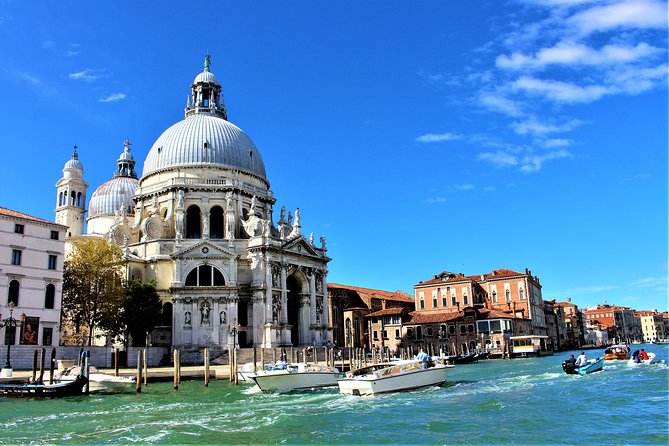
- Churches on the canal: San Giorgio, Il Redentore, and plague memory
- Noble houses, museums, and a casino you sail past
- Peggy Guggenheim’s Palazzo and the art side of the Grand Canal
- Barefoot Bridge and the station connection you can visualize
- Price and value: is $54.19 for a one-hour Grand Canal tour fair?
- A balanced take: why the reviews split (and how you can protect yourself)
- Who should book this Venice Grand Canal tour?
- Should you book the Small Group Venice Grand Canal Panoramic Tour?
- FAQ
- How long is the Small Group Venice Grand Canal Panoramic Tour?
- Where does the tour start and where does it end?
- How many people are on the tour?
- What language is the tour offered in?
- What’s included in the price?
- Is food or drinks included?
Small Group Grand Canal Tour: the sweet spot for first-time Venice
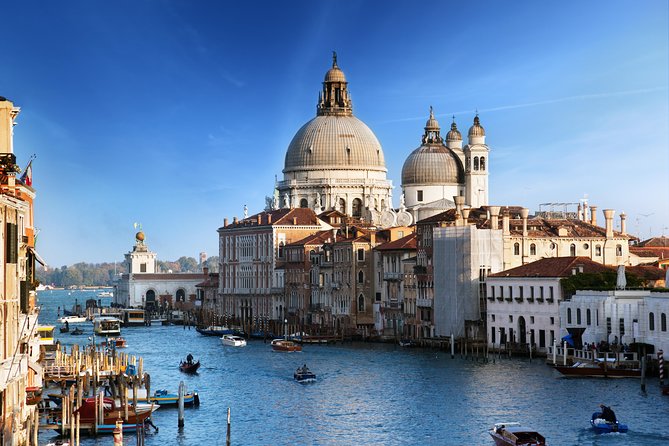
This is the kind of Venice tour that feels built for a first visit: short, scenic, and packed with specific architectural stops. In about an hour, you get a long stretch of the Grand Canal, plus big-name bridges and palazzi you’ll otherwise spend hours hunting down from land. The small-group size is the big reason to pick it, because it keeps the narration feel personal and makes it easier to spot what the guide is pointing at.
The best part is the guided layer. You’re not just drifting past buildings; you’re hearing why they matter—who built them, what style you’re seeing, and how Venice’s politics and money shaped the skyline. That’s especially useful for landmarks like St. Mark’s Basin and the Doge’s Palace view, where a little context makes the whole place click.
Entering the route: how your 1-hour ride actually feels
The tour runs for about an hour, and it’s timed with a choice of late-day start times at checkout (3:30pm, 4:30pm, 5:30pm, or 6:30pm). If you can, I like the later slots because the water reflections and light across the canal are often more forgiving than mid-day glare.
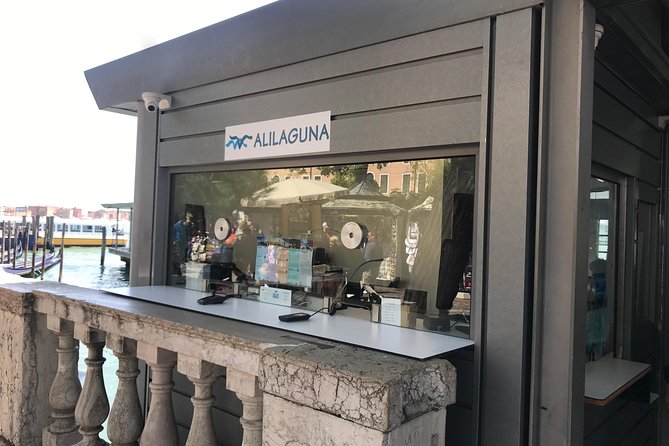
You’ll meet at the Alilaguna & Bucintoro Viaggi ticket office at San Marco Giardinetti, Riva degli Schiavoni. From there, you board and begin at the San Giorgio Maggiore area, with San Giorgio Maggiore’s church as a key visual anchor right at the start. The pacing is practical: it’s enough time to see many landmarks, but not so long that you feel “tour-ed” to death.
And because it’s a small motor launch ride, the experience stays fluid. You don’t have to fight crowds getting on and off like you would with some bigger bus-to-boat formats.
You can also read our reviews of more tours and experiences in Venice.

Meeting at Alilaguna ticket desk: avoid the common time-waste
Your check-in point is the Alilaguna ticket desk at the gate of the Royal Gardens area. The tour starts from there, and the guide meeting happens in advance of your selected departure time. I strongly recommend you arrive early, even if your timing looks right on paper.
Some reviews point to issues like late help at the counter, confusion about which exact guide to follow, or unexpected cancellation on a given day. You can’t control the weather or city operations, but you can control one thing: reduce friction by showing up with your confirmation in hand and giving yourself buffer time before the departure window.
Once you’re aboard, don’t treat the boat like a sightseeing cruise where you can just sit anywhere. Think of it like a moving viewing platform.
Seat reality on a water-taxi style boat: what to plan for
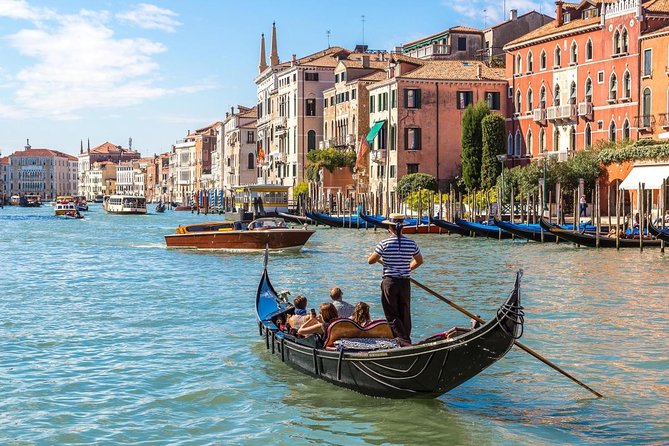
Here’s the honest deal: the vessel is small, and it works like a water taxi. That’s great for speed and access to close views, but it also means you may not get a guaranteed best spot. A common theme from reviews is that the group size can sometimes push more people into the interior area, which has windows that may be less helpful for photos and viewing.
If you want the classic Grand Canal experience—seeing palazzi as you pass at eye level—try to position yourself where you can stand or sit near the open sides. One review even mentions dirty glass affecting visibility, and another describes having to swap seats to get a decent sightline.
Also, don’t underestimate sound. A couple of comments mention difficulty hearing the guide from certain parts of the boat, especially if you’re farther back. If you want the full narration value, sit where you can catch the guide’s voice and look up at the same time.
San Giorgio Maggiore start: Palladio’s church and the St. Mark’s view
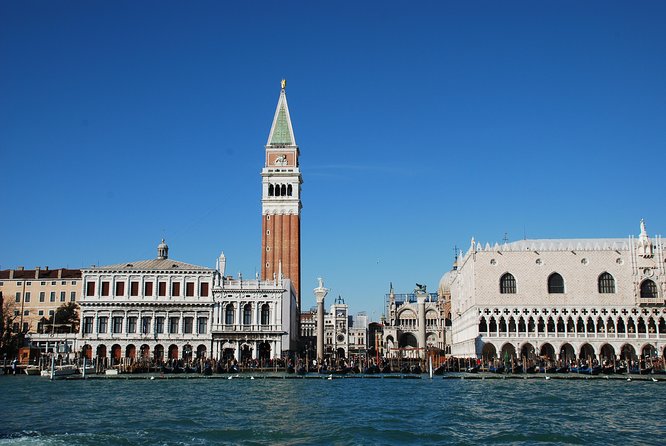
The tour begins at San Giorgio Maggiore, a Benedictine church area dating to the 16th century, with the church designed by Andrea Palladio. If you’ve only seen St. Mark’s Square from the piazza, this is your chance to get the big-picture postcard view from the water approach.
What I like here is the way it sets the tone. You’re not starting mid-canal with random palazzi. You start near the St. Mark’s orbit—so you can later recognize St. Mark’s Basin and Doge’s Palace as more than just names on a map.
You’ll sail from this starting point toward central Grand Canal sights, with the guide tying together architecture styles and why Venice built so grandly along the water.
S-shaped Grand Canal cruise: palazzi close up, details you’d miss on foot
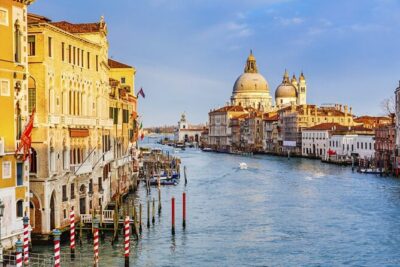
Venice’s Grand Canal is famous for its S-shaped sweep, and you actually feel that curve and flow from the boat. The guide narrates as you pass grand palazzo fronts, hotels, and historic buildings in different architectural styles—so you get a sense of how the city evolved rather than a single style snapshot.
Some of the named stops you’ll see include palazzi such as Palazzo Gritti and Palazzo Corner. You’ll also cross under iconic bridges, and those are some of the best “map-to-reality” moments for first-timers: once you’ve sailed under Rialto and seen the Accademia Bridge shape up close, it’s much easier to understand where everything sits.
This is also where the art-historian angle matters. A quick explanation about facade details, building age, and the famous families behind these palaces helps you slow down and look instead of rushing for photos.


Rialto Bridge and Accademia Bridge: iconic, but with better context
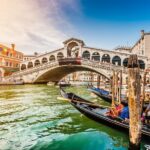
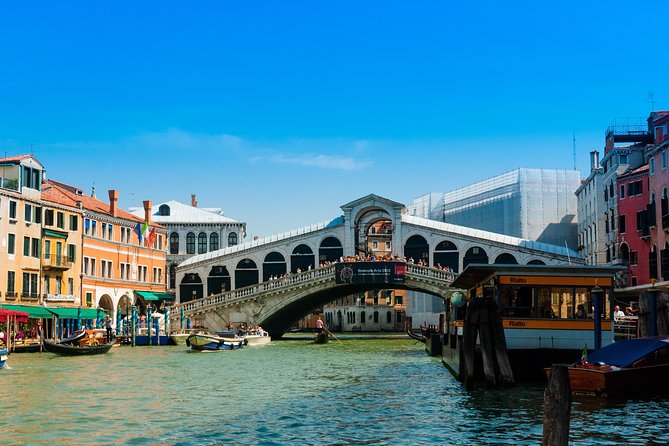
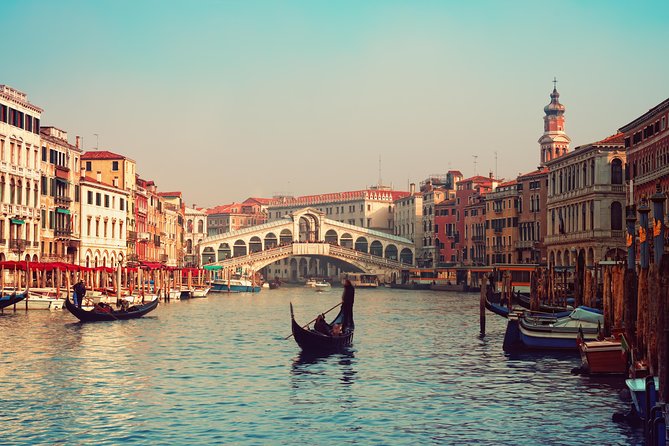
Rialto Bridge is the big star. You pass under it and get a clear sense of why it became Venice’s symbol—because the Grand Canal isn’t just a canal; it’s the city’s main address. Seeing it from water level, under the arch, makes the view feel real and immediate.
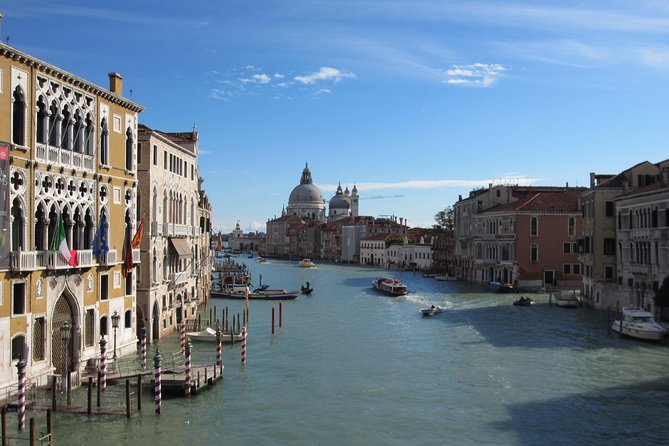
Then there’s Accademia Bridge, which is noted as the only wooden bridge in Venice. Sailing by gives you a different perspective on Venetian engineering and how the city kept adapting its connections while remaining locked into a water world.
I like that your guide doesn’t treat these bridges like photo backdrops. The narration links them to where people lived, traded, and governed.
St. Mark’s Basin and Doge’s Palace: the end view that makes sense
The tour concludes back toward St. Mark’s Basin, where you can see Doge’s Palace. This is a satisfying finale because Doge’s Palace isn’t just a pretty facade—it was the political and judicial heart of Venice, and seeing it from the canal gives it a stronger sense of power and purpose.
St. Mark’s Square also comes up in the narration because it’s tied to Venice’s identity and ceremonies. Even if you’re not walking the square during this ride, viewing the basin area from the water brings the whole center of Venice into one frame.
For many first-time visitors, this is the moment you stop thinking in ticket lines and start thinking in city geography.
Churches on the canal: San Giorgio, Il Redentore, and plague memory
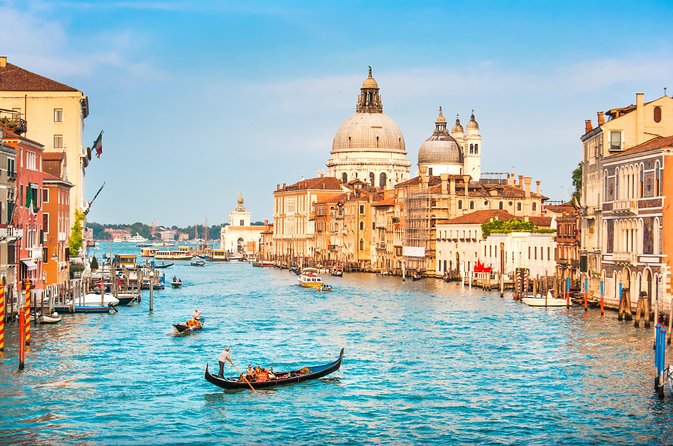
A major theme along the route is how Venice used architecture as a public message. The tour includes San Giorgio Maggiore’s church area, but it also points out the Church of the Redeemer (Il Redentore), designed by Andrea Palladio and built as a votive church after a devastating plague outbreak.
That plague story is more than trivia. It helps explain why Venice’s religious buildings can feel both solemn and civic at the same time. When you hear that these churches were built to thank God for deliverance, the skyline becomes less decorative and more meaningful.
This kind of detail is exactly why I think the professional commentary is worth the price, as long as you can hear it from your seat.
Noble houses, museums, and a casino you sail past
As you continue along the canal, you get a mix of old wealth, art spaces, and modern uses layered into the same water corridor.
You’ll pass Ca’ Pesaro, a Baroque marble palace facing the Grand Canal, built by Venetian architect Baldassarre Longhena. The guide also connects it to the fact that it’s part of Venice’s long-running pattern of turning major palazzi into institutions.
Another standout is Ca’ Rezzonico. It’s tied to 18th-century Venetian baroque and rococo styles, with interiors associated with major painters like Francesco Guardi and Giambattista Tiepolo. Today, it hosts Museo del Settecento Veneziano, which helps make the building more than an empty facade.
You’ll also see Ca’ Vendramin Calergi, which now hosts the casino of Venice. And you’ll spot Ca’ d’Oro (Palazzo Santa Sofia), one of the oldest palaces on the Grand Canal. Its name means golden house, tied to the gilt and polychrome exterior decorations that once lined its walls.
These names matter because once you learn them, you’ll recognize them later while wandering. That turns the ride into a real navigation tool.
Peggy Guggenheim’s Palazzo and the art side of the Grand Canal
Toward the latter part of the route, the tour includes a stop for the Peggy Guggenheim collection. It’s housed in Palazzo Venier dei Leoni, an 18th-century palace, and it notes that Peggy Guggenheim lived there for three decades.
Even if you’re not planning to enter the museum afterward, seeing where modern art ownership lives inside an older palazzo adds a satisfying contrast. Venice isn’t stuck in one era, and this is a great example of how the city repurposes space without erasing its identity.
Barefoot Bridge and the station connection you can visualize
One of the most practical landmarks mentioned is the barefoot bridge that connects the railway station to the rest of the city. It’s an easy thing to ignore if you’re arriving by train and moving fast, but from the canal route you can quickly place the bridge in relation to the rest of Venice’s central water traffic.
That matters because it turns your arrival point into a mental map. After you’ve seen it from the boat, your future walking routes make more sense.
Price and value: is $54.19 for a one-hour Grand Canal tour fair?
At $54.19 per person for about an hour, this can be good value for three reasons.
First, you’re paying for guided commentary from a professional art historian guide, not just transportation. Second, it’s a small-group format with a maximum of 12 people, which usually means less jostling and more attentive narration than larger public tours. Third, the route hits high-demand sights like Rialto, Accademia, and the St. Mark’s basin area without you needing to coordinate anything on your own.
It still isn’t a magic deal, though. The biggest “value risk” isn’t the price—it’s seat quality. If you end up in the interior area, with limited sightlines and less chance to hear the guide clearly, the experience can feel more like a ride than a guided panorama.
If you want the full value, treat the seat choice as part of the booking decision.
A balanced take: why the reviews split (and how you can protect yourself)
The rating average is mixed, and the split makes sense. When everything clicks—small group, friendly guide, good seating—people call it a great way to orient themselves and enjoy the Grand Canal. Multiple positive comments mention guides who were friendly and knowledgeable, and one mentions a guide named Gaella. Another mentions a guide named Alberto as wonderful and informative, with lots of detail in the hour.
On the downside, there are repeated complaints about seating constraints, with some people forced indoors where visibility and photo angles were worse. Other issues show up too: a few people reported canceled tours, late or confusing meeting assistance, or booking problems due to overbooking.
You can’t guarantee you’ll avoid every hiccup, but you can improve your odds:
- Arrive early at the ticket office near San Marco Giardinetti so you’re not depending on a late host.
- If possible, choose a time when you can get the best boat position, not the last seat.
- If narration matters to you, aim for a spot where you can hear clearly, not just see out a tiny window.
Who should book this Venice Grand Canal tour?
Book this if you want a fast, structured Grand Canal overview with architectural and cultural explanations. It’s a good fit for first-timers, couples, and small groups who don’t want the cost or hassle of coordinating private boat time.
It’s also smart for people who plan to keep walking after the ride. Once you’ve seen the bridges and palazzi from the water, it’s easier to choose what to prioritize on foot.
If you’re extremely photo-focused or you’re sensitive to crowding inside a small boat, you might prefer a private setup or a different tour format with guaranteed open-air viewing. This one can be excellent, but it depends on space in the vessel.
Should you book the Small Group Venice Grand Canal Panoramic Tour?
Yes, I’d book it for most first-time Venice visitors who want an hour of guided Grand Canal sightseeing. The combination of small group size, a named focus on major bridges and palazzi, and commentary from an art historian guide is exactly what makes the experience feel more useful than a plain boat ride.
Just go in with open eyes: seat quality and audio clarity are the swing factors. If you arrive early, manage your expectations about water-taxi style seating, and choose your vantage point wisely once aboard, you’ll get a lot of Venice value in a short time.
FAQ
How long is the Small Group Venice Grand Canal Panoramic Tour?
The tour runs for about 1 hour.
Where does the tour start and where does it end?
You start at the Alilaguna & Bucintoro Viaggi ticket office at San Marco Giardinetti, Riva degli Schiavoni, and the tour ends back at the meeting point.
How many people are on the tour?
This is limited to a maximum of 12 travelers.
What language is the tour offered in?
It is offered in English.
What’s included in the price?
The tour includes live commentary on board, a professional art historian guide, and a motor launch ride along the Grand Canal.
Is food or drinks included?
No, food and drinks are not included.