REVIEW · VENICE
Private Tour of Jewish Ghetto in Venice
Book on Viator →Operated by Free Walk in Venice · Bookable on Viator
Venice has another face beyond the postcard sights. This private walk focuses on the Jewish Ghetto and the people who were forced to live there, with stops that turn history into street-level context. I especially like how the guide ties together the story of the neighborhood’s layout and daily life, not just names and dates.
Two things I really like: the personal, grounded perspective from guide Lucia (an art historian with deep Jewish heritage), and the practical way the tour trains your eye to spot secret symbols in the area. One consideration: the tour does not include synagogue entry, so if that’s a must for you, you’ll want to add it separately.
In This Review
- Key Points to Know Before You Go
- Why the Jewish Ghetto Is the Real Venice Story
- Private, 2 Hours, and the Pace That Actually Works
- Getting Oriented: Start at Campo San Geremia
- The Main Walk: Ghetto Ebraico and the Streets That Tell the Story
- Spotting Secret Symbols on an Off-the-Beaten Track Route
- Hidden corners, panoramic views, and quiet streets
- Connecting the Three Jewish Quarters in One Route
- A Planned Break for Bacari Life: Wine or Cake
- Synagogues Aren’t Included (So Plan That Piece If It Matters)
- Price and Value: What $349.13 Covers for Up to 4
- Where This Tour Fits Best (and Who Might Skip It)
- Should You Book This Private Jewish Ghetto Tour?
- FAQ
- How long is the Private Tour of the Jewish Ghetto in Venice?
- What is the price for the tour?
- Is this tour private or shared?
- What language is the tour offered in?
- What’s included in the tour?
- Are the synagogues included?
- What are the tour meeting and ending points?
- Is a mobile ticket used?
- Do I need to pay an admission fee?
- Is there an access fee for some day-trippers?
Key Points to Know Before You Go
- Private and small-group feel: up to 4 people with a guide, so questions don’t get lost in a crowd
- Secret symbols and hidden details: you’ll learn how to notice traces in buildings and street corners
- Cicchetti-style stops: a planned chance for a glass of wine or a slice of cake at a traditional spot
- The ghetto concept gets explained clearly: who controlled the rules and why the term spread
- Focused duration: about 2 hours, ideal if you want real context without a long day
Why the Jewish Ghetto Is the Real Venice Story
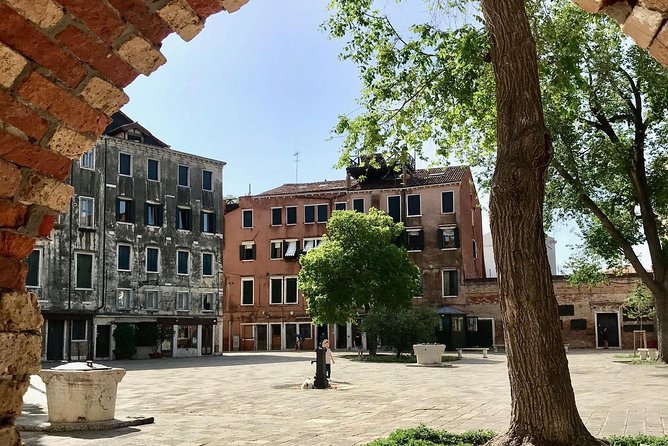
The Venice you see in photos is mostly the same Venice that everyone else sees. This experience gives you a different layer—one tied to survival, confinement, and how a community shaped its own life inside strict boundaries.
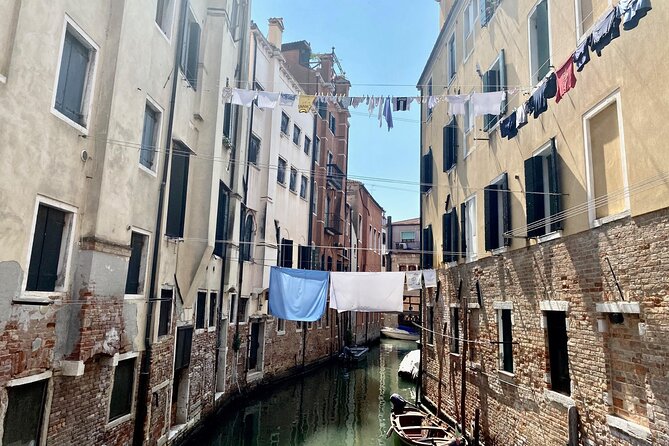
You’ll walk in the sestiere of Cannaregio, where the Jewish quarter formed the world’s first ghetto system. The guide spends time on the origin of the word ghetto—when and why the Venetian Republic forced Jews to live in that area—and that framing changes how you read the neighborhood. Suddenly, the narrow streets feel purposeful, not just old.
And because the focus stays local, you don’t need to be a history buff to feel oriented. Even if you only know a few basics, the walk builds a clear picture: where the community lived, what the rules meant in real life, and how the area’s identity lasted long after the worst parts of the story.
You can also read our reviews of more private tours in Venice


Private, 2 Hours, and the Pace That Actually Works
This is a 2-hour private tour, offered in English, for up to 4 people. That matters in Venice, where “group tours” can sometimes feel like you’re being pushed along. Here, the guide can slow down for questions, connect streets to bigger events, and point out the kind of details that only show up when someone is watching for them.
The pacing also fits the emotional weight of the topic. You’re not rushed through tough history, and you’re not stuck forever in lectures. You get walking time, street context, and breaks built around the neighborhood’s everyday rhythm.
One more practical point: you’ll be near the Jewish Ghetto area when you finish, so it’s easy to keep exploring without backtracking across the city.
Getting Oriented: Start at Campo San Geremia
Your meeting point is Campo San Geremia (30121 Venezia VE). From the first moments, the walk sets a contrast: you may have already seen Rialto, San Marco Square, and the Grand Canal, but this start point shifts you into the side of Venice where everyday life still feels close to the ground.
Campo San Geremia is also a helpful launchpad because Cannaregio is a neighborhood you experience by wandering. You’ll get early orientation about the ghetto’s position within Venice and what to expect as the route moves toward the heart of the Jewish area. It’s the kind of setup that helps you connect the map in your head to what you’re actually seeing.
The Main Walk: Ghetto Ebraico and the Streets That Tell the Story
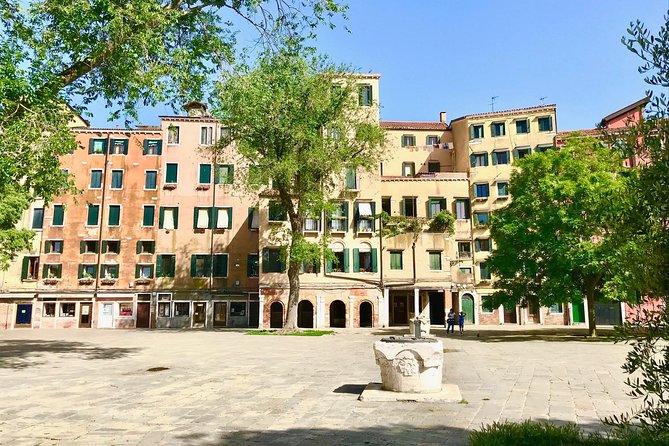
The tour centers on Ghetto Ebraico—the core area where the first Jewish ghetto of the world took shape. The guide’s job here is not to overwhelm you, but to make the history legible. You learn the how and why behind the Republic’s forced segregation, plus what daily life likely meant when the rules were set by people outside the community.
A standout feature is the focus on Holocaust history and its impact on Venetian Jews. You won’t get only “timeline history.” You’ll get the human geography: how a neighborhood carried identity and memory through time, and how that can still show in the streets if you know what to look for.
Spotting Secret Symbols on an Off-the-Beaten Track Route
A lot of Venice tours point at famous buildings. This one trains your eye for subtle markers—places where you can recognize secret symbols. That’s not something you can easily do from a guidebook alone, and it’s exactly why hiring a guide pays off here.
As you walk, the guide explains what these symbols mean in context. The value is twofold: you learn symbolism tied to Jewish life, and you also learn how Venetian history can be layered—sometimes visibly, sometimes quietly.





Hidden corners, panoramic views, and quiet streets
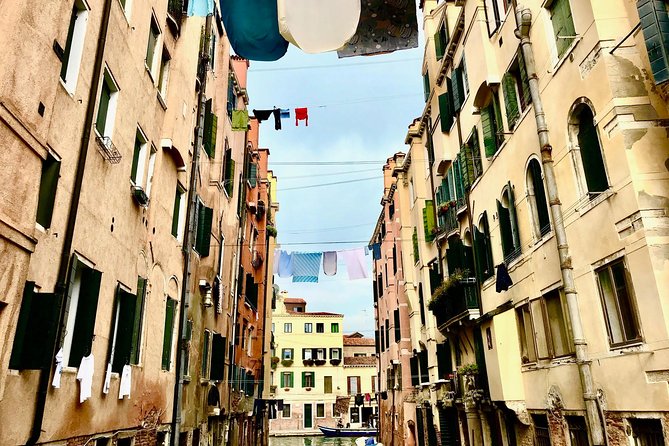
The route is designed to move you away from the densest tourist flow. You get short bursts of perspective—small panoramas and viewpoints that show how the ghetto sits within Venice’s urban layout. Those moments are more than pretty photos. They help you understand boundaries and distance, which makes the historical explanation land better.
Connecting the Three Jewish Quarters in One Route
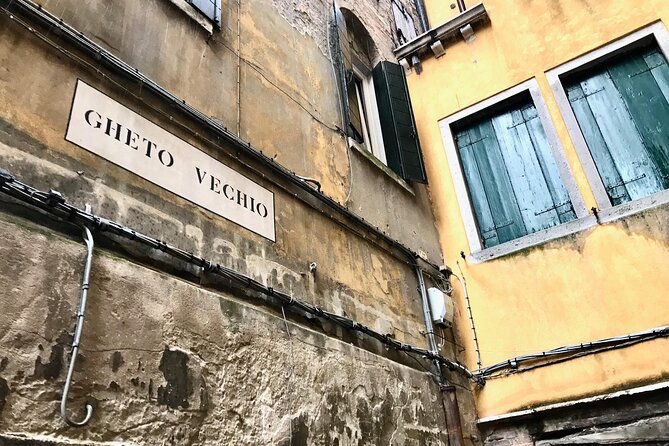
Even though the tour is described as centered on Ghetto Ebraico, the experience you’re aiming for naturally connects the ghetto’s multiple quarters—often referred to as Ghetto Vecchio, Ghetto Nuovo, and Ghetto Nuovissimo.
That matters because it prevents the neighborhood from becoming a single static “old ghetto” postcard. Instead, you come away with a sense that the community and its physical spaces changed over time. You learn how the ghetto wasn’t just one place with one story—it was an area shaped by different periods, different pressures, and different ways the community adapted.
The guide’s narrative stitches these areas together so you can see the neighborhood as a connected system. When you leave, you’re not just thinking about one street—you’re thinking about how Venice organized space around the people living there.
A Planned Break for Bacari Life: Wine or Cake
This tour doesn’t pretend it’s only about heavy topics. It includes a chance to stop for a glass of wine or a slice of cake in a traditional establishment.
This is a smart choice, not an add-on for fun. A pause in a bacari-style setting (wine bar culture in Venice) gives your brain room to process what you just learned. It also shows another truth about Venice: even in neighborhoods shaped by history, people still live, eat, drink, and keep routines going.
The best part is that the guide doesn’t treat food as a separate track. You’ll get practical local guidance—like where to have cicchetti and where to go to unwind—so the stop feels like part of the neighborhood, not a tourist detour.
Synagogues Aren’t Included (So Plan That Piece If It Matters)
A key detail: visiting the synagogues is not included. That’s not a deal-breaker, but it’s something you should decide up front.
If synagogue entry is important for you, ask the guide for details to add it. You’ll likely want to match the timing and choose an option that fits your schedule without making the rest of the walk feel rushed.
If you’re mainly here for street-level history, Holocaust context, and identifying the area’s hidden traces, the core tour still delivers a full experience. Just be aware that the “inside the synagogue” part is a separate step.
Price and Value: What $349.13 Covers for Up to 4
The price is $349.13 per group (up to 4 people) for about 2 hours. That’s not a cheap walk, but it’s also not “small money for Venice.” For this topic, the value comes from the private format and the guide’s ability to personalize the route around what you want to understand.
You’re paying for:
- A private guide, not a big group shuffle
- An English-speaking specialist who can connect art, symbols, and Jewish history
- A route focused on hidden details, not just major landmarks
- The time saved by not having to figure out how to interpret what you’re seeing
If you’re traveling as a couple or a small group, the cost spreads out and becomes more reasonable. If you’re solo, it’s still potentially worth it if you really care about context and want a guide who can tailor answers rather than reciting facts over heads.
Where This Tour Fits Best (and Who Might Skip It)
This tour is ideal if you:
- Want Venice history that’s not centered on San Marco and canals alone
- Like learning how to read a neighborhood—through symbols, boundaries, and everyday life
- Prefer a private, question-friendly pace
- Plan to add synagogue time later if you want that chapter too
You might choose something else if you’re mainly looking for a light, scenic stroll. This walk touches serious history, including Holocaust impact. It’s thoughtful, not grim in tone all the time, but it isn’t a casual wander.
Also, because the tour needs good weather, plan around Venice’s moods. In bad conditions, you may have to shift dates.
Should You Book This Private Jewish Ghetto Tour?
I’d book it if you want your Venice to feel honest—layered, human, and specific. The private format, the focus on secret symbols, and the guide’s personal connection (especially Lucia’s blend of art history and Jewish heritage) make it more than a standard “ghetto overview.”
If synagogues are a top priority, treat this as the foundation and plan the synagogue visit separately. With that small adjustment, you’ll get a route that helps you see what many people miss: how memory can live in streets, not just in museums.
FAQ
How long is the Private Tour of the Jewish Ghetto in Venice?
It runs for about 2 hours.
What is the price for the tour?
It costs $349.13 per group, up to 4 people.
Is this tour private or shared?
It’s a private tour, so only your group participates.
What language is the tour offered in?
The tour is offered in English.
What’s included in the tour?
It includes a 2-hour private tour with a private tour guide.
Are the synagogues included?
No. Visits to the synagogues are not included, but the guide can share details for adding that part to your tour.
What are the tour meeting and ending points?
You start at Campo San Geremia, 30121 Venezia VE, Italy, and you end outside the Jewish Ghetto area at Fondamenta dei Ormesini, 30121 Venezia VE, Italy.
Is a mobile ticket used?
Yes, the tour includes a mobile ticket.
Do I need to pay an admission fee?
The admission ticket is free for the tour portion described.
Is there an access fee for some day-trippers?
On certain dates, some people staying outside Venice who are visiting for the day may be required to pay a €5 access fee. You can check which days apply at https://cda.ve.it.