REVIEW · VENICE
Off the Beaten Path Walk in Venice
Book on Viator →Operated by deTourist Venice Valerio Coppo · Bookable on Viator
Venice reveals itself on foot, off the main routes. I love how this route trades the usual crowds for quiet Dorsoduro streets plus canals and churches you’d miss on your own. I also love the mix of art details and daily-life Venice, from Ca’ Foscari’s Gothic stonework to the San Pantalon ceiling painting. One thing to consider: it’s a steady walking-style experience, so good shoes matter, and don’t expect long stops.
You’ll spend about two hours moving between places with strong personalities, from Campo Santa Margherita’s social energy to the Squero di San Trovaso gondola workshop. With a small group and a guide who adapts to what you care about, the whole walk feels personal rather than rushed.
In This Review
- Key highlights you’ll actually care about
- Dorsoduro and the Giudecca side: why this route feels local
- Meeting at Campiello dei Squelini, then gliding into Ca’ Foscari
- San Pantalon: the ceiling “canvas” plus a Banksy-style surprise
- Campo Santa Margherita: the nightlife hub that still feels Venetian by day
- Campo San Barnaba: Indiana Jones energy and a famous canal moment
- Zattere waterfront: the promenade, Molino Stucky, and the water’s workload
- Squero di San Trovaso: watching gondola craft at the boatyard
- Punta della Dogana: the Dorsoduro tip, old customs building, and Fortune Goddess
- Price and value: is $92.92 for two hours worth it
- Who should book this walk (and who might want something else)
- Should you book this off the beaten path Venice walk?
- FAQ
- How long is the Off the Beaten Path Walk in Venice?
- Where does the tour start and end?
- Is hotel pickup available?
- What language is the tour offered in?
- What is the group size limit?
- Are there admission tickets to pay for the stops?
- Is there an access fee for some day visitors?
- What is the cancellation policy?
- FAQ
- Is the tour offered year-round and when will I get confirmation?
- Is the tour accessible for most people?
- What if the tour needs to be canceled due to minimum travelers?
Key highlights you’ll actually care about
- Small group up to 15 people, so questions and detours work
- Dorsoduro + Giudecca side focus for a calmer Venice feel
- Ca’ Foscari and San Pantalon for standout art and architecture
- Zattere promenade views plus the history behind the waterfront
- Squero di San Trovaso to see gondola craftsmanship in action
- Punta della Dogana ending at the Fortune Goddess statue viewpoint
Dorsoduro and the Giudecca side: why this route feels local
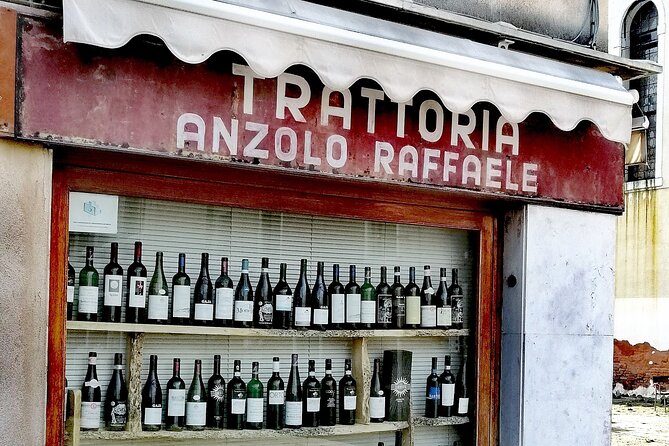
This is a Venice walk built around neighborhoods that stay busy with real residents and students, not just tour buses. Dorsoduro gives you art-adjacent streets, water-level views, and lots of corners where you can hear regular life without fighting crowds.
The Giudecca Canal side adds a different angle on Venice. You get that open-water feeling and longer lines of sight along the waterfront, which makes the whole walk feel like a real repositioning of where you are in the city.
You can also read our reviews of more walking tours in Venice
Meeting at Campiello dei Squelini, then gliding into Ca’ Foscari
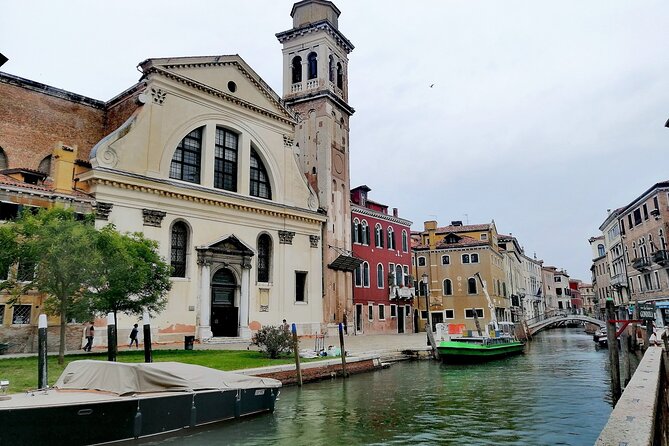
Most walks in Venice start with something obvious. This one starts in a Campiello (small square) near Ca’ Foscari, and the atmosphere right away is more intimate. It’s a good warm-up because you’re standing in the city’s smaller-scale space before the canal scenery takes over.
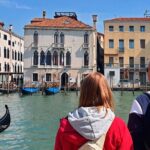
From there, you pass the Ca’ Foscari area, linked to the Venice University. The standout detail here is the Venetian Gothic stonework: think pointed forms, intricate carvings, and that slightly theatrical look Venetian palaces have when they sit right on the Grand Canal. It’s the kind of architecture that makes sense only when you’re close enough to notice the details, not just snap a photo from far away.
If you’re traveling with a private group, you can ask for route adjustments toward other districts (like Cannaregio, Castello, San Polo, Santa Croce, or San Marco). That flexibility is a real plus when you know what you’re hungry for.
San Pantalon: the ceiling “canvas” plus a Banksy-style surprise
At Campo San Pantalon, you’ll head into the Church of San Pantalon, known for its ceiling painting that covers the entire ceiling. Even if you only have a short moment inside, it changes how you think about Venice churches. The art isn’t tucked away; it dominates the space in a way that’s hard to grasp from photos.
Outside, you’ll also catch a modern-art moment: the only Banksy graffito in Venice that’s part of this specific route, with a reflection in the canal water. Venice has layers, and this is a fun way to see the old and new share the same frame.
Practical note: churches can vary in how long you’ll want to stand there looking up. If you’re short on patience, focus on the ceiling painting first, then do a quick scan for how the light hits the artwork.
Campo Santa Margherita: the nightlife hub that still feels Venetian by day
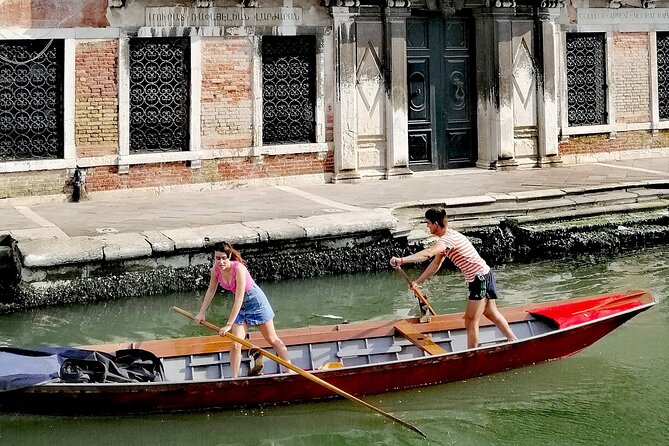
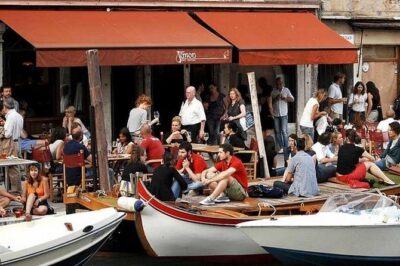
Next comes Campo Santa Margherita, one of Venice’s more social squares. It’s the sort of place that works at multiple hours: during the day, it feels like a neighborhood gathering point; in the evening, it turns into a lively zone with cafés and outdoor seating.
The value of stopping here on a guided walk is simple: you’re not just seeing the square. You’re learning how locals use these spaces, including what makes it a magnet for students and a place you’d keep returning to.
If you like people-watching, this is one of the best pauses. If you hate crowds, you still might enjoy it—because the square is open enough that it feels “lively,” not “packed.”
Campo San Barnaba: Indiana Jones energy and a famous canal moment
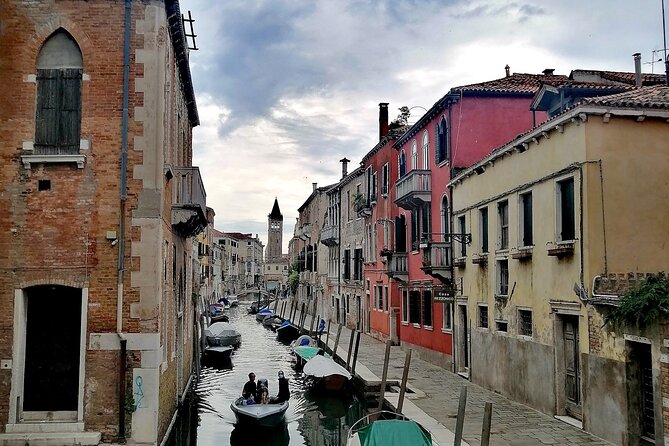
Then you shift to Campo San Barnaba, a calmer square with a church and a strong canal-view feel. Here the story hits pop culture: this is the setting tied to Indiana Jones and the Last Crusade.
You’ll also hear about Katharine Hepburn’s film moment, where she famously falls into the water on-screen. Even if you’re not a movie person, it’s a great example of how Venice keeps leaking into global storytelling.
What I like about this stop: it’s not loud. You get cinematic associations, but the physical setting stays peaceful. It’s a nice reset after the more social Campo Santa Margherita stop.

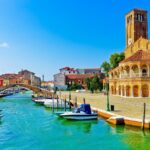
Zattere waterfront: the promenade, Molino Stucky, and the water’s workload
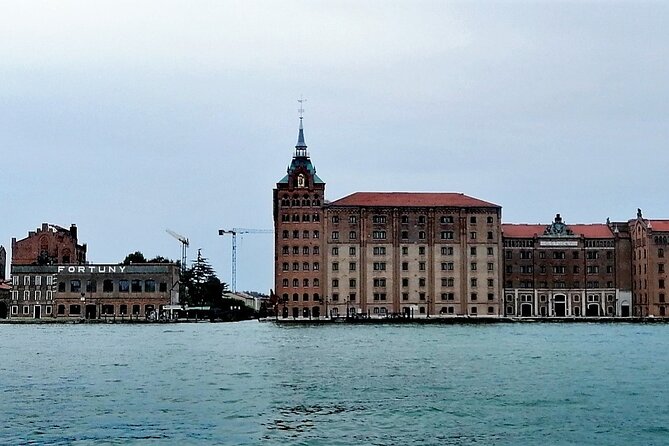
The walk along the Zattere is where the route starts feeling like Venice by water, not Venice by postcard. You’ll pass the Molino Stucky area, originally a 19th-century flour mill and now transformed into a luxury hotel.
That transformation matters because it shows how Venice adapts instead of freezing in time. The industrial architecture is still readable, and the change in use is clear enough that you can talk about it while you’re walking.
As you continue along the Zattere, you’ll also get the story behind the waterfront’s name and role. It was paved in 1519, and the area was linked to coal unloading when it was known as “Carbonaia.” The word Zattere connects to rafts used to move wood toward the Arsenale from the mainland.
Even if you don’t care about historical logistics, this background improves the views. You start noticing what you’re seeing as “infrastructure,” not just scenery: docking points, water channels, and the waterfront’s working geometry.
If you’re someone who gets motion-sick, this is still usually manageable, because you’re walking slowly along a wide pedestrian stretch. Still, take your time. Venice days can run long fast.
Squero di San Trovaso: watching gondola craft at the boatyard
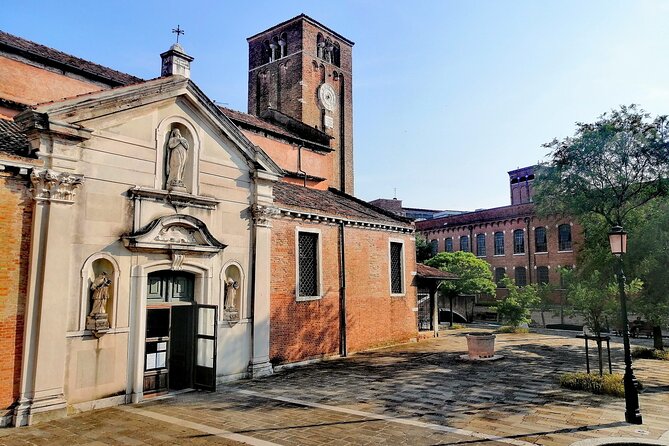
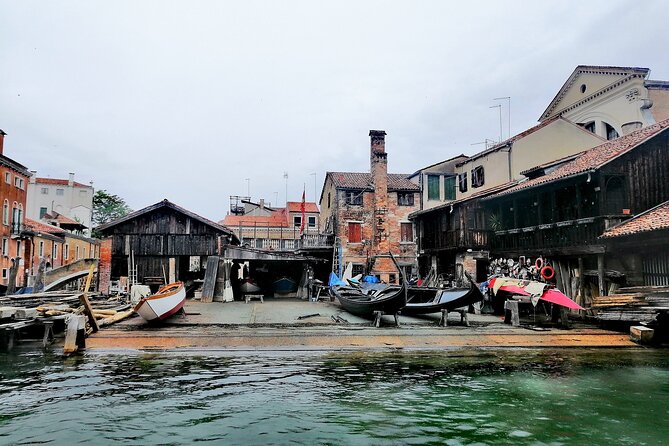
Next is Squero di San Trovaso, a working boatyard for gondola craftsmanship. This is one of the most satisfying stops on the walk because it’s practical and hands-on in atmosphere—wood, water sounds, and craft work happening in a place with a long tradition.
You don’t just see gondolas as symbols. You see the workshop setting that helps explain why gondola design endures. And because the boatyard is tucked along quieter canals, it feels like a secret Venice corner without needing to hunt for it.
If you’re taking pictures, remember that the action isn’t just on the “main canal view.” Look down and to the side for detail: materials, tools, and the way the space is shaped by the water.
Punta della Dogana: the Dorsoduro tip, old customs building, and Fortune Goddess
The walk finishes at Punta della Dogana, right at the Dorsoduro triangle where the Grand Canal meets the Giudecca Canal. This ending point is scenic in a practical way: the geography gives you a “look around” moment with multiple directions of water.
Along the way, you’ll notice several cultural anchors: an art museum housed in an old customs building, plus a baroque church and the Patriarchal Seminary of Venice. The final focal point is the statue of the Fortune Goddess, a strong visual that feels like a quiet wink at Venice’s love of luck, prosperity, and symbolism.
This is a good place to pause before you head elsewhere, because you’ll finally have the city in one wide view instead of only a series of streets.
Price and value: is $92.92 for two hours worth it
At $92.92 per person for about two hours, the value comes from three things you can feel right away:
- You’re paying for guide-time, not just sights. You get the why behind the architecture and the meaning behind the squares and waterfront spaces.
- You’re paying for pacing. The route moves through a calmer Venice footprint, with short stops that still add up.
- You’re paying for group size control. With a maximum of 15 people, it’s easier to ask questions and stay oriented.
The stops are also marked as admission-ticket-free in the walk structure, which reduces the “surprise costs” feeling you sometimes get with sight-based tours.
One practical budgeting note: if you’re visiting Venice from outside the city and you’re there for the day on certain dates, there may be a €5 access fee for some visitors. It depends on date and exemption rules, so it’s worth checking before you go.
Who should book this walk (and who might want something else)
This walk is a strong fit if you want:
- Off-the-beaten-path Venice without going so far that you lose the practical flow of the city
- Architecture and art context while still keeping the day relaxed
- A calm alternative to the most obvious Venice routes
It’s less ideal if you want:
- A slow, sit-down tour where you spend most of the time parked in cafés
- A “only major landmarks” plan built around big-ticket sights
If you do like variety, this one delivers. You get Gothic palaces, church art, movie-location squares, a working boatyard atmosphere, and a panoramic canal finish.
Should you book this off the beaten path Venice walk?
Yes, if you care about seeing the quieter Venice side with a guide who can read your interests and adjust the flow. The best evidence of value is how strongly the walk is recommended for its small-group feel and the way the guide brings places to life without making it a lecture.
Book it especially if you plan to spend only a few hours in Venice and want those hours to feel like they belong to a real neighborhood, not just the highlights. If you’re the kind of person who likes a city most when you understand what you’re looking at, this route will reward you.
FAQ
How long is the Off the Beaten Path Walk in Venice?
It lasts about 2 hours.
Where does the tour start and end?
It starts in Campiello dei Squelini, 30123 Venezia VE, Italy, and ends at Punta della Dogana (Dorsoduro), 30123 Venezia VE, Italy.
Is hotel pickup available?
Pickup is offered only for the private group option. For share tours in a small group, you meet your guide at the general meeting point under the trees in Campiello degli Squelini in Dorsoduro.
What language is the tour offered in?
The tour is offered in English.
What is the group size limit?
The tour has a maximum of 15 travelers.
Are there admission tickets to pay for the stops?
The stops listed in the walk are marked as admission ticket free.
Is there an access fee for some day visitors?
On certain dates, some people staying outside Venice and visiting for the day may need to pay a €5 access fee, depending on exemptions. You can check details at https://cda.ve.it.
What is the cancellation policy?
You can cancel for a full refund if you cancel at least 24 hours before the experience’s start time. Cancellation is free up to 24 hours in advance.
FAQ
Is the tour offered year-round and when will I get confirmation?
You receive confirmation at the time of booking.
Is the tour accessible for most people?
Most travelers can participate, and service animals are allowed.
What if the tour needs to be canceled due to minimum travelers?
If the experience is canceled because the minimum number of travelers isn’t met, you’ll be offered another date/experience or a full refund.