REVIEW · VENICE
Jewish Ghetto and Cannareggio Private Tour in Venice
Book on Viator →Operated by Journey Tours · Bookable on Viator
Venice has a quieter side in plain sight. This private walking tour through Cannaregio and the Jewish Ghetto trades the usual postcard routes for narrow alleys, palaces, churches, and real neighborhood feel. I love how the guide ties street-level details to the larger story of how Jewish life shaped this part of Venice.
Two things really stand out: the way the tour keeps moving through everyday streets (not museum silence), and the history is explained in a clear, human way. One heads-up: this is an outdoor tour, so you shouldn’t count on guaranteed synagogue interiors during the walk.
In This Review
- Key highlights worth your attention
- Cannaregio and the Jewish Ghetto: why this part of Venice hits different
- Meeting at Ponte delle Guglie: what to expect from a private 2-hour tour
- Stop 1: Cannaregio streets, palaces, bridges, and the Regio clue
- Stop 2: Ghetto Ebraico sights and what you learn outside the synagogues
- What your guide actually brings to the streets
- Value check: is $98.23 per person a fair deal?
- Timing, weather, and getting around those alleys
- Who should book this Jewish Ghetto and Cannaregio private tour?
- Should you book this tour?
- FAQ
- How long is the Jewish Ghetto and Cannareggio private tour?
- Where does the tour start?
- Is the tour private or shared with other groups?
- Is the tour offered in English?
- Does the tour include visiting the synagogue inside?
- Can I visit the Great Synagogue or the museum after the tour?
- Does the tour operate in bad weather?
- What is the cancellation policy?
Key highlights worth your attention
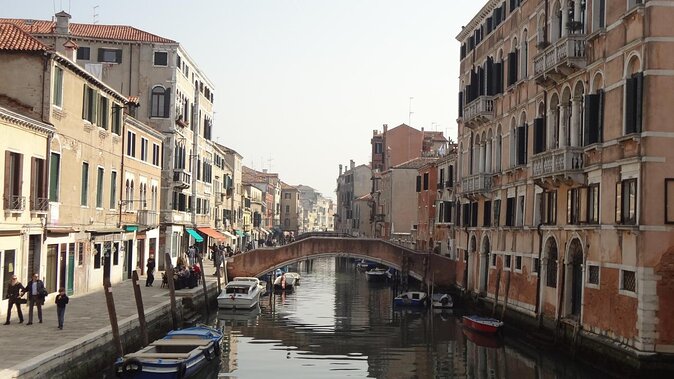
- A true neighborhood walk in Cannaregio, one of Venice’s most populated sestieri
- Jewish Ghetto sights from the outside, with context on Jewish culture and traditions
- A private guide for a 2-hour pace that you can actually keep up with
- Local storytelling that connects past and present in the same streets
- Optional add-ons after the tour like the Great Synagogue or museum visit on your own
Cannaregio and the Jewish Ghetto: why this part of Venice hits different
Venice isn’t just canals and grand facades. In Cannaregio and the Jewish Ghetto, you see a Venice that feels lived-in, slightly quieter, and more layered. The tour is built around walking those small lanes where you’d otherwise just pass through without noticing anything important.
The biggest value is the guide’s framing. You’re not just looking at buildings; you’re learning what those streets meant for centuries of Jewish residents, and how that history sits alongside today’s Venetians. It’s a calmer kind of Venice, but it doesn’t gloss over difficult truths.
If you want the Venice most first-timers miss, this is the way to do it.
You can also read our reviews of more private tours in Venice

Meeting at Ponte delle Guglie: what to expect from a private 2-hour tour
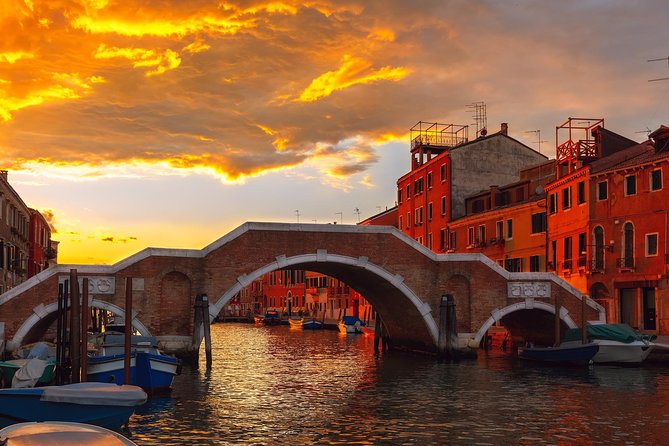
You’ll start at Ponte delle Guglie, Cannareggio 1299. The tour ends back at the meeting point, so you’re not left hunting for your way out of the neighborhood afterward.
Because it’s private, the flow is steadier than a large group walking tour. Your guide can pause when you want to look closer at a bridge, a doorway, or a church facade, and they can answer questions without rushing you along.
Also, this is an outdoor walking tour through built-up areas. Expect steps, uneven paving, and tight corners. Venice always demands a bit of patience, and here the alleys are part of the point.
Stop 1: Cannaregio streets, palaces, bridges, and the Regio clue
Your first hour centers on Cannaregio, one of the most populated sestieri of Venice. It’s the kind of area where you can feel the city’s rhythm without it being staged for visitors.
As you walk, you’ll spot the urban mix that makes Venice fun on foot: palaces, bridges, and churches, all threaded through narrow lanes. The guide also gives you a meaningful origin for the name. Cannaregio’s name is linked (possibly) to a canal called Regio. Even if names are debated, the connection helps you see the neighborhood as something shaped by waterways and trade long before modern tourism.
What I like about starting here is that it gives you a baseline. Once you understand Cannaregio’s streets and character, the Jewish Ghetto stop feels less like a separate attraction and more like a chapter within the same neighborhood.
Potential drawback at this stop: you’re on your feet for a full hour in Venice’s alley web. If you’re sensitive to walking on uneven stone, wear supportive shoes and build in your own slow pace.
Stop 2: Ghetto Ebraico sights and what you learn outside the synagogues
The second hour takes you into Ghetto Ebraico, the Jewish Ghetto area. This is where you’ll still be able to admire synagogues and other visible landmarks, but in an outdoor format.
Here’s the key detail: the tour is designed as an overview from the street, not a sit-and-watch interior museum experience. You’ll get an explanation of Jewish culture and traditions, plus how the architecture and the history of this district developed over time.
You’ll also have flexibility after the walk. You can decide to visit the Great Synagogue after the tour and/or stop by the museum on your own. That’s handy because it lets you match your energy level—some people want more time inside, others prefer to keep wandering the neighborhood.
One important consideration: while synagogues are part of the visible experience, the tour itself doesn’t include a synagogue visit during the walk. If stepping inside is a top priority, you’ll want to plan that separately.
What your guide actually brings to the streets
This tour lives or dies by the guide, and the best part is the tone: thoughtful, specific, and grounded in real streets. In the past, I’ve seen guides like Barbara deliver thorough explanations in a way that doesn’t talk down to you. Alessandra is another name you might hear associated with this kind of tour, and she’s described as patient even with kids—plus good at connecting the origins of the ghetto to bigger European themes like banking.
Even without naming any specific guide you’ll get, you should expect:
- clear historical background you can picture as you walk
- architecture pointed out in practical, visible terms
- a balance between the serious history and the fact that this is still a functioning neighborhood
That last part matters. Venice’s history can turn heavy fast, and it’s easy to miss the human continuity. The guide approach here helps you understand the past without making the streets feel like a closed exhibit.




Value check: is $98.23 per person a fair deal?
At $98.23 per person for about 2 hours, you’re paying for a private, local guide experience. That can sound steep if you compare it to big-group tours. But the private format is the whole point here: you get pacing control, more direct answers, and a route built around small, meaningful sights.
Where the value really shows up:
- You’re learning history that isn’t covered deeply on classic Venice routes.
- You’re getting street-level context across two linked areas (Cannaregio first, then the Ghetto).
- You can ask questions as they come up, rather than waiting for a group recap at the end.
If you’re the type who enjoys understanding why a neighborhood is shaped the way it is, this price starts to make sense quickly. If you just want quick photos with minimal talking, you might feel the cost less justified.
Timing, weather, and getting around those alleys
The tour runs in all weather conditions, so plan for rain, shade, and that damp Venice feel when it shows up. The simple fix is what you’d expect: dress appropriately and wear shoes that handle slick stone.
Also, there are architectural constraints. The tour notes that in some areas a stroller may need to be carried in your arms, so don’t assume you’ll be able to push the whole route smoothly. Most people can participate, but if you’re traveling with mobility constraints, you’ll want to think about walking time and uneven surfaces.
When you arrive, keep your expectations realistic: this is a walking tour through dense neighborhoods, not a flat promenade.
Who should book this Jewish Ghetto and Cannaregio private tour?
This tour is a great fit if you:
- want Venice beyond the main sights
- like history you can see and walk through
- enjoy small, local neighborhoods more than landmark checklists
- want a guide who can handle sensitive history with care
It’s also a strong choice for families who do well walking and asking questions, since the tour style is described as patient and engaging.
If you’re only interested in guaranteed interior synagogue access, you may feel disappointed because this is primarily an outdoor format. In that case, treat this as the background and context step, then add the interior visit separately if it’s available and you can get the timing right.
Should you book this tour?
I’d book it if you want a meaningful Venice detour—one that makes Cannaregio and the Jewish Ghetto feel understandable, not mysterious. The price buys you a private guide who can explain Jewish culture, traditions, and neighborhood history while you’re actually standing in front of the evidence.
Skip or plan carefully if you’re expecting a purely inside-the-building synagogue experience during the 2 hours. For everyone else—especially first-time visitors who want the Venice that isn’t on the usual route—this is a smart, respectful way to spend your time.
FAQ
How long is the Jewish Ghetto and Cannareggio private tour?
The tour lasts about 2 hours.
Where does the tour start?
The meeting point is Ponte delle Guglie, Cannaregio 1299, 30121 Venezia VE, Italy.
Is the tour private or shared with other groups?
This is a private tour/activity, so only your group participates.
Is the tour offered in English?
Yes, it is offered in English.
Does the tour include visiting the synagogue inside?
No. The tour is outdoor and does not include a synagogue visit during the tour.
Can I visit the Great Synagogue or the museum after the tour?
Yes. You can decide to visit the Great Synagogue after the tour and also visit the museum on your own.
Does the tour operate in bad weather?
It operates in all weather conditions, so dress appropriately.
What is the cancellation policy?
You can cancel up to 3 days in advance for a full refund. If you cancel less than 3 days before the start time, the amount paid will not be refunded.