REVIEW · VENICE
The Heart of Venice: A Self-Guided Audio Tour
Book on Viator →Operated by VoiceMap Audio Tours · Bookable on Viator
Venice talks back when your phone says hello. I love the way the audio auto-starts at each stop, and I love having offline maps and geodata so you can wander without hunting for signal. The main catch: you need your own smartphone to run the app, and some day-trippers may face a €5 access fee on certain dates.
This is a 1-hour, English-language self-guided GPS tour using the VoiceMap application. You get lifetime access to the tour, and you can move at your own pace while the route nudges you from Piazza San Marco to Rialto Bridge.
What makes it feel genuinely Venetian is the mix of big-name landmarks and specific local stories. You’ll hear opera history around La Fenice, and even practical tide talk near the Centro Maree for acqua alta.
In This Review
- Key things to know before you go
- VoiceMap self-guided setup: offline audio, GPS triggers, and your pace
- Price and value of a $11.99 Venice audio walk with lifetime access
- Piazza San Marco: the drawing room of Europe stories before you turn corners
- Campo San Salvador: the Austrian revolt memorial column
- Teatro Comunale Carlo Goldoni: comedy in the Venetian dialect
- La Fenice opera house: where Rigoletto and La Traviata premiered
- Palazzo Cavalli and Centro Maree: civil marriage and the science of acqua alta
- Rialto Bridge: understanding the third bridge and its raised center
- Practical timing: how to make a 1-hour route work in real crowds
- Who this self-guided tour suits best (and who should look elsewhere)
- Should you book The Heart of Venice audio tour?
- FAQ
- How long is The Heart of Venice audio tour?
- Is the tour offered in English?
- Does it work offline?
- Where does the tour start and end?
- What do I need to participate?
- Is there a refund if I cancel?
Key things to know before you go
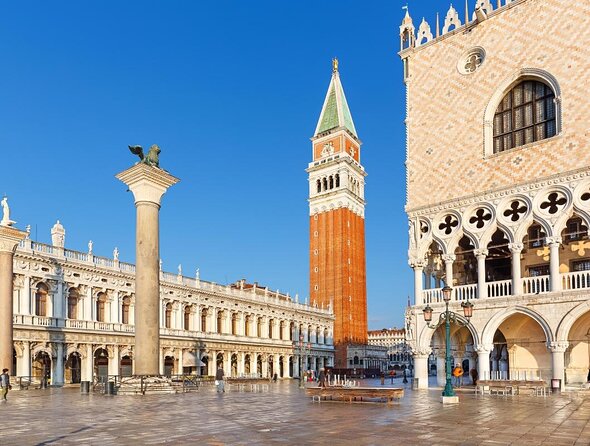
- Audio that triggers on location: no scrolling and no guesswork once you’re at each spot
- Offline access included: audio, maps, and geodata work without data
- A tight route for a 1-hour walk: good pacing without feeling like a marathon
- Real local context, not generic postcards: revolt memorials, opera premieres, and tide predictions
- Lifetime access: replay it later, or use it as a bite-size guide when you return
VoiceMap self-guided setup: offline audio, GPS triggers, and your pace
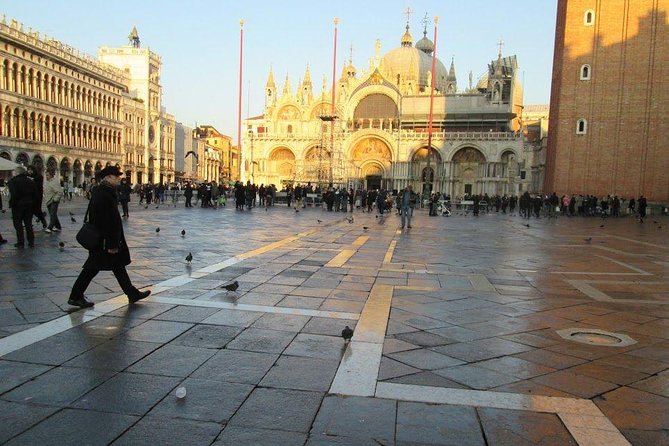
This tour is built for walking—your job is to show up at the right places, and the app does the rest. The audio is designed to play automatically when you reach each spot, which is great in Venice, where it’s easy to get turned around between lanes, canals, and sudden squares.
The smartest part for most people: offline access. The tour includes offline access to the audio, maps, and geodata. That means you’re not stuck finding Wi‑Fi or burning through cellular data just to keep the story going. If you’ve ever tried to use a map app in Venice and watched your signal wobble, you’ll appreciate this.
It’s also self-guided GPS, so you’re not locked into a group pace. You can linger at a view, step aside to avoid a crowd, then resume when you’re ready. It’s private in the sense that it’s only for your group, not a shared tour with strangers packed in.
You can also read our reviews of more guided tours in Venice



Price and value of a $11.99 Venice audio walk with lifetime access
At $11.99 per person for about 1 hour, this isn’t a “see everything in Venice” package. It’s a focused route through the core highlights around San Marco and Rialto—then it gives you stories you wouldn’t easily pick up just by looking.
Here’s the value angle: you get lifetime access to the tour. So you’re not paying just for one day’s walking. You can revisit the route later, or use it as a quick refresher when you’re back in the area.
Also, what’s included matters. You get the VoiceMap application and offline audio/maps/geodata, plus directions to the starting point so the tour will start when you’re in the right place. If you’d otherwise spend money on a guided tour, a paid audio story can be a good budget-friendly alternative—especially if you like your time flexible.
The only real “cost” is your phone. Smartphone isn’t included, and you’ll want it charged before you start.
Piazza San Marco: the drawing room of Europe stories before you turn corners
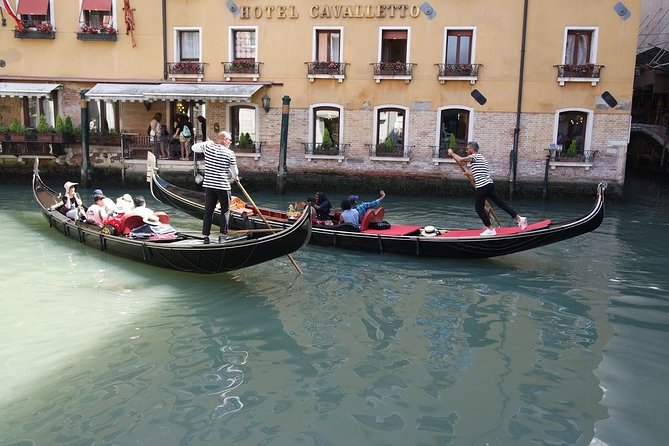
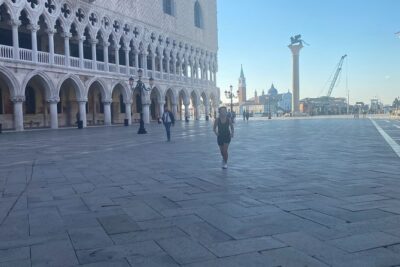
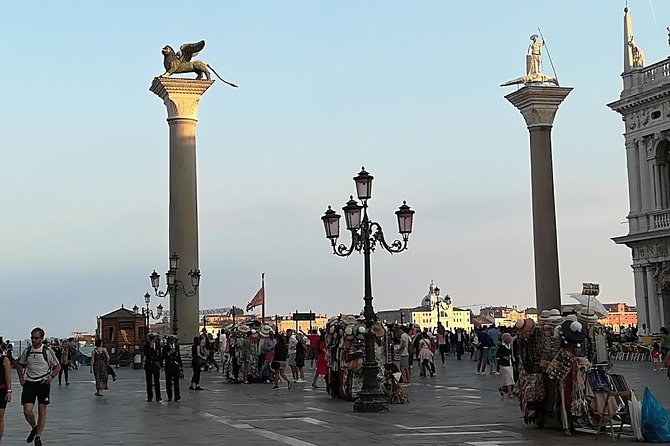
Your walk begins at Piazza San Marco, the central heart of Venice. It’s the place that’s been visited for centuries—so much so that the square earned the nickname the drawing room of Europe, while Venetians simply call it la Piazza.
What I like about this stop in particular is that the audio frames the square as a stage for power and public life. You’ll hear about state visits by popes and emperors, public executions, religious processions, and of course Carnival. That turns the familiar postcard landscape into something you can actually “read” as you stand there.
Practical consideration: Piazza San Marco can be crowded, and the stone-and-echo sound can make it harder to hear phone audio if you’re standing right in the densest flow of people. If you can, step a little to the side, keep your volume comfortable, and let the audio guide your next move.
Campo San Salvador: the Austrian revolt memorial column

Next up is Campo San Salvador, a square with a surprisingly sharp historical detail: a tall marble column set in the middle. It was installed in 1898 to commemorate the 17-month Venetian revolt against Austrian occupation in 1848 and 1849.
This is the kind of stop that makes a self-guided tour feel better than a generic route. You’re not just moving from famous building to famous building—you’re getting a specific, dated story that helps explain why certain monuments are where they are.
One good tip: don’t race through this square. The column is prominent, but the most rewarding part is hearing the story tied to the timeline. Give it an extra minute and let the audio connect the dots before you cross into the next stretch.
Teatro Comunale Carlo Goldoni: comedy in the Venetian dialect
Then the route turns toward the Teatro Comunale Carlo Goldoni, named for Carlo Goldoni, a Venetian playwright from the 1700s. Goldoni wrote many comedies in the Venetian dialect, and the tour highlights why that mattered: it was considered revolutionary at the time.
The audio focuses on something you can feel even today—Goldoni made characters seem like real people. Not heroes carved in stone, but Venetians with quirks and everyday habits. That’s a great pairing for Venice, because the city runs on personality and small social rhythms.
Potential drawback: if you’re in a rush, theaters can feel like quick photo stops. But this one works best if you slow down for the story, because the theater name is the key. Once you know why it’s named for Goldoni, the stop feels more alive.
You can also read our reviews of more tours and experiences in Venice




La Fenice opera house: where Rigoletto and La Traviata premiered
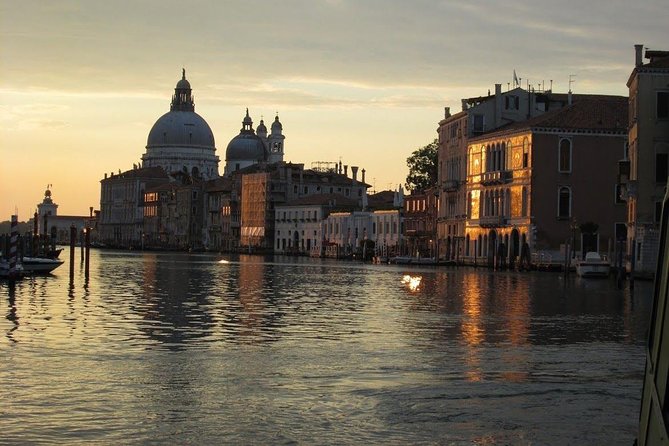
From there, you’ll hear about La Fenice, one of Italy’s most important opera houses. The tour calls out that many famous operas had their first performances here, including Rigoletto and La Traviata.
Even if opera isn’t your main travel interest, this stop is worth it because it’s still Venice’s idea of culture: art built in public spaces, with a city-wide audience. The stories you hear here help explain why people treat La Fenice as more than just a building—it’s part of Venice’s identity.
If you’re a music lover, you’ll probably want to linger for a moment after the audio finishes, just to look at the theater with new context. And if you’re not, you can still enjoy it as a “why this matters” moment, tied to names you’ll recognize.
Palazzo Cavalli and Centro Maree: civil marriage and the science of acqua alta
This is where the tour surprises you—in a good way. The route includes Palazzo Cavalli, which does two very different jobs.
First, it conducts civil marriage services. Second, it houses the Centro Maree, also known as the Tide Center. That’s where monitoring of tides and weather happens, and where the daily predictions are made—especially for high tide, called acqua alta.
This stop is valuable because it grounds Venice in something practical. The city has legend and drama, yes. But it also has schedules, forecasts, and systems for living with the water. When you hear how the tide center makes daily predictions, you start to understand why Venice adapts so well—and why planning matters more than it does in many other European cities.
The only consideration here is timing. The tour’s pacing is about an hour total, so make sure you don’t spend so long elsewhere that this portion becomes rushed. If you want the full effect, give this stop the attention it deserves.
Rialto Bridge: understanding the third bridge and its raised center
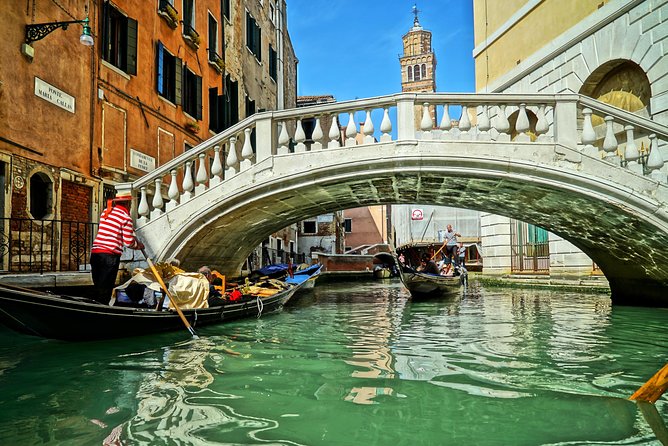
You’ll finish at Rialto Bridge, one of the most recognizable symbols of Venice. The audio explains that it’s the third bridge of its kind, and that earlier versions were made of wood.
It also covers a detail that helps you picture how the canal used to work: the older Rialto bridges were bascule bridges, meaning the center section could be raised so ships with masts could pass.
That little engineering detail matters. It turns Rialto from a static photo spot into a piece of functional history—something built to keep Venice moving through the waterway network.
Practical note: Rialto Bridge area is usually active. If the audio ends but you want to keep looking, take an extra minute to watch the flow—boats, feet, and the way the bridge sits between them.
Practical timing: how to make a 1-hour route work in real crowds
The tour runs for about 1 hour. That’s a sweet spot: long enough to get meaningful context, short enough to fit into a day already packed with wandering.
Here’s how to make it work smoothly:
- Start at the Piazza San Marco address given, so the app recognizes you quickly.
- Move at a walking pace that lets you stop when the audio begins each segment.
- If Piazza San Marco is jammed, step to the edge of the flow so you can hear clearly.
Also, Venice weather can change your mood fast. Since this route includes offline maps and geodata, you can keep going even if your phone signal fades. If you’re caught in rain, you’ll still have the audio ready.
Who this self-guided tour suits best (and who should look elsewhere)
This tour is a strong match if you want:
- Stories without a group schedule
- A walk through the most central Venice sights: San Marco, Rialto, and the key squares and cultural stops between
- A format that works offline, which is a big deal in Venice
- A mix of topics: history, theater, and even tide science
It may be less ideal if you:
- Want a fully human guide explaining everything on the spot and adjusting to your interests
- Don’t travel with a smartphone or don’t like relying on apps while walking
One more thing: the tour is private for your group, and service animals are allowed. It’s also near public transportation, so you should be able to fit it into a route without needing a car.
Should you book The Heart of Venice audio tour?
I’d book it if you want a high-value, low-stress way to learn what you’re actually looking at around San Marco and Rialto. The offline setup and auto-triggering audio are the big wins, and the content isn’t just generic landmark trivia—it connects theater culture and even tide predictions to everyday Venice.
If you’re short on time or you don’t want to lock into a set group itinerary, this makes a lot of sense. Just go in with a charged phone, and check whether your visit date has the possible €5 access fee for day-trippers staying outside Venice.
FAQ
How long is The Heart of Venice audio tour?
It lasts about 1 hour (approx.).
Is the tour offered in English?
Yes, the audio tour is offered in English.
Does it work offline?
Yes. It includes offline access to audio, maps, and geodata, so you do not need data during the tour.
Where does the tour start and end?
It starts at Piazza San Marco (P.za San Marco, 328, 30124 Venezia VE) and ends at Rialto Bridge (Ponte de Rialto, 30100 Venezia VE).
What do I need to participate?
You need the VoiceMap application on a smartphone. A smartphone is not included with the tour.
Is there a refund if I cancel?
Yes. You can cancel for a full refund if you cancel up to 24 hours in advance of the experience’s start time.