REVIEW · VENICE
Glass Blowing Experience with Glass Master
Book on Viator →Operated by Gino Mazzuccato Murano Glass · Bookable on Viator
Molten glass meets real life on Murano. This private Venice-to-Murano outing puts you at Gino Mazzuccato Murano Glass, where I like the private water-taxi ride and the chance to watch the glass master work up close, then you get a quick try yourself. Do plan on the hands-on time being short, and the glass you make stays behind because it needs slow cooling for 24–48 hours.
The best part for me is the mix of craft and explanation: a staff member talks through materials and technique, while the master demonstrates the process right in front of you. In feedback, one guide named Rocco gets mentioned for keeping things clear and engaging in English.
After the demo, you’ll have time to browse the factory shop and possibly use a store discount that many people report. One caution: if your group is larger, the chance to blow may be limited to some people at a time, so check your expectations before you go.
In This Review
- Key points to know before you book
- Getting to Murano by private water taxi
- Gino Mazzuccato Murano Glass: watching the master work
- Hands-on blowing: what your short try actually looks like
- Your glass doesn’t go home: 24–48 hours of slow cooling
- Factory shop time: buying authentic Murano glass without getting weird about it
- Price and value at about $241 per person
- Should you book this glass-blowing experience?
- FAQ
- Where does the glass-blowing experience take place?
- How long should I plan for?
- Do I get to blow glass, or is it only watching?
- Can I take home the glass I blow?
- How do I get from Venice to Murano?
- Is this a private tour?
- Is there an access fee when visiting Murano from outside Venice?
Key points to know before you book
- Private water taxi from your hotel makes the trip feel smoother than bus + steps across islands.
- You watch the master create real pieces first, including techniques used for items the shop sells.
- Your hands-on moment is brief but real: you’ll blow molten glass along with the master, not just observe.
- The glass you shape doesn’t go home with you because it must be cooled slowly for tempering (24–48 hours).
- Shop time happens right after while the craft is still fresh in your mind, and a discount is commonly mentioned.
- Good weather matters since the plan relies on water transport.
Getting to Murano by private water taxi
This experience starts with a simple idea: you leave Venice by private water taxi. You’ll find your boat at your hotel (or your agreed pickup point) at the scheduled time, and then you head over to the island of Murano.
That boat ride is more than a nice perk. It saves you from the usual Venice scramble—queues, crowded stops, and the question of whether you’re moving fast enough to catch the right connection. It also sets the tone. You’re not “touring the islands.” You’re going to a working glass factory.
A few practical notes that matter when you’re planning:
- The experience is offered in English, and confirmation is sent at booking.
- The activity requires good weather. If weather cancels, you’ll be offered another date or a full refund.
- Service animals are allowed, and the factory is described as near public transportation.
- If you’re staying outside Venice and visiting for the day, you may need a €5 access fee on certain dates. The tour info points you to the official Venice access details here: https://cda.ve.it.
One more timing detail: this is popular, and it’s commonly booked about 78 days in advance. If you’re traveling in a busy season, don’t assume you can grab a last-minute slot.
You can also read our reviews of more tours and experiences in Venice.



Gino Mazzuccato Murano Glass: watching the master work
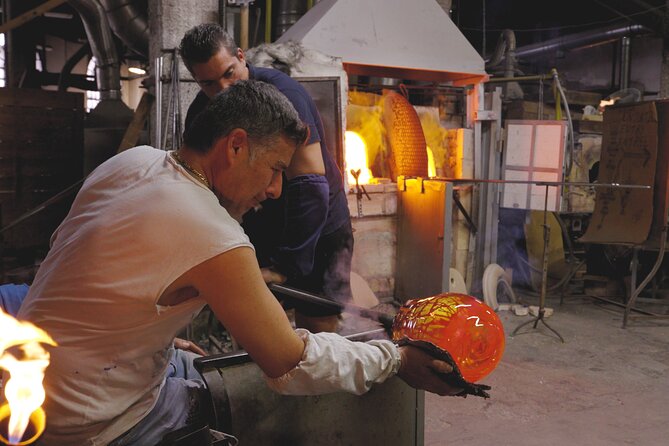
Once you reach the factory, a staff member meets you and brings you into the heart of what makes Murano famous: the live process. Your first phase is watching the glass master work, with staff explaining the history of glass production, the materials used, and the basic techniques behind the results.
What you’ll see is not just random glass “tricks.” The master produces glass art pieces in front of you, showing how molten glass gets shaped and manipulated. In feedback, people often highlight examples like:
- A horse figure made by pulling molten glass with tweezers
- Vase-style shapes created live
- The use of a pipe/tube to form a bubble before it gets further worked
Even if you only catch a few minutes of the actual shaping, the key is timing. Glass has a narrow window where it’s workable. Watching a master helps you understand why glassblowing is part heat control, part muscle memory, and part nerve.
There’s also something human here. A good demo isn’t just about the final object. It’s about the decisions: when to pull, when to rotate, when to gather and shape. The staff explanations help connect those gestures to the bigger story of Murano glass production—why certain techniques exist, and why they took root here.
And yes, Murano itself is a reason to go. The island context makes the whole thing feel like you arrived somewhere that still runs on craft, not just souvenirs.
Hands-on blowing: what your short try actually looks like
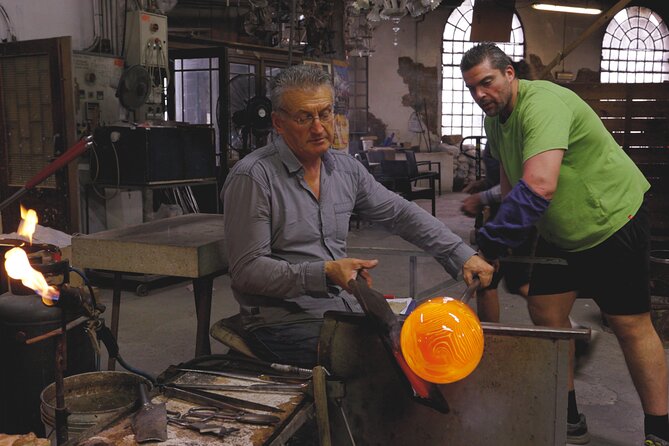
After you watch the master, you join in. The description is clear that this is not a full workshop—it’s a simple try where you blow glass along with the master.
So what does that mean in real life? Expect a fast, guided moment. People describe participation lasting about a minute or less, sometimes even closer to a quick burst of blowing and then finishing the bubble process with the staff. One common pattern is:
- You blow into a tube/pattern the master sets up
- You form a bubble or shape
- The glass is handled right after, so the experience moves on quickly
That’s exactly why this activity works best when you treat it like an introduction, not a class where you walk out with a personal handcrafted piece.
A few value-related details to keep in mind:
- Some people report that access to the actual blowing moment can be limited when a group is bigger. Even if your booking includes more people, the factory may only allow a set number to blow at once.
- Kids have been able to participate under supervision in feedback, which is encouraging if you want a family-friendly “try it once” memory.
- Staff may use photos or video from your device while you’re participating, and many people find that part of the fun.
If you go in expecting a long, step-by-step session where everyone gets extended time at the pipe, you’re likely to feel shorted. If you go in expecting a short, well-explained intro that lets you feel the pressure and timing firsthand, it can land really well.
Your glass doesn’t go home: 24–48 hours of slow cooling
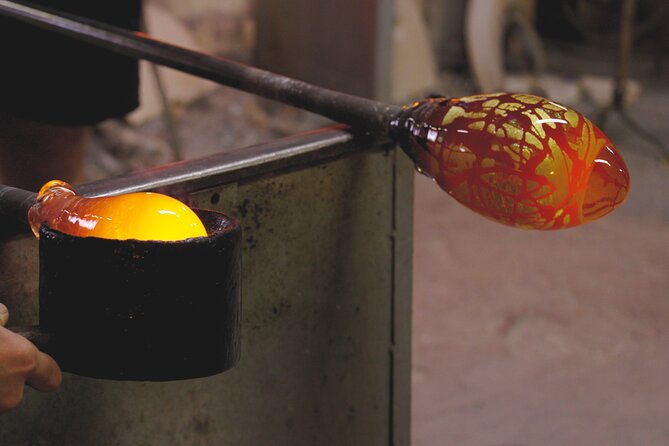
Here’s the big one: you cannot take the glass you blow home.
The reason is built into the science. Once shaped, the glass has to cool slowly so it can be tempered properly. That cooling process takes about 24–48 hours.
This matters for two reasons when you’re deciding if the experience is worth it:
- You’re paying for the craft moment and the demonstration-to-try experience, not for a take-home item.
- If your souvenir plan depends on leaving with something you made, you’ll need to adjust your expectations.
That said, the experience is structured to compensate for that. After the glass-blowing moment, you’re able to visit the rest of the glass collection in the factory shop, which is framed as a great place to buy authentic Murano glass.
So think of this like an “experience-first” purchase. If you want the feeling of participating in glassblowing, this gives it. If you want a finished personal object to carry home immediately, you may find a longer workshop more satisfying.
Factory shop time: buying authentic Murano glass without getting weird about it
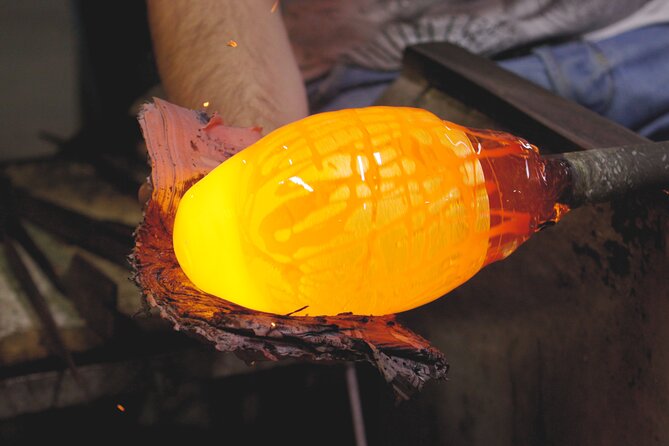
After the demo and your short try, you’ll have time to visit the shop and browse the glass collection. This is where the experience shifts from hands-on learning to real buying decisions.
In the feedback, there’s a recurring theme: people like that the discount show up after the demo, and many feel the shop is part of the point. One person specifically notes that they appreciated a discount offered after the demonstration, and another says the shop browsing felt free of heavy pressure.
But here’s the balanced caution: not everyone loves the sales atmosphere. A few reports mention feeling strong pressure to purchase merchandise. In other words, the factory shop is still a shop.
My practical advice if you want to keep this fun:
- Go in with a budget and a “maybe” mindset. If you end up buying, it should feel like a choice, not a rescue from FOMO.
- Focus on what you actually liked when the master created pieces. If you saw techniques that matched certain styles, look for those styles in the shop.
Also, since you don’t take your blown glass home, the shop is where the experience turns into a physical memory—so it helps to give yourself time to browse rather than rush out immediately.






Price and value at about $241 per person
At $240.96 per person for roughly 2 hours, this isn’t a casual add-on. You’re paying for several things at once:
- A private water-taxi transfer from your hotel/pickup point
- Access to a glass master’s live demonstration
- Staff-led explanations of techniques and materials
- A short hands-on blowing moment
- Time in the factory shop afterward
That price can feel great if your top priorities are:
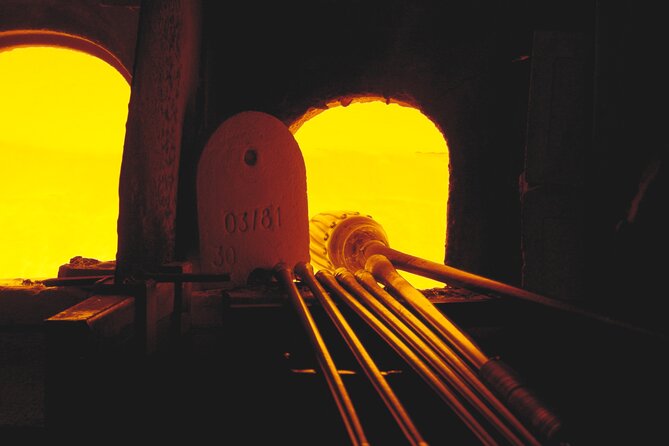
- Seeing glassblowing up close in a real furnace environment
- Getting at least a few moments to blow molten glass yourself
- Doing it with a private setup rather than slotting into a crowded demo line
It feels overpriced to some people when their expectations lean toward a longer hands-on workshop. A few notes mention a surprisingly short demo-to-try window, and others question whether it matched the advertised time. There are also comments where people felt the experience didn’t justify the extra cost versus what they could have seen elsewhere.
So how do you decide?
Use this simple checklist:
- If you’re thrilled by the idea of watching a master and you mainly want a quick “I tried it” moment, this can be a good fit.
- If you need lots of time at the pipe, step-by-step practice, and extended crafting, you’ll probably want a different format.
- If you’re a group where not everyone gets to blow, the value per person can feel uneven. That doesn’t mean it’s bad—it just means you should know what you’re buying.
Finally, language can affect your value. One report mentions difficulty understanding. Since staff explain glass history, materials, and techniques, consider whether you’ll be comfortable enough in English to follow along. If not, you may still enjoy the visuals, but the “story layer” could be less satisfying.
Should you book this glass-blowing experience?
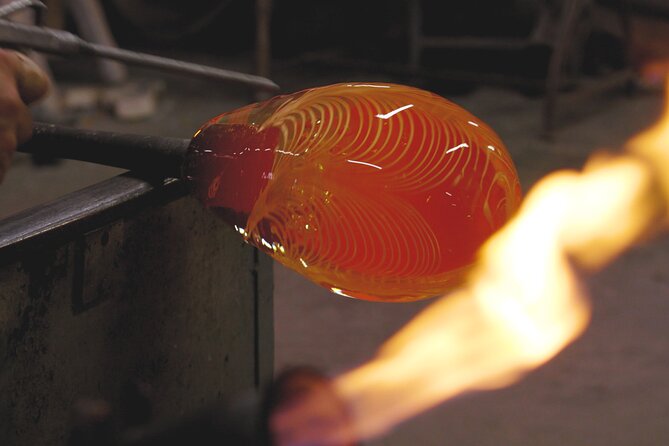
Book it if you want a short, guided, private introduction to Murano glassblowing, with a real glass master in front of you and a chance to blow molten glass yourself. It’s especially appealing if you like the idea of leaving the experience connected to Murano through the factory shop—since your own blown glass won’t be packaged to go.
Skip or reconsider if you’re shopping for a longer, more hands-on craft class where you spend extended time making something substantial. Also reconsider if getting a take-home item is your main goal, because your glass needs 24–48 hours of slow cooling to temper.
If you’re on the fence, I’d decide based on this: do you want the master’s live technique and a quick try, or do you want time to practice and produce a take-home piece? This experience leans clearly toward the first option.
FAQ
Where does the glass-blowing experience take place?
It’s in Venice, Italy, with the activity happening on the island of Murano. Your stop is the Gino Mazzuccato Murano Glass site.
How long should I plan for?
The duration is listed as about 2 hours.
Do I get to blow glass, or is it only watching?
You’ll watch the glass master work first, then you’ll get a brief chance to blow glass yourself. This is described as a simple try, not a full workshop.
Can I take home the glass I blow?
No. The glass you shape cannot be taken away because it must cool slowly to be tempered, which takes about 24–48 hours.
How do I get from Venice to Murano?
The experience includes pickup by private water taxi from your hotel (or your chosen pickup point) at the scheduled time.
Is this a private tour?
Yes. It’s private, and only your group participates.
Is there an access fee when visiting Murano from outside Venice?
On certain dates, people staying outside Venice and visiting for the day may need to pay a €5 access fee. The experience info directs you to check details and exemptions at https://cda.ve.it.