REVIEW · VENICE
Venice Film Tour: Explore Iconic Movie Locations
Book on Viator →Operated by deTourist Venice Valerio Coppo · Bookable on Viator
Two hours, sixteen movie corners, one city of water. This Venice Film Tour threads classic and modern cinema through real streets, canals, and landmark facades, with licensed guide commentary on how scenes were made. You’ll cover the kind of places that show up again and again on screen, from the railway station’s film-start energy to the views around San Marco and Rialto.
I love the way this route balances big sights with quieter campi you might miss on a first visit. I also like the stop-by-stop storytelling that connects each location to specific films, so the city starts to look like a set of camera-ready angles instead of just buildings.
The main drawback is the pace. The tour is tightly timed, with many stops lasting about 10–15 minutes, so you’ll want comfy shoes and a plan for walking fast in heat.
In This Review
- Key highlights you can actually feel
- A movie-lover’s shortcut through Venice’s real geography
- Price, duration, and what $185.43 gets you in practice
- Pacing and meeting near the railway station
- Stop-by-stop: 16 screen locations from ghetto campi to San Marco
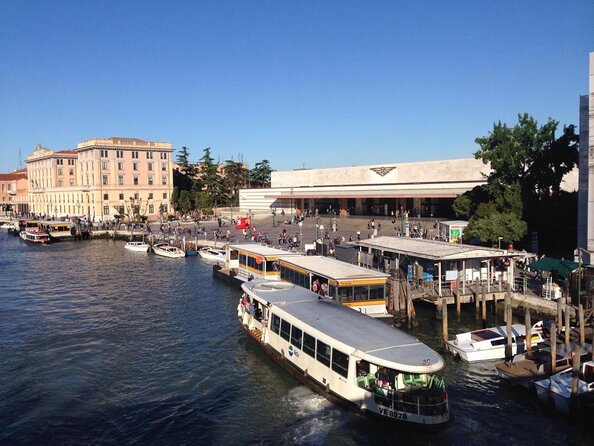
- Start at the railway station zone
- Stop: In campo del ghetto (Jewish Ghetto)
- Stop: Chiesa di San Stae (Eustachio)
- Stop: Grand Canal
- Stop: Mercati di Rialto
- Stop: Chiesa di Santa Maria dei Miracoli
- Stop: Scuola Grande di San Marco
- Stop: Ca’ Rezzonico
- Stop: Teatro La Fenice
- Stop: Scala Contarini del Bovolo
- Stop: Campo Santa Maria Formosa
- Stop: Campo San Barnaba
- Stop: The Gritti Palace (Luxury Collection Hotel)
- Stop: Basilica di Santa Maria della Salute
- Stop: Piscina Sant’Agnese
- Stop: Hotel Danieli
- Stop: Doge’s Palace
- The guide matters: Valerio Coppo’s film energy and routing
- When you should adjust your expectations
- Should you book the Venice Film Tour?
- FAQ
- How long is the Venice Film Tour?
- What does the tour cost?
- Is the tour offered in English?
- Are there admission tickets included for the stops?
- Is pickup available?
- Is there any extra Venice access fee I should know about?
- What happens if the tour is cancelled due to weather?
Key highlights you can actually feel
- 16 screen locations across Venice packed into about two hours
- Valerio Coppo’s film-to-city explanations that make camera angles click
- Most locations listed as admission-free for quick viewing and context
- A private-group format so the experience stays focused on your group
- Good for cinephiles and families who want a fun break from standard sightseeing
- Short stops, efficient route that still covers famous areas like Rialto and San Marco
A movie-lover’s shortcut through Venice’s real geography
Venice is already cinematic. What makes this tour different is that it gives you a map for how films think—where the camera wants drama, romance, mystery, or spectacle. Instead of bouncing around randomly, you follow a sequence of locations tied to specific stories, and your brain starts recognizing the city’s visual patterns: the way water frames a church, how a terrace becomes a landing spot, how a façade can do heavy lifting on screen.
I like that you don’t just hear film trivia. You also get a sense of how Venice’s layout shapes storytelling: narrow passages funnel sightlines, campi feel like stages, and bridges or terraces instantly change the mood. By the end, you’re not just remembering scenes—you’re seeing Venice as a set of viewpoints.
You can also read our reviews of more tours and experiences in Venice.

Price, duration, and what $185.43 gets you in practice
At $185.43 per person for about two hours, this isn’t a budget stroll—but it can feel fair if you’re the type who watches movies with a second brain turned on. The value here is the tight structure: you’re paying for a guide who can link a location to what happens there on screen, then point out what to notice while you’re standing in the real spot.
Also, many of the stops are marked as admission ticket free, which matters in Venice. You’re not stacking separate ticket purchases on top of a walk—more of your money goes into the guidance and the time you spend seeing multiple key areas in a compressed window.
One heads-up: because it’s efficient and timed, it may not feel slow and leisurely. If you’re the kind of traveler who wants to linger for photos for 20 minutes at every corner, this style might feel brisk.
Pacing and meeting near the railway station
Most tours start with a simple plan: meet, walk, arrive, repeat. This one adds a film perspective early by beginning at the railway station area, which has shown up in multiple movies. That’s a smart move. The station is Venice’s gateway—instant orientation, quick energy, and a setting that already feels like the start of a story.
You’ll move through the city in a series of short stops, which keeps the tour lively. Expect many locations to be around 10–15 minutes, with a couple closer to 5–10 minutes. In real life, that means you should show up ready to walk, keep your water handy, and be ready for photos on the fly.
Also note: the tour includes pickup offered, and it runs in English with a licensed tour guide. If you’re traveling with kids or want a guided break from ticket lines, this format often works well.
Stop-by-stop: 16 screen locations from ghetto campi to San Marco
Here’s how the tour experience feels as you move across Venice. Think of it as a guided montage: each stop gives you a film hook, a quick explanation, and a viewpoint to connect the story to the city.
Start at the railway station zone
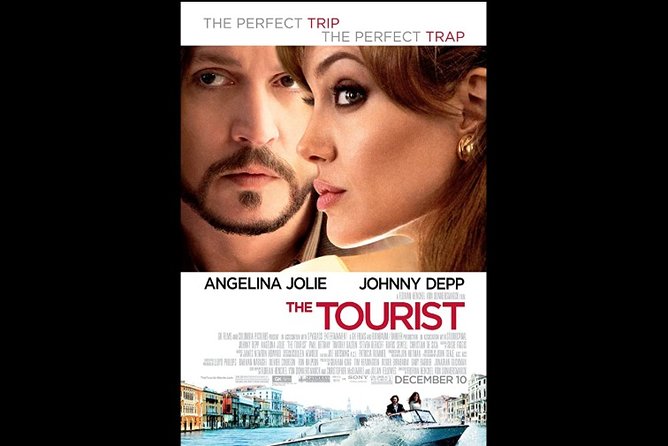
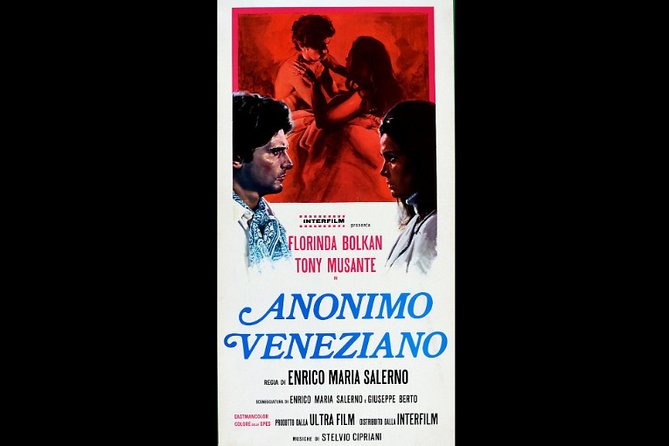
This is one of the most recognizable starting points for Venice-on-screen. The guide ties it to films ranging from The Anonymous Venetian (1970) to The Tourist (2010), plus the especially memorable moment in Venice, the moon and you (1958), where Alberto Sordi’s character hooks foreign tourists.
What to look for: the sense of arrival. Even before you reach major landmarks, the station area already communicates Venice as destination and performance.

Stop: In campo del ghetto (Jewish Ghetto)
In campo del ghetto, you’ll connect the square to Senso (1954), where Luchino Visconti sets the beginning of a passion story between Livia Serpieri and Franz Mahler.
Why it works: the Ghetto isn’t just a backdrop. A “campo” in Venice is a public stage, and the tour helps you understand how film uses that openness.
Stop: Chiesa di San Stae (Eustachio)
Outside this church, the tour points you toward the connection to Don’t look back now (1973), including the funeral boats in final scenes moored with views toward the Grand Canal and the church’s Baroque façade.
Practical note: church exteriors and canal-adjacent corners can look very different depending on angles. The guide’s job is making sure you stand where the film energy would have been.
Stop: Grand Canal
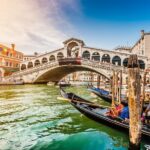
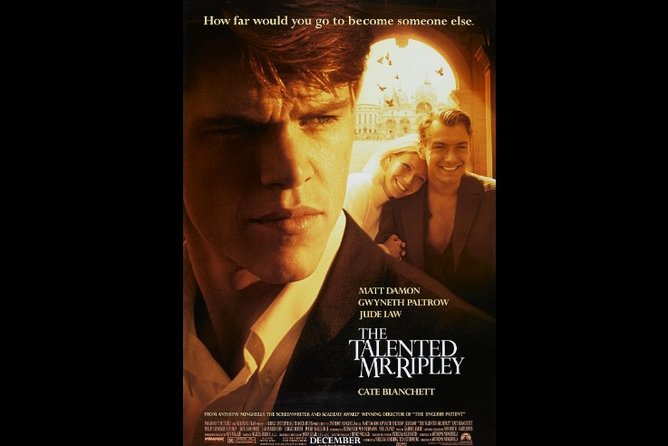
The Grand Canal is the movie highway. Here the guide brings up Alexandre Promio’s 1896 gondola filming run—one of the earliest cinematic views of Venice. You’ll also get examples of how the Grand Canal and its many buildings show up in dozens of films, including The Talented Mr. Ripley (1999) and The Merchant of Venice (2004).
What you can do on your own: when the guide points out building relationships, try to “frame” the canal in your head like a shot. It makes the place feel more legible and less like endless water.
Stop: Mercati di Rialto
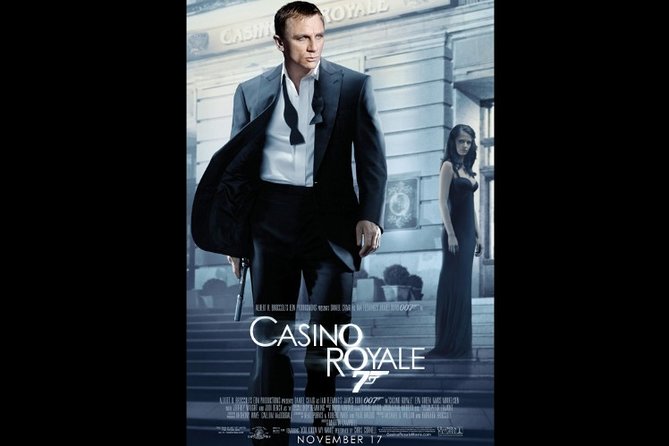
At the Rialto fish market area, you’ll hear about The Tourist (2010), where Johnny Depp launches from a terrace onto a stall. On the far side of the canal, the guide also connects the area to James Bond’s Casino Royale (2006), clarifying that the palace-collapse moment is fictional.
Where you’ll benefit: Rialto can be crowded on your own. With a guide, you get the meaning of what you’re seeing, and you’re more likely to understand the geography rather than just snap photos.
Stop: Chiesa di Santa Maria dei Miracoli
This small church is known for its polychrome marble, and it’s tied to Orson Welles choosing it for the wedding scene in Othello (1952). The tour also mentions a fictional flower shop associated with Bread and Tulips (1999), placed just a few steps behind the church.
Look closer than you think: polychrome marble rewards a slow stare—but the stop is short. Let the guide show you what matters, then do one careful photo and move on.
Stop: Scuola Grande di San Marco
This is linked to The New Pope (2019), directed by Paolo Sorrentino and starring Jude Law.
Why it’s fun: schools and religious buildings in Venice often look “set-ready.” The tour helps you recognize why a production would choose the architecture, not just the view.
Stop: Ca’ Rezzonico
Ca’ Rezzonico appears in cinematic imagination as the fictional Drax’s office in Moonraker (1979). The building is also a civic museum today, but on this tour you’re mostly there for the film connection and the exterior feel.
What to notice: palazzi have a way of looking even more “designed” from certain angles. You’ll get pointed out where the scene energy would land.
Stop: Teatro La Fenice
This stop brings the drama of real and film time together. Senso (1954) begins during a performance at La Fenice. The guide also explains the devastating fire in 1996, the rebuilding, and reopening in 2003. You’ll learn the irony of the name La Fenice, tied to fires and returns.
If you’re a theater person: you’ll probably end up looking at the façade and thinking about how directors use performance spaces to signal turning points.
Stop: Scala Contarini del Bovolo
There’s a legend that links this structure to the home of Desdemona. The guide connects the place to Orson Welles’s Othello (1952) and how he made the location famous, at least for movie fans.
Tip for photos: courtyards and staircases in Venice reward low, angled shots. You can usually get a stronger result by changing your position a few steps rather than just zooming.
Stop: Campo Santa Maria Formosa
Here the guide ties the “campo” to Spider-Man: Far From Home (2019), including the idea of the square being destroyed in the film. The tour reassures you: the damage is fictional, and you get to admire the corner as it actually is.
Why this stop is good: Venice changes over time. Film often freezes a version of a place. Seeing the real intact square helps you feel the difference between screen fantasy and street life.
Stop: Campo San Barnaba
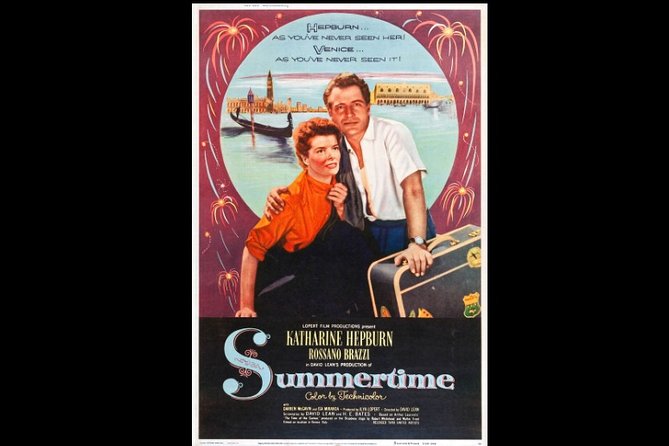
This stop blends adventure fiction with classic travel comedy. The guide connects it to Indiana Jones and the Last Crusade (1989), where Indiana Jones finds the X that never indicates where to dig. Then it ties in Summer Time (1955), with Katharine Hepburn as an American tourist who accidentally falls into the San Barnaba canal. The guide also mentions it as a location for The Italian Job (2003).
What to do: when the guide describes the canal situation, pause and look where a camera would place a character. You’ll start seeing the city like a storyboard.
Stop: The Gritti Palace (Luxury Collection Hotel)
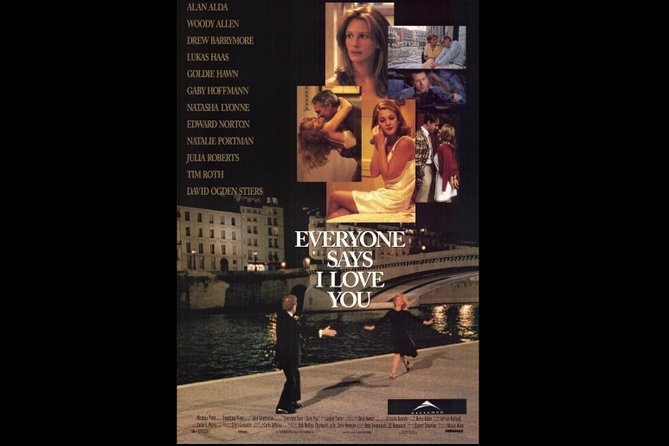
The Gritti Palace is a former Doge family palace and a residence for Vatican ambassadors, later transformed into a luxury hotel. The tour connects it to famous guests including John Ruskin, Ernest Hemingway, and Somerset Maugham. More recently, Woody Allen used it for scenes in Everyone Says I Love You (1996), starring Julia Roberts.
Why it matters for you: this stop reminds you that film doesn’t only borrow Venice from the streets. It borrows the prestige, the mood, and the history-laden surfaces too.
Stop: Basilica di Santa Maria della Salute
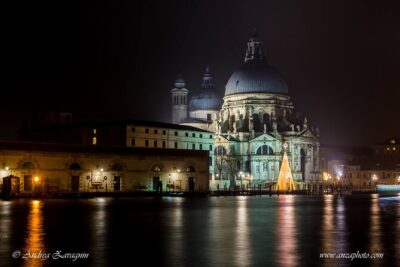
This church is tied to Lara Croft: Tomb Raider (2001) through the Illumianati gathering idea. The guide also clarifies that a room you may see in the film is actually from the Painted Hall of the Old Royal Naval College in London. This basilica also appears in The Talented Mr. Ripley (1999), with a conversation that takes place by a terrace at the Hotel Westin Europa & Regina across the canal.
Smart way to think about it: this is an easy example of how film mixes real locations with other sets. The guide’s explanation helps you not only appreciate Venice but also understand the mechanics of filmmaking.
Stop: Piscina Sant’Agnese
This is tied to Everyone Says I Love You (1996), where Julia Roberts used to jog, and to Summer Time (1955), where Katherine Hepburn freshens up during her Venice scenes.
What you get: a reminder that “Venice on screen” isn’t always about churches and palazzi. Sometimes it’s about everyday movement and timing.
Stop: Hotel Danieli
Hotel Danieli is connected to Vittorio de Sica’s last movie, The Journey (1974), starring Sophia Loren and Richard Burton. The tour also connects it to Moonraker (1979) as Holly Goodhead’s hotel. Plus it links the building to Viaggi di Nozze (1995), describing the first tragicomic wedding night.
Why this stop lands: it adds another side of Venice: the glamorous hospitality version that films love when they want romance and power in the same frame.
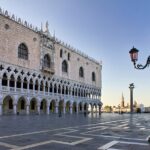
Stop: Doge’s Palace
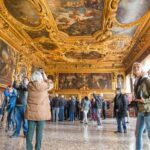
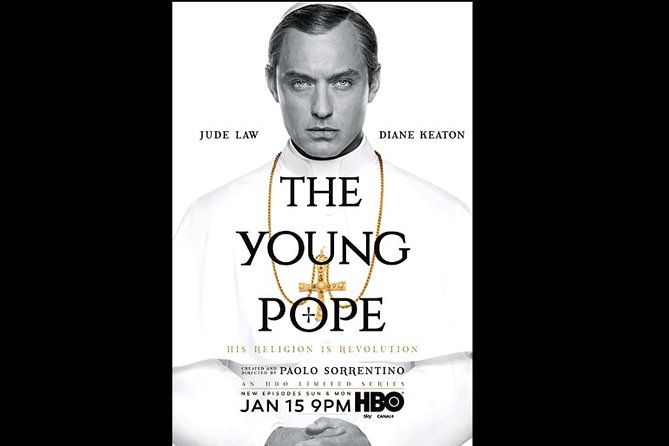
The finale energy belongs here. The guide ties the Doge’s Palace area to James Bond’s Moonraker (1979), including the famous gondola-hovercraft idea. It also connects the area to Casino Royale (2006), plus an Orson Welles dialogue moment connected to Othello (1952). The tour also mentions The Talented Mr. Ripley (1999) final scene in the Piazza’s café tables and Paolo Sorrentino’s The Young Pope series with Jude Law and Diane Keaton.
How to finish strong: at the end, take one slow look across San Marco’s space. When you’ve walked through so many film hooks, the square suddenly feels less like a monument and more like a stage.
The guide matters: Valerio Coppo’s film energy and routing
This tour is credited to deTourist Venice Valerio Coppo, and the reviews emphasize his style: friendly, outgoing, and good at getting you off the standard tourist routes. That’s a big deal in Venice. The difference between a “walk past” and a “walk that teaches you the city” is often just the guide’s route choices.
One review also points out that you can get immediate feedback on scenes via film clips shown during the walk (on a tablet). That’s exactly the kind of tool that helps the locations click in your mind. Seeing a short clip while you’re standing at the matching place compresses the learning curve.
And if you ask, you’ll likely get practical restaurant suggestions. That’s not just nice; it’s efficient. After two hours of cinema geography, you want a plan for dinner that matches what you’ve just discovered.
When you should adjust your expectations
A few things can shape how smooth the tour feels:
- Heat and walking: with many short stops, you’ll be moving often. Venice can get intense in warm weather.
- Day-visitor access fee: on some dates, if you’re staying outside Venice and visiting for the day, you may need to pay a €5 access fee. The tour points you to the City of Venice site for details and exemptions.
- Tips aren’t included: plan for gratuity if the guide earns it (and most people do on a tour like this).
- Weather matters: the tour requires good weather. If it’s canceled for poor weather, you’ll get offered another date or a full refund.
If any of those are dealbreakers, it helps to decide early. If you’re flexible on timing and weather, you’ll likely enjoy the route much more.
Should you book the Venice Film Tour?
Book it if you fit one of these profiles:
- You’re a cinema fan who remembers scenes by location, not just by plot.
- You want a guided way to see major Venice areas fast—Rialto, Grand Canal viewpoints, San Marco zone—without trying to connect it all alone.
- You like your sightseeing with stories, not just dates and facts.
Skip it (or at least reconsider) if you want a slow Venice day with long photo pauses and lots of free time. The stop length is short by design, so you’re buying efficiency and film context, not leisurely wandering.
If you want the best “value feel,” aim for good walking weather and go in with comfy shoes and a curious mindset. This tour turns Venice into something you can recognize on screen—and that’s a fun way to travel, especially the first time you visit the city.
FAQ
How long is the Venice Film Tour?
It runs for about 2 hours.
What does the tour cost?
The price is $185.43 per person.
Is the tour offered in English?
Yes, it’s offered in English.
Are there admission tickets included for the stops?
The stops listed on the tour are marked as admission ticket free.
Is pickup available?
Pickup is offered.
Is there any extra Venice access fee I should know about?
On certain dates, day visitors staying outside Venice may need to pay a €5 access fee. The tour directs you to check details and exemptions on the City of Venice website.
What happens if the tour is cancelled due to weather?
The experience requires good weather. If it’s cancelled due to poor weather, you’ll be offered a different date or a full refund.