REVIEW · VENICE
Venice: Enchanting City Walk & Majestic Gondola Glide!
Book on Viator →Operated by VENEZIA EXPERIENCE · Bookable on Viator
Venice can overwhelm on day one. This small-group walk helps you get bearings fast and still hits the postcard sights without feeling like you’re sprinting. You start near St Mark’s and move through the Castello side, then finish with a Grand Canal gondola glide.
I especially like the way the guide threads you through alleyways and campi like a local, not a marching line. I also love that the gondola time is long enough to actually enjoy the views and grab photos, not just one quick float-by.
The one thing to keep in mind is that the gondola is shared, and seats are assigned by the gondolier—so you don’t control your angle for pictures or who you’re sitting near.
In This Review
- Key highlights you’ll feel right away
- Venice in two hours: how this walk earns its place on your plan
- Piazza San Marco area start: Campo San Moisè, La Fenice, and the Bovolo Staircase
- Santa Maria Formosa: the calm center in a city of shortcuts
- Rialto Bridge: where the Grand Canal becomes your backdrop
- The Grand Canal moment: what a 30-minute gondola really gives you
- Teatro La Fenice stop: the theatre stories that make the city feel alive
- Ponte de le Ostreghe: the food-and-gardens side of Venice
- Mercerie shopping pointers: turning a walk into future plans
- Price and value: is $131.97 worth it?
- When the route changes: weather, timing, and how to keep control
- Who should book this gondola and city walk
- Should you book it?
- FAQ
- How long is the tour?
- Is the gondola ride private?
- How big is the walking group?
- Where does the tour start?
- What time does the tour run?
- Do I need to eat or bring food?
- What’s included in the price?
- How do I get my tickets?
- What if bad weather cancels the gondola ride?
- Is there any required Venice access fee?
- Can I cancel for free?
Key highlights you’ll feel right away
- Short time, big coverage: St Mark’s area sights plus the Castello side in about two hours
- Campo San Moisè to La Fenice zone: story stops like the Bovolo Staircase
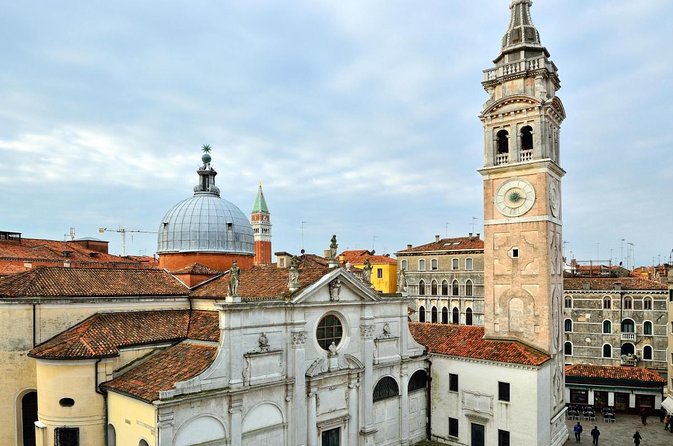
- Santa Maria Formosa break: a central, calmer square and church stop
- Rialto Bridge viewpoint: classic panoramas over the Grand Canal
- Grand Canal photo moment: a 30-minute shared gondola ride on the main waterway
- Mercerie shopping pointers: the guide flags shops to circle back to later
Venice in two hours: how this walk earns its place on your plan
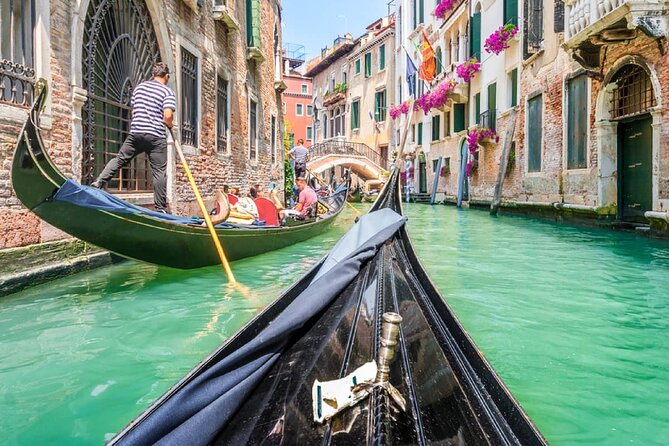
Venice is a maze. If it’s your first time, you’ll spend the first day just figuring out which direction is north and which way leads to a bridge. This tour is designed for that exact problem: you get a guided path through the key sights and enough context to make the city feel readable.
You’re not trying to do everything. Instead, you’ll see the big names—St Mark’s area and the Rialto zone—and then get a little breathing room with quieter stops that don’t dominate your brain with nonstop crowds. The pacing matters here. Two hours is short enough that you stay alert, but long enough that you start noticing patterns: where lanes funnel into campi, how the city uses bridges as checkpoints, and how the big sights connect.
Value-wise, the price makes sense if you want two things together: a guided walking orientation plus a real gondola ride. If you’re the type who already knows Venice and would rather wander freely, you might feel this is more structured than you want. But if you’re trying to make your first trip land well, I think the format is a strong deal.
You can also read our reviews of more walking tours in Venice
Piazza San Marco area start: Campo San Moisè, La Fenice, and the Bovolo Staircase
Your walk begins around Campo San Moisè near Piazza San Marco. This is a smart starting choice because it lets you work your way into St Mark’s gravity without starting at the absolute center of the frenzy.
From there, the guide points out landmarks and tells the stories that make them click. One stop in this phase is La Fenice, the famous opera house. Even if you don’t plan to attend a performance, knowing what La Fenice represents helps you read the building and the neighborhood around it.
Then you get one of the most fun architectural moments on the whole route: the Bovolo Staircase, a spiral staircase at Palazzo Contarini del Bovolo. It dates to 1499, and the guide’s explanation gives you a reason to pause instead of just snapping a photo and walking on. This is the kind of detail that can be easy to miss when you’re alone—Venice is full of small “wait, what is that?” moments, and a good guide helps you catch the right ones.
Practical note: you’ll have limited time at each point. The goal is to see, understand, and move. If you love slow museum-style pacing, this may feel too quick. But for first-timers, it’s the right speed.
Santa Maria Formosa: the calm center in a city of shortcuts
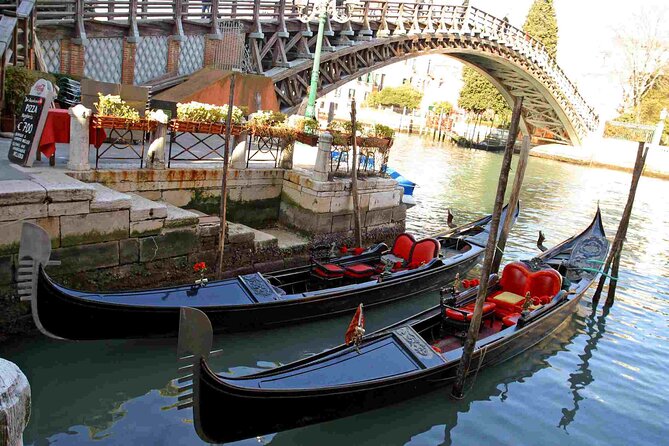
Next up is Campo Santa Maria Formosa, which many people overlook because it’s not as famous as St Mark’s. I like it for exactly that reason. It feels like a real neighborhood square—still central, but less like a theme park corridor.
The highlight here is Santa Maria Formosa Church, a 15th-century building with a façade described as a mix of Byzantine and Renaissance styles. Even without going inside, standing in the square gives you a more complete sense of Venice’s layered look—different eras stacked on top of each other.
This is also where the tour does something useful: it shifts from the “big icon” mode into “understand Venice’s everyday texture” mode. You’ll walk through nearby alleys and campi, and the area helps you reset your pace. If your feet are already complaining, this is a welcome stop.
Rialto Bridge: where the Grand Canal becomes your backdrop
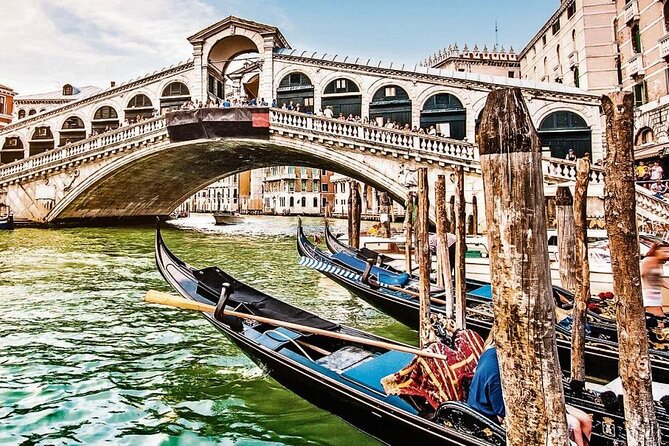
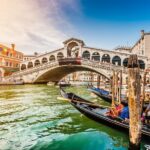
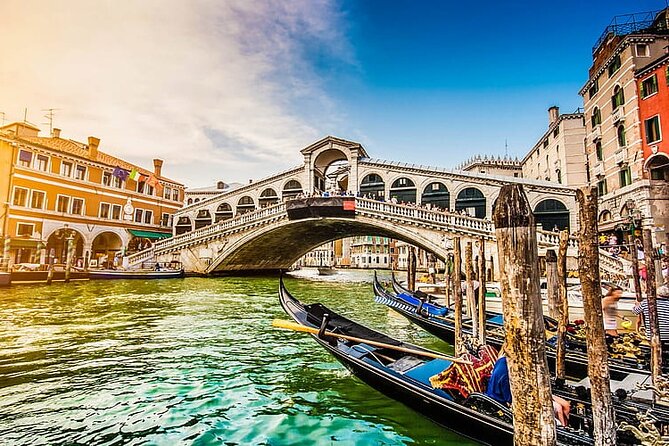
Then you hit Ponte di Rialto, the iconic bridge that connects the San Marco and San Polo areas. The tour frames it as both a landmark and a viewpoint, which is the key. The bridge isn’t just pretty; it’s a strategic photo and orientation spot.
You’ll learn that the bridge’s origins go back to the 16th century, and you’ll also notice the shops lining the bridge edges—another reason Rialto works even if you don’t plan to shop. From above, you get a clear view of how boats and gondolas thread through the Grand Canal.
If you want one “postcard moment” that actually matches the way Venice looks in your head, Rialto is it. It’s also a good time to check your bearings: after this stop, you understand how the canal corridors pull the city together.
The Grand Canal moment: what a 30-minute gondola really gives you
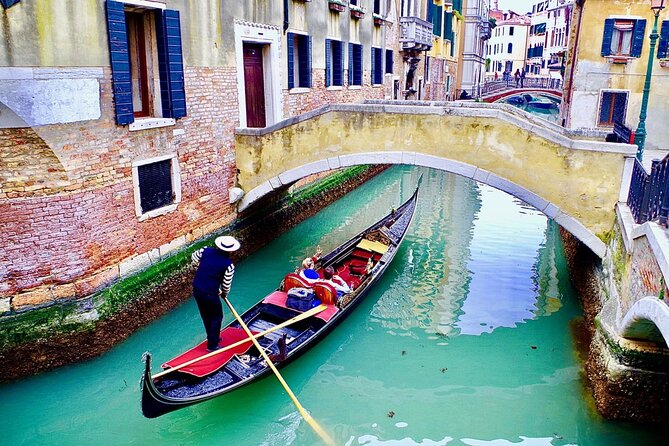
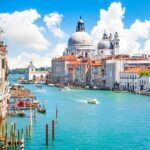
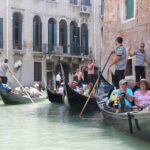
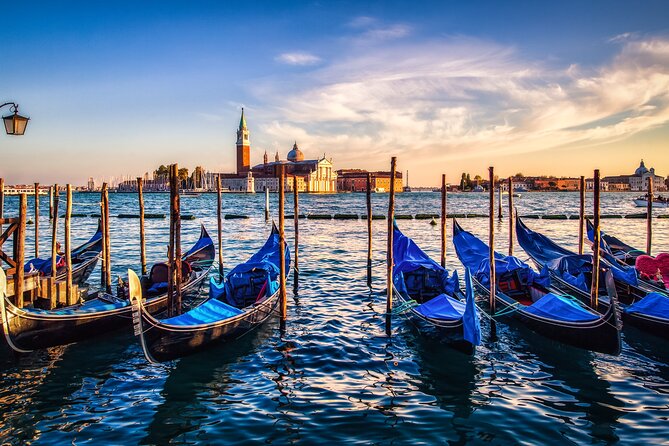
Here’s the main event: a 30-minute shared gondola ride along the Grand Canal. This is the one part of Venice that can feel like a splurge until you’ve done it—then you get why people line up for the experience.
The Grand Canal is about two miles long and flows in an S shape through the city. When you glide through it, you start noticing the architecture patterns: palaces and churches with façades oriented toward the water, and different “styles” that tell you how wealth and power wanted to be seen.
On a shared boat, you’ll understand another reality quickly: Venice gondolas are designed for movement and conversation, not for you to control the whole experience. Seats are assigned by the gondolier, and you can’t choose where you sit. I’d plan your expectations around that and think more about the ride itself than trying to force the perfect photo angle.
Still, the timing is the best part. Thirty minutes is enough to feel like you’re traveling, not just passing by sights at speed. You can relax your shoulders, listen to the water, and let the canal pass in front of you.
You can also read our reviews of more city tours in Venice



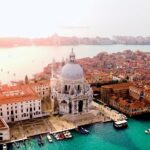
Teatro La Fenice stop: the theatre stories that make the city feel alive
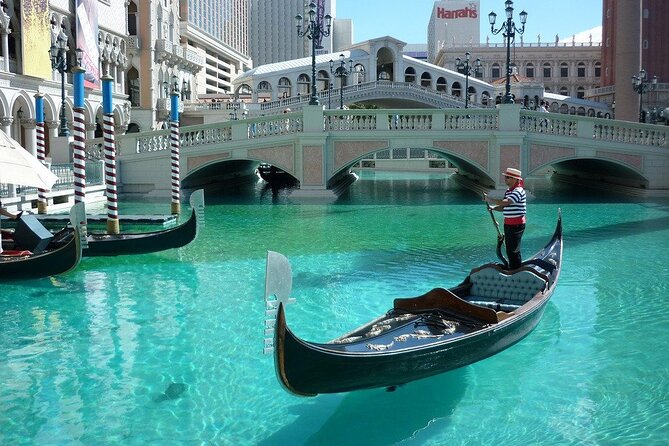
Later, the walk makes a stop near Teatro La Fenice again, and this is where the guide shifts into Venice’s performing-arts world. Venice had multiple theatres for drama and music, and the tour’s story line connects the city’s culture to its social life.
The route explanation includes details like the Grimani family and the 1755 founding of a key theatre (mentioned as Teatro San Benedetto in the narration). It also covers a change in control involving the Noble Society of boxholders, and an agreement in 1787 that led to their eviction. Even if you don’t memorize dates, you’ll feel the point: Venice treated public entertainment as a serious institution.
This stop matters because it adds depth to what you’re looking at. You’re not just seeing pretty buildings; you’re learning what people did inside them and why those spaces mattered.
If you prefer strictly visual stops with minimal talking, you might wish this phase were shorter. But for me, the theatre story helped the city feel more human and less like a postcard collection.
Ponte de le Ostreghe: the food-and-gardens side of Venice
The last walking stop is near Ponte de le Ostreghe. This is a great choice because it turns Venice from art-and-architecture focus into something more grounded.
Here, the guide uses place names as clues. Venice names its waterways and areas in ways that hint at horticulture and plants—campi, campazzi, and references connected to fig trees. You also hear about recorded mentions of waterways: Rio dell’Alboro noted in 1696, and Rio de le Ostreghe appearing in records in the following century.
The tour makes a plausible link between those waterways and food culture: it suggests these canals may have hosted vendors of seafood at one time, and that lagoon food cultivation grew over the 19th century. Even if you treat parts of this as a historical reconstruction, the takeaway is clear. Venice didn’t just float on art and palaces; it fed people and traded practical goods too.
This is also a good finale because the stop feels different from Rialto. You’ve seen the major views; now you end with a fresh angle on how the city’s names and waterways reflect daily life.
Mercerie shopping pointers: turning a walk into future plans
One of the most useful parts of the experience is the way the guide flags places you might want to revisit, including the Mercerie shopping area. Even if you’re not a shopper, this is valuable because it helps you map where certain streets and storefront types are located.
I like doing this at the end of an orientation walk. It gives you a couple of easy “next steps” rather than sending you back out with only memories. If you want a simple plan for your later afternoon or evening, those pointers can save time.
Price and value: is $131.97 worth it?
At $131.97 per person, this tour isn’t a budget activity. But it is priced in a way that makes sense if you compare it to the cost of just doing a gondola ride plus paying for a guided walk.
Here’s what you’re really buying:
- a guided route through major Venice sights and quieter areas,
- a gondola ride on the Grand Canal with time for photos,
- and a local narrative that helps you understand what you’re seeing.
The risk is that Venice gondolas can turn sour if you expect a private romantic setup. This is a shared ride. The seat assignment means your viewpoint may not be your preferred one, and you’ll share the gondola with other people.
If you want controlled, private, tailor-made everything, you’ll likely prefer a private gondola add-on. But if your priority is a smart first visit with a gondola included, I think this price is fair.
Also, the timing helps. You’re doing this as a 2-hour orientation. That means you can spend the rest of your trip walking with purpose instead of guessing.
When the route changes: weather, timing, and how to keep control
Venice weather happens. The operator notes that the itinerary can change in inclement weather. If the gondola ride gets canceled due to bad weather, you’ll receive a refund of 30 euro per person.
What this means for you: don’t lock yourself into other gondola plans back-to-back. Give yourself flexibility on the day of the tour, especially if your schedule is tight.
Also remember: it’s a shared tour, so expect a group pace. The walk is small on paper and limited on gondolas in practice, but you’re still not getting a one-on-one guide.
Who should book this gondola and city walk
This works best if:
- it’s your first time in Venice and you want an orientation that feels practical,
- you want a gondola ride but don’t want to spend your whole day planning it,
- you like architecture and stories, not just shopping and photos,
- you’re okay with a shared experience and following the gondolier’s flow.
You might skip it if:
- you already feel confident navigating Venice and don’t need the bearings,
- you dislike guided walking because you prefer long, independent wandering,
- you’re very picky about gondola seating and photo angles.
Should you book it?
Yes, with one mindset: treat it as a guided first-visit foundation plus a shared gondola treat. I like that you get both the “what am I looking at?” context and the Grand Canal ride in a single, time-efficient package.
Before you go, I’d plan for shared seating, wear comfortable shoes, and arrive on time so you can collect tickets without stress. If you do that, you’ll come away with a clearer map in your head and a gondola memory that feels like the real Venice.
FAQ
How long is the tour?
The walking tour is about 2 hours. The gondola ride included is 30 minutes.
Is the gondola ride private?
No. The gondola ride is shared. Each gondola can hold a maximum of 5 individuals.
How big is the walking group?
The walking tour is limited to a maximum of 15 people.
Where does the tour start?
It starts at Giardini Reali, Piazza San Marco, 30124 Venezia VE, Italy.
What time does the tour run?
The listed start time is 3:00 pm.
Do I need to eat or bring food?
Food and drink are not included.
What’s included in the price?
The tour includes an English-guided walking tour and a 30-minute shared gondola ride.
How do I get my tickets?
You receive a voucher by WhatsApp, and you must present it at the Aliguna Ticket Office to collect the tickets.
What if bad weather cancels the gondola ride?
If the gondola tour is canceled due to bad weather, you receive a refund of 30 euro per person.
Is there any required Venice access fee?
On certain dates, day visitors staying outside Venice may need to pay a €5 access fee. Check the official guidance at https://cda.ve.it for details and exemptions.
Can I cancel for free?
Yes. You can cancel up to 24 hours in advance for a full refund.