REVIEW · VENICE
Secrets of Venice Carnival and Life of Casanova Tour
Book on GetYourGuide →Operated by Venice Events srl · Bookable on GetYourGuide
Casanova and Carnival, in the same walk. I like how this tour turns Venice into a story you can feel, mixing Casanova’s life with real Carnival customs like masks and 17th-century costumes. I also like the payoff: a hot cappuccino and frittella at the end, in a local coffee stop near St Mark’s. One thing to consider is that it’s a mostly outdoors, back-street walk, so rain and a larger group can make hearing the guide harder.
This is a 2-hour, English-guided, costume-forward experience priced at $88 per person. You’ll meet in front of Teatro La Fenice, then follow a path through tight calli (alleys) tied to Casanova’s world, including stories around the Ridotto, Venice’s early casino culture, and the people who helped make the city play along with Carnival.
For a Venice trip that already includes the classics, this tour is a smart way to add texture: the myths, the manners, and the street-level theater of Carnival. It also hits a sweet spot for couples, history lovers, and anyone who wants more than the postcard version of Venice.
In This Review
- Key highlights to know before you go
- Starting at Teatro La Fenice: a Carnival-costumed guide sets the tone
- Casanova’s Venice: San Samuele alleys, Giorgio Baffo, and the Ridotto
- Masks that hid identities: how Carnival culture worked on the street
- 17th-century costumes and private Grand Balls
- Palazzo Contarini del Bovolo and Campo Santo Stefano: the street-level Venice lesson
- The hot cappuccino and frittella finish near St Mark’s
- Price and value: what $88 buys in 2 hours
- Small cautions for a smooth walk
- Who should book this Casanova and Carnival tour
- Should you book this Secrets of Venice Carnival and Casanova tour?
- FAQ
- How long is the Secrets of Venice Carnival and Life of Casanova tour?
- Where do I meet the guide?
- What is included in the price?
- Is hotel pickup or drop-off included?
- Do I need to speak Italian?
- Is the tour wheelchair accessible?
- Is oversize luggage allowed?
- Can I wear a Carnival costume or mask?
- Where does the tour end?
- What is the cancellation policy?
Key highlights to know before you go
- Start at Teatro La Fenice, then slide from grand opera vibes into Carnival backstreets
- Walk the alleys tied to Casanova and Giorgio Baffo, including mentions of Casanova’s Freemason life
- Learn why masks hid identities and what makes the traditional mask culture tick
- See costume inspiration from 17th-century Venice, plus talk about Grand Balls in private palaces
- End near St Mark’s with a hot cappuccino and Carnival-only frittella at Le Café Venezia
- Guide names you may hear (like Sergio, Dennis, or Lorenzo) are often praised for keeping the mood fun
Starting at Teatro La Fenice: a Carnival-costumed guide sets the tone
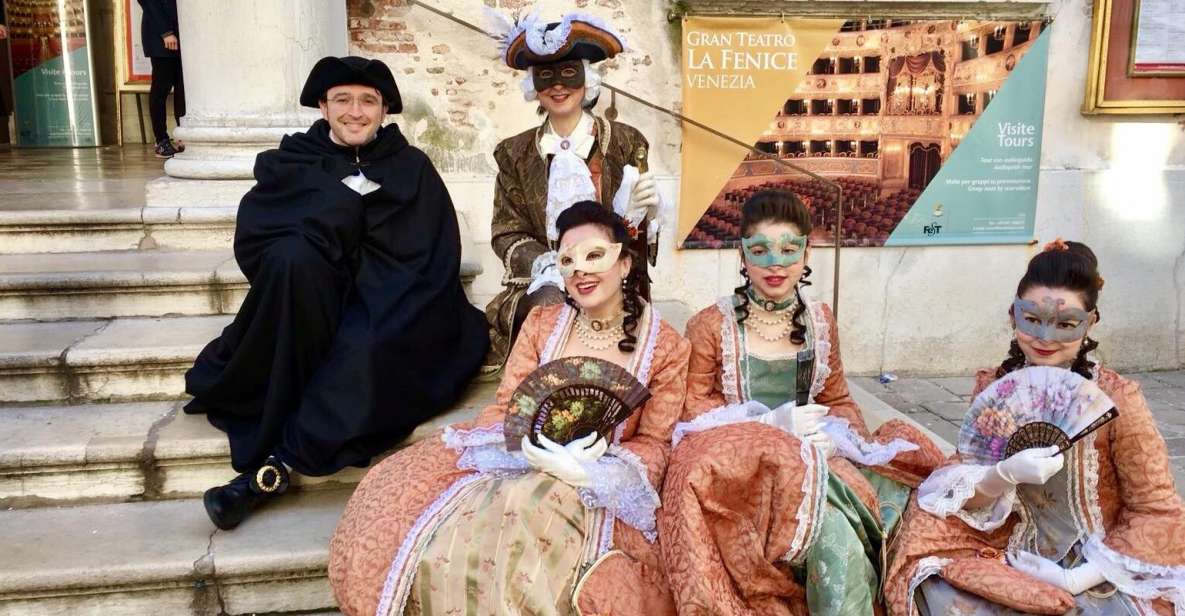
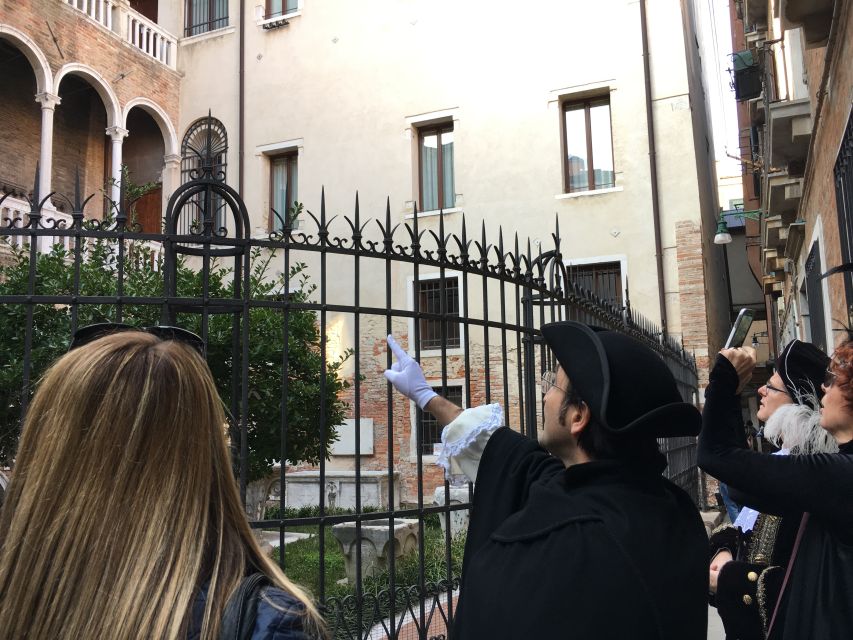
Teatro La Fenice is an easy place to find, and it’s a good mental switch. You start right at the opera house, where Venice feels polished and dramatic. Then your guide shows up dressed for Carnival, which changes the mood fast. It’s not costume cosplay for the sake of it; it frames the whole walk as theater, which is exactly what Carnival is.
You’ll be with an English-speaking guide who leads the conversation and keeps the pace. This is a walking experience, so expect to move through narrow streets and small squares rather than big scenic viewpoints. If you like stories you can track step-by-step, this format works well.
It also helps that the guide’s costume isn’t just decoration. You’re given context up front about how Carnival traditions used to function in Venice, including why masks mattered socially and practically. If you’ve ever wondered how a city could “play” so hard for a season, you’ll understand the mechanism here.
Practical note: there’s no hotel pickup. You’ll want to arrive on time at the meeting point so you’re not rushing in at the start. And oversize luggage isn’t allowed, which is a good reminder that this is an alley-focused tour.
You can also read our reviews of more tours and experiences in Venice.


Casanova’s Venice: San Samuele alleys, Giorgio Baffo, and the Ridotto
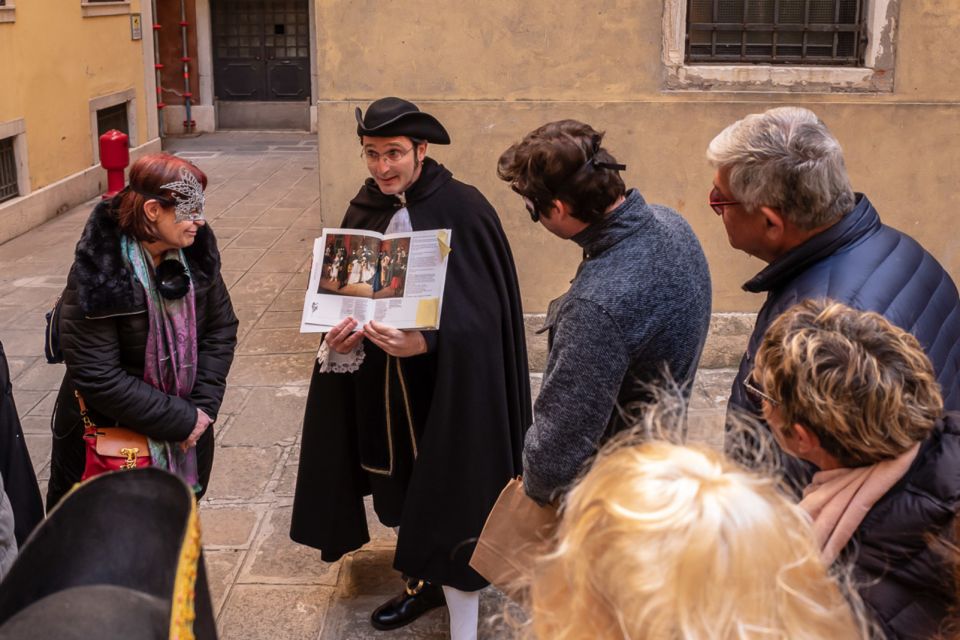
The heart of the tour is Casanova. Not the tourist-souvenir Casanova, but the lived-in version: lover, adventurer, extravagant personality, and someone whose life tangled with the institutions and entertainment culture of Venice.
You follow in his footsteps through tight calli in the San Samuele area. The walk is built around places connected to his upbringing and circles, including the area tied to his early life and the path that passes his home. You’ll also move past the house of poet Giorgio Baffo, described here as the person who introduced the young Casanova to worldly pleasures. That detail adds a human angle. It’s not just a biography outline; it’s a map of relationships.
One of the most interesting threads is how the tour connects Casanova to Venice’s early high-society entertainment scene. You’ll hear about the Ridotto, described as the first casino in Venice, where Casanova met Venetian aristocracy. It helps explain why Carnival wasn’t only costumes and jokes. It was also a social engine that pulled together status, money, and permission to behave differently for a season.
You’ll also hear stories tied to courtesans and their role in keeping the city lively. That part matters because it widens the story beyond palaces and powdered wigs. Venice’s social world had layers, and Carnival gave those layers a stage.
In tone, the tour leans into desire, passion, pleasure, and entertainment. If you’re expecting a strict academic lecture, you might find it playful. If you’re hoping for a guide who can hold attention with humor and dramatic pacing, you’ll likely enjoy it.
Masks that hid identities: how Carnival culture worked on the street
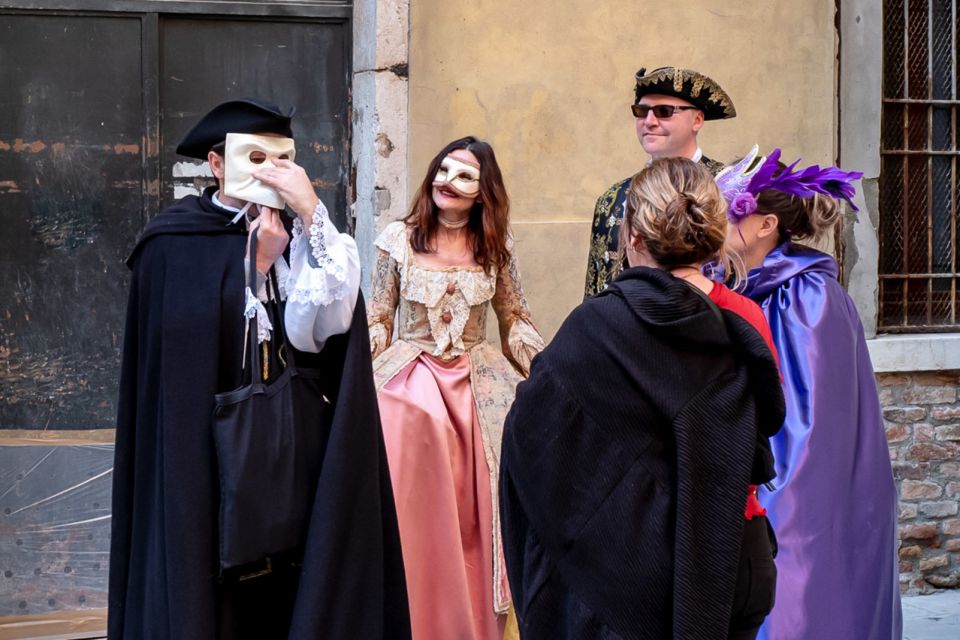
Carnival masks aren’t just “cute traditions” in this tour. You learn why they were worn: to hide the wearer’s identity. That idea changes how you see Venice during Carnival season, because it turns masks into social tools rather than props.
Your guide explains the history of masks and then talks about how the traditional masks are made. The manufacturing element is key. It’s one thing to look at masks in shops; it’s another to understand what goes into making them and why the process matters. Even if you don’t leave with a craft lesson, you’ll see the masks differently the next time you spot them in the street.
This also connects back to Casanova. Carnival culture created space for flirtation and reinvention. When identity is blurred, the rules shift. That’s part of the reason Casanova’s story and Carnival traditions fit together so naturally on this walk.
And because you’re moving through the old streets while hearing these explanations, the information lands with more force than a museum stop alone. You’re literally stepping into the setting where people once used masks to perform, hide, and start conversations they might not have started otherwise.
17th-century costumes and private Grand Balls
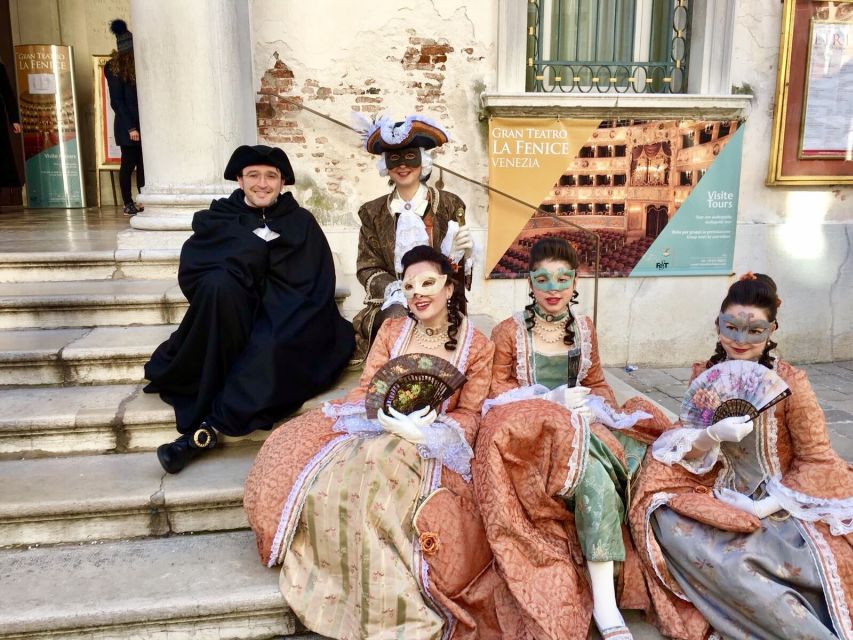
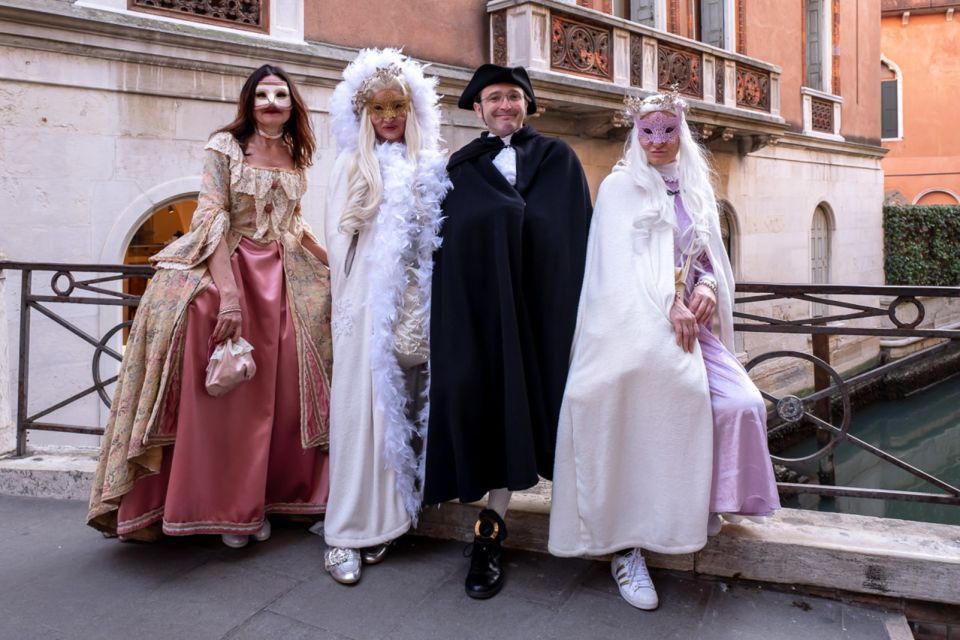
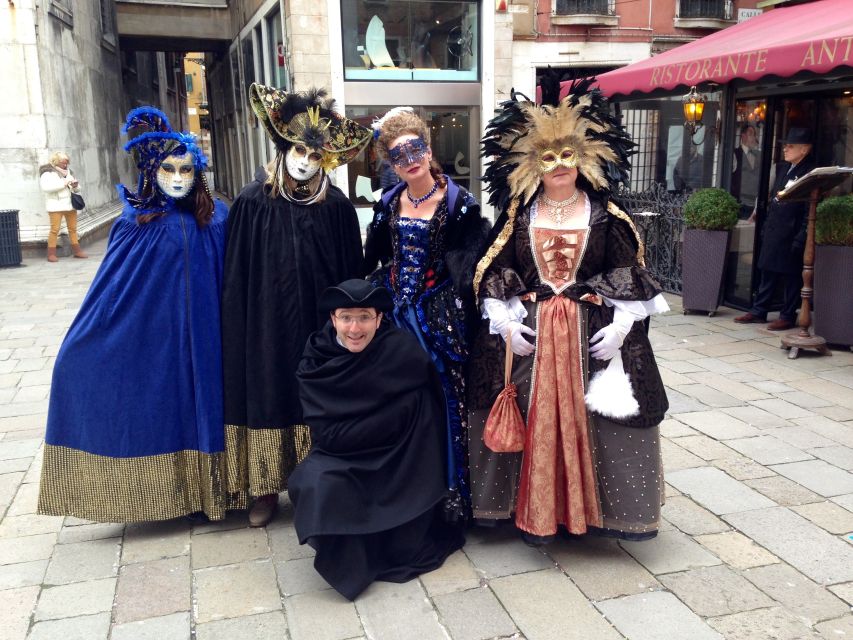
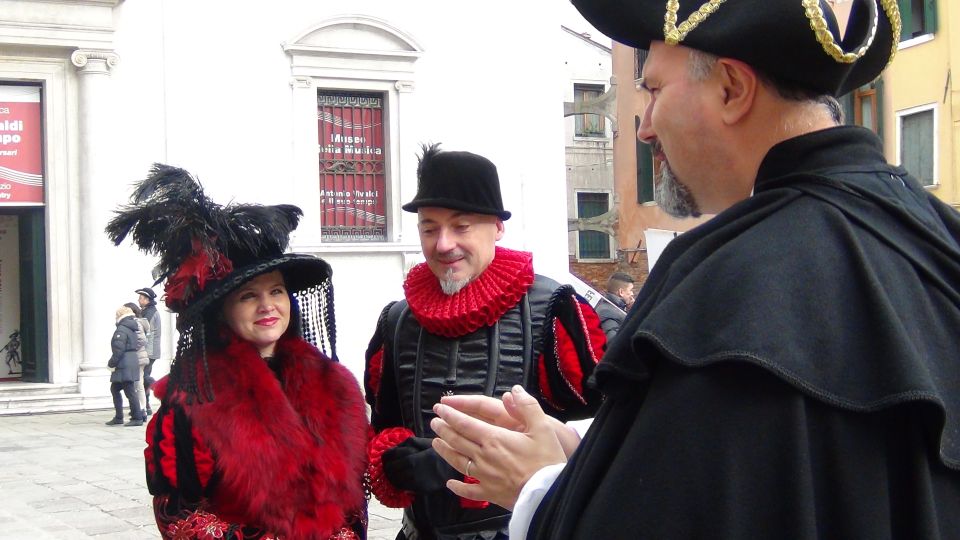
One of the best parts of this experience is how it brings costumes into the conversation without turning them into a static display. You’ll marvel at flamboyant costumes from the 17th century, with the discussion tied to the way people would wear outfits during Carnival time.
The tour also highlights how people dressed for different kinds of Carnival life. You’ll hear about luxurious costumes worn by attendees heading to one of the many Grand Balls that took place in private palaces. That distinction helps you understand what Carnival looked like behind the scenes, not just what you see from the street.
If you’re traveling during Carnival, you’ll notice how people dress can vary wildly from one neighborhood to another. This tour gives you a framework for those differences. It’s not just about what looks good in photos. It’s about social space, etiquette, and the kind of events people were going to.
And yes, it’s a great setup for photos. The guide encourages guests to come in Carnival costume or at least in something like a cape with a mask. You’ll look part of the scene, not like you’re passing through it.
Palazzo Contarini del Bovolo and Campo Santo Stefano: the street-level Venice lesson
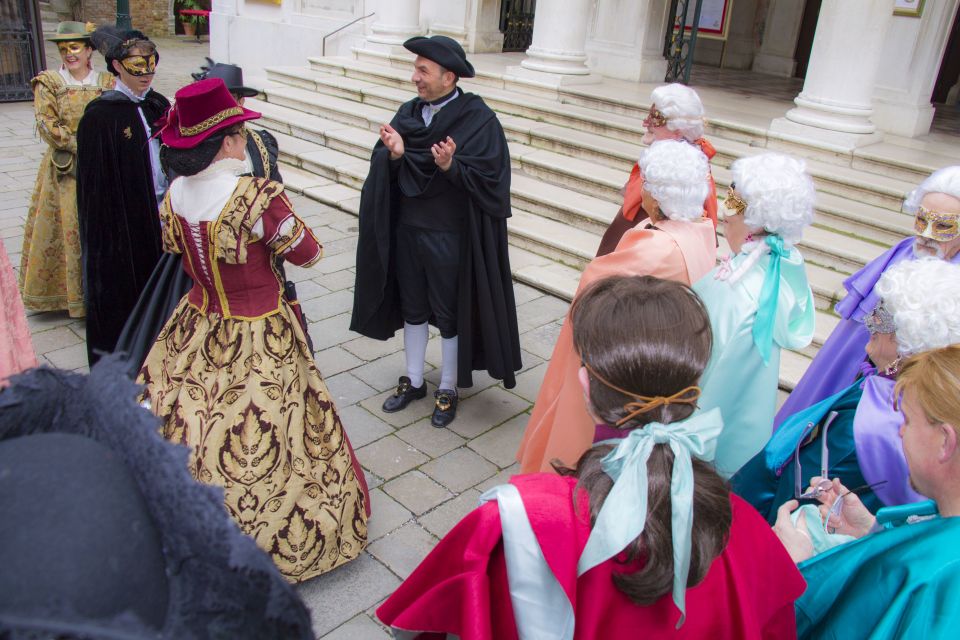
The tour includes guided time connected to historic Venice at Palazzo Contarini del Bovolo and at Campo Santo Stefano. These stops are important because they break the walk into “moments,” not just a long string of calle narration.
Palazzo Contarini del Bovolo is a name you’ll likely recognize only because it’s tied to Venice’s historic architecture. Here, it’s used as an anchor for the stories about the city’s elite entertainment culture and the kind of palatial spaces connected to Grand Balls. You’re not just passing by. You’re getting guided context for why a place matters in the narrative.
Campo Santo Stefano adds another layer. In Venice, campi are where life gathers, even when it’s quiet. This stop helps you feel the scale of the city’s social geography: tight lanes that lead to open squares, where a season like Carnival can spill out into real street atmosphere.
From a practical point of view, these pauses are useful. They give your feet a chance to relax, and they help you absorb the timeline: Casanova’s era, Carnival traditions, the mask culture, and the ways Venice functioned as a stage for performance.
Potential drawback: if the weather turns and you have a large group, standing around while listening can feel tiring. Position yourself where you can see your guide clearly, especially in windy or rainy conditions.


The hot cappuccino and frittella finish near St Mark’s
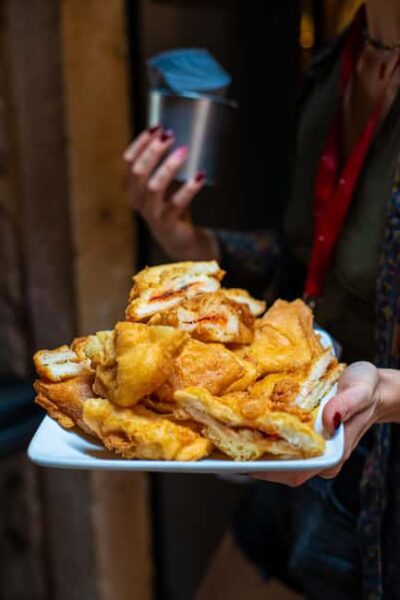
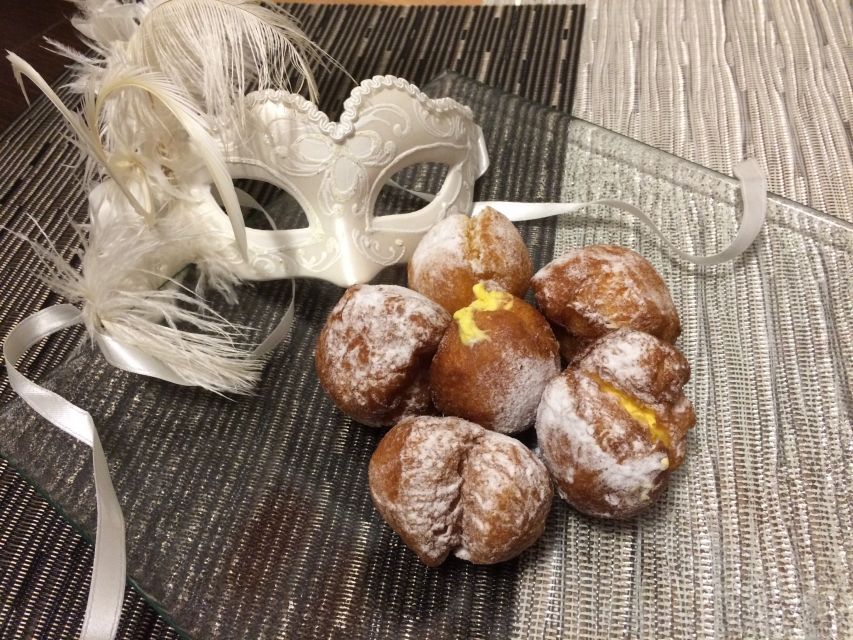
The tour ends with a classic Carnival treat: a hot cappuccino and a Venetian cake called frittelle at Le Café Venezia. This is one of those details that makes the experience feel complete. You’re not just leaving with stories; you’re leaving warm, fed, and ready to keep exploring.
It’s also strategically placed. The café is about a 10-minute walk from St Mark’s Square, so you can easily connect it with your other sightseeing without needing to regroup for transportation.
What I like about ending with food is that it shifts the energy. Before the café, the focus is on costumes, masks, and historical social life. After the café, the conversation can relax into simple Venice pleasure: coffee, sugar, and a slow moment to compare notes with your group.
One thing to plan for: the official finish is at Le Café Venezia, not back at Teatro La Fenice. So don’t expect the tour to return you to the starting point. If your next plan is somewhere specific, map it now so you’re not moving in a hurry after.
Price and value: what $88 buys in 2 hours
At $88 per person, this tour isn’t the cheapest way to fill two hours in Venice. But the value comes from three things working together.
First, you get a guided storytelling format focused on a single theme: Casanova plus Carnival traditions. That theme is specific enough to feel different from a general Venice overview.
Second, you get costume and culture context that’s not locked inside a museum. You’re learning why masks mattered, how Carnival identity worked, and how the social scene connected to early casino life via the Ridotto.
Third, food is included. A hot cappuccino plus frittelle at the end matters more than it might elsewhere in Italy, because Carnival weather can be chilly and it’s a relief to have a warm stop that’s part of the itinerary. This also means you don’t have to hunt for a café right when you’re done walking.
Also worth noting: the experience offers a skip-the-ticket-line benefit, and you’re not paying for extra transfers. No hotel pickup is included, so your $88 is clearly aimed at guiding and the included refreshment.
Small cautions for a smooth walk
This tour is simple, but a few details can make or break your experience.
- Rain and sound: if it’s rainy or cold and people use umbrellas, it can be hard to hear a guide’s voice in the busy streets. Bring a hood or compact rain layer and try to walk where you’re closer to the front.
- Group staying together: the tour depends on everyone moving as one unit through narrow alleys. If you tend to wander off for photos, set a rule for yourself: pause for photos only when your guide indicates a stop.
- End location: you finish at Le Café Venezia. Plan your route forward from there, especially if you’re headed to St Mark’s or dinner nearby.
- Accessibility: this isn’t suitable for wheelchair users. The streets and walking nature are part of the experience.
On the plus side, the guides connected to this tour often get praised for humor and for keeping attention through the stories. Names that show up in feedback include Sergio (also described as The Swiss), Dennis, and Lorenzo, and the consistent theme is that the guide knows how to keep the pace lively.
Who should book this Casanova and Carnival tour
You’ll be especially happy with this tour if:
- you want Casanova as a doorway into Venice culture, not just a name you recognize
- you like Carnival traditions like masks and costumes, with practical context
- you prefer walking tours that hit backstreets and small squares rather than only major landmarks
- you want an end stop with warm food and drink, close to St Mark’s
It may be less ideal if:
- you need minimal walking or step-free routes
- you’re sensitive to cold weather and noise in outdoor lanes
- you want a quiet, museum-style presentation with no playful tone
Should you book this Secrets of Venice Carnival and Casanova tour?
If your Venice trip includes time in St Mark’s and you’re already doing the big sights, this is a strong add-on. The combo of Casanova storytelling, mask tradition context, and an included cappuccino plus frittelle makes the $88 feel more justified than a pure sightseeing walk. The starting point at Teatro La Fenice is easy to locate, and the ending point near St Mark’s helps you stitch this into the rest of your day.
My advice: if you can handle a couple hours outdoors and you’ll stay close to your guide, book it. Come in a cape or mask if you feel like it, and keep your phone charged for photos along the way. If rain looks likely, dress for hearing and for staying warm, and position yourself well so the stories land.
FAQ
How long is the Secrets of Venice Carnival and Life of Casanova tour?
The tour lasts about 2 hours.
Where do I meet the guide?
Meet at Campo della Fenice, in front of Teatro la Fenice. The guide will be easy to spot with a sign showing the tour name.
What is included in the price?
You get an English-speaking guide dressed for Carnival, plus a hot cappuccino and a Venetian frittelle at the end.
Is hotel pickup or drop-off included?
No. Hotel pickup and drop-off are not included.
Do I need to speak Italian?
No. The tour is in English.
Is the tour wheelchair accessible?
No, it is not suitable for wheelchair users.
Is oversize luggage allowed?
No. Oversize luggage is not allowed.
Can I wear a Carnival costume or mask?
Yes. You’re encouraged to come in Carnival costume, or a cape with a mask, which is great for photos.
Where does the tour end?
The tour ends at Le Café Venezia, about a 10-minute walk from St Mark’s Square.
What is the cancellation policy?
You can cancel up to 24 hours in advance for a full refund.