REVIEW · VENICE
Learn to Row in the Venice Canals
Book on Viator →Operated by Venice On Board · Bookable on Viator
Rowing your way through Venice feels different. I love that this isn’t a quick photo stop plus a short ride; it’s a real learn-to-row lesson that takes you through peaceful waterways in Cannaregio, with a guide who ties the technique to Venetian boat tradition. You also get out of the sidewalk bottlenecks and into the rhythm of canal life.
The two things I like most are the hands-on instruction (you’re not just watching) and the way the route uses the canals to show neighborhoods most people skip. The only real drawback to keep in mind is that the time is focused on rowing technique and boat history, not a full walking-tour style breakdown of every building you pass.
In This Review
- Key Takeaways Before You Go
- Rowing Your Way Through Venice: What You’ll Actually Learn
- Price and Time Value: Is $95.54 Worth It?
- Meeting at Cantiere Nautico Navale Casaril: Getting Oriented Fast
- Your Route Through Cannaregio: Stops You’ll Notice From the Water
- Chiesa della Madonna dell’Orto: A Classic Venice Landmark, Seen Differently
- Ghetto Ebraico: Canal-Level Views of a Historic Area
- Fondamenta dei Ormesini: The Feeling of Real Waterfront Life
- Campo dei Mori: A Square You Can Read Without a Crowd
- Casa del Tintoretto: A Cultural Stop That Fits the Boat Theme
- What Rowing Feels Like: Technique, Turns, and Forcola Talk
- Avoiding Sidewalk Crowds: Why This Canals-First Approach Works
- Who Should Book This (and Who Might Prefer Something Else)
- Weather and Day-Visit Fees: Two Small Things That Can Affect Your Plan
- Should You Book Learn to Row in the Venice Canals?
- FAQ
- How long is Learn to Row in the Venice Canals?
- Where does the tour start?
- Where does the tour end?
- Is the tour offered in English?
- What group size should I expect?
- What if the weather is bad?
- Do I need to pay any Venice access fees?
- When will I get confirmation after booking?
- What is the cancellation policy?
- Are service animals allowed?
Key Takeaways Before You Go
- Max 6 travelers means more coaching time and less waiting around
- Hands-on rowing practice so you learn the motions, not just the story
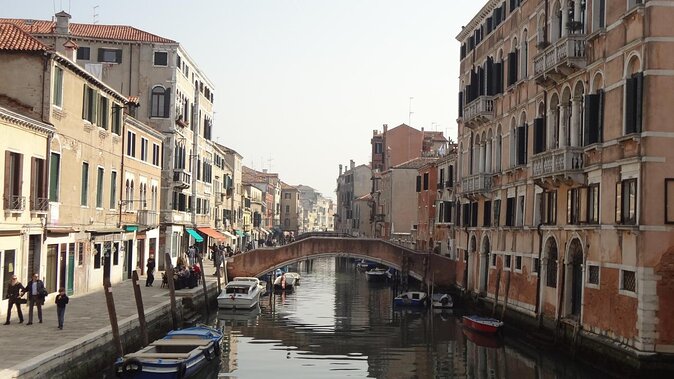
- Quiet Cannaregio canals give you a calmer Venice view than the central tourist routes
- Traditional boat history + recovery work turns the lesson into something meaningful
- English instruction with a local, born-and-raised perspective (often guides like Stefano, Nicola, Emiliano, or Frederico)
Rowing Your Way Through Venice: What You’ll Actually Learn
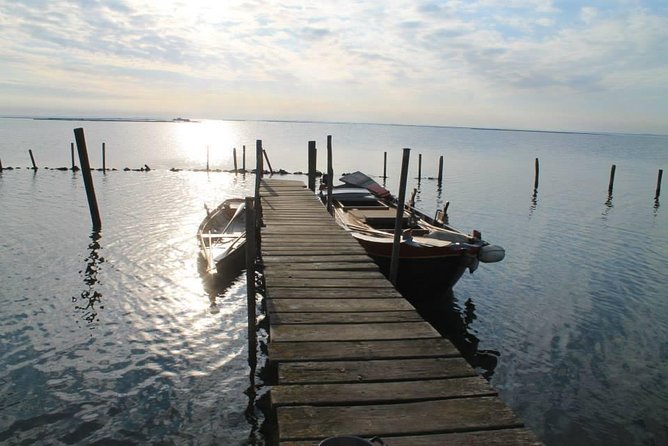
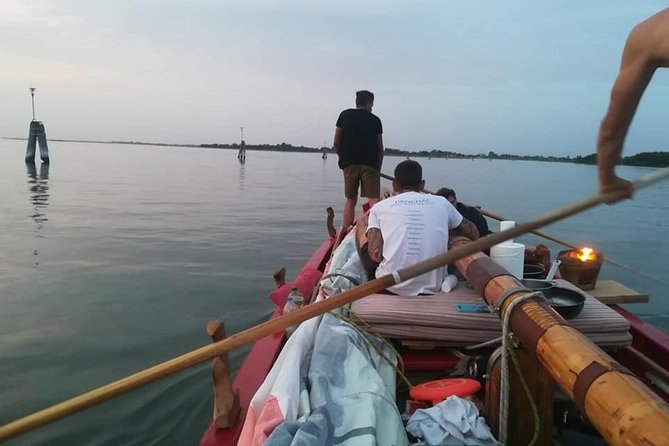
Think of this as gondolier-style know-how, but taught in plain steps on a boat meant for local waterways. After a short intro, you start working on the basic mechanics: how to hold the oar, how to time the strokes, and how to control the boat so you feel steady rather than “seat-of-the-pants.”
The bigger payoff is that you learn how canal craft works in Venice. The rowing lesson isn’t treated like a stunt. It’s presented as part of Venetian transport culture, linked to the history of the traditional boats and the ongoing recovery work that keeps this skill alive.
If you’ve been curious about how gondoliers actually steer and move through narrow passages, you’ll probably leave with that lightbulb moment: rowing looks simple from shore, but doing it well takes technique. More than one guide in the experience roster (Stefano, Nicola, Emiliano, Frederico) is described as passionate, and that passion matters. When your instructor cares, you get clearer cues and better confidence fast.
You can also read our reviews of more tours and experiences in Venice.

Price and Time Value: Is $95.54 Worth It?
At $95.54 per person for about 1 hour 30 minutes, you’re paying for more than a boat trip. You’re buying coaching, time on the water, and access to quieter canals that you’d be hard-pressed to recreate on your own without local help.
Here’s how I think about value in Venice: a gondola ride often gives you limited actual time moving through the canals, and the experience is usually more about the ride than learning. This rowing format flips that. You get longer guided practice and the chance to take a turn, which is why so many people who consider canceling gondolas end up preferring this.
Two practical notes on timing:
- It’s long enough to teach fundamentals and get you rowing, but short enough that you won’t replace a full day of sightseeing.
- It’s also a smart “middle of the day” activity if you want a break from crowds. Venice can drain you. This gives you a focused, active pause.
Meeting at Cantiere Nautico Navale Casaril: Getting Oriented Fast
You meet at Cantiere Nautico Navale Casaril S.r.l., 3009/H, C. del Magazzen, 30121 Venezia VE, Italy. The good news is that the meeting point is described as near public transportation, which helps if you’re not staying right in the historic core.
Once you arrive, expect a brief setup and intro. You’ll learn the background first—traditional Venetian boats, why rowing matters, and what the organization is working to preserve. Then you move into technique. Because the group is capped (maximum 6 travelers), you don’t get lost in a crowd waiting for instructions.
A small but important practical detail: you should plan for getting on and off the boat smoothly. This experience is generally doable for most travelers, but it’s still an active water activity. If you’re bringing kids, it helps to know this is hands-on, not just a scenic float.
Your Route Through Cannaregio: Stops You’ll Notice From the Water
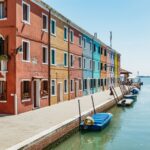
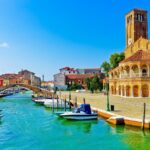
The route focuses on quieter, more residential Venice views from the canal level. That matters because Venice feels totally different when you’re at water height, instead of walking and dodging foot traffic. The canals also keep the pace calmer, so you can actually pay attention.
Here’s how the stops shape the vibe:
Chiesa della Madonna dell’Orto: A Classic Venice Landmark, Seen Differently
You start at Chiesa della Madonna dell’Orto. Even if you’ve seen churches in Venice before, watching one from the water gives you angles and scale you don’t get on sidewalks. It’s a good opening stop because it signals you’re in Venice proper, not in a generic canal corridor.
From a learning standpoint, early stops also help you get comfortable quickly. You’re not thrown into tricky navigation right away. You’re settling into the rhythm of rowing while the scenery frames where you are.


Ghetto Ebraico: Canal-Level Views of a Historic Area
Next comes the Ghetto Ebraico area. From the water, the neighborhood layout feels immediate: you notice how life, buildings, and waterways interlock. This stop is a reminder that Venice’s canal system wasn’t just about tourism—it shaped where people lived and how they moved.
If you like history that feels lived-in, this kind of stop tends to land well. It’s not a museum lecture. It’s a passing encounter that helps you orient yourself geographically.
Fondamenta dei Ormesini: The Feeling of Real Waterfront Life
You then pass Fondamenta dei Ormesini. Fondamenta means a waterfront quay, and that word matters because it points you toward the everyday edge of Venice. From the canal, you can see how the city breathes along the waterline.
This is also where the lesson starts to feel less like a class and more like a guided canal walk—except you’re moving by oar.
Campo dei Mori: A Square You Can Read Without a Crowd
Then you reach Campo dei Mori. A campo is a square, and seeing it from a boat gives you a neat shortcut: you can understand how the square connects to the street fabric nearby. It’s a more relaxed way to “read” Venice’s structure.
If you’re worried you’ll spend the whole time staring at the oar, don’t be. You’ll still look up. The route is designed for moments like these.
Casa del Tintoretto: A Cultural Stop That Fits the Boat Theme
Finally, you’ll head near Casa del Tintoretto. This is the kind of stop that adds a cultural layer without turning the experience into a lecture. Seeing an art-related location in this setting makes sense because Venice is a city where craft and culture overlap—boat tradition included.
By the time you’re here, you’ll likely feel more control of the boat. That means you can switch from “focus mode” to “enjoy the view mode” more easily.
At the end, the activity returns you to the starting point.
What Rowing Feels Like: Technique, Turns, and Forcola Talk
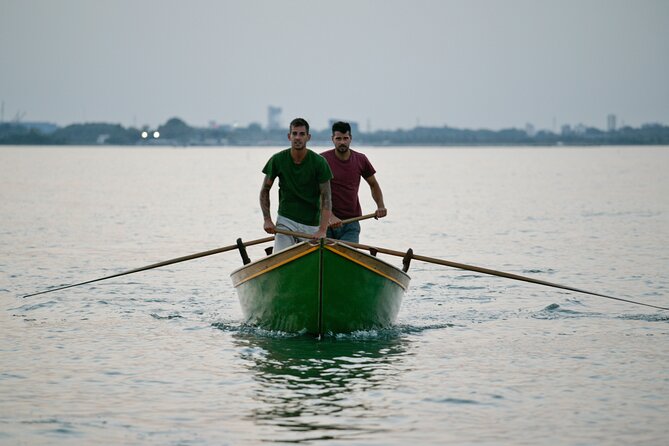
Let’s be honest: rowing in Venice sounds easy until you do it. The oar has a rhythm, your hands need the right grip, and you must coordinate force with timing. Once it clicks, though, it feels powerful in a low-key way. You’re not fighting the boat; you’re working with the motion.
Several guides are mentioned by name across different groups, and they’re described as friendly and able to explain steps clearly in English. Names that show up often include Stefano and Nicola, with other instructors such as Emiliano and Frederico. If you connect with your guide’s teaching style, you’ll likely pick up technique quickly.
You may also hear specific traditional references. One guide is noted for explaining how gondoliers handle the boat and mentioning the forcola, the steering element used by gondoliers. Even if you’re not trying to become one, it’s a great detail because it explains why Venice boats aren’t just decorative—they’re engineered around local movement.
The best part is that you’re on the water long enough to get feedback. In good instruction, you start with basics, adjust with coaching, then try again. That cycle is what turns a cool idea into a skill you remember.
Avoiding Sidewalk Crowds: Why This Canals-First Approach Works
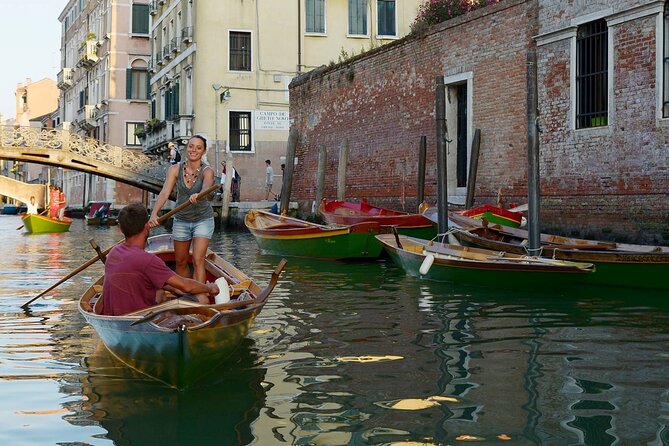
Venice can be exhausting when your day is dominated by lines and foot traffic. This experience counters that by putting you on the water and focusing on a calmer part of the city.
The canal approach does three things well:
- You see neighborhoods like Cannaregio from an angle most people never get.
- You get a break from the constant stop-start of walking.
- You experience Venice as a working system, not just a background for photos.
If you’re tired of the typical gondola experience (short ride, big price, lots of waiting), this is often a smarter match. You still get that Venice-on-water feeling, but you gain a skill and a calmer pace.
Who Should Book This (and Who Might Prefer Something Else)
This is a strong choice if you:
- Want a hands-on Venice activity, not just a passive sightseeing stop
- Love boats, canals, or traditional crafts
- Have a family group and want a shared activity that keeps multiple ages engaged
- Prefer quieter parts of Venice like Cannaregio over the most crowded central routes
It’s also a good match if your group has mixed interests. Even people who think they’ll only tolerate the experience end up enjoying it when they’re given real coaching and a chance to row.
Who might reconsider?
- If you’re mainly hunting for lots of city facts, this is more boat-and-transport focused. You’ll get history and context, but the main goal is rowing technique and the experience on the water.
- If you only want passive sightseeing, the activity is still active and hands-on. You will handle an oar and participate.
Weather and Day-Visit Fees: Two Small Things That Can Affect Your Plan
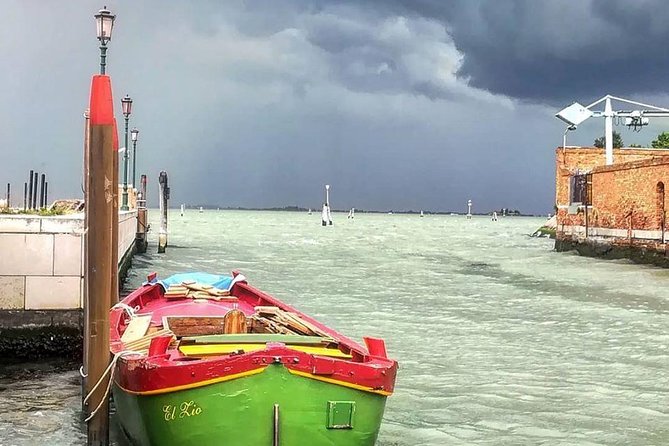
This activity depends on good weather. If it’s canceled due to poor weather, you’ll be offered a different date or a full refund. If you’re traveling in shoulder season, it helps to keep flexibility in your schedule.
Also watch for the €5 access fee that can apply to people staying outside of Venice on certain dates. The guidance and exemptions are listed here: https://cda.ve.it. If your visit dates line up with a fee day, it’s worth checking early so you’re not surprised.
Should You Book Learn to Row in the Venice Canals?
I think you should book this if you want a Venice experience that feels local and practical: you learn a skill, you see quieter canals, and you’re not stuck in the gondola setup where your time is mostly spent waiting. The max 6 travelers format also makes it feel personal, not crowded.
If you’re already the type who loves learning how things work—boats, tools, traditional transport—this will likely become a standout part of your trip. And if your goal is to escape the heaviest tourist push while still feeling the magic of Venice’s waterways, this is one of the better ways to do it without spending big gondola money for mostly sightseeing.
FAQ
How long is Learn to Row in the Venice Canals?
It lasts about 1 hour 30 minutes.
Where does the tour start?
The meeting point is Cantiere Nautico Navale Casaril S.r.l., 3009/H, C. del Magazzen, 30121 Venezia VE, Italy.
Where does the tour end?
The activity ends back at the meeting point.
Is the tour offered in English?
Yes, it’s offered in English.
What group size should I expect?
The experience has a maximum of 6 travelers.
What if the weather is bad?
The activity requires good weather. If it’s canceled due to poor weather, you’ll be offered a different date or a full refund.
Do I need to pay any Venice access fees?
On certain dates, most travelers staying outside of Venice who are visiting for the day may need to pay a €5 access fee. Check details and exemptions at https://cda.ve.it.
When will I get confirmation after booking?
Confirmation is received within 48 hours of booking, subject to availability.
What is the cancellation policy?
You can cancel for a full refund up to 24 hours before the experience starts. If you cancel less than 24 hours in advance, you won’t get a refund.
Are service animals allowed?
Yes, service animals are allowed.