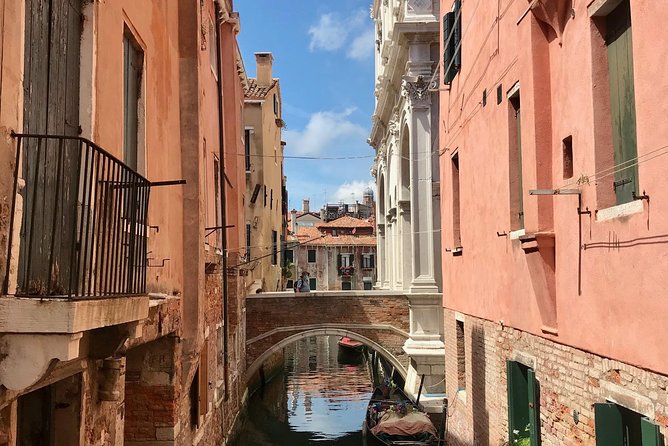
Venice feels like an open-air set. This small-group tour puts you in places most people never wander and explains the city’s water-based life in plain, human terms. I especially love the small group feel and the focus on everyday water life instead of a checklist of landmarks.
You’ll get two very practical, satisfying surprises along the way. First, you’ll spend time at Campo San Barnaba and learn why this area has such strong links to Venice’s water routines, including the idea of a floating market you can picture right away. Second, you’ll come up close to Venice’s gondola world at the Squero di San Trovaso area, with stories that make the craft feel less mysterious and more real.
One thing to consider: not every stop is ticket-free, and some entry costs may be on you. Also, this tour needs good weather, so have a flexible plan in case it gets moved or refunded.
In This Review
- Key highlights worth your attention
- The value here is the local way of seeing Venice
- Campo San Barnaba: legends plus real water-life context
- Fondamenta Zattere: learning why palazzi face the water
- Squero di San Trovaso: gondola craft secrets from the outside
- Chiesa di San Trovaso: mascaron faces that are funny or scary
- Gallerie dell’Accademia: scuole grandi and why a museum matters
- Campo Santo Stefano: palazzi, secret doors, and local storytelling
- Price and timing: what $84.02 buys you in 2 hours
- What it’s like with a guide: the Lucia factor
- Who this tour suits best (and who should choose differently)
- Tips to make the most of your 2 hours
- Should you book this Venice tour?
- FAQ
- How long is the Venice Hidden Gems and Secrets Tour?
- What’s the price per person?
- Is the tour in English?
- How big is the group?
- Where does the tour start?
- Does the tour include admission tickets?
- What happens if the weather is poor?
- Is there a cancellation policy?
Key highlights worth your attention
- Campo San Barnaba meeting point: a legendary starting spot that sets the tone for water life in Venice.
- Fondamenta Zattere: learn how buildings along the waterfront get shaped by the lagoon world.
- Squero di San Trovaso (outside): hear gondola secrets without committing to a long, indoor visit.
- Mascaron in Chiesa di San Trovaso: understand these face-like decorations and what they’re about.
- Gallerie dell’Accademia (scuole grandi focus): connect major Venetian confraternities to art and museums.
- Campo Santo Stefano: palazzi, stories, and details like secret doors and a magic potion legend.
The value here is the local way of seeing Venice
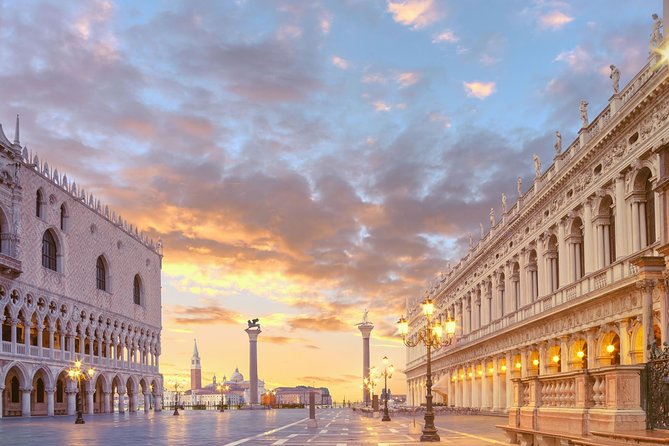
A lot of Venice tours stop at photos. This one slows you down enough to notice how Venetians actually live with water. The route is designed around places tied to daily routines: waterfronts, small architectural details, and corners where you can sense how the city functions when you’re not staring at a single famous facade.
At just about 2 hours and capped at 10 people, the pace stays relaxed. You can ask questions. You’re not crushed into a crowd. For me, that’s where value shows up: you get explanations you can actually hear, and you leave with context instead of just images.
You can also read our reviews of more tours and experiences in Venice.


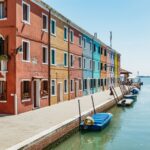
Campo San Barnaba: legends plus real water-life context
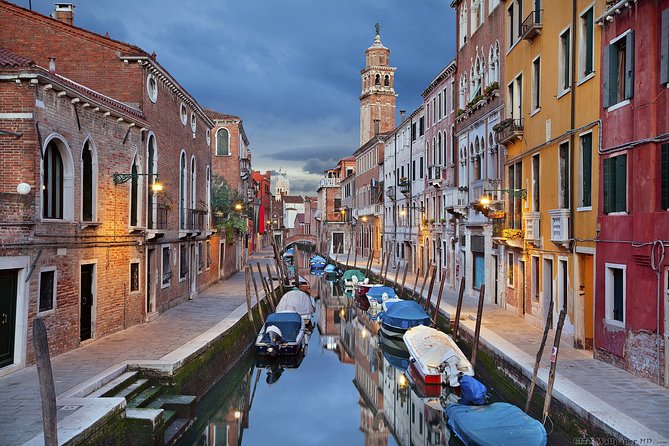
Your tour starts at Campo San Barnaba, at the well in front of the church. This matters because a “campo” is more than a pretty square in Venice—it’s a social room. The meeting spot is one of those places where stories gather, including references to cinematic adventures and legends that cling to the area.
Here, the guide’s job is to help you read the neighborhood like a local. You’ll focus on life on the water—how it shapes movement, work, and daily rhythms. You’ll also get a first look at the idea of a floating market, which helps you understand why food, commerce, and community can be tied to boats even when you’re walking around on stone.
Practical note: this first stop is about 15 minutes and the admission for this part is free. If you arrive early, you can take a quick loop around the edges of the square to get oriented before you meet up.
Fondamenta Zattere: learning why palazzi face the water
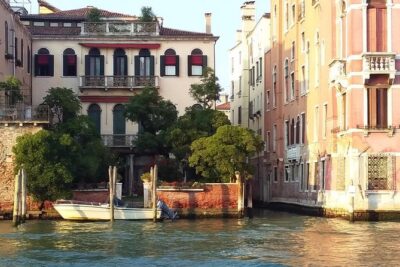
Next you head to Fondamenta Zattere, one of Venice’s long waterfront stretches. The big idea here is construction: you’ll learn about how palazzi get built along the fondamenta and what that means for Venice’s relationship with the lagoon.
Even if you’re not an architecture nerd, this is the kind of explanation that changes how you see the city. Instead of thinking of buildings as fixed scenery, you start to understand them as responses to place—water, tides, and the practical needs of homes and institutions facing the canal.
This stop runs around 20 minutes, and it’s free to enter for this segment. If you want a Venice walk that feels grounded—less “look up and move on,” more “why is it like this?”—this is one of the strongest portions.
Squero di San Trovaso: gondola craft secrets from the outside
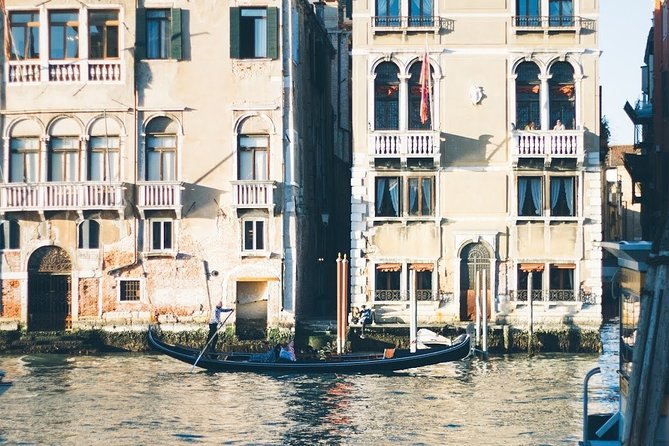
At Squero di San Trovaso, you look from the outside. That’s important: you’re not stuck inside a workshop waiting for a formal entry. You’re guided in a way that helps you spot what matters and understand the gondola world without turning the tour into a long detour.
You’ll learn the secrets of gondola craft here. In practical terms, that means the guide connects details you’d normally miss—how the gondola’s shape and build connect to its role in Venice. Even from outside, you’ll get the sense that gondolas are not generic boats; they’re part design, part local tradition.
This stop is about 15 minutes, and no ticket is included for it. So if you’re hoping for a full interior experience inside every space, you may need another activity planned separately. Still, for a 2-hour tour, it’s a smart use of time.
Chiesa di San Trovaso: mascaron faces that are funny or scary
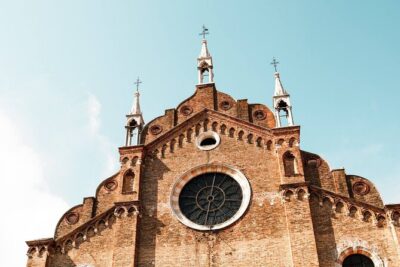
Then comes Chiesa di San Trovaso, where you’ll encounter a question that’s more interesting than it sounds: what is a mascaron? You’ll also learn how these decorations can be scary or funny, depending on the design.
A mascaron is one of those Venetian details that makes the city feel alive. It’s not random decoration—it’s a clue that Venice historically mixed aesthetics with symbolism. When you understand what you’re looking at, the church facade stops being “pretty” and becomes “meaningful.”
This stop is about 15 minutes, and entry isn’t included here either. If you want to minimize extra spend, you can treat this as a look-and-learn segment from where the tour allows. If you want full access, plan for additional tickets.




Gallerie dell’Accademia: scuole grandi and why a museum matters
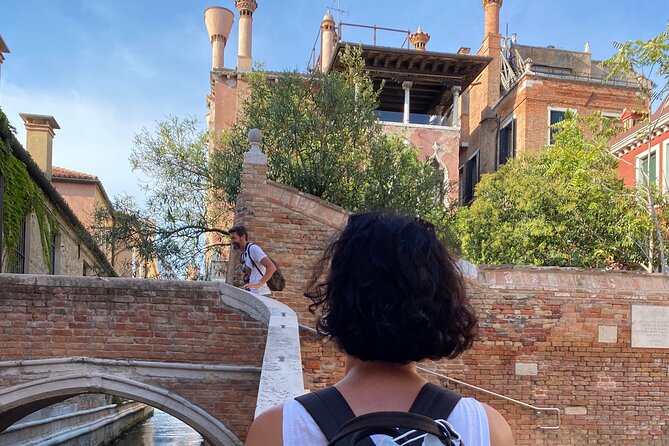
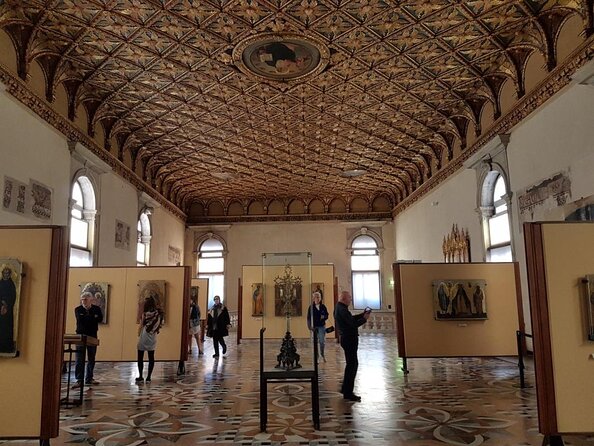
Next is Gallerie dell’Accademia, focused on two things: scuole grandi and the history tied to the museum’s importance in Venetian art.
This is where the tour becomes especially useful if you’ve been trying to connect Venice’s churches to what you see in museums. Scuole grandi were major local institutions in Venice, and understanding them gives you a clearer picture of why art, patronage, and civic identity often overlap.
The segment lasts about 15 minutes, and again, admission isn’t included for this part. Even so, the payoff is the framing: you start thinking, before you even enter a museum proper on your own, about who funded what and why those artworks ended up where they did.
If museums aren’t your thing, you may skim this portion mentally. But if you like learning why Venice puts certain collections in certain buildings, this stop gives you a strong foundation for future wandering.
Campo Santo Stefano: palazzi, secret doors, and local storytelling
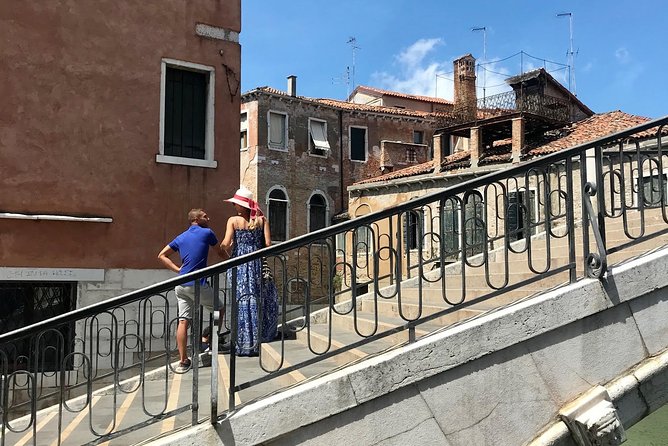
Your final neighborhood stop is Campo Santo Stefano. This is the part where the tour leans into the kind of Venice mystery you can’t get from a guidebook alone.
You’ll hear about huge gorgeous palazzi, plus stories that include a “magic potion” theme and even secret doors—the kind of details that make the city feel like it has layers under the surface. Campo Santo Stefano is also a good place to process what you learned earlier, because the architecture and streets around the campo help you connect “water life” to “land life” in one mental map.
This stop lasts about 20 minutes. Admission isn’t included for this segment either, but the value here is the storytelling and the way the guide points out features you’d otherwise walk past.
One small consideration: the ending location is different from the meeting point. That’s normal for city walking tours, but it means you’ll want a plan for your next stop—especially if you’re pairing this with a specific restaurant reservation.
Price and timing: what $84.02 buys you in 2 hours
At $84.02 per person for about 2 hours, you’re paying for three things: a local guide, a tight route through less-common areas, and a group size that stays small enough to feel personal.
A big part of the value is that some segments are ticket-free (like Campo San Barnaba and Fondamenta Zattere), while other stops may require entry that isn’t included. So your total “out-the-door” cost depends on how deep you go at the ticketed segments.
If you compare this to spending a morning hopping between major monuments, I think this tour is a better deal if you care about atmosphere and context. You’ll leave with fewer “I saw it” moments and more “Now I understand Venice” moments—which is the difference between a fast day and a memorable one.
Timing-wise, this is booked in advance (about 75 days on average) and runs with a maximum of 10 people. If you’re traveling in peak season, booking early helps you lock in a time that fits your schedule.
What it’s like with a guide: the Lucia factor
One review highlights Lucia as a guide who’s lovely and passionate about the city. That kind of guide energy matters on this route because the tour relies on explanation, not just scenery. When the guide clearly loves Venice, you feel it in how they connect the dots—water life, architecture, and small details like mascaron faces—without making it sound like a lecture.
You’re also more likely to get useful answers to your questions, because the group stays small and the stops are spaced so conversation isn’t swallowed by noise.
Who this tour suits best (and who should choose differently)
This tour fits best if you want:
- A small-group Venice experience that feels relaxed
- Context for what you’re seeing—water life, gondola culture, and meaningful architectural details
- A route that avoids the most obvious “everyone goes here” paths
You might want a different option if:
- You only want stops with ticketed museum interiors included (several segments don’t include admission)
- You prefer a longer, sit-down pace, because this is built as a walking program with short segments
- Weather is a strict problem in your schedule—this experience requires good weather
Tips to make the most of your 2 hours
- Wear shoes you trust. You’re on real Venetian stone paths and uneven surfaces.
- Bring a phone with enough battery. You’ll use a mobile ticket.
- If you’re visiting on a day when the city applies an access fee to day visitors staying outside Venice, check the rules ahead of time. The tour info points to the official guidance and mentions a €5 access fee on certain dates, with exemptions possible.
- Build your day so you’re not rushing right after. The tour ends in a different location, so give yourself time to find your next stop calmly.
Should you book this Venice tour?
If you like Venice for its details—the way water shapes everything, the way churches hide quirky faces, and the way gondola culture fits into daily life—this is a smart buy. The strongest reason to book is the combination of small group size and a guide-led route through areas most people never slow down to notice.
I’d skip it only if your idea of value is mostly paid museum time, or if you can’t be flexible with weather and extra ticket costs at some stops. Otherwise, it’s a short, satisfying way to see a more local Venice without turning your day into a sprint.
FAQ
How long is the Venice Hidden Gems and Secrets Tour?
It runs for approximately 2 hours.
What’s the price per person?
The price is $84.02 per person.
Is the tour in English?
Yes, the tour is offered in English.
How big is the group?
The tour has a maximum of 10 travelers.
Where does the tour start?
It starts at Studio Frari Wifi, Campo dei Frari, 2997, 30125 Venezia VE, Italy.
Does the tour include admission tickets?
Some stops are free, and some stops have admission not included. You may need to pay tickets separately for certain sites during the route.
What happens if the weather is poor?
This experience requires good weather. If it’s canceled due to poor weather, you’ll be offered a different date or a full refund.
Is there a cancellation policy?
Free cancellation is allowed up to 24 hours in advance for a full refund. If you cancel less than 24 hours before the start time, the amount paid isn’t refunded.