REVIEW · VENICE
Murano Glass Blowing Demonstration – The Glass Cathedral
Book on Viator →Operated by The Glass Cathedral · Bookable on Viator
Venice hands you fire and finesse. In The Glass Cathedral, a historic former church of Santa Chiara on Murano, you’ll watch Murano glass masters sculpt hot glass with precision, with soft music in the background. I love the up-close view and the calm, cathedral-like setting; the one drawback is that live commentary can be minimal, so some of the explanation is delivered by audio instead of the glassblower talking directly.
Best of all, this is a small-group 25-minute show. You’ll have an English guide and you’ll watch original pieces created right in front of you, without the usual hard sell you might expect around some glass shops. I also like that you can order a drink while you sit—drinks aren’t included, but the option makes it feel more relaxed than rushed.
With a maximum of 30 people, you’re not stuck behind tall bodies. If you’re hoping for a hands-on workshop, you’ll be disappointed—this is about watching the masters work.
In This Review
- Quick take: what’s worth your time
- Entering The Glass Cathedral in Venice’s Murano
- Inside a Former Santa Chiara Church: Setting, Ambience, and Audio
- How the Glass Blowing Demo Works in 25 Minutes
- Price and Value: Is $16.94 Worth It?
- The Sales-Pitch Test: Glass Cathedral vs. Shop Demos
- Practical Tips: Finding Seats, Seeing the Work, and Getting There
- Who Should Book This Murano Glass Blowing Demonstration?
- Should You Book The Glass Cathedral Glass Show?
- FAQ
- How long is the Murano Glass Blowing Demonstration at The Glass Cathedral?
- Is the demonstration offered in English?
- Where does the show take place?
- What’s included with the ticket price?
- How big is the group?
- Is there a minimum age requirement?
- Are drinks included?
- Is the venue near public transportation?
- Do I need to pay an extra €5 access fee?
- Can I cancel for a full refund?
Quick take: what’s worth your time
- The venue is a former Santa Chiara church and the room helps the whole show feel special
- You’ll see precision glasswork up close as masters create original pieces in front of you
- Soft music and sound-system audio set the mood during the quieter moments
- Small group size (up to 30) means the tools and glass are easier to see
- No-pressure atmosphere compared with many shop-linked demos
- Short and focused (about 25 minutes)—easy to fit into a Murano day
Entering The Glass Cathedral in Venice’s Murano
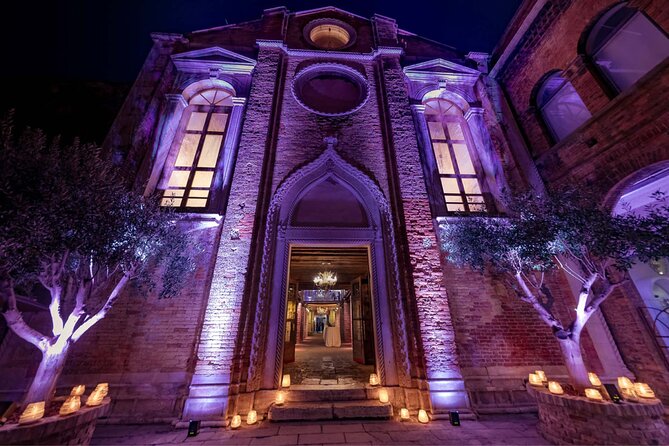
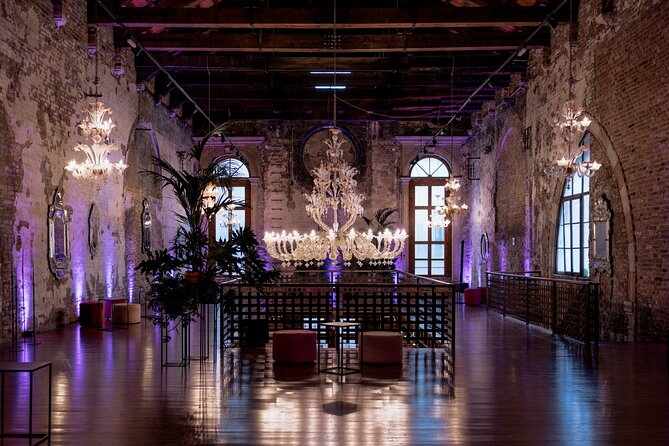
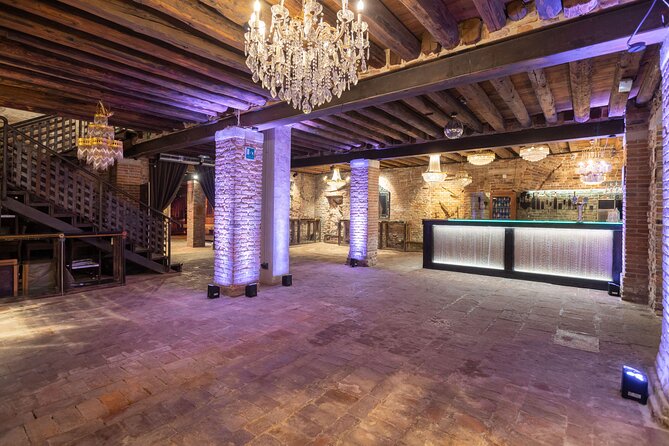
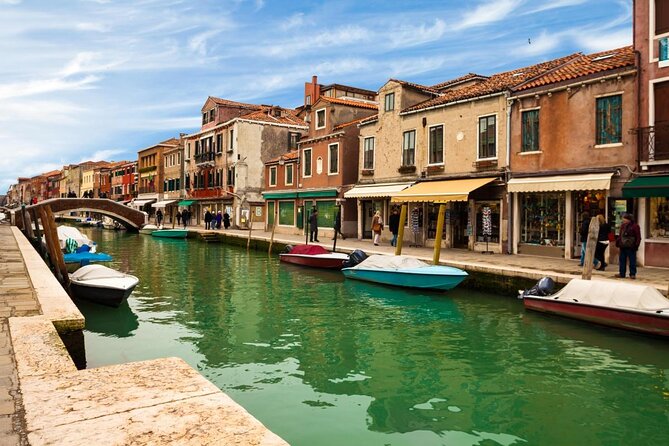
This isn’t just a glass demo in a storefront. The Glass Cathedral runs inside a historic building that used to be the former church of Santa Chiara. That matters more than you’d think. The high-ceiling feel, the dimmer light, and the gentle music turn “watching glass being made” into an actual little performance.
From the start, the experience is designed for you to sit, look, and understand what you’re seeing without needing a background in metallurgy or chemistry. The show is offered in English, and it runs about 25 minutes. For many people, that short length is part of the appeal: you get the glow and wonder of Murano craft without committing an entire afternoon.
The price point also helps: at $16.94 per person, it sits in the sweet spot for a must-see activity. You’re paying for the workshop-style viewing access plus the venue experience—particularly the church setting—rather than only for a quick demonstration on the street.
One more thing I appreciate: the group size is capped at 30. In a place where you really want to watch hands, heat, and timing, that cap keeps the viewing from turning into “missed everything” mode.
You can also read our reviews of more tours and experiences in Venice.
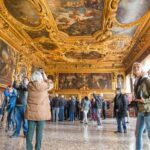


Inside a Former Santa Chiara Church: Setting, Ambience, and Audio
The biggest “wow” factor here is where you’re sitting. A former church is made for sound, stillness, and attention. Even when the glassblower is working quietly, the room doesn’t feel dead. It feels focused.
Soft music plays during the demonstration, and there’s also audio content to frame what you’re watching. Some people find the sound system explanation helpful, including the history of Murano glass. Others feel the in-person narration can be light, especially during the actual glassworking steps. That difference is worth knowing upfront.
Here’s the practical takeaway: if you want a person to explain each technique live, you might feel a little frustrated. If you’re happy to watch the process and take in the craft with music plus recorded context, you’ll probably love it.
You can also expect the vibe to be calm rather than chaotic. One reason is the controlled format: the show is timed, the seating is arranged for viewing, and the audience stays in one place long enough to see the pieces take shape.
If you’re traveling with kids, the ambiance helps. Glass is visually hypnotic, and a quiet, musical setting gives children room to look closely instead of being drowned out by noise.
How the Glass Blowing Demo Works in 25 Minutes
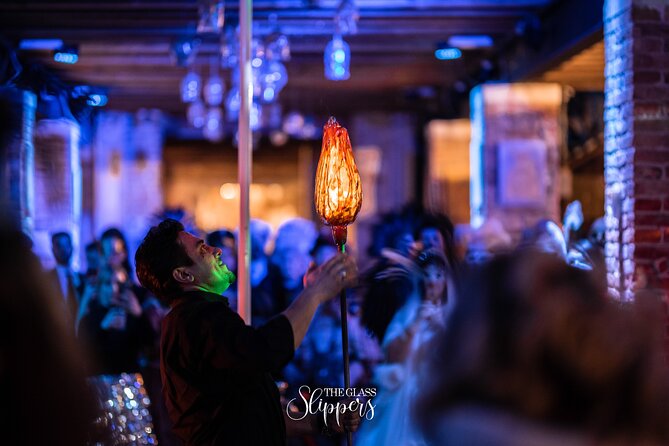
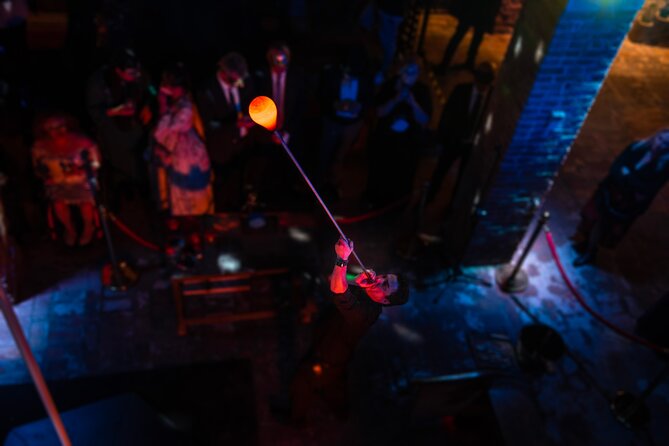
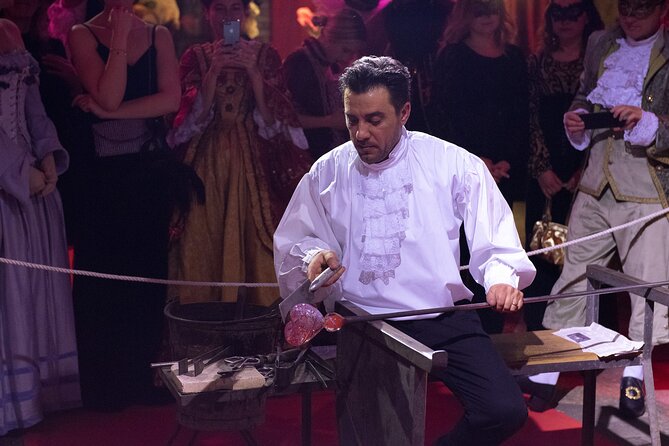
Think of this as a “precision show” with a clear arc. The demo runs for roughly 25 minutes, and you’ll watch the masters at work as they create original pieces in front of you.
The structure usually feels like:
1) you settle in and get the context,
2) the glass process starts,
3) the master works through the shaping steps, and
4) you see the pieces come out as finished forms.
The tour description highlights that you’ll be able to watch the creation of two original pieces before your eyes. Some experiences report additional pieces depending on the pace and the master’s rhythm, but two pieces is what you should plan around.
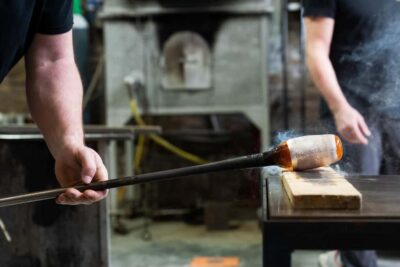
Also pay attention to the pace. Glassblowing isn’t slow like pottery. It’s fast, hot, and skill-heavy. The master heats, pulls, shapes, and returns the glass to the process in a way that looks effortless—until you remember it’s serious craft.
During the quieter parts, the show can feel more like a visual demonstration than a talk. There’s audio framing, but the hands-on work may be the main event. That’s great for people who like seeing technique without getting lecture fatigue.
One practical benefit of this format: you don’t need to “understand” everything to appreciate it. When you can see how the material behaves—how it bends, how it holds shape, how details form—you walk away with a stronger mental picture than you get from photos or videos.
Price and Value: Is $16.94 Worth It?
Let’s do the honest math. You’re paying $16.94 per person for:
- the Glass Masters show,
- a guide, and
- the venue experience inside The Glass Cathedral,
with taxes and fees included.
What’s not included is drinks. That’s easy to handle: you can still enjoy a drink if you want, but you’ll pay separately.
So is it worth it? For me, the value hinges on your expectations.
If you want a short, well-run craft show in a beautiful building, this is a strong deal. You’re not just watching a craft routine—you’re watching it in a former church with soft music and guided context. That’s a real “experience add-on,” not just a ticket.
If you’re expecting a long, interactive explanation where the glassblower talks through each stage and answers questions, then the value may feel worse. Some people feel the commentary is too minimal during the action. The glassblower might be focused and quiet, letting the audio do most of the explaining.
The practical way to decide: treat this as a craft show with guided framing, not as a full classroom lecture. If that matches your style, the price makes sense.
Also, it’s capped at 30 people. That cap supports the quality of the viewing. If it were larger, it might feel rushed or hard to see. Here, it’s built to stay watchable.
The Sales-Pitch Test: Glass Cathedral vs. Shop Demos
One reason people like this stop is the tone. Many Murano glass demos are tied tightly to sales, and the audience can feel herded toward purchases.
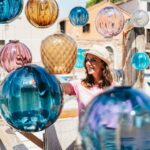
This one can feel less pushy. There’s a display of glass items for sale, because of course there is. But the experience is presented as the demonstration first, with buying kept as an optional add-on rather than a constant pressure.
That matters if you’re the type who hates feeling sold to. It also helps families. Kids can focus on the making part without being pulled into sales talk.
Still, be realistic. If you watch glass being made, you’ll probably want to look at finished pieces afterward. That’s normal. If you don’t want to spend, just set that boundary for yourself before you go in—then enjoy the show without second-guessing every glittering object.
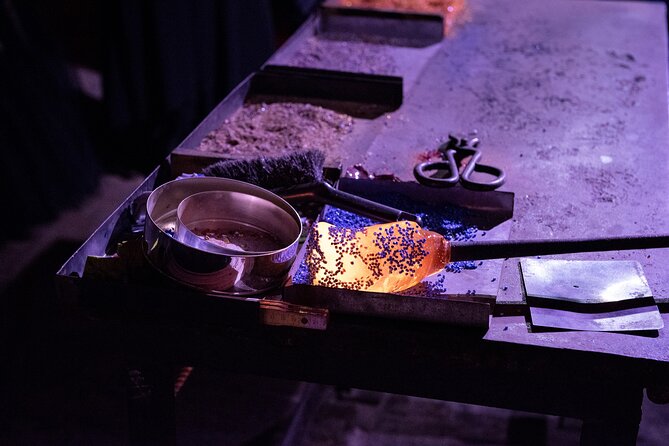
Also, a few people mention photo opportunities after the demonstration with tools. Even if you don’t come for pictures, that kind of access can make the experience feel closer to the real craft world.




Practical Tips: Finding Seats, Seeing the Work, and Getting There
Here’s how to make your time smoother.
First: arrive a little early. Some people recommend showing up about five minutes before inside the building and confirming your registration. Even with a mobile ticket, early arrival reduces stress. You’ll also have time to find the best viewing spot.
Second: plan your Murano day around this being a show, not a wandering stop. Since the demonstration is about 25 minutes, you want your schedule to stay flexible enough that you’re not rushing in late and scrambling to settle.
Third: expect the room to be a little harder to navigate than a street-level shop. A historic church setting can mean narrower entry points, stairs or awkward corners, and signage that isn’t as obvious as you’d expect. If you’re directionally challenged, give yourself a few extra minutes for wayfinding.
Fourth: on certain dates, some day visitors staying outside Venice may need to pay a €5 access fee. That’s tied to Venice rules for certain days. Check the official site for which dates apply so you don’t get surprised.
And one last practical note: this activity is near public transportation, which makes it easier to combine with other stops on Murano without planning a car.
Who Should Book This Murano Glass Blowing Demonstration?
This is a great match if you want:
- a short Murano glass experience that doesn’t take over your entire day,
- close viewing of how hot glass is shaped with precision,
- a beautiful setting that feels more like a show than a sales pitch,
- music + audio context in English.
It may be less satisfying if you’re the type who needs lots of live technique talk. Some versions of the show can feel like the master works silently while an audio track provides most of the explanation. If you’d rate a demo lower when the demonstrator doesn’t explain out loud, keep that in mind before booking.
It also suits families well. There’s no minimum age requirement, and children must be accompanied by an adult. Kids tend to like watching the transformation happen in real time, especially when the room stays calm.
If you’re traveling solo, the small-group format is still a plus. You’ll see the tools and the shape changes more clearly than you would in a bigger, louder setting.
Should You Book The Glass Cathedral Glass Show?
I’d book it if you want a Murano glass experience that mixes craft skill with a seriously atmospheric venue. The former church setting, the music, the English framing, and the up-close viewing are what you’re really buying—and those pieces come together well for the length of the show.
I’d skip or reconsider if you primarily want a live, talk-through lesson. If you need lots of in-depth explanation during the action, you may leave feeling that something essential was missing.
If you’re on the fence, here’s the simple rule: choose this when you want to watch the craft with guided context. Choose something else when you want a full interactive teaching moment.
FAQ
How long is the Murano Glass Blowing Demonstration at The Glass Cathedral?
The show is about 25 minutes (approx.).
Is the demonstration offered in English?
Yes, it is offered in English.
Where does the show take place?
It takes place at The Glass Cathedral Santa Chiara in Venice/Murano, in a historic former church of Santa Chiara.
What’s included with the ticket price?
Your ticket includes the guide, the Glass Masters show, and all taxes, fees, and handling charges. Admission ticket for the show is included.
How big is the group?
The experience has a maximum of 30 travelers.
Is there a minimum age requirement?
No minimum age is required, but children must be accompanied by an adult.
Are drinks included?
Drinks are not included, but you may be able to enjoy a drink while the show is happening.
Is the venue near public transportation?
Yes, it is near public transportation.
Do I need to pay an extra €5 access fee?
On certain dates, some people staying outside of Venice who visit for the day are required to pay a €5 access fee. Check cda.ve.it for which dates apply and any exemptions.
Can I cancel for a full refund?
Yes. You can cancel up to 24 hours in advance for a full refund. Canceling less than 24 hours before start time is not refundable.