REVIEW · VENICE
Gay Life in Venice from the Middle Ages to Present Days
Book on Viator →Operated by deTourist Venice Valerio Coppo · Bookable on Viator
Venice has always had secrets. This LGBTQ history walk strings together real places tied to artists, romances, and harsh punishments from the Middle Ages to today. You’ll get the story in English from Valerio Coppo, with a smart, human tone that keeps the focus on what each site meant to real people.
I like two things most. First, the tour is small—a capped group size that makes questions easy and turns a city of crowds into a city you can actually hear. Second, it connects big themes (surveillance, punishment, subculture) to specific street corners, like the cheba cage near San Marco and the Rialto area where names were publicly read.
One drawback to flag: the subject matter gets dark. You’ll hear about prosecutions and execution-era “sodomy” bans, so if you want a light, party-only vibe, this may feel heavy. And at about two hours, it moves fast through a lot of material.
In This Review
- Key Points Before You Go
- Gay Life in Venice Starts With Art, Records, and Hard Control
- Where it begins and where it ends
- A quick heads-up on the Venice day-fee
- Campo San Giacomo dell’Orio: When Poetry and Identity Meet
- Fondamenta del Megio: Chronicles, City Memory, and “Kindness” That Isn’t
- Chiesa Santa Maria Mater Domini: Churches Used as Surveillance Tools
- Ponte delle Tette and the Old Red-Light Logic
- Chiesa di San Cassiano: Rolandina Roncaglia, Italy’s Early Trans Story
- Campo San Cassiano: Early Opera, State Spies, and Casanova’s Role
- Calle dell Ogio: Canal Grande at Human Scale
- Campo San Giacomo di Rialto: Public Announcements and Death Sentences
- Ruga dei Oresi: Even a Pharmacy Could Be Condemning Evidence
- Palazzo Ca’ Zenobio: Baroque Interiors and Pop Culture After the Fact
- San Sebastiano to San Marco: Saint Sebastian, Art, and the Cheba Cage
- Piazzetta San Marco and the Area of Executions
- Harry’s Bar: When Modern Gay Venice Becomes a Name You Know
- Riva degli Schiavoni and the Stories Palaces Still Keep
- San Martino di Castello: When a 1450 Law Mapped Night Cruising
- Price and What Makes This Tour Worth $92.63
- Who Should Book This and Who Might Skip It
- Should You Book Gay Life in Venice?
- FAQ
- How long is the tour?
- Is the tour offered in English?
- How many people are in the group?
- Where does the tour start and end?
- What ticket format do I receive?
- Is there a Venice access fee on top of the tour price?
- What’s the booking timeframe like?
Key Points Before You Go
- Small group feel: capped size (the listing notes up to 10; the experience description frames it around eight), so you don’t get lost in a crowd
- A guided narrative, not a scavenger hunt: Valerio Coppo ties places together so you leave understanding the patterns, not just the stops
- From medieval cruising to modern gay Venice: churches under surveillance, cat masks, and ending with Harry’s Bar
- Dark-but-important context: the tour explains how authorities policed same-sex behavior and gender nonconformity
- Street-level Venice: lots of short walks and canal-side viewpoints with frequent context along the way
- Accessible format for most people: the operator says most participants can join
Gay Life in Venice Starts With Art, Records, and Hard Control
This tour is for you if you like Venice with the sound turned down. Instead of only palaces and postcards, you follow how people lived when “normal” was tightly enforced—and how LGBTQ culture found ways to exist anyway.
You’re moving through the city on foot for roughly two hours, with short stops that feel manageable even if you’re not trying to “power walk” Venice all day. Valerio’s storytelling style is practical: what happened here, who it affected, and why the place still matters.
It’s also a good match if you want context that doesn’t ignore brutality. You’ll hear about horrific punishments tied to the word sodomy, about public warnings and surveillance, and about how the city tried to prevent cruising by controlling public space.
You can also read our reviews of more tours and experiences in Venice.

Where it begins and where it ends
You start at Campo San Giacomo dell’Orio and finish around Ponte di Rialto. That end point is useful. You’ll be close to major transit and the Rialto area for food afterward.
A quick heads-up on the Venice day-fee
On some dates, visitors staying outside Venice may need a €5 access fee for day entry. It depends on the day, so check the current rules before you go.
Campo San Giacomo dell’Orio: When Poetry and Identity Meet
You begin where the city’s literary connections start to sharpen. Near Campo San Giacomo dell’Orio, you’re pointed to the area connected with an Italian poet who came out in the early 1970s and later died by suicide. The guide frames his work as among the first Italian poetry to explore homosexuality, which changes how you look at Venice’s “old” culture. Even in a city of centuries-old stone, identity and writing were still pushing boundaries in the recent past.
What I like about this opener is the contrast. You’re not just chasing medieval scandals. You’re seeing how LGBTQ expression shows up in art, in language, and in the personal cost of being visible.
A consideration: if you’re expecting only medieval-era stories, this first stop is a reminder that modern life—especially the emotional price of visibility—belongs in the same conversation as the past.
Fondamenta del Megio: Chronicles, City Memory, and “Kindness” That Isn’t
Next you move to Fondamenta del Megio and a historian connected to Venice between the 15th and 16th centuries. His major work, the Diarii, is described as a wide-ranging chronicle meant to cover Venetian history. The guide also explains why people later saw his behavior as “kind,” while others clearly did not experience it as a compliment.
This stop matters because it shows how LGBTQ history isn’t only about bedrooms and crime. It’s also about how the record gets written, how reputations are shaped, and how power can soften itself with polite labels.
You also get a Venice-side benefit: you’re walking along the waterways, not stuck indoors. It makes the history feel like it’s happening in your field of view, not in a museum.


Chiesa Santa Maria Mater Domini: Churches Used as Surveillance Tools
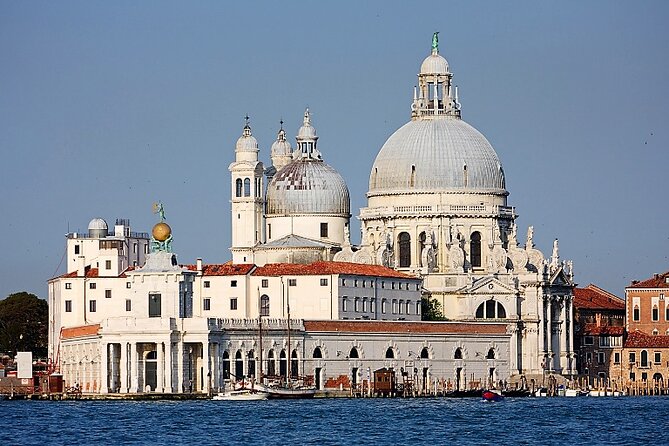
Then comes a place that’s unsettling in a very specific way: Chiesa Santa Maria Mater Domini. The arcades around it were reportedly placed under public surveillance in 1488 to prevent sodomites from using the church spaces for cruising and meeting.
It’s an important idea. Venice didn’t only punish. It also designed the environment to control behavior. When you see how authorities tried to remove opportunity, the rest of the tour’s locations start to make more sense.
Drawback: if you’re sensitive to religious settings tied to persecution, this stop may feel heavy. But it’s also one of the most direct examples of how the city used architecture and oversight to police intimate life.
Ponte delle Tette and the Old Red-Light Logic
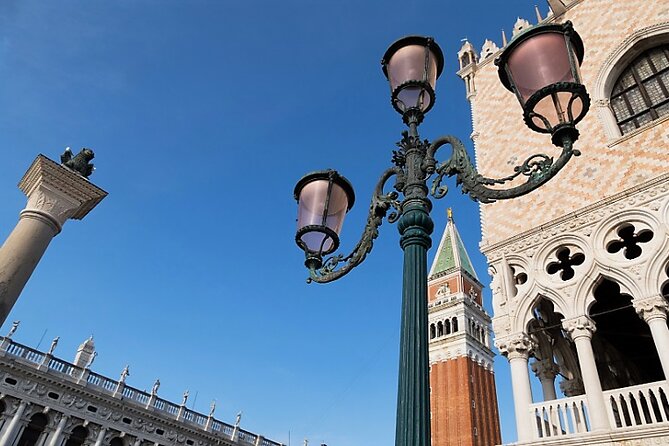
Ponte delle Tette is where the tour leans into the city’s shadowy, practical history. You’re walking a neighborhood presented as a red-light district in the 15th century. The story is that authorities encouraged prostitution to display sexual activity in public—framing it as a way to prevent sodomy in town.
Then you hear about gnaghe: men dressed as women, faces covered with cat masks, making cat-in-heat sounds to signal and to offer explicit proposals to passers-by.
I appreciate how the guide presents this without turning it into pure shock. The point isn’t gossip. It’s that Venice had visible gender play and sexual subcultures, while officials tried to manage them through control of public space.
A consideration: some people come for “cruising history” and expect more titillating detail. This tour keeps returning to what the city did and why, so it’s more historical framing than modern fetish storytelling.
Chiesa di San Cassiano: Rolandina Roncaglia, Italy’s Early Trans Story
At Chiesa di San Cassiano, you hear the story of Rolandina Roncaglia, described as the first trans person we know of in Italy. She was born as Rolandino, lived as a woman for seven years in a nearby house, and was supported through selling eggs and working around the local market. After being discovered in 1355, she met a terrible death.
This stop hits hardest, and for good reason. It’s not just a footnote. It shows how gender variance could be recognized, targeted, and brutally punished. The guide also uses the location to remind you that trans history in Italy is not new—it’s been here for centuries, even when records were hostile or incomplete.
Be ready for an emotionally intense moment. This is one of the stops where you’ll likely want a second to absorb what you’re hearing.
Campo San Cassiano: Early Opera, State Spies, and Casanova’s Role
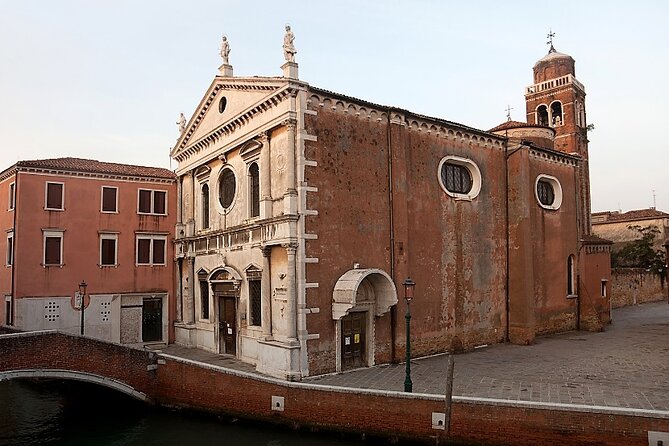
Moving to Campo San Cassiano, you’re in an area linked to the world’s first public opera house (as described on the tour). You also connect this cultural flowering to homosexual encounters, with a reference to Giacomo Casanova pointing it out when he worked as a spy for the state inquisitors in the 18th century.
This is one of the most memorable “how can this be real?” moments. Venice loved art—opera, theatre—and also used state power to monitor and control behavior. The city’s cultural life and its policing machinery weren’t separate. They coexisted.
If you’re a Casanova fan, you’ll enjoy this framing. If you’re not, you still get a useful lesson: art spaces and social spaces overlapped far more than we assume.
Calle dell Ogio: Canal Grande at Human Scale
At Calle dell Ogio, you walk along a short bank beside the Canal Grande. Here, the tour notes a famous writer and pioneer of the British gay movement who met a 19-year-old porter—suggesting the kind of personal, real-world connection that can happen in any great city, even one that policed sexuality.
This stop is shorter than some others, but it’s a nice reset. After heavy persecution stories, you get one that’s about romance and meeting—not institutions.
Tip for your visit: pause for a minute and look at the canal stretch. Even if the story feels distant, the setting is immediate.
Campo San Giacomo di Rialto: Public Announcements and Death Sentences
At Campo San Giacomo di Rialto, the guide brings you right into the machinery of fear. A famous statue here was used as a platform for proclamations, including bans relating to sodomy. An officer read out the names of those sentenced to death standing on a block at the end of the staircase. The proximity to the Rialto market made it ideal for public communications.
This is one of those places where the city’s social geography becomes clear. Messages weren’t delivered privately. They were delivered where daily life happened—so everyone would hear.
The pacing is important here. Let the guide finish the thought before you rush to look around. It’s a location where your brain needs a moment to connect the stone to the human consequence.
Ruga dei Oresi: Even a Pharmacy Could Be Condemning Evidence
You then go to Ruga dei Oresi, where the tour says a suspicious pharmacy was used for meetings by sodomites, and that even approaching it could be grounds for condemnation to death.
This stop explains a dark logic: surveillance didn’t require you to be caught in an act. Association could be enough. The city tried to make everyday routes feel dangerous.
If you want to understand LGBTQ history as a study in risk management—how people found coded meeting places—this is a key moment.
Palazzo Ca’ Zenobio: Baroque Interiors and Pop Culture After the Fact
Next, you reach Palazzo Ca’ Zenobio, highlighted as a major late Baroque example. The tour notes that in the 18th century it became a venue for intense intellectual life, and since 1993 it has served as a research center for Armenian studies after a full restoration.
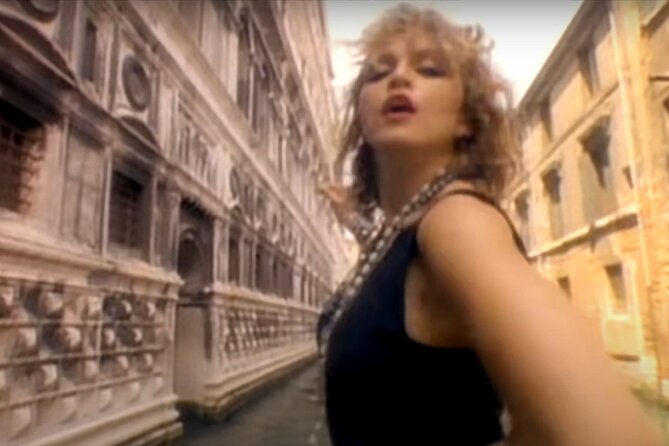
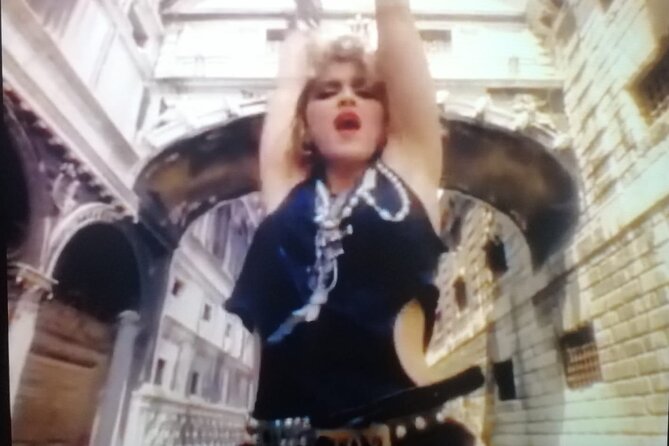
Then comes the pop-culture twist: it was described as the main indoor location used for Madonna’s Like a Virgin video in the 1980s.
This is a clever late-stage contrast. After centuries of surveillance and punishment, you’re in a restored palace whose interiors became a global music video set. It’s not the same story, but it helps you see how a place can change meaning over time.
A consideration: if you prefer only LGBTQ-specific episodes, the Madonna element might feel like a detour. But it also shows how Venice repurposes its spaces—and how modern global visibility can be part of the city’s LGBTQ story too.
San Sebastiano to San Marco: Saint Sebastian, Art, and the Cheba Cage
At Chiesa di San Sebastiano, you’re in one of Venice’s leading art venues thanks to a major cycle of paintings by Paolo Veronese and you learn the church is tied to the burial of Veronese.
The tour also connects San Sebastiano to LGBTQ identity by saying San Sebastian is considered the patron saint of the LGBT community worldwide. In practice, that means this stop isn’t just about art tourism. It’s about why certain religious figures became symbolic, and how art and iconography feed identity.
Then you move near Campanile di San Marco. Outside the tallest bell tower, an iron cage called cheba is described as dating from the 15th century and used into the 16th. The cage was also used to expose sodomite priests to bad weather and crowd taunts.
That’s a brutal image. Again, the tour keeps returning to how punishment was staged in public. It wasn’t only about ending lives. It was about humiliating people in sight of the community.
Piazzetta San Marco and the Area of Executions
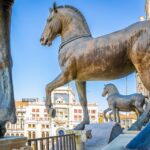
At Piazzetta San Marco, between the two columns, the tour notes executions took place up to the middle of the 17th century, with Casanova also confirming this.
If you’re thinking, This feels like the dark center of the city, you’re not wrong. San Marco is Venice’s public face. That’s what makes it such a strong location for this part of the story: the city’s most visible stage was also where state violence was made visible.
Harry’s Bar: When Modern Gay Venice Becomes a Name You Know
Then you’re at Harry’s Bar. The tour describes it as a famous gathering spot for gay travelers up to the 1970s, with the founder’s claim that it was “just rumours” noted as part of the lore.
I like this stop because it turns the previous century’s fear into a different kind of social signal. People weren’t hiding completely. They were finding places where being gay in public became easier—at least for a while.
If you want a practical idea for after the tour, this is a good area to re-check your energy and continue the day’s Venice plans.
Riva degli Schiavoni and the Stories Palaces Still Keep
On Riva degli Schiavoni, you visit a palace connected with a love story staged between a Venetian rower and a famous German writer. The focus stays on how personal life and performance intersected—again, a theme of Venice where art and social life share the same streets.
Then you move on to Calle del Dose da Ponte, tied to a hotel where a famous lesbian US painter lived and collected love affairs with men and women. After that, Palazzo Ca’ Dario is described as famous for unfortunate events affecting some owners, many of whom were gay.
And finally, Palazzo Mocenigo is linked to a British poet, praised for complex poetry and also described as having a bisexual component in a complicated sentimental and sexual life.
One caution: several of these palace stories are presented as connected anecdotes rather than fully documented biographies in the way the Rolandina or cheba sections are. That’s not a flaw—it’s how walking tours often work. But if you want deep names and dates for every stop, you might want to do a bit of reading after.
San Martino di Castello: When a 1450 Law Mapped Night Cruising
The tour ends with Chiesa Parrocchiale di San Martino di Castello, where the church had a porch that a 1450 law listed among places of the night for sodomites cruising.
That ending ties the route back to the theme of control through law and place. You finish with the idea that LGBTQ history was never only private. It was mapped into public order, with officials drawing boundaries around where people could meet.
Price and What Makes This Tour Worth $92.63
At $92.63 per person for about two hours, you’re paying for a guided narrative with a tight group size, plus a storyteller who focuses on details that don’t show up in standard Venice tours.
Here’s what you get for the price:
- English guidance and a consistent storyline across many sites
- Small-group pacing so you can actually hear the meaning behind each location
- Value through interpretation, not just seeing buildings
What you’re not paying for is a long museum session with time to sit. If you want a slow sit-down experience, you may feel rushed. But if you like walking, short stops, and an organized storyline you can carry with you as you explore the rest of Venice, the time-to-information ratio here is strong.
Who Should Book This and Who Might Skip It
I think this is a great fit if you:
- want LGBTQ history that’s rooted in real streets and real institutions
- like your Venice slightly “wrong” in the best way—less postcard, more human
- enjoy narrative guides who can connect art, politics, and daily life
I’d be cautious if you:
- want a purely celebratory tour with no mention of persecution, punishment, or execution
- prefer only famous named figures (some stops are tied to types of people and places rather than fully spelled-out biographies)
- need a long duration; the tour is designed to cover many sites quickly
Should You Book Gay Life in Venice?
Yes, if you want Venice through an LGBTQ lens that actually explains the city’s mechanisms—how people met, how they were threatened, and how culture survived. It’s not a one-note tour. It moves from medieval surveillance and cat masks to Casanova’s era, then to pop culture and modern social life at Harry’s Bar.
Book it if you’re open to a frank tone and you like walking with a guide who cares about connecting dots. Skip it only if you want light entertainment or you can’t handle stories about public punishment.
FAQ
How long is the tour?
It’s about 2 hours.
Is the tour offered in English?
Yes, it is offered in English.
How many people are in the group?
It’s a small group. The description mentions a cap around eight people, and the listing also states a maximum of 10 travelers.
Where does the tour start and end?
It starts at Campo San Giacomo dell’Orio and ends near Ponte di Rialto.
What ticket format do I receive?
You receive a mobile ticket.
Is there a Venice access fee on top of the tour price?
On certain dates, visitors staying outside of Venice may need a €5 access fee. Check the current rules for which dates apply.
What’s the booking timeframe like?
On average, it’s booked about 25 days in advance, so earlier is smart if your dates are flexible.
If you want, tell me your travel dates and whether you prefer darker historical content or more modern social stories, and I’ll help you decide if this route matches your mood.