REVIEW · VENICE
Doge’s Palace & Saint Mark’s After Hours Small Group Max 6 People
Book on Viator →Operated by LivTours · Bookable on Viator
Venice without the crush feels unreal. This small-group after-hours tour puts you inside Doge’s Palace and Saint Mark’s Basilica when the day crowds are gone, with a guide who explains what you’re seeing and why it matters. I love the max-six size, and I also love the chance to experience Saint Mark’s Basilica in near-silence.
The one thing to plan for is logistics. Night opening and closing can create a long wait between sites, and you’ll need to follow strict rules (including an original ID and a no-shorts dress code) or you risk being turned away.
In This Review
- Key things to know before you go
- Why Saint Mark’s After Hours Feels Like Venice’s Secret Stage
- Small-Group Touring That Actually Stays Calm
- Piazza San Marco at Dusk: The Square Behind the Icons
- Palazzo Ducale: Fortress Roots and a Color-Changing Facade
- Ponte dei Sospiri: The Last View Before Prison
- Saint Mark’s Basilica After Hours: From Darkness to Gold Mosaics
- Price and Value: What You’re Really Paying For
- Timing, Breaks, and How to Plan Your Evening
- Who This Tour Fits Best (and Who Should Skip It)
- Should You Book This Tour?
- FAQ
- What time does the tour start, and where do we meet?
- How long is the tour?
- How many people are on the tour?
- Which places does the tour visit?
- Are tickets included for Doge’s Palace, the Bridge of Sighs, and Saint Mark’s Basilica?
- Do I need to bring photo ID for Saint Mark’s Basilica?
- What is the dress code for entering religious sites?
- Is photography allowed inside Saint Mark’s Basilica?
- Is there an extra Venice access fee on certain dates?
Key things to know before you go
- Max six people: small enough for real questions and a calmer pace.
- Exclusive after-hours access to Saint Mark’s Basilica: you get time when it’s unusually quiet.
- A slow illumination light show: the basilica’s mosaics come to life gradually at night.
- Doge’s Palace history with visuals: you’ll connect fortress-to-palace changes with real stories.
- Bridge of Sighs with the lagoon mood: the classic photo spot feels different when it’s not packed.
Why Saint Mark’s After Hours Feels Like Venice’s Secret Stage
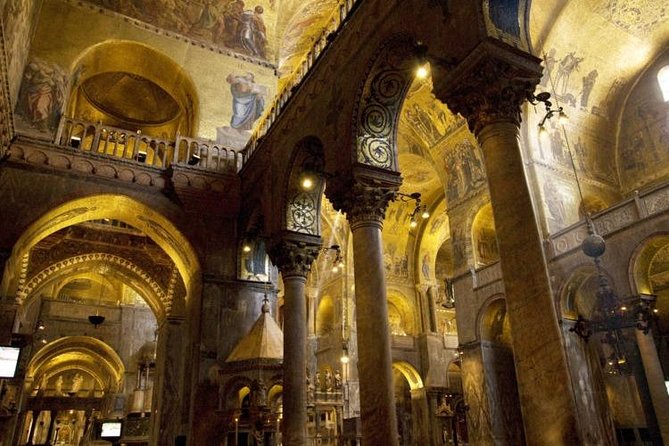
Saint Mark’s Basilica is famous for a reason. But daytime visits can feel like a loud museum line: you stand, you glance, you move on. This tour flips the mood. You arrive when the building shifts from public monument to something more intimate, almost theatrical, with a guide steering your attention to details you’d otherwise miss.
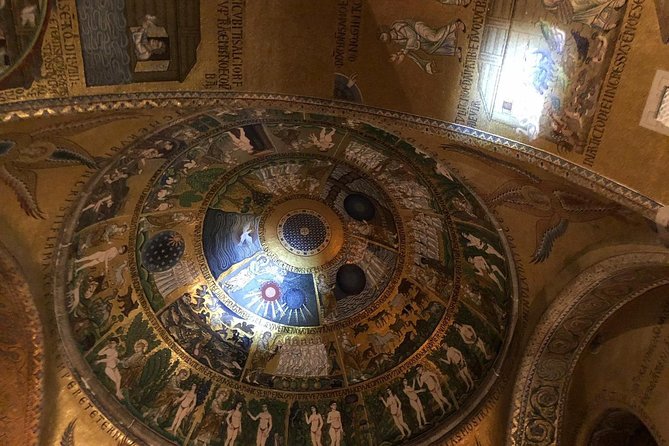
The biggest payoff is the basilica’s night routine. You start in dimness, then—slowly—the ceiling mosaics brighten as the lights come back on. The effect isn’t just pretty. It changes how the whole space reads. Gold leaf, glass, and tiny story scenes suddenly make sense as a designed “picture Bible” up on the ceiling, with Old Testament moments like Noah, Adam, and Moses.
And yes, you’ll hear the same iconic names everywhere in Venice. The difference here is timing plus context. When your guide explains how these artworks connect to medieval Bible miniatures, you stop treating it like decoration and start seeing it like visual storytelling meant for people long ago.
You can also read our reviews of more tours and experiences in Venice.

Small-Group Touring That Actually Stays Calm
I like tours that feel like a conversation, not a cattle chute. With a maximum of six people, you’re less likely to get swept into someone else’s pace. It also makes the guide’s job easier: they can stop more often to answer a question, point to the right detail, and keep everyone oriented in the right spot.
That matters in Venice, where you can easily lose time finding the correct entrance or stepping around crowds. A smaller group makes it simpler to stay together—especially at dusk, when everyone’s deciding where to go next.
You’ll also notice how much the guide’s voice shapes the experience. In this tour, the guide names the places you’re seeing (Piazza San Marco, Palazzo Ducale, the Bridge of Sighs, Saint Mark’s Basilica) and then connects them to the larger Venice story: trade power, religious authority, and political control. Even if you only catch a piece of the big picture, the night setting helps it land.
Piazza San Marco at Dusk: The Square Behind the Icons
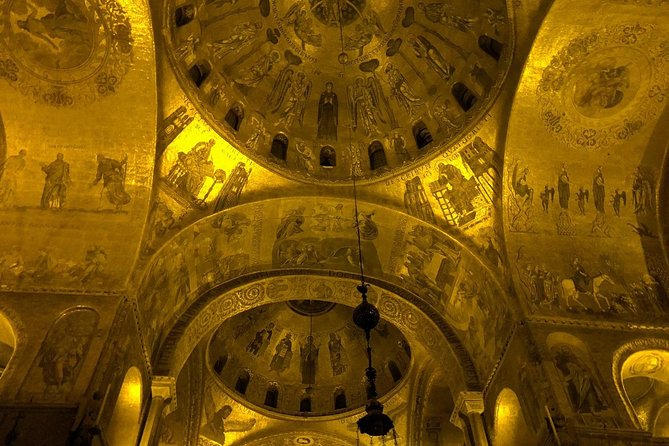
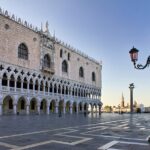
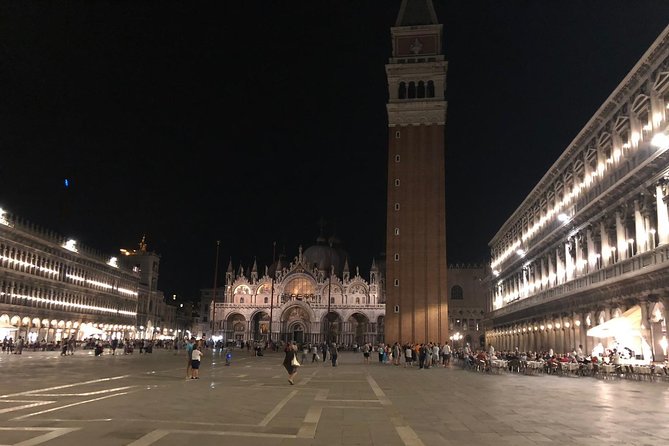
You begin in Piazza San Marco, one of Venice’s most theatrical stages—Italian-Gothic architecture along a canal-facing plaza. The square looks timeless, but the story is anything but static. A key early detail here is the plaza’s long rise to cultural importance, starting with the first chapel construction in 819 AD.
From there, your guide connects the dots you’ll see later: how St Mark’s Basilica and Doge’s Palace became the defining backdrop of the square, and how architectural influences show up in the surrounding buildings—especially the push-pull of Eastern and Venetian Gothic styles. That’s the moment when you stop treating the square as a postcard and start seeing it as a planned center of power.
A short stop like this is also smart. At 5:30 pm, the lighting starts to soften, and your brain switches from “walk fast” to “look closer.” You get orientation fast, then you move on while the city is transitioning into evening.
Palazzo Ducale: Fortress Roots and a Color-Changing Facade
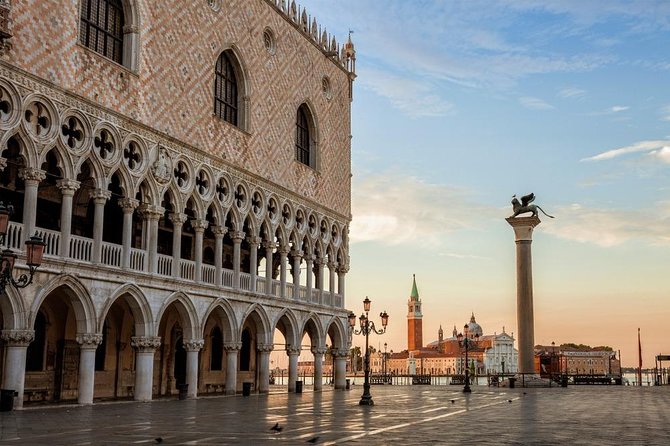
Doge’s Palace is where Venice’s political story shows up in stone and scale. The building didn’t begin as a palace at all. It started as a 10th-century fortress, then later transformed under Doge Sebastiano Ziani. That change—from military stronghold to ruling-center home—matters, because it explains the “power” feel of the place: Venice built for control, then dressed it up as prestige.
Your guide also points out the palace’s dramatic facade and how its color shifts from day to night. That’s not just a design trick. It’s a reminder that Venice’s materials and light do the heavy lifting. In the late evening, the palace can look warmer or darker depending on where you stand and how the light hits stone and surfaces.
You’ll also hear the palace tied to the city’s pageantry and to the darker side of rule. Even if you’re not a “history person,” this building helps you understand why Venice relied on secrecy and spectacle at the same time. It’s easier to connect that feeling when you’re in the palace at night, not while everyone is blasting through in daylight.
Practical note: you’re in a building with lots of sightlines. So wear shoes you can stand in. The pace is managed, but this is still a real walking-and-stopping experience.
Ponte dei Sospiri: The Last View Before Prison
The Bridge of Sighs gets its name from a brutal idea: it was the last sight for prisoners as they moved toward imprisonment. That’s why the bridge is so memorable even today. It’s not just a romantic photo frame; it’s tied to a system of justice that felt final for the people going through it.
In the afternoon or peak hours, the bridge can feel like a traffic jam of cameras. At night, it’s a different scene—quiet enough that you can actually absorb what the bridge represents. You get time for the view over the Venetian lagoon, and you also get the emotional framing that makes the look matter.
This stop is also short on purpose. You don’t want to burn your evening waiting for photos. You want to get the meaning, catch the moment, then head into the night’s main event.

Saint Mark’s Basilica After Hours: From Darkness to Gold Mosaics
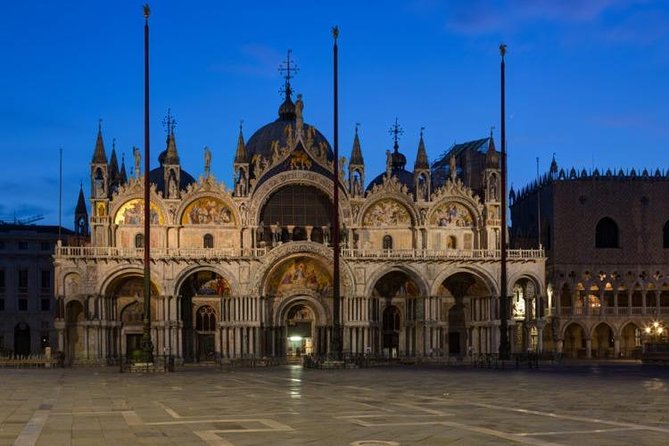
This is the highlight for most people, and it makes sense. The tour saves you the basilica for last, after you’ve had the palace and bridge. That ordering works because you arrive at Saint Mark’s with the bigger story in mind: Venice as religious authority and political power, both stamped onto the city’s most important spaces.
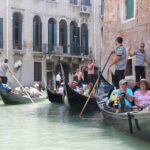
Inside the basilica, the experience starts with darkness. Then comes the slow, deliberate illumination—an actual light show built around the ceiling mosaics. You’ll see Old Testament stories represented in the artworks, and the guide explains how the imagery connects to medieval Bible traditions, including the way some scholars link these scenes to ancient manuscript miniatures.
The best part is how the night timing changes your role. You and your group are essentially alone for that portion, which turns the space into something closer to a private viewing than a crowded stop. You’re not competing with people who talk over the guide or who keep stepping into your line of sight.
Two rules you should take seriously:
- No photography inside Saint Mark’s Basilica.
- Plan for a dress code check: no shorts, no sleeveless tops, and knees and shoulders must be covered for men and women.
Also, bring an original, valid photo ID. Photocopies aren’t accepted. This is one of those details that can ruin an evening fast if you forget it.
Price and Value: What You’re Really Paying For
At about $337 per person for a 3.5-hour window (approx.), this is not a budget tour. But it’s priced around two big things you can’t easily replicate on your own.
First, you’re paying for after-hours access to Saint Mark’s Basilica, plus guided context. If you visit on your own, you can see the basilica. You won’t get the same timing, the staged illumination moment, or the quieter experience where you’re not pushing through crowds.
Second, you’re paying for the small-group format and expert storytelling. When you’re walking through Doge’s Palace and then moving to the bridge and basilica, it’s the guide’s job to connect the dots—fortress-to-palace evolution, Doge Sebastiano Ziani, the facade color shift, the bridge’s prisoner meaning, and the mosaic program above.
Is it worth it? For people who care about art, architecture, and how the pieces fit together, it often feels like paying for access plus a better lens. If you mostly want the fastest checklist of photos, you might feel the price more sharply. But if you want Venice at its quietest and most dramatic, this is the kind of evening that can stick with you longer than a daytime sprint.
Timing, Breaks, and How to Plan Your Evening
The tour starts at 5:30 pm and runs about 3.5 hours on the schedule. Your guided time is designed to total three hours, but there may be up to a 1.5-hour break between Doge’s Palace and Saint Mark’s Basilica, depending on night opening and closing times. If that break happens, your guide will suggest a local restaurant or bar to wait.
That break is the main reason you should avoid tight dinner plans nearby. Instead, think of it as a flexible Venice evening: you’ll do big-ticket sights, then you’ll take a pause while the city and the buildings do their night switching.
Also keep in mind the meet point: you start at Colonna di San Marco in Piazza San Marco (and the tour ends back at the meeting point). So plan to be in that area anyway.
One more Venice reality check: there can be a €5 access fee on certain days for people staying outside of Venice who visit for the day. Check the city guidance for whether your date triggers it, and build it into your expectations.
Who This Tour Fits Best (and Who Should Skip It)
This is a strong match if you:
- want Saint Mark’s Basilica at night, when it’s quiet and the mosaics get the full light-show treatment
- like small groups and real guide interaction
- care about how architecture and power shaped Venice (not just how things look)
You might rethink it if you:
- hate strict entry rules and the hassle of carrying the right ID
- need a very predictable timeline with no waiting between sites
- mainly want casual sightseeing with zero dress code pressure
It’s also a good pick for first-timers who feel overwhelmed by Venice’s sheer number of landmarks. This tour zooms in on four “anchors” and gives you a story thread to hold onto.
Should You Book This Tour?
I’d book it if your goal is to see Saint Mark’s Basilica the way Venice experience should feel: quiet, dramatic, and guided. The after-hours access, the slow illumination of the mosaics, and the small group size do the heavy lifting for value.
If you’re traveling on a tight budget or you’re allergic to dress code checks and original photo ID rules, then you might prefer a cheaper daytime plan. But if you can meet the requirements and you want a calmer Venice evening, this is one of the more satisfying ways to spend your time in the center of it all.
FAQ
What time does the tour start, and where do we meet?
The tour starts at 5:30 pm. You meet at Colonna di San Marco, Piazza San Marco, 30124 Venezia VE, Italy.
How long is the tour?
The tour is approximately 3 hours 30 minutes. The guided portion is always three hours, though there may be a break between sites that changes the total time on the schedule.
How many people are on the tour?
It’s a small group with a maximum of six people.
Which places does the tour visit?
It includes stops at Piazza San Marco, Palazzo Ducale, Ponte dei Sospiri, and Saint Mark’s Basilica.
Are tickets included for Doge’s Palace, the Bridge of Sighs, and Saint Mark’s Basilica?
Yes. Admission is included for Palazzo Ducale and for the Bridge of Sighs, and admission is included for Saint Mark’s Basilica.
Do I need to bring photo ID for Saint Mark’s Basilica?
Yes. An original, valid photo ID is required for entry to Saint Mark’s Basilica. Photocopies are not accepted.
What is the dress code for entering religious sites?
You must cover your knees and shoulders. No shorts or sleeveless tops are allowed, and you may be refused entry if you don’t follow the dress requirements.
Is photography allowed inside Saint Mark’s Basilica?
No. There is no photography permitted inside Saint Mark’s Basilica.
Is there an extra Venice access fee on certain dates?
On certain dates, a €5 access fee may be required for some visitors staying outside Venice who are planning to visit for the day. Check the city guidance for which days apply and exemptions.