REVIEW · VENICE
Da Vinci Interactive Museum Venice Scuola di San Rocco
Book on Viator →Operated by Leonardo da Vinci Museum · Bookable on Viator
Leonardo feels oddly close here, and that’s the trick. The Leonardo da Vinci Interactive Museum in Venice turns his imagination into hands-on working replicas and high-contrast backlit painting copies, so you get to study like a detective instead of just reading labels.
I especially like the museum’s clear, kid-friendly setup and the way it keeps you moving through ideas. You’ll also find extra value in the onsite bookshop, and there are audio guides available for free at the entrance if you want more than the wall text (one visitor even mentioned asking and getting them).
One thing to watch: this is a small museum. If you’re expecting a massive, fully immersive show, you may finish quickly and feel the exhibition is more about interaction and replicas than original masterpieces.
In This Review
- Key Things You’ll Notice Right Away
- Where This Leonardo Museum Fits Into a Venice Day at San Rocco
- Earth, Water, Air, Fire: The Exhibit Layout That Helps Your Brain
- The Working Replicas You Can Operate (and Why That’s the Real Point)
- Backlit Painting Copies: Seeing Leonardo Through Strong Light
- Anatomy Studies Alongside Engineering Ideas
- Multimedia, Short Film, and Audio Guides You Can Actually Use
- Bookshop Stops, Souvenirs, and Extra Time to Browse
- Timing Your Visit: How to Fit 45 Minutes Into Venice
- Price and Value: Is $10.21 Worth It?
- Who Should Book This Leonardo Da Vinci Museum (and Who Might Skip)
- FAQ
- FAQ
- How long does the Leonardo da Vinci museum visit take?
- Do I need a specific entry time?
- Is the experience available in English?
- Are audio guides included?
- What will I actually see inside?
- Is it suitable for children?
- Are food and drinks allowed in the exhibits?
- Is there an extra Venice access fee on certain dates?
- Can I cancel and get a refund?
- Should You Book the Leonardo da Vinci Interactive Museum in Venice?
Key Things You’ll Notice Right Away
- Four themed sections (Earth, Water, Air, Fire) that organize Leonardo’s thinking in a way that makes sense fast
- Hands-on machines and working models that help you understand the logic behind the designs
- Backlit reproductions of major paintings that are easy to look at without squinting or crowds
- Anatomy studies alongside the engineering ideas, showing Leonardo’s two-track genius
- Multimedia in multiple languages, plus optional audio guides you can request at the entrance
Where This Leonardo Museum Fits Into a Venice Day at San Rocco
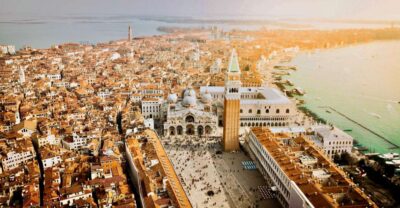
This is a smart stop when you want something compact but thoughtful. You’ll be in the Venice area of Scuola di San Rocco / Campo San Rocco, which is a great pairing zone because the neighborhood is full of beautiful things to look at between museum moments.
The visit runs about 45 minutes on average, which is perfect if Venice has already done a number on your feet. Opening hours are 10:30 AM to 4:30 PM, with last entrance at 4:00 PM, so you can slot it in without planning your whole day around it.
If you travel with kids, you’ll appreciate that it’s family friendly and built to spark curiosity. It’s also a good choice for adults who like diagrams and mechanical thinking more than formal museum pacing.
You can also read our reviews of more museum experiences in Venice



Earth, Water, Air, Fire: The Exhibit Layout That Helps Your Brain
The museum organizes its main galleries into four sections: Earth, Water, Air, and Fire. That sounds simple, but it matters because it turns Leonardo’s vast output into a structure you can follow without getting lost.
As you move through each area, you’ll see machines built according to Leonardo’s designs, using the original proportions unless the creators had to make changes for practical construction. Even if a model looks playful, the setup is trying to show you the reasoning behind the idea—what parts would do what work, and why the design makes sense.
This layout also works well if you don’t have much time. You can focus on one or two sections and still leave feeling like you learned something, rather than trying to absorb everything at once.
The Working Replicas You Can Operate (and Why That’s the Real Point)
The headline here is the interactive models. The museum is designed so you can interact with replicas and “test” concepts by operating the designs. That hands-on approach is what most people seem to enjoy, especially families and anyone who likes science, mechanics, or hands-on problem solving.
You’ll also see explanations that connect the machines to Leonardo’s broader interests—so the experience doesn’t feel like a pile of gadgets. Instead, it’s more like a guided tour of Leonardo’s way of thinking: observe a problem, sketch possibilities, and then build a model to see what happens.
One practical note: the museum is set over two floors with steps. If you’re traveling with strollers or you prefer minimal stairs, plan your pace accordingly.
Backlit Painting Copies: Seeing Leonardo Through Strong Light
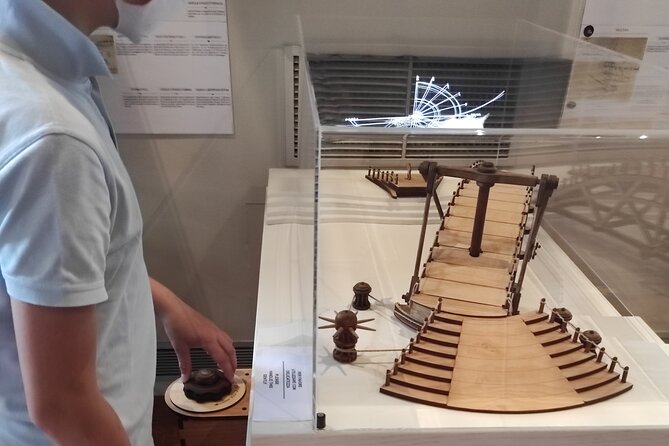
Leonardo wasn’t just an inventor. He was also a serious observer and artist, and the museum makes that clear.
In the exhibit, you’ll find high-resolution backlit copies of major paintings. Backlighting matters because it gives you clarity without the typical museum struggle: blurry prints, dim rooms, and everyone standing at odd angles.
These displays are paired with context that helps you connect art and science. You can use the light and size of the reproductions to notice details you might miss when looking at smaller images.
If you’re the type who enjoys art but wants the story behind it, this section is a good bridge. It turns paintings into evidence—part of Leonardo’s curiosity about how the world works.
Anatomy Studies Alongside Engineering Ideas
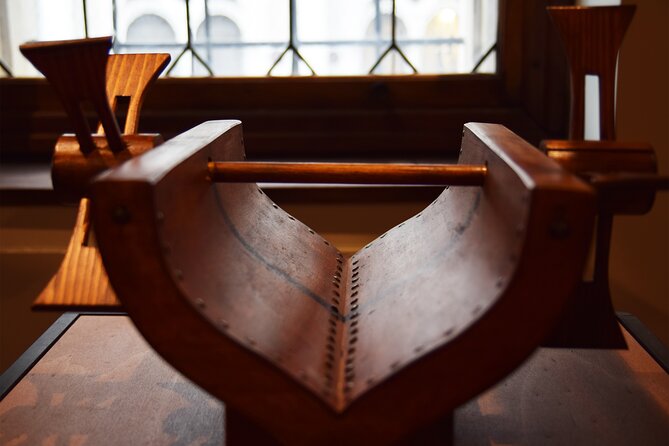
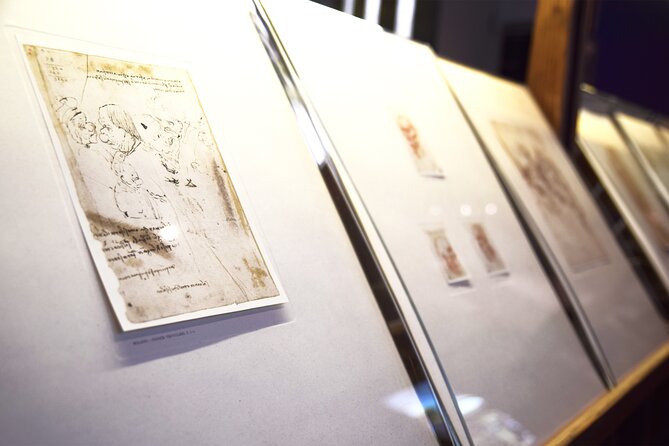
A big part of Leonardo’s legacy is that he studied the human body with the same focus he brought to machines. This museum includes displays of some of his major studies of anatomy, and it places them in the same overall learning rhythm as the invention galleries.
Seeing anatomy next to engineering ideas makes the whole experience feel more coherent. You start to notice a pattern: Leonardo kept asking why things move, how structures form, and what the underlying system is.
For many visitors, this is the moment where the museum stops being just fun and becomes genuinely educational. Even if you only spend a short time in each section, the topic pairing helps you walk away with a bigger picture.






Multimedia, Short Film, and Audio Guides You Can Actually Use
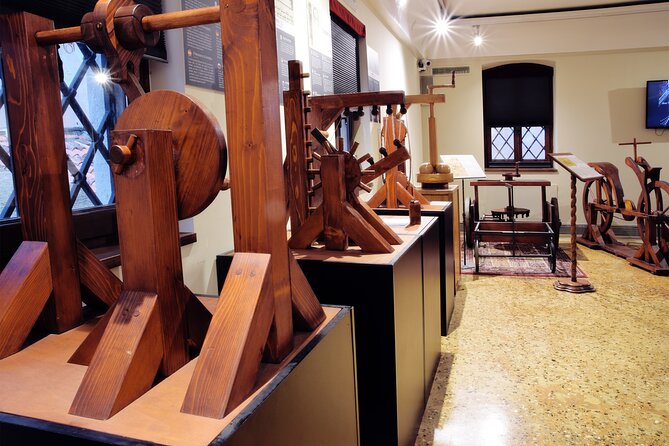
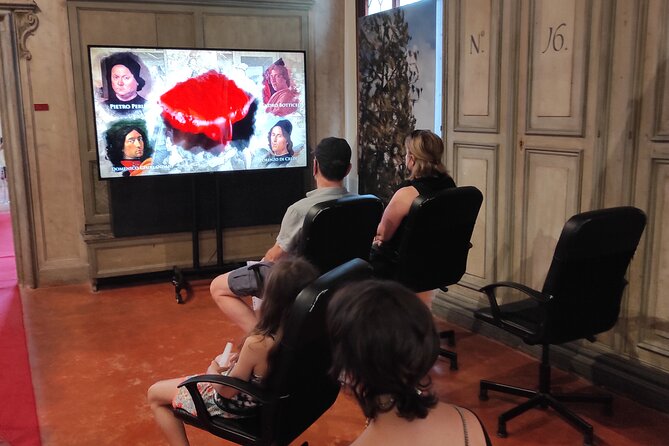
The museum uses multimedia displays to explain Leonardo’s life and works, and there’s also a short film introduction that sets the tone.
Here’s a helpful practical tip: if you want more guidance than the exhibit text, ask for the audio guide at the entrance. Some visitors noted that audio guides weren’t obvious when they used the online ticket, but the museum indicates they’re available free of charge upon request.
This matters in a place like this. When you’re trying to read while also deciding which machine to try next, audio can help you keep momentum without losing details.
Bookshop Stops, Souvenirs, and Extra Time to Browse

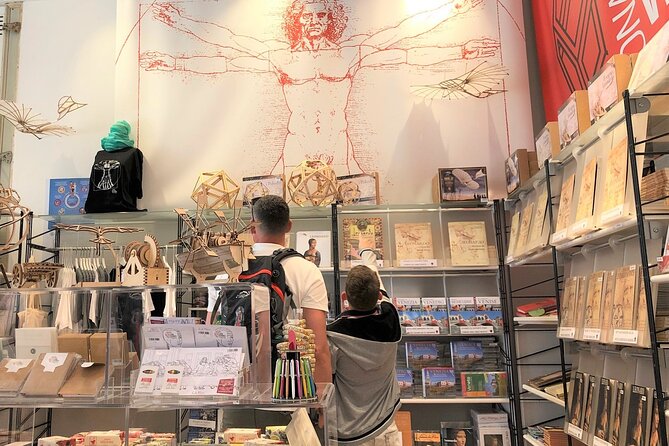
After you’ve worked through the galleries, don’t rush straight out. The onsite bookshop and supporting displays add real depth, especially if you want to go home and keep playing with Leonardo’s ideas.
A museum like this is easy to treat as a quick diversion, but the shop turns it into a learning loop. If you’re traveling with curious kids—or if you want something to read on the plane—this is where you can convert your visit into a take-home reference.
This isn’t a high-end art catalog situation. It’s more like a science-and-history store geared to the interests the museum sparks.
Timing Your Visit: How to Fit 45 Minutes Into Venice
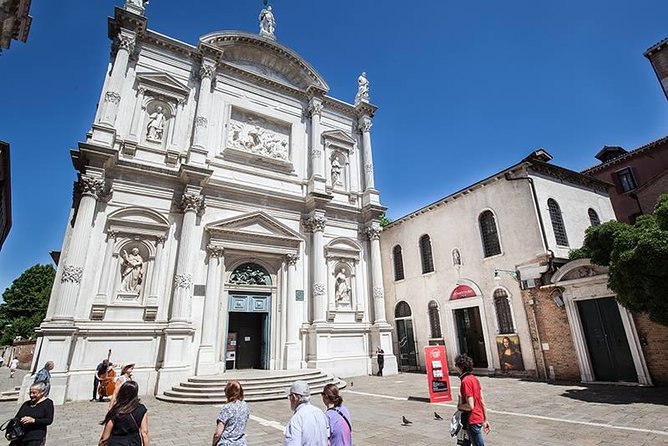
The opening hours are long enough to fit into most itineraries: 10:30 AM to 4:30 PM. With last entrance at 4:00 PM, aim to arrive earlier rather than later, especially if you want time to operate exhibits at a leisurely pace.
Because the museum is small, it’s best to treat it like a “mental breather” in the middle of Venice touring. Do a half-morning of walking, reset your brain with machines and art, then head out again when you’re ready.
Also, if you’re searching on your phone map app, double-check you’re landing in the Campo San Rocco area. One visitor reported ending up at a different Leonardo museum after following directions that didn’t match what they expected. A quick sanity check saves time and money.
Price and Value: Is $10.21 Worth It?
At about $10.21 per person, this is priced for a short, satisfying visit. You’re not paying for a long gallery marathon. You’re paying for a concentrated experience: interactive models, art-focused displays, and explanations that tie Leonardo’s interests together.
The best value happens when you match the museum’s strengths to your interests:
- If you like working with your hands, the interactive models help justify the ticket fast.
- If you like art but want context, the backlit copies make the painting section easier to enjoy.
- If you go with kids, the museum’s family-friendly pacing tends to keep everyone engaged.
The main mismatch is expectation. If you want a large collection of original artworks or a bigger-scale production, you’ll likely wish there were more. The museum’s size is part of the bargain. For the right traveler, that’s a plus; for the wrong expectation, it can feel like a letdown.
Who Should Book This Leonardo Da Vinci Museum (and Who Might Skip)
Book it if you:
- want an easy family friendly activity where kids can touch and operate things
- enjoy Leonardo as an inventor as much as an artist
- like practical learning—diagrams, models, and explanations you can “try out”
- want a Venice stop that’s not a half-day commitment
You might skip it if you:
- need a big museum experience with lots of space and long viewing time
- are mainly chasing original masterpieces (this museum focuses on replicas and copies)
One way to think about it: this is an ideas museum. It works when you’re curious and willing to spend a short time testing concepts rather than just looking.
FAQ
FAQ
How long does the Leonardo da Vinci museum visit take?
Most visits run around 45 minutes. Because the museum is compact, you can finish quickly if you skim, or take longer if you want time to operate multiple interactive exhibits.
Do I need a specific entry time?
You can visit any time during opening hours. Just keep an eye on the last entrance at 4:00 PM.
Is the experience available in English?
Yes. English is offered, and exhibit descriptions are also available in multiple languages.
Are audio guides included?
Audio guides are not listed as automatically included with the ticket, but you can request them free of charge at the entrance.
What will I actually see inside?
Expect working replicas of Leonardo’s machines, backlit high-resolution copies of major paintings, and displays that cover some of his anatomy studies, plus multimedia about his life and work.
Is it suitable for children?
Yes. The museum is family friendly and is designed to stimulate curiosity, with interactive elements that work especially well for kids.
Are food and drinks allowed in the exhibits?
No. Food, chewing gum, and beverages are prohibited in the exhibit areas.
Is there an extra Venice access fee on certain dates?
On some dates, day visitors staying outside Venice may need to pay a €5 access fee. You’ll need to check the applicable days and exemptions on the provided Venice access information page.
Can I cancel and get a refund?
Yes. You can cancel up to 24 hours in advance for a full refund.
Should You Book the Leonardo da Vinci Interactive Museum in Venice?
If you want a short, hands-on way to meet Leonardo’s ideas, I’d book it. The ticket price fits the time commitment, and the strongest parts are the interactive models, the backlit painting replicas, and the way the museum connects inventions and art instead of treating them like separate worlds.
Go in with the right expectation: this is small. If you’re okay with a focused visit rather than a huge museum day, you’ll likely leave with a clearer sense of Leonardo’s range—and with at least a couple of machines you’ll remember how to explain.