REVIEW · VENICE
Venice: Tickets to Negozio Olivetti
Book on GetYourGuide →Operated by FAI - Fondo Ambiente Italiano · Bookable on GetYourGuide
Carlo Scarpa turns a shop into Venice poetry. This small visit in St. Mark’s Square lets you experience contemporary design at human scale, then step inside the restored Olivetti showroom from 1957–58. Two things I really love: the way Scarpa reshapes the interior using light and thoughtful space planning, and the chance to study an original brand environment that connects modern architecture to everyday technology like typewriters and calculators.
The main drawback is size. The Negozio Olivetti interior is compact, so if too many people pile in at once, your views of the fine details get cramped and the mood goes away. The ticket includes an audio guide, but the room still needs space to breathe.
In This Review
- Key things to know before you go
- St. Mark’s Square starts with a surprising “corner premise”
- Carlo Scarpa’s design: light, volumes, and sharp material choices
- The restored Olivetti showroom (1957–58): what you’re really paying to see
- Walking your way through the design: what to focus on
- Audio guide in Italian or English: how to make it worth your time
- The interior rules that protect the experience
- Group size and the small-room reality
- Is the $11 ticket good value?
- Who should book this, and who might skip it?
- Should you book a Negozio Olivetti ticket?
- FAQ
- How long is the Negozio Olivetti visit?
- How much does a ticket cost?
- What’s included with the ticket?
- What languages are available for the audio guide?
- How large are the groups?
- Are food, drinks, or flash photography allowed?
- Can the interior look different during temporary exhibitions?
Key things to know before you go
- Carlo Scarpa’s re-organization makes the room feel engineered for light, not just display cases
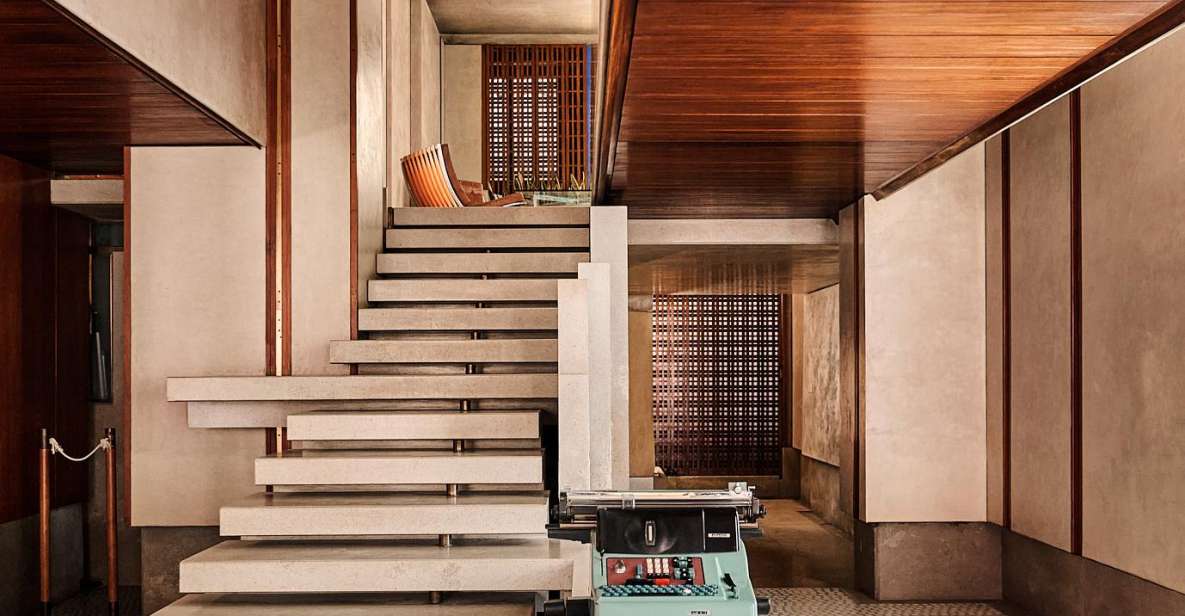
- A preserved 1957–58 showroom (restored and reopened to the public) is the real star inside
- Small group limits (max 10) help you look closely, not just pass through
- Audio guide in Italian and English keeps the visit paced and readable
- Temporary exhibitions can change what you see in the interior layout and objects
- No touching, no flash, no food/drinks indoors keeps the space protected
St. Mark’s Square starts with a surprising “corner premise”
Negozio Olivetti sits in Venice’s St. Mark’s Square area, along the colonnades of the Procuratie Vecchie. Instead of a big museum entrance, it feels like you’re slipping into a carefully framed pocket of modern design tucked against a historic backdrop. That contrast is part of the fun: you’re surrounded by classic Venetian grandeur, and then—inside—you get mid-20th-century modernism handled with the precision of an architect’s workshop.
What I like about arriving this way is that you’re not rushing from one landmark to the next. You get a short architectural walk, then the ticket becomes more than a stop—it becomes a focused look at how design and business culture can share the same room. This is also where the story starts to make sense: the space was chosen as a way to transmit Adriano Olivetti’s cultural values in a modern, innovative setting that still respects the historic surroundings.
You can also read our reviews of more tours and experiences in Venice


Carlo Scarpa’s design: light, volumes, and sharp material choices
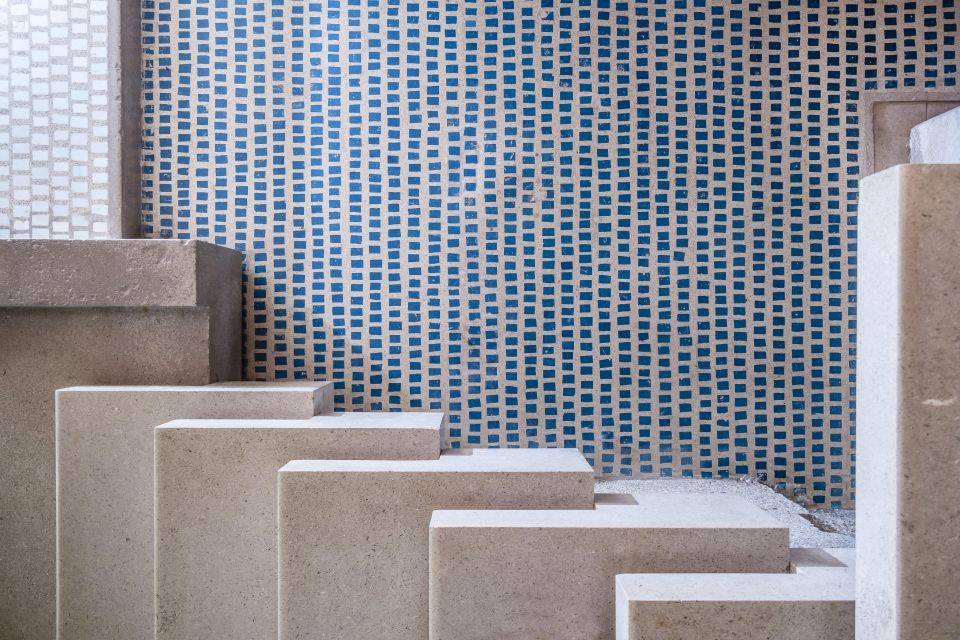
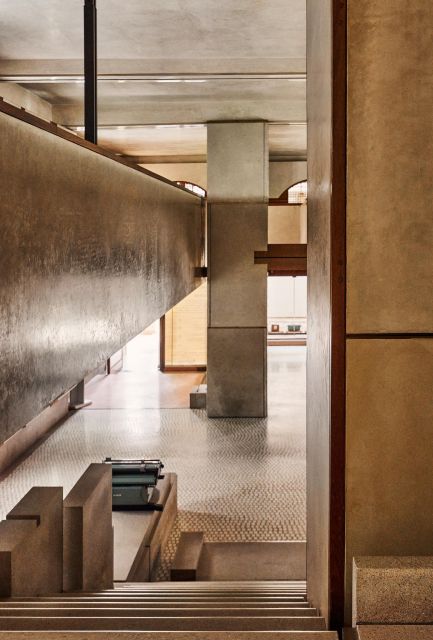
The reason this ticket feels different from a standard gallery visit is that Carlo Scarpa treats the interior like a composed scene. He didn’t just add furniture or display units; the commission required a complete reworking of the original unit, using a cutting-edge reorganization of spaces to reshape volumes. In plain terms: you feel the building’s thinking.
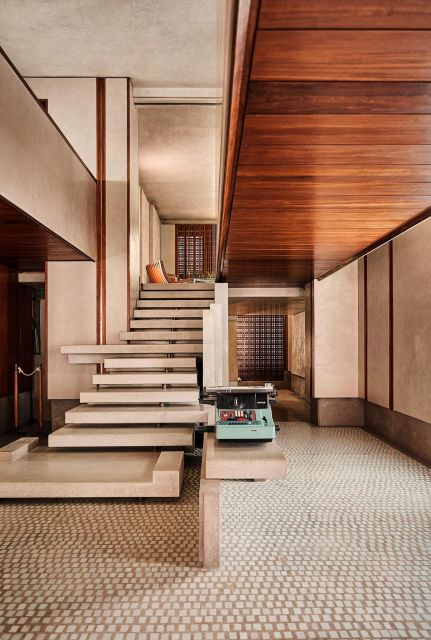
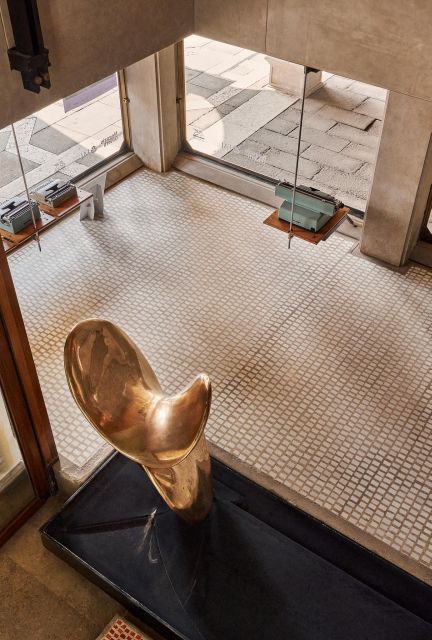
You’ll notice that the design seems to guide your eye. Scarpa leans on the way light moves through the room, and then he “dials in” the surroundings so the materials don’t fight each other. The interior uses luxurious, sophisticated finishes such as Aurisina marble and ebony. Even if you’re not a design nerd, you can still sense the logic: surfaces are chosen for contrast, edges and planes are treated with care, and the whole setup encourages slow looking rather than quick scanning.
There’s also something quietly satisfying about the conservation angle. The architecture isn’t presented like a fragile artifact behind glass; it feels like it’s been respected. You can see the attention given to the space’s preservation, including after Venice’s notorious water-related challenges. In other words, you’re not just visiting what someone planned—you’re seeing what has survived.
The restored Olivetti showroom (1957–58): what you’re really paying to see
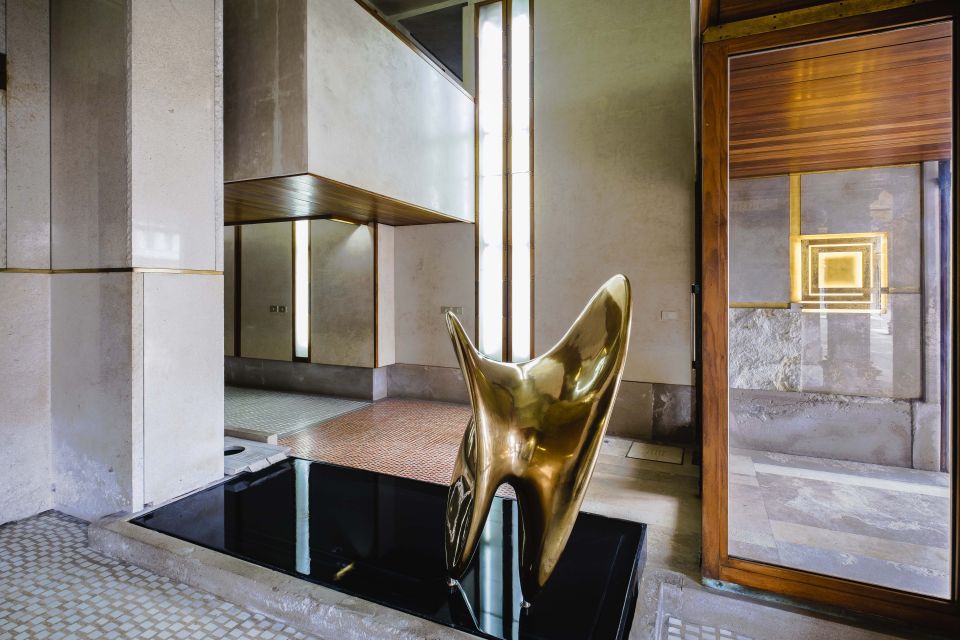
Inside Negozio Olivetti, the highlight is the original setup of the historic showroom from 1957–58, restored carefully in 2010 and open to the public again starting in 2011. That timeline matters because it explains the atmosphere: the place isn’t a modern recreation. It’s an original environment for Olivetti’s brand world, presented with enough care that it still communicates how the company wanted to be seen.
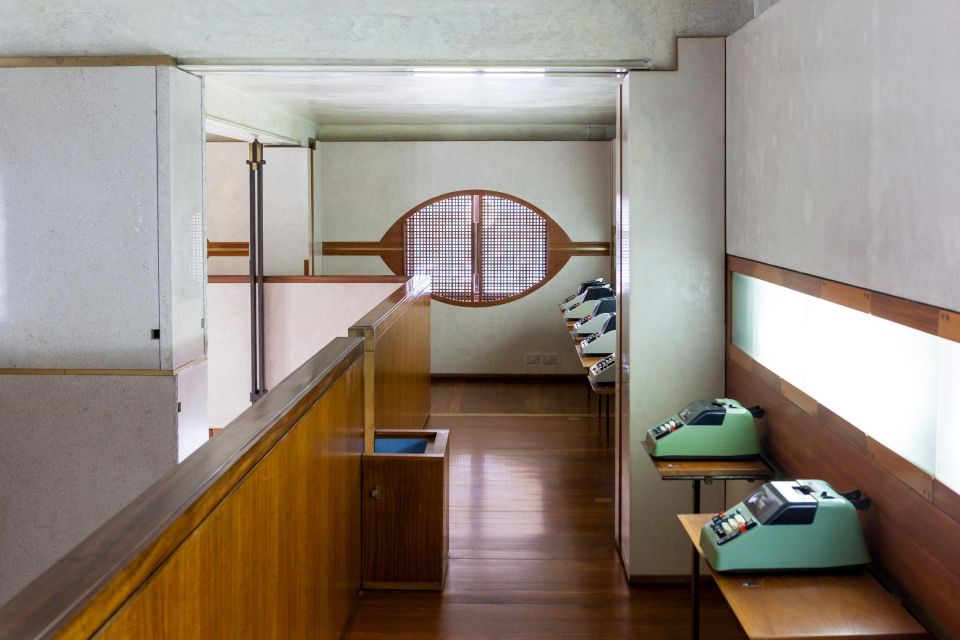
Olivetti is strongly associated with typewriters and calculators, and this showroom was a design and marketing stage for that technology. The result is a rare combination you don’t get often in Venice: a room that’s both functional and symbolic. You can study how the display space supports the idea of innovation, while Scarpa’s architecture controls the way the room reads visually.
One more detail that can affect your visit: the space can host temporary exhibitions at certain times of the year. When that happens, you may see changes to the content, the number of objects, or how they’re arranged. That doesn’t mean the experience becomes unreliable—it means the interior is alive, and your ticket still gets you access to the core architectural masterpiece, even if the surrounding scene may shift.
Walking your way through the design: what to focus on
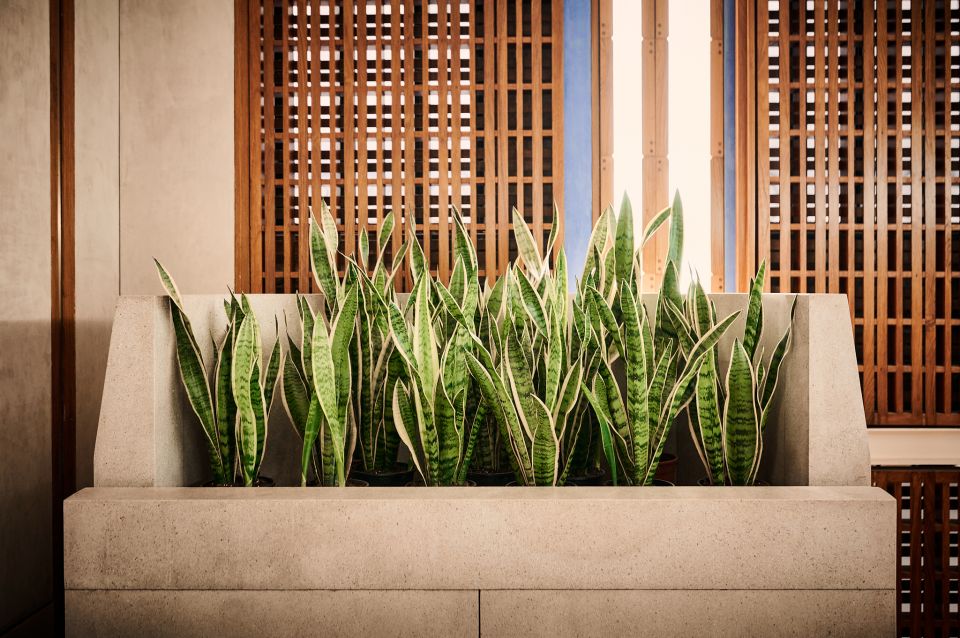
Since this is a small interior, you get better results if you give it your full attention for a short time. I’d treat your visit like an architecture reading lesson. Instead of trying to take everything in at once, pick a few things to track:
- How your eye moves: Scarpa’s reorganization is meant to shape your sightlines. Watch what you notice first, then see what becomes visible next.
- Light vs. surfaces: the room feels constructed around illumination, and materials like marble and ebony make the contrasts sharper.
- The relationship between brand and building: the Olivetti showroom isn’t just objects in a room. The architecture helps the brand message hold together.
And because the rules are strict—no touching exhibits, no flash photography, and no food or drinks indoors—you’ll naturally slow down. That’s a good thing here. Negozio Olivetti is the kind of place where a quick glance can feel like nothing happened, while 10 extra minutes can make the design click.
Audio guide in Italian or English: how to make it worth your time
This experience includes an audio guide in Italian and English, and that matters because the space is compact. You don’t want to spend your whole visit trying to figure out what you’re looking at. The audio guide helps you connect what you see to the bigger picture: the architecture, the personalities behind it, and the showroom’s context.
You can also use the included information materials when available, which is especially helpful if you prefer reading for details you might miss while listening. I recommend you do a simple two-step approach: start by listening to the audio guide as you enter, then later pause on the parts that catch your attention the most. The room rewards a second look.
Because the interior can be sensitive to crowding, the audio guide becomes more than narration—it’s a way to stay focused if you can’t linger in front of every element.





The interior rules that protect the experience
Negozio Olivetti has clear boundaries meant to keep the space in good condition. Plan on:
- No food and drinks indoors
- No smoking indoors
- No flash photography
- No touching exhibits
This is one of the reasons the visit holds up as an architectural experience. The organizers are protecting both the materials and the experience quality. For you, it means the place stays calm and visually clean, and the details remain crisp instead of getting smudged or distracted by casual handling.
Group size and the small-room reality
The ticket is for a small group limited to 10 participants. That’s a big deal here. When you’re studying a detailed interior, crowd control affects everything: sightlines, how comfortably you can pause, and whether the room stays quiet enough to enjoy the design.
One thing to watch for is that the building is small enough that any unexpected crowding can feel noticeable. I’d treat your entry time as important, show up with a little buffer, and be ready to adapt your pace if you see the room filling fast. If you want the full value of Scarpa’s craftsmanship, aim for a visit when the space feels steady, not jammed.
On the positive side, the experience is often described as paced enough to look calmly, and the staff is typically friendly and helpful. In a place like this, that personal attention matters because it helps you slow down instead of feeling like you’re being rushed through.
Is the $11 ticket good value?
At $11 per person for a one-day ticket with an entrance ticket and audio guide, this is strong value—especially if you care about design, architecture, or mid-century brand history. You’re not paying for a long, complicated museum route. You’re paying for access to a specific, famous interior concept: Scarpa’s contemporary architecture inside the context of Olivetti’s showroom.
The value equation is simple:
- You get architecture you can actually observe up close.
- You get the original 1957–58 setting (restored and reopened after restoration).
- You get guided context in English or Italian without extra equipment or rental fees.
If your Venice time is limited, this also makes sense because it targets a precise experience rather than asking you to wander and guess what matters. It’s a short stop with a strong identity.
Who should book this, and who might skip it?
You’ll likely love Negozio Olivetti if you:
- want a change of pace from classic church-and-palace Venice routines
- enjoy architecture and design where small details matter
- like the idea of seeing how business culture (Olivetti) and design culture (Scarpa) connect
You might feel less satisfied if you:
- want a large, multi-room museum experience (this is intentionally small)
- dislike any situation where crowding can change your ability to stare at details
Think of it as a focused visit. The payoff is not variety of rooms—it’s quality of space.
Should you book a Negozio Olivetti ticket?
Yes, I’d book it if your interests include modern architecture, design details, or Olivetti’s mid-century story. For the price, you’re getting access to a restored original showroom environment shaped by Scarpa’s way of thinking—light, volumes, materials, and careful conservation.
If you’re a quick “hit the highlights” type, still consider it. Just give yourself permission to slow down for a short interior visit and use the audio guide. When the room stays calm, this one becomes a memorable part of Venice that doesn’t rely on crowds or long lines.
FAQ
How long is the Negozio Olivetti visit?
The experience is listed as valid for 1 day, and you check availability for starting times.
How much does a ticket cost?
The price is $11 per person.
What’s included with the ticket?
Your ticket includes the entrance and an audio guide.
What languages are available for the audio guide?
The audio guide is available in Italian and English.
How large are the groups?
Groups are limited to a maximum of 10 participants.
Are food, drinks, or flash photography allowed?
Food and drinks are not allowed indoors, smoking indoors is not allowed, flash photography is not allowed, and you can’t touch the exhibits.
Can the interior look different during temporary exhibitions?
Yes. The space could present temporary exhibitions, which may slightly modify the content and the number or organization of objects.