Venice gets intense fast. This day tour keeps it calmer at first, starting in Cannaregio and the Jewish Ghetto before heading to the big sights. I like the route choice because it focuses on quieter lanes and local storefronts, and I like that the pace is structured with stops that actually make sense. The main thing to consider is that it is still a long walk day with church dress rules if you want to go inside.
What makes this experience worth your time is how it blends everyday Venice with the monuments you came for—Rialto and San Marco included. You also get a guided rhythm for navigation, so you spend less time guessing which calle to take. One possible drawback: a previous guest described a German/English mix, so if you’re very strict about language, plan to be flexible.
In This Review
- Key highlights you’ll care about
- From Padua Station to Venice: the value of the round-trip train
- Cannaregio and the Jewish Ghetto: quieter Venice with real storefronts
- San Polo’s calmer pace: bacari streets and people’s squares
- Rialto Bridge and Rialto Market: the icon plus the working area
- San Marco Square and Bridge of Sighs: how the route lands you in the right mindset
- A Grand Canal viewpoint plus espresso and cicchetti: the stops that feel local
- Ferry back to the station: ending Venice smoothly instead of battling crowds
- Practical stuff that can make or break your day
- Who this tour suits best
- Should you book Live Venice as a local departing from Padua?
- FAQ
- What’s the duration of the tour?
- Where do I meet the tour in Padua?
- What time does the tour start?
- Is the ticket mobile?
- Do I get round-trip transportation from Padua?
- Does the tour include entry to St. Mark’s Basilica?
- Is there a dress code for churches?
- Are there any extra fees I should expect?
- How big is the group?
- What if there’s a public transportation strike?
- Is there a cancellation window for a full refund?
Key highlights you’ll care about
- Padua round-trip by train keeps logistics simple for a day in Venice
- Jewish Ghetto + Cannaregio streets show a quieter Venice side with shops and atmosphere
- Rialto Bridge and Rialto Market cover both the icon and the working area nearby
- San Marco Square route includes the core sights and ends with the ferry back to the station
- Cicchetti lunch in a bacaro gives you a taste of traditional Venetian bar culture
From Padua Station to Venice: the value of the round-trip train
This tour is designed to start in Padua. The meeting point is at Stazione FS di Padova, and the departure time is listed as 9:45 am. You’re not left to figure out train times on your own, which matters because Venice day trips can turn into a scramble when you’re tired.
The big value play here is that the price bundles round-trip train transfer from Padua. At $150.49 per person, you’re paying for more than “a guide walking around.” You’re paying for transportation plus the guided route through Venice’s most walkable districts.
One small but important practical note: the tour information you receive says you travel to Venice by train. So if you’re expecting a pickup in Padua by van, don’t—this is structured around the rail connection.
You can also read our reviews of more tours and experiences in Venice.

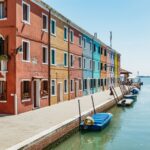
Cannaregio and the Jewish Ghetto: quieter Venice with real storefronts
The day begins with a visit to the Ghetto Ebraico (about 10 minutes). Even if you already know the basics, walking through this area on a guided route is different from seeing it from a distance. The streets are narrow, the pace is steadier, and you get a feel for how Venice neighborhoods function beyond the postcard zones.
Next comes Cannaregio (around 30 minutes). This is where you’ll spot everyday Venice: the connection between Santa Lucia station and the Rialto area via Strada Nova, plus shopping streets like Lista di Spagna. The tour also points you to the entertainment area in the northern part of the sestiere, between the Jewish Ghetto and Fondamenta Nuove—useful context if you want to understand where locals go after dark.
I especially like that the experience doesn’t rush past the Jewish Quarter as a checkbox. You’re not just moving on; you’re learning how the neighborhood fits into the city’s larger flow—then you transition toward the center.
San Polo’s calmer pace: bacari streets and people’s squares
From Cannaregio, you move into San Polo (about 30 minutes). This district is the smallest of Venice’s six, and the payoff is that you often feel less compressed than around San Marco. The streets here feel more lived-in, with houses and working shops side by side.
The tour also uses San Polo’s geometry to orient you: Campo San Polo is described as the largest square after San Marco, and it sits in a neighborhood shaped around that space. It’s the kind of place where you can see how Venice holds community life in public squares, even when the buildings look like they’re doing their own thing.
If your ideal day includes more than landmarks—like learning how Venice “hangs together” on the street level—San Polo is a strong mid-route choice. It also sets you up for the more famous sights later without that feeling of being rushed into crowds immediately.
Rialto Bridge and Rialto Market: the icon plus the working area
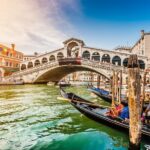
Then you hit Ponte di Rialto (about 1 hour). This bridge is the oldest of Venice’s four bridges over the Grand Canal, and the tour doesn’t treat it like a photo stop only. You get the key backstory: it was built between 1588 and 1591 after earlier wooden structures failed (collapsed twice and even burned on different occasions).
What I like most is that the tour has you cross Rialto Bridge as part of the route, not as a separate “stand here and take your picture” detour. Walking across it gives you a sense of movement between the city’s commercial heart and the viewpoints that naturally collect crowds.
You also get Rialto Market as part of this section. That’s valuable because Rialto isn’t only architecture—it’s also commerce and everyday activity. Even if you don’t buy anything, seeing the market area on a guided walk helps you understand how Venice historically ran on this kind of exchange.
San Marco Square and Bridge of Sighs: how the route lands you in the right mindset
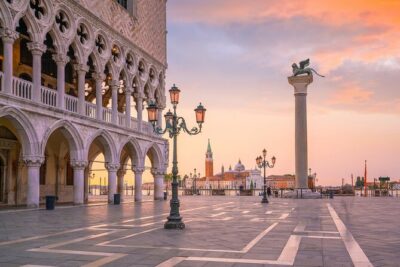
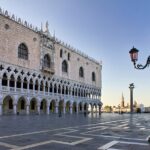
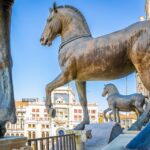
Next up is Piazza San Marco (about 1 hour). The tour frames it as the city’s “main salon,” and it’s easy to see why once you’re there in person: the square feels ceremonial, with major buildings all clustered around you.
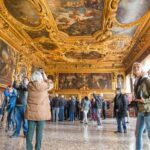
The sights inside the square area include the Basilica of San Marco, Doge’s Palace, the Correr Museum, the Campanile, and the Clock Tower. One important detail: Basilica of San Marco is not included, so you should treat this as viewing time rather than a guaranteed church visit.
You’ll also arrive at the Bridge of Sighs, which is usually tied to the story of crossings between spaces in the old governmental complex. Even without going inside, the guide route helps you position it in your head so it connects logically to the surrounding power-center buildings.
Practical reality check: San Marco is the most crowded area in Venice on many days. A guided path matters here, because it can help you avoid spending your time stuck in slow lines or zigzagging into dead ends.
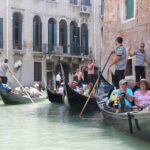


A Grand Canal viewpoint plus espresso and cicchetti: the stops that feel local
One reason this tour stays interesting is that it includes food and viewpoint moments, not just monuments.
Early in the day, there’s a planned espresso stop in a small coffee shop in Venice, described as using the same recipe for almost a century. That kind of detail doesn’t sound like a big deal until you’re standing there and realizing the place is still operating like it did long ago. Also, coffee breaks are not just about caffeine—they’re how you reset your legs for the next block of narrow streets.
For lunch, the tour heads to an ancient bacaro hidden among Venice’s calli. Bacari are Venetian small bars where you eat standing-style and graze. The tour specifically mentions traditional Venetian cicchetti, which is exactly what you want on a day trip: local food without turning lunch into a half-day commitment.
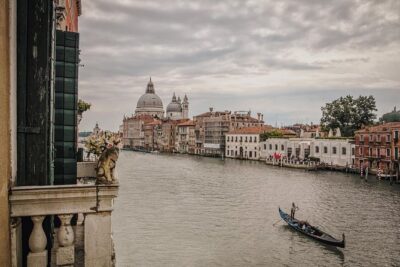
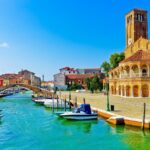
There’s also a hidden place viewpoint from which you can appreciate an exclusive view of the Grand Canal. That’s a big deal because most visitors see the Grand Canal from the same few angles. When you get a less common viewpoint, it changes how the whole city reads—especially in photos where you want more than “another canal shot.”
Ferry back to the station: ending Venice smoothly instead of battling crowds
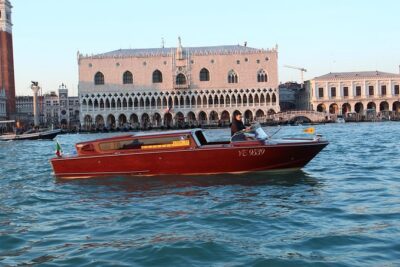
After you finish around San Marco, the tour transitions to transport. You take a ferry boat that brings you back toward the rail station area (timed at about 30 minutes for this segment).
This is smart logistics. If you try to walk back to Santa Lucia from San Marco, you’ll spend your energy on bridges and long detours. The ferry turns the ending into a more scenic, less stressful conclusion—especially when you’re already tired from walking narrow streets.
The tour ends back at the meeting point area in Padua on the return sequence, meaning you’re not left stranded figuring out which direction to go.
Practical stuff that can make or break your day
This is a 7 hours 30 minutes day, and the route includes multiple districts connected by walking through narrow lanes. The experience is designed for people with moderate physical fitness, so wear shoes you trust on uneven stone and don’t plan on doing “just one more museum” after.
For church visits, remember the dress code: covered shoulders and legs are necessary. Even if you’re not planning a long church stop, you’ll feel this rule when you pass a doorway and decide you want to go in.
Two other practical notes from the tour info:
- On certain dates, some day visitors staying outside Venice may need a €5 access fee. Check the city’s official page listed with the tour info.
- Entrance fees are not currently required (though that can change in the future). So if you’re hoping for paid sites, don’t assume everything is free forever.
Group size is capped at 10 travelers, which tends to make navigation easier and keeps questions practical. Also, you get a mobile ticket, which is handy on a phone in a city where paper can vanish quickly.
Who this tour suits best
This fits best if you want a structured Venice day without spending hours researching routes. It’s especially good for:
- First-timers who want Rialto + San Marco but still want quieter streets
- Travelers who like neighborhood context: Cannaregio and the Jewish Ghetto
- People who prefer a guide to manage the flow of a long walking route
If you want a deep, museum-heavy agenda or you’re chasing very long sit-down meals, you might find the day moves too quickly. But for a first pass at Venice from Padua, the pacing hits a sweet spot.
Should you book Live Venice as a local departing from Padua?
I’d book it if your goal is a well-managed day that mixes “local Venice” streets with the must-see icons—without making you handle transit chaos. The biggest wins are the train round trip from Padua, the focus on Cannaregio + the Jewish Ghetto, and the route that ties together Rialto and San Marco in a logical order.
I’d think twice if language precision matters a lot. One previous guest reported an English tour that became a German/English mix, which slowed things down because of translation timing. If you’re sensitive to that, you’ll want to confirm how language is handled for your date.
If you’re okay with walking, you dress for churches, and you want a day that feels guided but still street-level, this is a strong value way to do Venice.
FAQ
What’s the duration of the tour?
It runs for about 7 hours 30 minutes.
Where do I meet the tour in Padua?
You meet at Stazione FS di Padova, Piazzale della Stazione, 1, 35131 Padova PD, Italy.
What time does the tour start?
The listed start time is 9:45 am.
Is the ticket mobile?
Yes. The tour uses a mobile ticket.
Do I get round-trip transportation from Padua?
Yes. The tour includes round-trip transfer by train from Padua station.
Does the tour include entry to St. Mark’s Basilica?
No. The tour notes that the Basilica of San Marco is not included.
Is there a dress code for churches?
Yes. To visit churches, you need covered shoulders and legs.
Are there any extra fees I should expect?
The tour notes that on some dates a €5 access fee may apply for people staying outside Venice who visit for the day. It also says entrance fees are currently not required (but may be in the future).
How big is the group?
The tour has a maximum size of 10 travelers.
What if there’s a public transportation strike?
The tour says you should contact the provider for alternatives or cancellations. If there are no alternatives, the tour is canceled and refunded in advance, but train tickets you already purchased may not be refunded.
Is there a cancellation window for a full refund?
Yes. You can cancel up to 24 hours in advance for a full refund.